

The details shown above are from John Derrick's famous 1581 engravings of 'The Image of Irelande' showing scenes and battles between Irish and English forces of the time. A set of them is available to view here on the Edinburgh University Library website. Two of these feature 'pypers' within the Irish 'woodkerne', one of which has been killed and has his pipes lying beside him.
'Many instances of the Lowland hatred of the Celtic bagpipes (declared to be a favourite musical instrument of Satan) imply no more than that the more musical Saxons could not bear the sound of an instrument which brought to their remembrance ruthless foes who, it is said, also played the pipes during the Irish massacres in 1641. In 1641 Lord Lothian [ William Kerr ] had a piper in every company when his regiment lay at Newcastle, and at the same time there was not a sober fiddler in the Scots army there. The Scots loved the harp, the harpsichord, the viol, and the flute, and still more the sweet voices which sang those martial ballads and love lyrics which still charm the dainty ear'. (thanks to Jack for this reference, from Hewison in 1908).
Pipe bands seem to have been popularised by soldiers returning from the First World War (1914-1918), where they saw and heard Highland regiments of the British Army - for example Gilnahirk Pipe Band from East Belfast was formed in 1919. So nowadays we don't have the same reservations about the pipes as our ancestors did. Time moves on and things change. The story of music and the Ulster-Scots is still to be properly researched and written.
> The Highland Bagpipe by W.L. Manson (1901) on Archive.org
> Bagpipes in War from the North East Folklore Archive
Sunday, July 31, 2011
"The Lowland hatred of the Celtic bagpipes (declared to be a favourite musical instrument of Satan)"


Thursday, July 28, 2011
European Pipe Band Championships, Belfast, 30 July 2011
A few years ago I was involved with some efforts to attract major pipe band events to Northern Ireland. We wanted to bring the RSPBA World Pipe Band Championships across the water from Scotland, but were just pipped at the post by Glasgow City Council (who retained the event for the umpteenth year). However, later that same year Belfast City Council did manage to secure the European Pipe Band Championships for three years running from 2010 - 2012. Last year's event at Stormont Estate was a good start to the series, and this year's looks like a much bigger affair.
> Belfast City Council web page about the Championships: click here
> Piping is Class Festival: click here
I can't go this year as I'm leading another Ulster-Scots historical bus tour of the Ards and North Down on the same day, but I'd definitely recommend anyone to go to the Europeans (and any of the pipe band contests), it's a great day out. For those stuck at home but close to a computer, there's always the live online stream being arranged through the multimedia department of Lurgan Junior High School- more info on the RSPBA website here. (school has obviously changed a lot since my day!).
The Worlds is being held on Glasgow Green on Saturday 13th. Let's hope the Ulster bands romp home with a truckload of wins - Worlds website here.

Hugh Porter of Moneyslane
I am fortunate enough to have an original 1813 edition of the poems of Hugh Porter. His 'country rhymes' are exceptional - clever, humourous, satirical, witty. Here's the intro of one I read the other day, entitled 'To the Most Noble Marquis of Downshire':
My Lord,
While friends an' folk o' fame,
Wi' compliments salute ye,
I maun contented sit at hame
An' barely think about ye
.
Friday, July 22, 2011


Tuesday, July 12, 2011
Newtownards, 11.30pm tonight.
Took this photo tonight of the view at the top end of Strangford Lough, towards Newtownards' massive 11th Night bonfire. Click to enlarge.

Saturday, July 09, 2011
If you're up at the North Coast this week
...then the Keswick at Portstewart convention is worth dropping in at. It's been running every year since 1913. Very rooted, down-to-earth, neither full of trendy cool types nor dour suited sorts either, it strikes a great balance with an all-ages approach to good clear Biblical teaching. And as it's in a 1000 seater marquee it's informal - and big enough to slip in and out of without causing a rumpus or being buttonholed by anybody. There's also a bookshop and coffee shop on site as well. I help them with their advertising each year (as you can see from the News Letter pic shown here, this ad appeared both yesterday and today). You can find out more on their blog.

Thursday, July 07, 2011
It has somehow become uncool to sound like you know what you're talking about
This is a bit American, but still applies. Thanks to The Resurgence.
From Killinchy to Newtownards to Irvine, March 1637
"...I went by Dean (Castle) and Loudon and Lanerk to Edinburgh, and remained there some space, being at some private meetings every day; and when I returned to the communion at Irvine, which was March 26, I found that my wife having come only ane visit from her mother's house to Newtoun to see the Lady Airds, and finding some of our Killinshie people going by to go to Irvine communion, she presently came along to Scotland with them... (I) sent to Ireland for some of our goods, and stayed in Lanerk till I went to Stranrawer..."
from The Life of Mr John Livingstone, written by Livingstone himself in January 1666
Tuesday, July 05, 2011
When Worlds Collide: An Encounter with a Public Sector Organisation
Joke with a jag caveat warning: This isn’t an actual conversation, and isn’t about any specific organisation. It’s a compendium of many conversations which have been relayed to me over the years by deflated, infuriated ordinary folk (known here as ‘Person’) who have attempted to deal with a wide variety of organisations in Northern Ireland’s public sector (known here as ‘Them’). Thankfully some public sector organisations aren’t like the mythical one below. There are also some very capable individuals in the sector, many of whom I have worked with and am still working with. However…
Person: “I have an idea that I’d like to talk to your organisation about. I understand you support this type of project.”
Them (with a look of horror/disdain): “That may be. But we have no-one who could take it forward, we’re already very busy.”
Person: “Okay, but it doesn’t need any of your people to actually do it.”
Them: “But we don’t have any money to pay for someone else to do it either, our budget for this year is already fully allocated.”
Person: “But we're only one month into the current year!”
Them: “Sorry.”
Person: “Well, I’m not looking for money for myself, but it might need some fairly small production costs to make it happen.”
Them: “But because we’re already fully allocated, we’d have to put in an external funding application to Organisation X under their new Funding Programme Y. However that Programme is closing next month.”
Person: “Okay. How long does that application take?”
Them: “Well, we’ll have to check their funding criteria and, if necessary, distort your idea beyond recognition to make it fit with their criteria. And, depending upon summer holidays and other delays by the time that their assessment and shortlisting process takes a final decision it could be about one year. Once we get written confirmation of the funding then we can talk to you. Hopefully we won't have to put your idea out to tender".
Person: “But it's MY idea!”
Silence.
Person: “Well, do you want to hear about the idea anyway?”
Them: “There’s probably little point, we’re already busy doing our own projects which are all aligned with our 3 – 5 year corporate plan.”
Person: “But, properly handled, this idea could really capture the public imagination.”
Them (with another look of horror/disdain): “That would create even more work for our already hard-pressed over-stressed staff.”
Person: “But this office is nearly empty. Where are all of your staff?”
Them: “On a course. Or on flexi-time. Or on leave. Or off sick.”
Silence.
Them: “Well, let’s have a look at your idea anyway.”
Person passes A4 summary document across table, and explains main highlights.
Silence.
Them: “Well, it looks interesting. However your timeline doesn’t dovetail with ours... your psychic powers are weak. And if we supply the paper for this specific aspect of the project (they said while pointing to a subtitle on the A4 sheet) then later on in the process we’ll probably claim copyright ownership of the words you’ve written and which have been printed on that paper, even though they’ve taken you years of voluntary time and expense to research, craft and perfect. But anyway, we can’t do a, b and c as these are technically not within our remit - or at least how we presently interpret our remit (but that interpretation is under review with an external consultant just now) - and d, e and f are mostly the responsibility of other public sector organisations. So you’d have to go and talk to them and get their written permissions and approvals before we’d even consider this project.”
Person: “But THEY told me I had to meet YOU first, and get in-principle support for the idea before THEY would consider the project! Look, I have a full-time job and this project is just something I’ve come up with voluntarily in my spare time with other local people, who like me have full-time jobs. We don’t have the time to spend our lives in meetings with public sector organisations being bounced from pillar to post and never getting an answer. AND IT'S OUR TAXES THAT PAY YOUR WAGES!” (thumps table).
Silence.
Them: “But we have no-one who could liaise with those other public sector bodies, we’re already very busy. And we’re not allowed to assist with specific projects – that could lead to complaints from other project applicants. And maybe even legal challenge.”
Person: “So that’s it then?”
Them: “Well, let’s be optimistic for a moment, let’s say we did manage to find some money”.
Person: “Yes?”
Them: “What we’d then do is make sure our logo was as big as possible on everything produced so it would appear to everyone that we had devised this project through our own genius, expertise and hard work. We’d then arrange a swish launch event for the great and the good. Maybe a Z list celebrity would be paid to come along. But we might forget to invite you - that happens now and again. You’d definitely be left out of publicity photo shoots. And afterwards we’d chop your project up as we see fit and publish it in whatever way we wish, edited by someone who hasn’t any understanding of the subject but who needs to be kept busy at their desk for most of the day. Unless they’re off of course. And we might also give copies of your project to others, without consulting you, so that they can build a new (probably heavily funded) project on the back of your voluntary project and with no acknowledgement that it’s your intellectual property in the first place. Of course we will need lots of freebies for the people on our corporate mailing list who we need to impress – these would be sent out first before the general public actually get any whiff of your project at all.”
Silence.
Them: “Otherwise we have this other small pot of money we could point you towards, to do something else entirely. We have targets to meet for that fund and it’s currently under-performing.”
Silence.
Them: “Would you like a copy of our corporate plan? You can download it from our website or write to request a hard copy edition which will be sent out within 30 days. And if you subscribe to our mailing list we'll keep you informed about all of the other wonderful projects that we are funding.”
Person: “Is there a bathroom on this floor?”
(this was written as a bit of mischief, but a few friends DEMANDED that I post it here!)
Monday, July 04, 2011
A final point about technology
"Technology of every kind for spreading truth exists, but there are not people to make it work." - JC Ryle (Ryle died in 1900). From John Piper on Twitter.
Sunday, July 03, 2011
...but for some projects, letterpress IS coming back
Here's the companion post for the one immediately below. In some cases, traditional methods can be used beautifully, to make a statement about an ethic, an ethos - with all of the inevitable labour pains of hand-crafted items. This video shows the process of creating the CD packaging for the wonderful Gillian Welch and Dave Rawling's new CD, The Harrow and the Harvest.Sometimes sterile digital perfection, retouched and auto-tuned to death, produces a monstrosity. Doing something the old way makes a virtue of imperfection.
> Gillian Welch website here
> Aardvark Letterpress website here
> A 5 star review of the album at The Guardian here
> for those who are suspicious of The Guardian, here's a 5 star review from The Telegraph.
Friday, July 01, 2011
A different Ulster McIlroy (ie not Rory) - Technology and tradition

In that context, it's great to see that the Ulster-Scots Language Society's new reprint of Archibald M'Ilroy's The Auld-Meetin'-Hoose Green (first published in 1898) is available both as a printed book and also as a Kindle edition. M'Ilroy's The Humour of Druid's Island (published 1902) is one of a very few books which have made me laugh out loud. Well done to Derek for championing M'Ilroy over recent years (at least to anyone who would listen!) and from what I hear there are other voluntary and self-funded projects in the pipeline which will combine to put M'Ilroy back on the map.
Wednesday, June 29, 2011
The story of Comber Potatoes
Comber Potatoes are soon to be a local product with 'PGI' (Protected Geographical Indicator) status, much like Champagne wine, Parma ham etc. This report from the Belfast Telegraph almost exactly one year ago gives a fascinating definition:
"...Only potatoes grown in the former Hamilton and Montgomery lands would pass muster — that is Ards Borough Council as far south as Ardkeen on the Ards peninsula and Crossgar and Killyleagh on the western side of Strangford, North Down Borough Council and the parts of Castlereagh, Belfast and Down District Councils that lie to the east of the A7 road between Carryduff and Killyleagh..."
This is a direct quote from the official DEFRA document (PDF here). The document goes on to quote from The Montgomery Manuscripts. And Ayrshire, where Hamilton & Montgomery came from, is of course also famous for potatoes - so it may well have been the early Scots who brought spuds to Comber.
There's an alternative story though, which is that some of the English colonists who came to the Ards with Sir Thomas Smith in 1572-1575 were farmers, and after Smith's 'official' colony collapsed they remained to farm the flat fertile land near Comber. When Sir Walter Raleigh brought the potato from the Americas to Europe (and specifically to Ireland) in the late 1580s, some of the seed crop were brought to the Comber area and were planted there by these English tenants. So maybe the Comber spud is Ulster-English in origin rather than Ulster-Scots.
Comber spuds are in season just now, but if you're driving along the M1 near Moira / Lisburn, keep an eye out for this poster I've just designed for one of my clients, local potato producer Wilson's Country, in a roadside field where they are currently growing a fresh crop. It's had quite a reaction from passing motorists!
(explanation for readers not from Ulster - 'peelers' is a nickname for 'police')

Tuesday, June 28, 2011

The No. 7 Modern Mistress solid fuel stove, Drumnahunshin Farm, Ulster Folk Museum
This is the older model, with the hot water tap at the side, exactly as my Granny Wilson had in her wee house at Ballyfrenis. Took this photo today. Click to enlarge.

Saturday, June 18, 2011
The Dying Words of David Dickson of Irvine (1583-1663)
(A brief post as there are other things to attend to just now). I can't thank Billy enough for sending this to me earlier in the week. Last weekend he gave me a tour of a number of important historical sites associated with Dickson. Then this appeared in my inbox on Wednesday.
'...on his death-bed in Edinburgh on December 1662, a friend asked him how he was himself. His reply was 'I have taken all my good deeds, and all my bad deeds, and have cast them together in a heap before the Lord, and have fled from both to Jesus Christ, and in Him I have sweet peace...'
> Wikipedia entry on David Dickson here.
Thursday, June 16, 2011
'A Mapp Shewing The Order & Causes of Salvation & Damnation' by John Bunyan
John Bunyan (1628 - 1688) is best known as the author of Pilgrim's Progress and other books like The Holy War. Here's his Wikipedia biography. He also seems to have been a bit of a graphic designer to, as the image below shows, the first version of which was created by Bunyan in 1644.
You can see a larger PDF version here. It is said to have been based on the earlier works of William Perkins (1558-1602), called 'A Golden Chain' (see example here). Even though the age we live in is highly visual, diagrams like these can look a bit strange and esoteric to us. (Main image above from this Flickr page)

Monday, June 13, 2011
The Ulster Covenant in Ayrshire
Yesterday when driving from Ayr through Troon up to Irvine, I made a point of stopping at Titchfield Road along Troon seafront. Why? Because my great grandfather was living there when he signed the Ulster Covenant in Troon in 1912. If you click on the document below (from the excellent PRONI website) you'll see five Thompson men - John, James, William, William and William John - were all staying at Titchfield Row when they signed the Covenant. William John was my great grandfather, and he gave his home address as Ballyfrench - the wee townland I'm now back living on again. You'll see that there were Bailies from John St in Newtownards living there with them, as well as other Ards and Belfast men. I expect they were over there working on the 'Scotch Harvest'. (Click to enlarge):

The photo below is of the roadsign for Titchfield Road, with Ailsa Craig directly behind. I wonder how often these men stood on that shore after a hard days work, looked out across the sea and thought of home? (Click to enlarge):

Ayrshire is my favourite part of Scotland - family tradition has it that the first of our Thompsons came across to Ulster from around Troon and Kilmarnock, probably some time in the early 1700s. Thanks to Joe and Jean, to Billy, to William, John and Brian for all of their help and hospitality over the weekend. If Stena Line and P&O would pool their finances and build a massive big bridge I'd probably be over there at least once a month - trawling through graveyards, libraries, museums, bookshops, ruined castles and abbeys... and eating Ayrshire tatties!
A fine year
...from the Royal Mile in Edinburgh, on the wall beside the John Knox House (now part of the Scottish Storytelling Centre).

Saturday, June 11, 2011

Friday, June 10, 2011
Mingary Castle, Ardnamurchan, 6am this morning

Mingary is the most remote place I've ever been to. 27 miles of single track road from Corran Ferry to Kilchoan. A perfect location for a prison even today, although the story I'm interested in took place here in 1644. If help is coming, it's not coming by land - it'll have to be by sea.
More on this to follow...
Thursday, June 09, 2011
Lowland Scots, Ulster Scots, Scotch-Irish
'...The Lowland Scots, the Ulster Scots, and the Scotch-Irish of America are, as has been noted, one and the same race, but the two latter branches of the race have had experiences in Ulster and America which have strengthened their character and toughened their native fibre by the very difficulties they have been compelled to overcome... the Ulster Scot in his new environment ceased to be a Lowlander, though the seedbed of his race was the Lowlands of Scotland... he will make one more migration - this time to the New World, where freedom abounds and opportunity beckons. Here, amid new surroundings, he will undergo a further change, and here he will go his farthest lengths and attain his greatest heights. No longer a Lowland Scot or and Ulster Scot, he becomes the Scotch-Irishman of America - still of the same race as the Lowlander and the Ulster Scot, to be sure, but different from either by reason of his adjustment to a changed environment...'
from The Scotch-Irish of Colonial Pennsylvania by Wayland F Dunaway (University of North Carolina Press, 1944) p 26-27
Visit Ulster, Pennsylvania here.
Tuesday, June 07, 2011
John Dunlap plaque, Strabane
Sadly this plaque to John Dunlap, the Printer of the American Declaration of Independence, hasn't been maintained just as well as the James Buchanan one I posted the other day. This one is on a concrete plinth, sited on a narrow strip of grass, along the road heading out of Strabane towards Plumbridge (and towards the beautiful President Woodrow Wilson ancestral cottage at Dergalt, which has just been refurbished). There seems to be a series of similar blue plaques dotted across Northern Ireland, made from a ceramic enamel material, and presumably all installed around the same time (maybe 20 - 30 years ago?). More on blue plaques to follow next week...

Monday, June 06, 2011
Just for badness...
... a few weeks ago while in Belfast in between a number of client meetings I went (with a colleague) to a place for lunch which had one of those serve-over counters where you tell the person behind the counter what you want him/her to put on your plate. So, just for badness, when she asked 'what would you like sir", I said "A'll hae a wheen o' prootas". You can imagine the bewilderment.

Sunday, June 05, 2011
'Death Has Lost its Sting' - Psalm 3 via Isaac Watts (1719) to Sojourn Church, Kentucky (2011)
My God, how many are my fears
How fast my foes increase
Conspiring my eternal death
They break my fleeting peace
The lying tempter would persuade
My heart to doubt Your aid
And all my swelling sins appear
Much greater than Your grace
Chorus:
Arise, Oh Lord, fulfill your grace
While I Your glory sing;
My God has broke the serpentʼs teeth
And death has lost his sting
But You - my Glory and my Strength -
Will on my tempter tread
Will silence all my threatening guilt
And raise my drooping head.
Bridge:
And though the hosts of death and hell
All armed against me stand
No more will terrors shake my soul;
Secure within Your hand.
Here's an article about the history of the song, and the new version in the video above. And here is Watts' original, from his Psalms of David first published in 1719.
Friday, June 03, 2011
President James Buchanan plaque, Deroran, County Tyrone
I had to do a bit of driving today to see a few clients, so I put the camera in the car and in between meetings I tracked down a few cultural photo opportunities. Finding the site of the Buchanan plaque was tricky enough, but eventually I got it. It's just under three miles east of Omagh, along the Deverney Road (or if you're driving from Sixmilecross, it's along the Bencran Road). Easily visible just on the road side, the house looks like a private farm rather than a visitor centre, so I didn't bother harassing the residents by knocking on their door.
Sixmilecross is where the minister/poet/author W.F. Marshall was from (his house is still there, with an Ulster History Circle blue plaque on the gate post as well as one on the house itself). The area includes a 'Marshall Country Trail' with brown signs along the route (click here for an example of one). Last year the Ulster-Scots Community Network, working alongside the Marshall family, published a booklet about Marshall's life. It was launched in City Hall and WF's granddaughter spoke at the event. I wonder if he was aware of the old Buchanan homestead just a few miles from his own house, and if that was one of his inspirations for his 1943 classic Ulster Sails West? After all, Marshall was born in Omagh and his father was the principal of Sixmilecross School, so the family would have travelled the Deverney Road / Bencran Road, past the old Buchanan homestead, every day.
Clearly Marshall is important to the people of that part of County Tyrone; in fact it has been said that Marshall 'virtually single-handledly... created a culture and heritage for the Ulsterman of which he could be proud'. With a brown-signed 'trail' in place there is a great opportunity to renew a wider interest in the man and his writings, and to enjoy the landscape he lived and worked in.
No matter which county, and whether east or west of the River Bann, rural Ulster is the place to be.


Wednesday, June 01, 2011

Tuesday, May 31, 2011
Friday, May 27, 2011
The Queen in Ireland
The Queen has been to (the Republic of) Ireland, to a warm welcome from the people and praise from pundits and politicians. Wind things back to the late 1500s and another Queen Elizabeth was thinking about Ireland too. After the disasters caused by two of her once-favoured aides - the Sir Thomas Smith colony in Co Down from 1572-1575, and the Earl of Essex's campaign in Co Antrim from 1573-1575 - her approach to Ireland changed. She struck this Seal in 1586, the first one to include the harp of Ireland.
In Co Down, Queen Elizabeth I (to some degree) made peace with the resident Savages and the Clandeboye O'Neills - in 1587 she formally granted Con O'Neill 'Castlereagh and its appurtenances' and in 1588 she ennobled Patrick Savage as 'Lord Savage of the Little Ards'. And it was all going so well until...

"It is to be regretted that the rich and powerful too often bend the acts of government to their selfish purposes..."
So said Andrew Jackson. The irony is that today Jackson's portrait is on the $20 bill - yet during his Presidency he abolished the 2nd Central Bank of America and was the last President to pay off the national debt. Just what you'd expect from a man with Ulster-Scots parents, who grew up in an Ulster-Scots emigrant society on the other side of the Atlantic.

Tuesday, May 24, 2011
I don't get some of the cultural references but I still kinda like this
Loads more here on the Humble Beast Records channel on Vimeo.
Thursday, May 19, 2011
R C Sproul - the Johnny Cash of theologians
I must admit, I thought R C Sproul was dead. He's one of those famous names who knowledgeable people namedrop and quote alongside others who definitely are dead. A bit like Johnny Cash, he just seems to have been around forever and for a while had dropped off my radar. But over the last year or two he's enjoying a resurgence (again like Johnny Cash did) and is writing, blogging and pumping out some great stuff. In his latest book, Unseen Realities; Heaven, Hell, Angels and Demons, he revisits some of the territory that CS Lewis explored in The Screwtape Letters. You can get a sample of the book here. His main focus is Ligionier Ministries (superb website here) and with regular audio and video postings here. A biography of Sproul is available here.
Wednesday, May 11, 2011
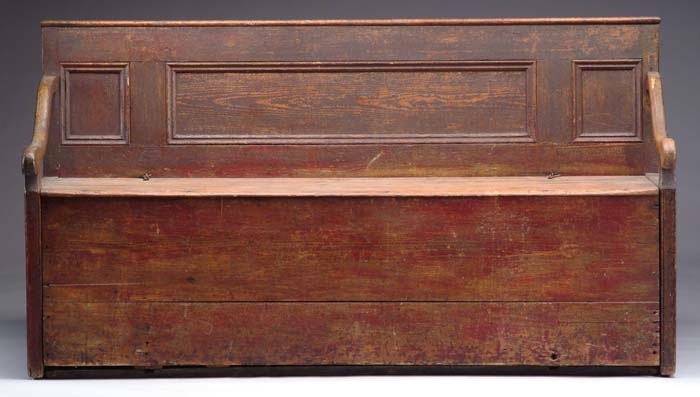
Settle beds
The settle bed is a piece of furniture you don't see too often these days. I came across one a few months ago but sadly the present owners don't show any signs of wanting to part with it! Its form is simple, essentially a large wooden fireside seat, hinged along the front (floor-level) edge to allow it to open out to become a large box. With an old millet mattress and a pile of blankets this then becomes a fireside bed. Beautiful in their simplicity, and with the shocking price of home heating oil, maybe these should make a comeback. Pics below from various websites.
(ps - if you know of anyone who has plans or working drawings of traditional settle beds please get in touch).


Tuesday, May 10, 2011
The Great Speckled Bird
This song was another one of my granda's favourites - he had the original Roy Acuff version on an old 78. If, like me, you've been mystified by the lyrics then you might be interested to listen to Russell Moore's analysis of it over on his podcast series The Cross and the Jukebox - click here.
Sunday, May 08, 2011
Onslows poster auction
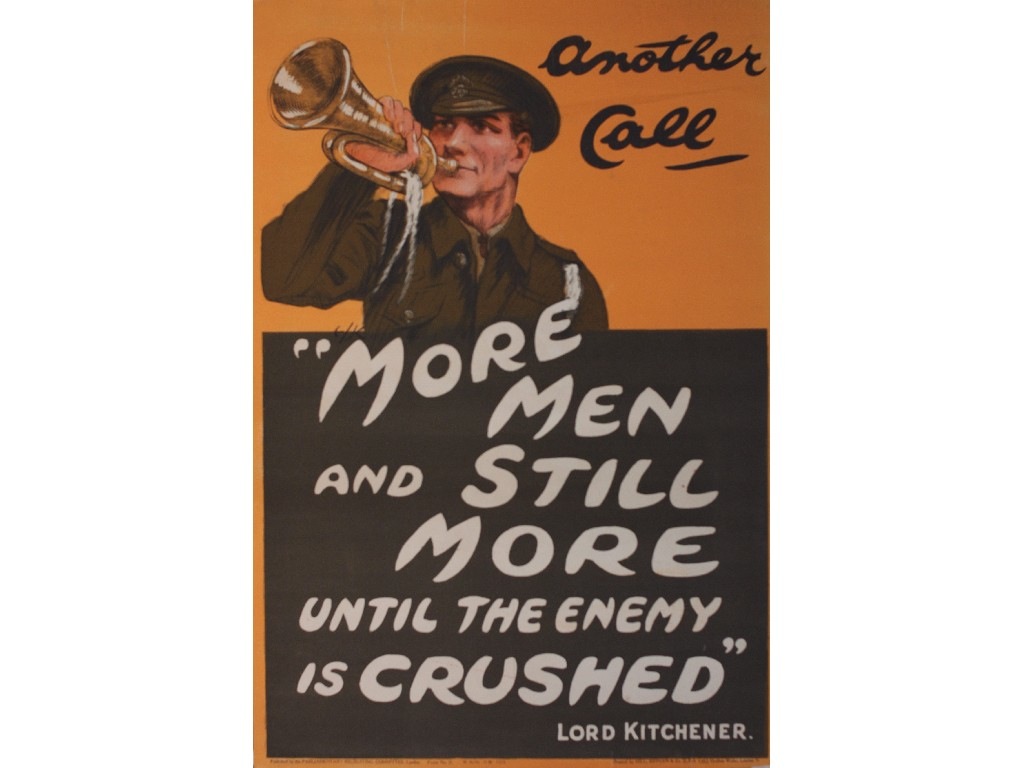
Onslows bi-annual poster auction is now online for viewing. Not too much Ulster stuff, although this one looks like Waterfoot to me, and lots of WWI posters. Definitely worth a look. Click here to view them all.
Friday, May 06, 2011
A different kind of election
Most of us, if we're honest, tend to respond to style before substance, where tradition and taste become more important than truth. See what you think...
On Voting
Now that the votes have been cast, and before the results start to trickle through, this piece by Mr UlsterScot summarises how many people think and feel.
Thursday, May 05, 2011
RAF Ballyhalbert Christmas Pantomime, 1944
Continuing the wartime theme, here's a not very good digital photo of an old poster I have, which I found in an antique shop years ago. They'd bought the remnants of a defunct printers and this was in one of their old sample books. The books also contained a handful of old tickets and invitations to dinners and dances in the Officer's Mess. Click to enlarge.

"Sit Doon and Drink Tay"
American readers might not know of the recession phenomenon here in the UK, where the old wartime poster "Keep Calm and Carry On" has been revived, and reworked for today's generation. Some of the new versions are great. I found this branded enamel teapot, so decided to make an Ulster-Scots version. If somebody made them, I'd buy one. A few years ago I bought an old enamel plate, drilled a wee hole in the middle, stuck a battery-powered clock mechanism inside it, and added the message "In oor hoose we aye hae time for mair tay" around the edge. Maybe "Dry Up an Quat Gurnin" could have its uses too.
> story of the original poster here
> range of giftware here
> modern and humourous interpretations here
Further suggestions welcome!

Wednesday, May 04, 2011
St Patrick's Well, Templepatrick, Donaghadee
Found this Victorian map a while ago, drawn at a time when there was still knowledge of the story of St Patrick's arrival at the small townland of Templepatrick just south of Donaghadee, having sailed across the 18 miles of water from Portpatrick in Scotland. You can see 'S. Patrick's Well" marked here. My mother grew up near Millisle (most of her family still live around there) and she told me the story when I was a wee lad. It can also be read in "The Bangor Season" by W.G. Lyttle, a local tourism brochure which was published in 1888, and it's also recorded in the first edition of The Montgomery Manuscripts. Personally, I'm not that bothered about Patrick, the Scottish ministers who came to Ulster in the early 1600s are far more interesting to me (such as Edward Brice, the first Presbyterian minister in Ulster, who arrived here in 1613). But it's a shame that the official "Saint Patrick Trail" leaves out this most historic of sites which has 400 years of documented and oral tradition - whilst many of the sites which are on the trail, whilst interesting in themselves, have little or no connection with Patrick. It's also a shame that Templepatrick - like so many sites of authentic heritage - is today in such poor condition, forgotten and neglected.

Thursday, April 28, 2011
Japped
Baffled the wife thenicht when A toul her her coat had got all japped when yin o the weans was paintin. Our cross cultural marriage (Hilary is English) highlights all sorts of wee Ulster-Scots quirks that I take far too much for granted.

Tuesday, April 26, 2011
"There is value in being connected to history"- Isaac Watts revisited
Thanks to Robert for this, and for spotting the mandolin (it looks like a Pomeroy, from Colorado, not County Tyrone!). A collection of centuries-old hymns by Isaac Watts, recorded by Sojourn Community Church of Louisville, Kentucky. Watts' remarkable story is shown in the second video, by Mars Hill Church of Seattle.
Sojourn Music: "The Water And The Blood" album preview from Sojourn Community Church on Vimeo.
Sunday, April 24, 2011
If you can't, or don't, do church at Easter...
... you could tune in here instead. Live stream of the Easter service from Mars Hill Church in Seattle by Mark Driscoll. Starts at 5.30pm UK time.
Saturday, April 23, 2011
"Who's that team they call the Rangers?"
I've been following Glasgow Rangers at a distance since I was about 12, when we used to be able to tune our tvs in to pick up a fuzzy BBC Scotland signal to watch the match highlights on a Saturday night. That was before the 'Souness Revolution' which transformed not only Rangers but Scottish football generally. Davie Cooper was my hero! I've taken Jacob to a few matches as well - his favourites were friendlies against Chelsea and AC Milan (with Beckham playing).
The close geography of Ulster and Scotland (especially the west of Scotland) means that we share much, both good things and bad things. Cultural difference and division is one of those things, and over the years one of the areas of life where that difference has found expression is through football. However this season it seems to have become far, far more intense than I can ever remember. The media, and seemingly the Scottish media even more than our own, take a very simplistic view of it all. I suspect there's far more going on than just the things the media have chosen to saturate airwaves and newsprint with. And too much to unpick in a brief post here. It's also strange to see Northern Ireland steadily moving forward, and yet some in Scotland are making things worse there.
Ulster-born players play for both Rangers and Celtic week in week out, and then play together for Northern Ireland when international games come round. Hopefully the big, potentially Championship-deciding, Rangers v Celtic derby match tomorrow will pass of without incident and will be reported for solely football reasons. And three mair points for the Gers.
UPDATE: the match finished in a 0-0 draw. No major incidents reported. Meanwhile this excellent article by Steve Bruce shows that the Scottish media are all too fond of exaggerating sectarianism and creating perceptions of it where none actually exists.
A soundtrack for Easter Sunday
A beautiful rendition from Red Mountain Music of an old English hymn from the 1780s. Just superb.
"...“It is finished,” O what pleasure,
Do these charming words afford..."
Full lyrics (and chords) available here.
Ulster-Scots heritage of the Ards and North Down: Customer feedback
I really must give Mr Balmoral that fiver.
Wednesday, April 20, 2011
Ulster-Scots in the Ards and North Down - exhibition
Just a few days ago a new exhibition (which William R and I worked on) began at Ards Tourist Information Centre, and a smaller version at North Down Museum. Both will be touring local public venues over the summer months. A few pics of the exhibition being assembled at Ards TIC are below. The design style follows a pre-existing style which had been developed by another designer for the accompanying printed literature. Keep an eye on local press to see the exhibition when it's touring. It's great that both Councils are getting to grips with local heritage and telling our unique story. There are some events lined up for later in the year, and two bus tours being led by yours truly!


'Yin Brave Change' - Rev John Weir in Mingary Castle
A project I'm footerin' at at the minute has led me to get hold of a copy of the diary of Rev John Weir of Dalserf, who had spent much time in Ulster in the 1640s, and which he kept during his later imprisonment in Mingary Castle. He and a number of other Ulster-Scots ministers had been taken hostage at sea whilst travelling from Donaghadee back to Scotland in July 1644, and eventually ended up being held as prisoners in remote Mingary Castle. Weir fell ill, and died after 15 weeks of incarceration, aged just 34. A fellow prisoner, Rev James Hamilton of Ballywalter, found Weir's prison diary and continued keeping it until his own release. Just a few days before Weir died, Hamilton wrote that Weir had said 'it will be ane (yin) brave change for to goe from Mingary to Heaven'.
Weir's diary also includes an account of a shipwreck of a Dutch vessel near Mingary, the wreck of which was found in 2001. An episode of a tv programme called 'Wreck Detectives' told the story of the ship - see article here.
• Pics of Mingary Castle are on Google Images here. It must indeed have been 'yin brave change'.
• The diary records that Weir was buried at 'Kilcowankirk', but I can find no trace of that placename online. It could be a derivation of 'Kirkcowan', a small village in Dumfries & Galloway.
Mandolin players in Ulster
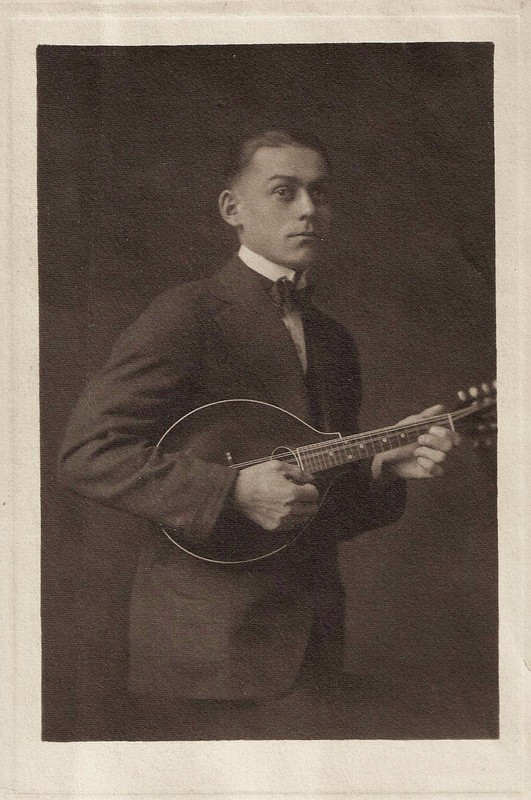
I was talking to an elderly man a few weeks ago, whose uncle was born and bred not far from where I live in Ballyhalbert. Like so many of his generation the uncle emigrated to Canada around 1925, but before he left he had been a well-known local mandolin player. He and another man (presumably a fiddle or accordion player) used to do the rounds at local country dances many years ago. The mandolin was discovered in his near-derelict cottage about 20 years ago, a small bowl-backed model, but was riddled with woodworm and so was thrown out.
From other folk I have spoken with over the years, the mandolin seems to have been surprisingly common in our general area back in the early 20th century. Tuned the same as a fiddle, the transition to a mandolin would have been relatively easy. Small, cheap and lightweight must have been other benefits.
I've been told that in the USA, the mandolin was more popular than the guitar in the early 1900s, until Roy Rogers hit the big screen in the 1930s as the guitar-playing singing cowboy and then everybody wanted a guitar.
There is a musical tradition in rural Ulster that goes far beyond high profile things like marching bands. Do you know of any mandolin players in the history of your area? If so, please get in touch. (the pic here is just a random one, not the man mentioned above).
Sunday, April 17, 2011
KJB - The Book that Changed the World
Now this looks like a very strong production; website here, trailer below. It's not often that old George Buchanan appears on screen - "lying, deceiving, are these your kingly virtues?".
Friday, April 15, 2011
Washburn M-4SW Black Oval mandolin (one for the mandolin geeks)
Most mass-produced instruments these days are built in big factories in the Far East. Brands which were once authentic American / European made instruments are now only logos, stamped or etched onto a common instrument shape. The materials used and the level of finish might vary, but they're generally all coming out of the same handful of factories. You can find the same mandolin with maybe 6 or 7 different names on them, but every other detail is pretty much identical.
However, when you consider how cheap these are, the quality can be surprisingly good. One that I've been looking for is the Washburn M-4SW Black oval hole mandolin, shown below.
The picture isn't great, and doesn't do the instrument justice. Below are two better quality photographs of the sunburst version of the same model. I have one of these already, bearing the brand name Ozark.

So if you've found this post by Googling around, and you have a black Washburn M-4SW that you don't want any more, please get in touch.
"the invisible ink on the pages of American history"
Good article here on James Webb's recent documentary 'Born Fighting' which I blogged about following the UK broadcasts back in February.
Thursday, April 14, 2011
Using new stuff to do old stuff
In a world of iPad mania, where you can download all sorts of bamboozling 'apps' that do things you didn't ever need to do before, and which (like armpit beauty treatment) solve problems you didn't even know existed, the LetterMpress idea is both a community project and a stroke of vintage design genius. Pic and demonstration video below. Amazing.
T-shirt below is available here.

Wednesday, April 13, 2011
The Foxfire books... 'and other affairs of plain living'.
Thanks to Jenny (in Alaska) for reminding me about these via her blog. I bought a couple of them on one of my visits to Appalachia many years ago - they're compendiums of rural life, old country traditions, and of a way of life that I can just barely remember traces of here on our side of the Atlantic. And they're much more than reminiscences, they're akin to 'how-to' guidebooks. Definitely worth buying if you were rared in the country, or even if Hugh Fearnley Whittingstall has inspired you... or if you have professional pig killers in your family tree (like I do). You're not going to get an article entitled 'Slaughtering Hogs' in Country Living magazine - but you do in this volume of Foxfire. Full of photography and hand drawn diagrams, all of the books are available here.

Tuesday, April 12, 2011
Irish Free State Creamery Butter
Took this photo in our kitchen about half an hour ago - thought some of you might like it. I'll expect some emails or comment about the brand of butter! Click to enlarge.

Ayrshire connections, 2011
Last Saturday I had the great privilege of spending about 2 hours with a retired man from Ayrshire, who was en route to County Leitrim (with his wife and two grandchildren) to spend a week with his son who lives there now. We met up near Lisburn, having emailed each other off and on for the last year and a half - it was a bit like meeting a pen pal! He found me online shortly after getting his first computer, whilst searching for the words of 'My Ain Countrie'. He lives between Dunlop and Beith - Hamilton & Montgomery country.
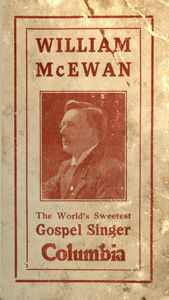
We got on like a house on fire, he brought me about 16 'Scotch brick' with the names of Ayrshire brickworks moulded into them. He also brought about 30 old 78s, of William MacEwan, Duncan McNeill, Jimmy Shand and fiddle player Mackenzie Murdoch. He told me of how his father used to cycle into Glasgow on a Sunday afternoon to listen to William MacEwan's open-air singing! He sang me four songs (which he let me record) one of which had been given to him in 1963 by a Robert Thompson from Sorn in Ayrshire who had learned it from his mother as a child in the 1890s. It has never appeared in print or in any university library in Scotland.
I could have talked to him all day, and I'm sure his wife and grandchildren feared that I would do just that! I am planning to meet up with him in June when I head over to Scotland for a few days on a research and photography mission for a project I'm tinkering at, and to give him his records back once I've digitised them all.
It was a brilliant afternoon, a wealth of common culture, and an example of how blogging has a value far beyond pixels and keyboards.
Sunday, April 10, 2011
'Fae the Han o a Low Country Lad'
An oul freen o' mine, noo leevin far fae hame, has tuk up the bloggin. Maistly aboot language an oul sayins he has mine o' fae whun he was runnin aboot the Low Country as a wean. He's turnt his han tae a wheen o poems that hae surfaced iver at A Balmoral Perspective. A'll no tell ye who he is as a wheen o' bloggers like tae keep their heids doon - ye can read him fer yersel here.
Saturday, April 09, 2011
A Biographical Narrative of Matthew Lanktree, Wesleyan Minister, 1816-18
An enormous thanks is due to William for kindly providing me with photocopies from this book, published in 1836, which I've been hunting high and low for for many years. It contains a very detailed account, almost like a journal or occasional diary, written by Methodist missionary Matthew Lanktree of his work in various parts of Ireland - and specifically the part of County Down where I live. Here's an excerpt:
"... as the summer advanced, I was much engaged, and much encouraged, in making collections, and preaching in various places which could not be reached in my ordinary line of duty; and, through the good hand of my God upon me, much was done in a preparatory way for Missionary labours, through the interesting barony of the Ards, and sundry other parts of County Down. Generally where I called, the Gospel was respected. Were the inhabitants of this country in possession of that salvation which the Gospel holds forth, with their present industrious and decent habits, there would be few to excel them in respectability and domestic happiness.
June 14th: We had a high day near the Ballyhalbert shore. An enclosure was prepared with spars and sails, supposed to contain 1500 persons, which was sufficient for the congregation. Mr Mackay preached in the forenoon , from Galatians iv. 4,5, the redemption which is in Jesus... in the afternoon, the willing multitude was again addressed by Mr M'Afee, from Daniel v 27, and Mr Mackay, from Rom. xiv. 17.
I trust when the dead, small and great, shall stand before God, many will have cause to glorify him for that day...'
Friday, April 08, 2011
Con O'Neill bridge and the Connswater Greenway
Once upon a time, back around 1606 when anything that's useful began, Ballyhackamore was acquired by Sir James Hamilton from Con O'Neill. As was Ballymacarrett. The maps which Thomas Raven drew for Hamilton, for both places and many more, are held at North Down Museum. Slightly south, the townland of Ballyrushboy was given by Con O'Neill to Thomas Montgomery, the man who had carried out Con's dramatic jailbreak from Carrickfergus. And slightly further south again, up in the hills that overlook east Belfast, was Con's home castle of Castle Reagh. The castle is long gone now, but the Presbyterian church (first built in 1650) is said to be pretty close to where the castle once was. Today all of this area is urban East Belfast, packed with rows of houses, shops, small businesses, schools, churches and factories. However, not all of the history has gone. Along the Beersbridge Road, tucked in between Elmgrove Primary School and the local Elim Pentecostal Church, still stands Con O'Neill's bridge.
If you do a search on this blog for Con O'Neill you'll find out lots about him, which I'll not repeat here. He gave the river, Connswater its name (which of course is a common Scottish naming form for rivers, ie Conn's Water), which centuries later (1984 to be precise) became the name of the main local shopping centre (or 'mall' for US readers!).
I had some time to kill this afternoon in between other things, and was in the area, so I went for a walk down to the bridge - some pics below. It's a lovely wee structure, with small cobbles. It could do with a tidy up, but that'll come soon as part of the Connswater Community Greenway, a major investment scheme to create a 9km park through east Belfast.
History doesn't just live in libraries and museums - it's outdoors and all around us. To use a modern buzz-word, history can 'add value' and make a place more special for both residents and visitors. It's all about finding, and applying, the stories. Con O'Neill's story is central to understanding the story of Hamilton, Montgomery and their first permanent Lowland Scots settlement. It's the cultural blend that makes it all so valuable.
[UPDATE: Ballyrushboy, granted to Thomas Montgomery, is better known as Orangefield. One of the major commercial areas there is Montgomery Road. Wonder where they got the idea for the name from? Across the way are a series of Covenanter-themed streets, Houston this and Cameronian that. I suspect there was a strong Ulster-Scots awareness in the old Belfast Corporation when these streets were being named?]


Tuesday, April 05, 2011
Braeside, Comber
Adrian Hanna of Comber Historical Society emailed me a few weeks ago to tell me about the society's new website. Comber, like so many of Hamilton & Montgomery's towns and villages, has numerous old Scots-influenced street names, some of which are only remembered by the older generation. Below is a photo of one that's still in use. I was told the other day that the Bushmills Distillery owns the defunct Old Comber Whiskey brand, and occasionally produce a few bottles of the stuff to maintain the trademark. Drool over the beautiful old labels here (metaphorically of course)!.


Saturday, April 02, 2011
Advance 2011 - Raleigh, North Carolina.
Some of you will enjoy this video; full website here. Shame it's being held on the other side of the Atlantic.
Advance 2011 Promo from Vintage21 Church on Vimeo.
Scrabo Hill panorama - courtesy of Aiblins
Over at Aiblins.com, Mr Ulster Scot is showing off a clever new toy he's found. If a walk up Scrabo Hill isn't something you can do (due to lack of fitness, or because you're too far away!). then this very impressive Photosynth might be handy. Click on the full screen (double rectangle) button in the bottom right corner and then zoom in and out and rotate from side to side. If you have a desk fan, turn it on full blast towards your face to get the real outdoor effect.