
Sunday, February 12, 2012

The Pikemen - A Romance of the Ards of Down, by S.R. Keightley (published 1903)

#alttext#

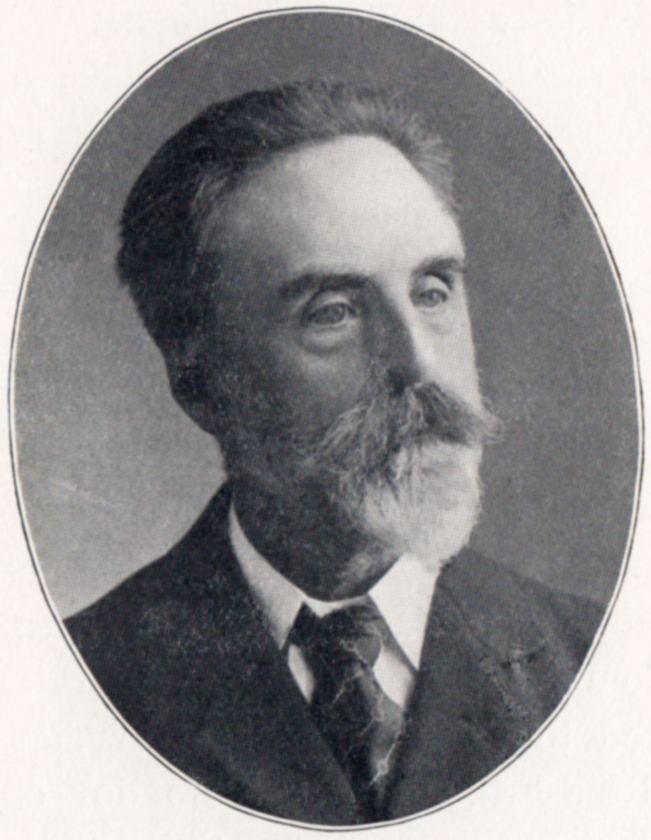
I recently got hold of a copy of 'The Pikemen - A Romance of the Ards of Down', published in 1903, written by Samuel Robert Keightley (1859-1949, pictured here) of Lisburn. I had been trying to get a copy of this for a while, and when it arrived I wasn't disappointed. It's a classic 'kailyard' format novel, set around the time of the Battle of Ballynahinch, and purports to be a first-hand account of the events as told by a Rev Patrick Stirling who had fled Ulster for the USA (Sangamon County, Illinois to be precise - click here to read the History of Early Settlers of Sangamon County published in 1876 and you'll find plenty of references to Ulster emigrants). Keightley had previously published 'The Crimson Sign', a novel about the Siege of Derry, and other books as well. You can read more about him here. Here are some excerpts:

"...there was a fever in my own blood. My hands were shaking and my heart was beating like a sea in storm. I hardly knew myself. My forefathers had marched to the lilt of the Psalms under the blue banner of the Covenant, and had laid down their lives like men at Drumclog and Bothwell Bridge on the other side of the narrow sea...

... he turned suddenly and stood staring up the road toward Kircubbin as you go to Newton... 'Archie Spence gave a hunted man twa nichts' lodgin' - his guid woman is a kin' ov cousin ov my ain - an' noo they're payin' him fur the kindness that he showed me - harberin' rebels they ca' it. The white-heidit bairns are oot on the roadside noo, an' the bonny roof-tree that shud be as sacred as the wa's ov a palace are jist a wheen ov charred sticks... before ye gang tae bed this nicht ye'll see how Britain trates the honest men ov Ards, shud I hae tae carry ye ivery fut ov the road mysel...

...Here on this night of June burned the watchfires of liberty where eight thousand men of Down were gathered... It was a great and inspiring sight - great not in the pomp and splendour of war, but in heroic courage and noble self-sacrifice. Here were men from Killyleagh and Strangford shore, from hilly Dromara and Rathfriland, and the sweet valley of the Lagan; hardy fishermen from Portavogie and Ardglass; weavers from Lisburn and Newtownards and Bangor, all dressed in decent Sunday wear like men going to the last communion of death... here and there a Psalm tune was being sung by many voices to the tune of 'Martyrdom' or the 'Old Hundred'..."

I'm looking forward to reading it. For a Belfast-born academic living in Lisburn, with a Bangor JP for a father, Keightley has a brave hannlin' of the hamely tongue throughout the book, and as the excerpts above show he also had a firm grasp of cultural identity and history. Ask any of his present-day equivalents what happened at Drumclog and they'll struggle to tell you. 'The Pikemen - A Romance of the Ards of Down' might be another wee indicator of just how widespread Ulster-Scots speech was a century ago.

The Ulster Journal of Archaeology review of the book said:

The Pikemen. A romance of the Ards of Down. By S. R. Keightly
London: Hutchinson & Co. 1903.

This is a story of the year '98 in the county of Down, written in vivid and telling language by one who has an excellent knowledge of the period of which he writes, and a thorough grasp of local circumstances and the common dialect of the people. There is not a dry or uninteresting chapter throughout the hook, and it will afford ample pleasure to the general reader of romance, and more especially to those who are residing in the county in which the principal scenes described in the book are laid. We heartily recommend to the cultured author the desirability of a cheaper and more popular issue of this work, so as to make its pages accessible to everyone. The principal characters are painted with a decisive brush, but if anything, we consider the scene in the old meeting-house at Greyabbey a little over-drawn. Here we have the Rev. James Porter balloting in the communion cup for the name of him who was to do away with the informer Newell. We doubt the accuracy of this incident, and even the death of Newell at this place ; nor do we think this wretched man was such a character as is so skilfully portrayed by the writer. Be this as it may, it is ill to cavil with dry historical details in a work that has many charms, a store of information, and the deepest interest to even the most casual reader.


(PS - Here's another biography of Keightley - click here. A similarly-entitled novel about the events of 1798 in County Antrim is James McHenry's The Insurgent Chief, the Pikemen of '98 which you can read online here.)

Thursday, January 19, 2012

"a triumph of small over large, right over might and local over global"

Excellent article here by Michael Hance on Scottish Review. And, to be fair, the initial article by David McVey here also rings true.

Monday, January 09, 2012

"The Hillsborough By-Pass: a Conversation between the A1 and the Hillsborough By-Pass at the time of the opening of the latter" - Patric Stevenson, 1974

I came across this again recently, I have a pamphlet version of it dated 1974. It was written by the artist Patric Stevenson, who was inspired by the Scottish poet Robert Fergusson:

"Whilst a' ye dae is makin' Sunday
Jist like a Saturday or Monday,
Encouragin' the non-devout
Till mitch frae kirk an' gad about
Neglectin' a' religious duties
Fer picnic sites an' scenic beauties..."


For the full poem, click here.

Tuesday, December 13, 2011

Hirsel / hirsle

It's that time of year when folk get a few sneezes and sniffles. Earlier today my mother said that she had a hirsel. It's a word I hadn't heard in donkeys years, but according to The Concise Scots Dictionary it's "a wheeze or catarrhal sound in the chest la19-". and is "a wheezing cough" in The Hamely Tongue, where it is spelled as hirsle. A big mug of ginger cordial with boiling water is required. These folk in Bangor make a tasty, a bit sweeter than normal, version.

Wednesday, September 21, 2011

"Tam's New Boots" - an oul poem aboot shoon fae Newtown.


............................................................................................................................................................ #alttext# ............................................................................................................................................................

This poem was given to me last Wednesday by a lady at Ards Historical Society, and I have her permission to post it here to share it with any readers who are interested.

A used tae buy grate muckle boots
That made my feet nae shape ava
An aye A stuffed the taes wi' cloots
But aye the heels wud gang athraw

A went tae Newtownerds yin Monday
An' jest whun passin' James McKee's
A stapt an glowered in his wunday
Thinks I 'There's sumthin there wud please'

A'm shair A seen a thoosan' pair
O' boots an' shoon o' ivery size
An' slippers bordered roon wi' hair
An' nice wee patent ankle-ties

A steppit in, a wee thin blate
The mester lauched - A think he pent me
He tell't me fur till tak a sate
An throwed a goat skin doon fornent me

My shoon amused him ower ocht
Sez he 'My dacent man, A tell ye
The shap, whauriver them was bocht
At ony rate haes gien ye velye'.

A wush ye seen the yins A tuk
An' whun he rowled them up in paper
He gied me sumthin back fur luck
Altho' A did not want them chaper

Man whun A put them on that nicht
A thocht A wuz some ither buddy
A felt that smart, an young an licht
A cudnae stan yin minit study

The fowk frae a' the country roon
Cummed in an' axed my boots tae see
An iver since they a' gang doon
An' fit themsels wi James McKee

James McKee, Practical Boot & Shoemaker, 80 High Street, Newtownards.

.......................................

(the advert above has been recreated from WG Lyttle's The Bangor Season (1885)

Wednesday, September 14, 2011

A 65th birthday, Ballyfrenis, and the Scotch tongue doon oor road

My mother is 65 today. Sadly she will be 'celebrating' it in the Ulster Hospital where she has been encamped since early May almost uninterrupted, except for a few days out at the 12th of July and the odd day out every few weekends.

She was rared at Ballyfrenis, one of a batch of nine, the same place as my oul school freen Darren Gibson (who blogs here as the Low Country Lad). Writer, poet, accordion player and singer Wilbert Magill also grew up brave an nearhaun - he tells me that the specific part of Ballyfrenis where our folk lived - Islandhill townland - was also called Blacktoun or Blackstown, a name which was brought from Ayrshire in 1606 by one of the Montgomeries (Blackstown was said to have been a small estate adjacent to Sir Hugh Montgomery's Braidstane).

Wilbert once told me a great story about a relative of mine from nearby Ballyraer / Ballyrawer who I'll not name, who became a preacher and was invited to London to speak. When he came back home to tell stories of his trip he gathered Wilbert and co together and advised them - 'young men, there are two words you must never EVER use on the platform... fornenst and oxter.' Wilbert's two books - his self-published family history story Blood Ties of Craigboy (2007) and his poems collection Aboot tha Airds (2009) are worth getting hold of. Wilbert was good enough to ask Graeme and I to play a wee bit of music at the launch of his second book, so we asked him to recite a poem on our Thompson Brothers CD 'Soda Farls and Redemption Songs'.

Not far from here is Ballyhay, where writer, storyteller and broadcaster Hugh Robinson grew up. I designed the cover of his book Across the Fields of Yesterday (1999) which he dedicated as being 'For My Ain Folk'. It's a great book with yet more Ballyfrenis references in it, including twa mair far oot freens o' mine who were the local pig-killers. Darren knows them well! You can listen to a wide range of clips of Hugh on the BBC Ulster-Scots web portal.

It would be a mistake to assume that these Ulster-Scots language writers and bloggers are a new phenomenon in this wee corner of the Ards; remember this is the landscape which inspired W.G. Lyttle's Ulster-Scots kailyard classic 'Sons of the Sod' which he published in 1886. Ballyfrenis Presbyterian Church was where our folk all went on a Sabbath, it was once a United Free Church of Scotland congregation, connected to an Ayrshire presbytery up until the 1940s. It was at Ballyfrenis where my mother remembers that the visiting Rev Moses Thompson would explain the gospel by using the wee rhyme "Three in Yin and Yin in three, but the middle Yin, He dee'd for me!", which I put a tune to a few years ago.

Just outside Carrowdore is the former Ballyboley National School, now an outpost for the local further education college, where Philip Robinson held a successful Ulster-Scots OCN-accredited course for some years, a school where Sheena McCullough had been principal for more years than she will probably admit!

I still pick up wee stories and expressions from family who live around Carrowdore and Ballyfrenis - and Darren's blog is a great example of just how rich it still is in our generation. In just this one wee pocket of the Ards there's a midden of vocabulary, language, literature, history and talent.

Monday, August 22, 2011

"there's no mony fowk bother their heids writin' ocht fur plain country workin men..."


A recent acquisition, and a real diamond in both rarity and quality.

Preface to the First Edition:
My Dear Freen,
Whun a gied the furst book to Mister Allen he prented sae mony thoosan's that a thocht they wud niver a been sell't, but he tells me he niver did see ocht gaun aff the wae they did, an' there's har'ly a coppy noo left.... a jist write fur my freens aboot hame, an' if ony weel lerned buddy happens fur til see this, a hope they'll beer that in min'. They hae plenty till write gran books fur them, but there's no mony fowk bother their heids writin' ocht fur plain country workin men..."


from Humorous Readings by Robin, Volume II, Second Edition (1886)

#alttext#

Monday, June 06, 2011

Just for badness...

... a few weeks ago while in Belfast in between a number of client meetings I went (with a colleague) to a place for lunch which had one of those serve-over counters where you tell the person behind the counter what you want him/her to put on your plate. So, just for badness, when she asked 'what would you like sir", I said "A'll hae a wheen o' prootas". You can imagine the bewilderment.

#alttext#

Thursday, April 28, 2011

Japped

Baffled the wife thenicht when A toul her her coat had got all japped when yin o the weans was paintin. Our cross cultural marriage (Hilary is English) highlights all sorts of wee Ulster-Scots quirks that I take far too much for granted.
#alttext#

Sunday, April 10, 2011

'Fae the Han o a Low Country Lad'

An oul freen o' mine, noo leevin far fae hame, has tuk up the bloggin. Maistly aboot language an oul sayins he has mine o' fae whun he was runnin aboot the Low Country as a wean. He's turnt his han tae a wheen o poems that hae surfaced iver at A Balmoral Perspective. A'll no tell ye who he is as a wheen o' bloggers like tae keep their heids doon - ye can read him fer yersel here.

Saturday, February 12, 2011

One Hundred Scotch Hymns and Poems (Chiefly in the Scotch Dialect), Edinburgh 1881

This book is the latest addition to my wee library, instantly doubling my "Sacred Scotch Solos" collection. Click the pics to enlarge:


Thursday, January 20, 2011

"Rannerin" and "fearty-ba"

Two words from a conversation of last week. I'm not going to give any definitions, look them up for yourself!

Tuesday, December 14, 2010

A cracker from Charlie

Tonight at bedtime I said to Charlie (who's 8) - "nae use haein' a dug an barkin' yersel" - the eyebrows went down and he repeated back "nae use hen dung.... what?!!".

Monday, December 06, 2010

Striddlin', stowch and nap

Three great words came up in conversation with my mother yesterday - striddlin is the half-bent-over, jumping from foot to foot, stance that somebody makes when they're busting for the toilet. When you nap your toe you stub it and lift a bit of skin off it, and stowch (with a hard -ch sound like in German) is the heavy greasy bluish atmosphere that's left behind after frying. All part of a Sunday afternoon conversation among Ards Peninsula folk. Let the experts concern themselves with the significance of etymologies - let the normal folk enjoy the words they grew up with, and pass them on with all their simple glory.

Saturday, November 20, 2010

Belfast Burns Association, 1939


Found this wee gem a few weeks ago - you'll see that it was held at Thompson's Restaurant! The menu that evening included "roastit bubblyjock wi' roastit tatties an' wee bow-kail". The Patron of the Association was the Duke of Abercorn K.G., K.P.. The usual Burns Supper order of service included an extra address entitled "The Land of our Adoption" which was given by J McAllan, Northern Ireland's Chief Veterinary Officer. An interesting find, tied up with a tartan bow. Click to enlarge.

[ps - Thompson's Restaurant was at 17 Castle Place and today is a branch of Barclay's bank, next door to HMV. The building was designed by William Hastings (1814-1892), who also designed Gt Victoria St Baptist Church, the old News Letter offices in Donegall Street, part of the famous Crescent off University Street, and the old Lyle & McCausland Seed buildings, which today is the luxurious Malmaison Hotel. A short biography of Hastings is available here.]

Tuesday, November 16, 2010

Tourism in our backyard (blog post no. 700)


(click pic to enlarge) I had lunch today at historic Grace Neill's in Donaghadee. It was a free lunch in one sense, in that I didn't have to pay for it... but I did have to work for it. I was invited by Ards Tourism to give a short talk about the Ulster-Scots story of the Ards for a "FAM" or "familiarisation" visit - to a group of over 30 tourism professionals and local tourism industry operators. What that means is that the audience spanned from people who work for local government to others who are right at the coal-face and run B&Bs for their livelihoods.

As they enjoyed their dessert I told them of how James Hamilton & Hugh Montgomery brought thousands of families across the water, families who worked hard, who rebuilt the ruined buildings and tamed the landscape. I even got one of the guests onto his feet to join me in a reading of an old local poem - "A Rustic Love Making". I took the part of the young man, and my volunteer/victim (a 60-something man who shall remain nameless!) took the part of the bashful young girl. So to the great amusement of the rest of the group we agreed that the poem's conclusion - a secret rendevous at Comber Burn for a kiss and cuddle - was highly inappropriate! Good job his wife was there!

"...Luik, see! There's fowk that gang this way
Whun gloamin'-time is nearin'
Come doon an' walk by Comber burn
That's oot o' sight an' hearin'!..."


Local amateur dramatic company Valhalla Street Theatre also took part, and after lunch they did some "living history" on Donaghadee harbour - bringing to life not only the "big names" of Lady Elizabeth Montgomery and Rev Andrew Stewart, but also a forlorn new settler called Maggie Wilson who wanted to go back to Scotland - "this isnae a land o' opportunity - it's a land o' pain an misery!" she declared. And as the wind whipped around us we all agreed with her.

Local folk, telling our own local stories - stories which have been brought back to local attention through research, scholarship and co-operation - is what it's all about. And if that can then be shaped to be of interest to visitors, then economic benefits can flow.

(nb - you can read the whole poem here on Fiona's blog)

Tuesday, October 26, 2010

Brief biography: William Hugh Patterson (1835 - 1918)

#alttext#
(Having mentioned Patterson in this recent post, I thought a sketch of his life might be of some interest to readers here at the 'Burn.)

William Hugh Patterson was born in Belfast in 1835. His family had been linen merchants and ironmongers for at least two generations; he was educated at Inst and Queens University and also worked in the family business. His grandfather was Robert Patterson (1750 - 1831). William's father, also called Robert Patterson (April 18 1802 - February 14 1872) was a successful businessman; he also wrote hymns which appeared in John Beard's collection for Unitarians. Robert was famous naturalist, publishing a series of important books on the subject.

William shared his father's interests and also developed a passion for history. In 1858 he married Helen Anderson, daughter of John Crossley Anderson of Knockbreda. In 1863, aged just 28, William was a founder member of the Belfast Naturalists' Field Club, and in 1869 the Club published his booklet entitled "A Notice of some Ancient Tombstones at Movilla". In 1872 he published "The Christmas Rhymers in the North of Ireland". Helped by other correspondents, he published perhaps his most famous work - "A Glossary of Words and Phrases used in Antrim and Down" - in 1880. He described the words in the Glossary as being "in the main of Scottish origin...(which had)... naturally underwent changes consequent upon the lapse of time since their introduction to an alien soil". For Patterson the origin year was "about the year 1607, when... immigration, previously a mere rivulet... became a flood". (The actual year was of course 1606).

His prestigious address was Garranard, Circular Road, Belfast - the same road that C.S. Lewis grew up on, and where Craigavon House had been built in 1870. He was a member of the Royal Irish Academy, the USPCA, and a Board member of the Royal Victoria Hospital and of the Belfast School of Art. Patterson signed the Ulster Covenant at Strandtown Halls, off the Belmont Road in Belfast. (see PRONI digital image). He died in 1918.

MISC:
• Princess Grace Irish Library entry
• He was a contributor to the Ulster Journal of Archaeology (here's an example of his work from 1896 on the subject of "Ulster Settlers in America")
• Dictionary of Ulster Biography entry
• Patterson was the uncle of Robert Lloyd Praeger (1865 - 1953)
• He was brother of Sir Robert Lloyd Patterson (1836 - 1906)

(NB: additions and corrections to this biography are very welcome)

Ulster dialect is not Ulster-Scots

"...The great majority of persons writing on this subject seem to think that by Ulster dialect is meant that form of speech prevalent in County Antrim and the Ards district of Down, and that a story, say, unless written in the Lowland Scottish prevalent in these districts is merely Irish, not Ulster dialect. This mistake, arising from either ignorance or want of thought, upon examination of the question, becomes quickly apparent..."

It's a very convoluted bit of writing, but what he's saying is that general Ulster dialect, and Ulster-Scots, are not the same thing. There is evidence everywhere of people who still need to grasp this simple fact.

(from The Dialect of Ulster by John J Marshall, UJA, 1904. His predictions of the decline of rural speech because of "newspapers and an ever-increasing volume of cheap literature" will mean that "in another hundred years, dialect stories... will be read with the aid of a glossary...")

Tuesday, October 19, 2010

"She roars wi' her elbows tae save her een".

This was a figure of speech used to describe my father's aunt Lucy (1893-1962) - she was renowned as somebody who pretended to cry when she didn't get her own way. Today she might be called a drama queen or an attention seeker. Picture somebody rubbing their fists in their eyes (to hide the lack of tears) and flapping their arms up and down at the same time, almost like wings, and you'll get the idea.

Sunday, October 17, 2010

Anither wee yin fae Ballyfrenis

Another wee rhyme from my aunt Betty:

"Lift the tither fit, lift the tither fit, lift the tither fit my dear
Lift the tither fit, lift the tither fit, let the watter rin clear"


There were other lines that she can't remember just now - can you help?