
(Pic above: High Street, Belfast, late 1800s.) Here's an excerpt from Gail Walker's article in today's Belfast Telegraph (full article here)
"...buildings which should fill us with pride are turning into eyesores. The neo-classical Upper Crescent exhibits serious signs of wear and tear. Garfield Street, off Royal Avenue, once must have been rather beautiful but now looks like something from a cheap zombie flick. Crumlin Road Courthouse — despite big talk of redevelopment and tourism — looks on its last legs. The heart and soul of Belfast has been blown out by the bombers and so “redeveloped” by the developers that you feel you're in the middle of nowhere in particular.
The Grand Central Hotel has been replaced by CastleCourt, which already looks rather weary after a few years. Smithfield is a hollow joke of former glories. North Street Arcade and its muses have been subsumed into Cathedral Quarter. North Street ... well, let's not even go there? No seriously, let's not go there, unless you're a fan of windswept spaces and boarded up shops. Cornmarket, once the imaginative heart of Belfast, is now little better than a waiting room for Victoria Square.
With so much gone forever, do we not have an ever-more pressing duty to preserve the legacy of older generations? I mean the actual bricks, the craftsmanship of our forefathers — their dreams, hopes and aspirations — not just call some area scheduled for demolition a “quarter”. But no. All that's someone else's problem — the Government's, the council's, the private sector's. Nothing to do with us, mate. We're too busy sipping lattes, watching Manchester United in HD in pubs and wondering which shopping centre has the best Christmas parking..."
The article above was a response to this recent "dirty dozen" list issued by the Ulster Architectural Heritage Society, the worst of 500 important buildings being neglected across Northern Ireland (UAHS website here).
............
Detail below from the above pic - I wonder what The Scotch House sold? According to some entries here from 1858/1859 it seems to have been a clothes shop. This website lists some "penny tokens" which were issued by the shop, with a decorative design combining shamrocks and thistles. This article gives a full list of all of the shops along the street in the early 1800s.
Wednesday, December 01, 2010
"With so much gone forever, do we not have an ever-more pressing duty to preserve the legacy of older generations?"


Tuesday, November 30, 2010
Happed up

Hap, (1) sb. a covering, as a cloak or a blanket
(2) v. to cover; to wrap up in muffling or bed-clothes
I hope you're all weel happed up this weather! For those of you who need an extra quilt, this one on eBay might be just the thing.
Monday, November 29, 2010
"Hyper localism"

These have come up in conversations over the last while with a variety of people, with most folk I've talked to agreeing (in our own context) that:
- the province of Ulster has a distinct character,
- within it each county has a distinct character (but probably not strictly contained within the blunt county boundaries)
- then to go another level down things get more interesting, as there are areas within the counties which in turn have different characters. In many cases these are based around local market towns, with the surrounding rural communities tending to gravitate towards one town rather than another. Stories, traditions, folk customs, social activities, commercial life then all circulate within these communities, and into and out from their main market town. Look at your own county - I'm sure you could think of 4 or 5 market towns to which this applies.
Over recent years there have been moves to oppose the "globalism" which has reduced every high street to a bland uniformity of brand names and shopfitting styles. Similar problems arise when the UK is assumed to be all the same, or that the island of Ireland is all the same, or even that every county within Ulster (presently 9, but I'm told that this has varied over the centuries) or Northern Ireland (6) is the same... and some even deny that each county has variety within it.
What about cities?
Cities break down like this as well; one PhD I recently spoke to said that when he was a boy in Belfast there were detectably different accents even within the clusters of streets where he grew up. There's a good post here at The Resurgence of how cities influence culture. I think that's fair enough to a certain extent. But 95% of Northern Ireland is rural, with a high proportion of employment in the cities taken up by people who commute in from the country or the satellite market towns. Many urban or suburban folk in Northern Ireland, when they trace their ancestry, are only 2 or 3 generations away from farmers. Pumping stuff out of the city into the country doesn't pay due regard or respect to rural ways, or acknowledge the richness of country traditions, or preserve a sense of rural and market town community.
Rural life is a key element of Northern Ireland's character and culture, but it varies greatly - flat uniformity just doesn't exist. Regional, and local, variety is what exists, and it should be acknowledged, encouraged and celebrated.
(pic above is of a "hoodie" very similar to the ones which I saw for sale in Hugh Fearnley-Whittingstall's River Cottage Café in Axminster during the summer)
Thursday, November 25, 2010
"Weary of earth, myself and sin..."
... is one of the songs by Red Mountain Music on their 15 track "Help My Unbelief" album which they are currently giving away as a free download here. I've blogged about them before; their (perhaps final) cd is being released next month. "Weary of Earth, Myself and Sin" was written by Samuel Medley (1738-1799), and was published in Gadsby's Hymns - a Reformed Baptist hymnal from Manchester which was first printed in 1838. (The melody on the Red Mountain version is new but the words are the original ones - those of you who download it and who are of a similar vintage as me might detect a slight similarity to the intro from "One" by Metallica).

Wednesday, November 24, 2010
Edward MacHugh of Dundee, gospel singer and radio star (1893-1957)
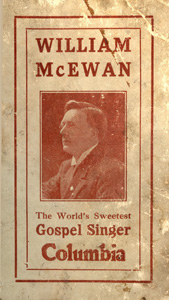
Edward MacHugh/McHugh was another Scottish gospel singer of the early 20th century who, like William MacEwan (who was the first recorded Gospel singer in the world, cutting six tracks for Columbia in London in 1911) and Duncan McNeill, found fame in the USA. His father, Michael McHugh, is believed to have been from Galway (source here). Here's a brief biography from various online and printed sources:
MacHugh was born in Dundee on 26th May 1893. He emigrated to the USA aged 17 and initially took jobs in railroad yards and department stores. His singing talent was noticed and in 1927 he made his debut appearance on a radio station in Boston called WEEI (founded in 1924 and still going today). He sang "The Old Rugged Cross" and the next day the station received 2300 letters. The radio station sent people signed photographic postcards of MacHugh and his fame grew rapidly, even reaching back across the Atlantic to Scotland. There's a story of how his sister, listening to an American broadcast on a short wave radio in Glasgow, realised who she was listening to: "...as the rich baritone voice of Edward MacHugh filled the room, she realised that her beloved brother, whom she had not seen for so many years, was singing to her over three thousand miles of ocean."
In 1938 the Rodeheaver Publishing Company issued "Edwards MacHugh's Treasury of Gospel Hymns and Poems", a collection of 100 hymns and 103 short poems, all of which were in standard English apart from "My Ain Countrie", a Scots hymn which had first appeared in Ira D Sankey's world-famous hymnbook "Sacred Songs and Solos" in the late 1800s. It's either number 344 or 982 depending upon which edition you consult.
By the early 1940s MacHugh was a regular on NBC radio, possibly the biggest radio network in America. But despite his fame, he still lived on a smallholding of 8 acres in Connecticut where he raised poultry and pheasants, and referred to himself as "The Farmer" whilst the public of America called him "The Gospel Singer". People would turn up at the radio station in New York just to meet him - "every day those of his listeners who happen to be visiting New York City come into the studios to be present at his broadcast. They shake hands with him, speak to him, and go away feeling that Edward MacHugh is a man who is sincerely trying to bring happiness to people through his gospel songs."
There are a few of his 78s among my grandparents' collection, including a lovely version of Lady Nairn's "Land O' The Leal" (Columbia 37015-F / 108364) with "Lassie Would Ye Loe Me" on the other side. I also have a set of three MacHugh 78s in a folded album/wallet - one of these is his recording of "My Ain Countrie", which I think is better than MacEwan's original. These records were probably bought by my grandfather from a shop like the Anglo-American Gramophone Company in Belfast. I also have two of MacHugh's hymnbooks, one of which has the 1927 promotional signed photo inside it (not the one shown here).
In 1954, nearly 30 years after his first radio appearance, Billboard Magazine carried an article saying that MacHugh's show was named as the "2nd best of all non-network religious series" (see link here). Edward MacHugh died on 3rd February 1957.
If you know anything more about him, or if he has any descendants who are reading this, please get in touch with me.
LINKS
> Partial Edward MacHugh discography of his 1936 recordings available here

Listen to MacHugh's recordings of "Land O The Leal" and "My Ain Countrie" here:
Northern Ireland in Brooke Bond tea advertising, 1955

One of the things advertising does is taps into the target audience's felt needs or desires - to be cleverer, cooler, healthier, more attractive etc. - which you can achieve instantly just by buying the advertiser's product or service. Here's an example of how Northern Ireland's Brooke Bond tea drinkers have "minds of their own", demonstrated by the tea brand they choose. So, if you buy the brand you can show the world that you have a mind of your own too! Click on the pic to enlarge, it's a stylised scene of Cushendun in north Antrim. The advert is from John Bull magazine, Jan 29 1955 - the magazine was first published in 1820 and closed in 1964.
Monday, November 22, 2010
A Lesson from Luther, via TheResurgence.com

Here's a great quote from Martin Luther, from this post over at TheResurgence.com:
"...Christ would indicate the principal reason why the Scripture was given by God. Men are to study and search in it and to learn that He, Mary's Son, is the one who is able to give eternal life to all who come to Him and believe in Him.
Therefore, he who would correctly and profitably read Scripture should see to it that he finds Christ in it; then he finds life eternal without fail. On the other hand, if I do not so study - and understand Moses and the prophets as to find that Christ came from heaven for the sake of my salvation, became man, suffered, died, was buried, rose, and ascended into heaven so that through Him I enjoy reconciliation with God, forgiveness of all my sins, grace, righteousness, and life eternal - then my reading in Scripture is of no help whatsoever to my salvation.
I may, of course, become a learned man by reading and studying Scripture and preach what I have acquired; yet all this would do me no good whatever..."
(Luther’s Works, 51, 4)
UPDATE: to the quote above, I'm going to add the quote below from my pal Martin McNeely's blog:
"...If I have learned anything in 35 or 40 years of teaching, it is that students don’t learn everything I teach them. What they learn is what I am excited about, the kinds of things I emphasize again and again and again and again. That had better be the gospel.
If the gospel—even when you are orthodox—becomes something which you primarily assume, but what you are excited about is what you are doing in some sort of social reconstruction, you will be teaching the people that you influence that the gospel really isn’t all that important. You won’t be saying that—you won’t even mean that—but that’s what you will be teaching. And then you are only half a generation away from losing the gospel.
Make sure that in your own practice and excitement, what you talk about, what you think about, what you pray over, what you exude confidence over, joy over, what you are enthusiastic about is Jesus, the gospel, the cross. And out of that framework, by all means, let the transformed life flow..." - D.A. Carson.
Sunday, November 21, 2010
Brief biography: Colonel David Boyd of Tourgill (15XX - 162?)
(the original seal pictured above is in the collection of the National Museum of Scotland. It features in Scottish Heraldic Seals by Stevenson & Wood, Glasgow 1940. The inscription reads "S' COLON DAVIDIS BOYD DE TOURGIL" and is believed to date from 1599.)
One of the men who came across from Scotland to Ulster with Hugh Montgomery in 1606 was David Boyd. Here's a brief biography.
1. Origins in Scotland
To give him his full title, Colonel David Boyd of Tourgill (also spelled Tourgil or Tuyirgill) was the youngest son of Robert Boyd, the 5th Lord of Kilmarnock. They lived at the original Dean Castle outside Kilmarnock, on an estate which had been granted to the Boyds by King Robert the Bruce for their service at Bannockburn in 1314.
2. Military Service in Holland
He is known to have served in a Scottish regiment in the wars in Holland (the three volume set entitled History of the Scots Brigade in Service of the Netherlands include a reference to him being in Holland on 24 January 1583.) Hugh Montgomery also fought in Holland at the same time - it is possible that they enlisted together.
3. Boyd of Tourgill
He had letters of legitimation under the Great Seal 11 July 1582, and a grant of the lands of Tourgill (a region to the north east of Largs in north Ayrshire) on 8 August 1598. Boyd, named as Dauid Boyd of Tourgill, also appears among a list of twelve Scottish nobles who were witnesses to the "Contract between King James VI, Ludovick Duke of Lennox and Hugh fifth Earl of Eglingtoun for the marriage of the Earl and Gabriela Steuart, Sister of the Duke" dated 10th and 13th April 1598.
4. Family Feud
He was twice the victim of attempted murder - in April 1599 he was "set upon and wounded... in the High Street of Glasgow" by his cousin Adam Boyd, who on 31 July in the same year then attempted to murder him at Kilmarnock.
5. Marriage and the Ross family of Kilmarnock
He married a wealthy widow, Margaret Wallace. Her former husband, George Ross, had the title of Hayning / Hanyng / Haining, an estate situated along the Cessnock River somewhere near today's Riccarton and Hurlford villages. She was known as the "Dame of Hayning" and had one daughter, Maria Ross, to her first husband. In March 1592 a land dispute arose within the Ross family, and the King's Advocate, David McGill, was sent to intervene in the row (source here). Like so many of the era, McGill was also attracted to Ulster - he was invited by Sir Hugh Montgomery who made him curate at Newtownards Priory in 1607, and later at Grey Abbey where his memorial can still be seen today. Other members of the Ross family also came across the water, one of whom, Robert Ross, settled in north Down some time before 1617 and rented 1500 acres from Sir James Hamilton at Portavo near Groomsport. (Peter Carr's excellent book Portavo: An Irish Townland and its Peoples provides a lot of detail about the Ross estates.)
6. Life in Ulster
Boyd arrived with Montgomery in 1606 and soon was granted lands. Con O'Neill directly granted him Ballymacarrett, another parcel of land near Glenmachan at the old church of Knockcolumbkille, and a townland called "Ballymurty". Boyd also secured seven townlands from Montgomery, totalling 1000 acres just to the north of Greyabbey. The family residence was built in the townland of Ballycastle, the site of which was probably where the well-known B&B Ballycastle House is today, on the Mount Stewart Road. Boyd is also said to have had lands near Glastry.
7. Influence in Scotland
Despite his estates in Ulster, Colonel Boyd was Provost of Edinburgh in 1613. The precise date of his death is unknown, but is thought to have been some time before 1623.
8. Children
He is known to have had one son, Robert Boyd, who after his father's death continued to occupy the lands Montgomery had granted. A John Boyd, possibly Robert's son, was in possession of land at Drumfad near Millisle in 1676. Colonel David Boyd may also have had a daughter, Jane, and another son, Thomas. A Thomas Boyd was elected MP for Bangor in 1651; another died at Portavogie in 1660. An Alexander Boyd was the tutor to William Montgomery, the writer of the Montgomery Manuscripts, and taught him fluent French.
Miscellaneous
• Description of David Boyd's Seal here
• Photo of Tourgill Burn here
• Photo of Tourgill Glen here
• Photo of Tourgill Lodge here
• His niece, Marion Boyd, was the wife of another major Ulster landholder, James Hamilton the 1st Earl of Abercorn.
• Colonel Boyd's sister, Egidia or Giles, was the wife of the head of the Montgomery family, Sir Hugh Montgomery the 4th Earl of Eglinton.
• Chapter in The Scots Peerage, detailing the Boyds of Kilmarnock.
• See previous blog post about the Boyds at Portavogie.
• Dean Castle is run today by East Ayrshire Council
Conclusion:
The early Scots in Ulster are not mysterious unknowable figures - there are plenty of good sources available which, when pulled together, paint vivid pictures of who these people were and of their achievements. The more is uncovered about them, the more obvious it becomes that Ulster was not merely a Scottish colony - it was in fact an extension of Scotland. People like Colonel David Boyd retained significant influence in Scotland even though he had relocated to County Down. The cultural ties established in the early 1600s are still evident today.
.

Saturday, November 20, 2010
Belfast Burns Association, 1939

Found this wee gem a few weeks ago - you'll see that it was held at Thompson's Restaurant! The menu that evening included "roastit bubblyjock wi' roastit tatties an' wee bow-kail". The Patron of the Association was the Duke of Abercorn K.G., K.P.. The usual Burns Supper order of service included an extra address entitled "The Land of our Adoption" which was given by J McAllan, Northern Ireland's Chief Veterinary Officer. An interesting find, tied up with a tartan bow. Click to enlarge.
[ps - Thompson's Restaurant was at 17 Castle Place and today is a branch of Barclay's bank, next door to HMV. The building was designed by William Hastings (1814-1892), who also designed Gt Victoria St Baptist Church, the old News Letter offices in Donegall Street, part of the famous Crescent off University Street, and the old Lyle & McCausland Seed buildings, which today is the luxurious Malmaison Hotel. A short biography of Hastings is available here.]
Thursday, November 18, 2010
Cultural gold dust
I've been hunting for this for about 10 years, and finally located a copy a few weeks ago. It arrived in the post this morning - published in 1848 from Blair's personal manuscripts and also those of his son-in-law - this is 625 pages of Blair's childhood and early career in Scotland, his experiences among the early Ulster-Scots settlements of Antrim and Down, Eagle Wing, and his return to Scotland right up into the "Killing Times" of the later 1600s. The Googlebooks version is a useful research tool, with its text-searchability, but as reading for enjoyment (rather than fact-hoking) you can't beat a real book. This will also be a big help for my forthcoming biographical booklet of Blair's protegé, James Hamilton of Ballywalter. I might just have to stop blogging for a few weeks! 
Wednesday, November 17, 2010
The Twilite Broadcasters
Found this "brother duet" - The Twilite Broadcasters - from North Carolina on Vimeo!
Here's my best stab at the songs in the medley:
0.00 - 0.56 : Little Glass of Wine - The Stanley Brothers
0.56 - 1.34 : There's More Pretty Girls Than One - Doc Watson
1.35 - 2.04 : Instrumental
2.05 - 3.04 : What Would You Do In Exchange for Your Soul - The Monroe Brothers
3.05 - 3.45 : Midnight Special - The Delmore Brothers
3.46 - 4.44 : Don't Let Her Know - Buck Owens (beautiful harmony!)
4.45 - end : Instrumental
Tuesday, November 16, 2010
Tourism in our backyard (blog post no. 700)

(click pic to enlarge) I had lunch today at historic Grace Neill's in Donaghadee. It was a free lunch in one sense, in that I didn't have to pay for it... but I did have to work for it. I was invited by Ards Tourism to give a short talk about the Ulster-Scots story of the Ards for a "FAM" or "familiarisation" visit - to a group of over 30 tourism professionals and local tourism industry operators. What that means is that the audience spanned from people who work for local government to others who are right at the coal-face and run B&Bs for their livelihoods.
As they enjoyed their dessert I told them of how James Hamilton & Hugh Montgomery brought thousands of families across the water, families who worked hard, who rebuilt the ruined buildings and tamed the landscape. I even got one of the guests onto his feet to join me in a reading of an old local poem - "A Rustic Love Making". I took the part of the young man, and my volunteer/victim (a 60-something man who shall remain nameless!) took the part of the bashful young girl. So to the great amusement of the rest of the group we agreed that the poem's conclusion - a secret rendevous at Comber Burn for a kiss and cuddle - was highly inappropriate! Good job his wife was there!
"...Luik, see! There's fowk that gang this way
Whun gloamin'-time is nearin'
Come doon an' walk by Comber burn
That's oot o' sight an' hearin'!..."
Local amateur dramatic company Valhalla Street Theatre also took part, and after lunch they did some "living history" on Donaghadee harbour - bringing to life not only the "big names" of Lady Elizabeth Montgomery and Rev Andrew Stewart, but also a forlorn new settler called Maggie Wilson who wanted to go back to Scotland - "this isnae a land o' opportunity - it's a land o' pain an misery!" she declared. And as the wind whipped around us we all agreed with her.
Local folk, telling our own local stories - stories which have been brought back to local attention through research, scholarship and co-operation - is what it's all about. And if that can then be shaped to be of interest to visitors, then economic benefits can flow.
(nb - you can read the whole poem here on Fiona's blog)
Monday, November 15, 2010
Mark Driscoll in Belfast - part 2

UPDATE: MP3 of his Bloomfield sermon available here, video coming soon.
Saturday, November 13, 2010
The war dead of North Down and the Ards
Local man Barry Niblock was on Radio Ulster earlier today, talking about his project to catalogue all of the war dead from North Down and the Ards. This is his website - an excellent growing resource. I'd encourage any readers to submit information and photographs (as I've done myself).

Friday, November 12, 2010
Mark Driscoll in Belfast

I'm going to be at the Waterfront Hall in Belfast tomorrow at the annual "Mandate" men's event. (I have a friend who is very alarmed by that name!). I haven't been to this in nearly 20 years - back when it was an evening-only thing in the Ulster Hall. I'm going tomorrow to hear Mark Driscoll preach - many of you will know that I've been very impressed by him, and by the quality of material that affilates like the Acts29 network of churches and The Resurgence have been issuing, since discovering him online at MarsHillChurch.org.
Ulster has attracted what might be termed "celebrity preachers" for nearly 400 years. Imagine the buzz there must have been when word got out that Professor Robert Blair was leaving the metropolis of Glasgow to come to... Bangor in 1623?! Or in 1622 when the news that John Knox's grandson Josias Welsh was on his way to... Templepatrick?! The flood of them is too great to outline in detail - but what about John Wesley who spent 43 years in Ireland? I'm pretty sure that Moody and Sankey were here in 1874.
Exactly 99 years ago, in November 1911 J Wilbur Chapman and Charles M Alexander held a mission in Bangor. They were both reared in rural America - Chapman in Indiana and Alexander in East Tennessee. They were major global news, having preached in Canada, Australia and the Far East. As a form of pre-publicity thousands of wall texts (shown here, click to enlarge) were given out to people to hang up in their homes. This one was given to me by a Bangor man a few months ago, from his parents' collection. Below is a recording of two tracks of Alexander's singing, recorded in 1905. The first one - "Tell Mother I'll Be There" is dire, so click on the fast forward button to get to the second one, "The Glory Song" which is brilliant. (click here to go to the source page on Archive.org). I very much doubt that this is the kind of music that'll be played in the Waterfront tomorrow!
We have of course cultivated our very own celebrity preachers over the years. So what? Thousands of people flocked to hear Jesus preach. As long as preachers focus their attention and their sermons upon Jesus Christ, then the more people go to hear them the better.
And here is Mark Driscoll in action - with a down-to-earth directness that would make Cottown-born evangelist WP Nicholson (1876-1962) proud.
Finally, some great Resurgence graphics below:


Thursday, November 11, 2010
Dust to Digital and my own "Atlantic Bridges"
Over the past couple of days, in addition to the local connections I've made and blogged about below, I've also made some brilliant links with people in the USA. Thanks to some old blog posts I'm now in direct contact with the grandchildren of Duncan McNeill, and once again with a nephew of the McCravy Brothers. I was able to send Paul McCravy six MP3s which I'd digitised from some McCravy Brothers 78s which had surfaced in a collection belonging to a man from Bangor - some of them Paul and the family never heard before. Likewise with the McNeills, I had digitised some old 78s and sent the MP3s to Stuart Eydmann who posted them on his website Raretunes.org - so the family were able to listen to their grandfather singing.
Here are two videos about a couple in the USA who have been nominated for Grammys for their work in digitising old 78s and making them available for the present generation - and in some of the most beautiful packaging design I've ever seen. Welcome to Dust to Digital. I was showing off my copy of the 6 CD box set "Goodbye Babylon" to a few fellow music enthusiasts last night!
Take Me to the Water: Photographs of River Baptisms
The International Center of Photography in New York is holding an exhibition from January - May 2011 entitled Take Me To The Water: Photographs of River Baptisms. Find out more here. Outdoor baptisms still take place around the coasts of Northern Ireland in the warmer weather. Can you imagine the NI "arts establishment" giving due regard to this, or to the communities and congregations that practise this? Unlikely. Well done New York.

Tuesday, November 09, 2010
"Home-grown" update
Following on from this recent post, here are two simple examples of the irreplaceable value of local communities, both of which happened earlier this evening:
Tonight Graeme and I were out singing for the PW at 2nd Newtownards. Many of the people who now live in towns will have grown up in the country, and that was the case with the audience tonight. We did nearly a full hour, so we dusted down some old stuff that we hadn't played in a while. One of these was "Running Over / Fu an Skailin" - written by the Glaswegian evangelist Seth Sykes, but taught to us in the 1970s by our Aunt Rhoda when we were wee boys, who had been taught it by another Scottish evangelist called Charlie Mayne during the 1940s. After we'd finished playing, a lady in the audience came up to us to say that she too had been one of the weans who was perched on the long wooden forms at Killaughey Mission Hall (near Ballycopeland Windmill), when Charlie Mayne taught it to them 70 years ago.
These types of connections don't live within textbooks or libraries, universities or museums - they live within people. The de facto Ulster-Scots library and museum is... the Ulster-Scots community itself. And there is much information in libraries and museums which should be returned to the people. In my experience our folk are canny, and won't glibly hand over traditions to outsiders who parachute in - but will share them among ourselves first, and then with others when trust has been established. These people are human beings to build friendships with, not "sources" to be milked dry and then discarded.
So I now have an invitation to meet the 95-year-old mother of the woman mentioned above, who is still as sharp as a pin and still lives out near the windmill, full of history, songs, stories and local Ulster-Scots vocabulary - but on one condition... the mandolin has to come too!
"In My Time of Need" by Ryan Adams
Here's a gem from YouTube - Ryan Adams' beautiful guitar/banjo song In My Time of Need, set to a slideshow video of classic photography from the Great Depression. View full screen (to do that, click on the four arrows symbol bottom right of the video player window) and turn the volume up a bit. The lyrics, sung from the point of view of an elderly man looking back on the hard life he and his wife have shared, are magical.
"I work these hands to bleed, 'cause I've got mouths to feed... I've got 15 dollars hid above the stove..."
Sunday, November 07, 2010
The Tin Tabernacle by Jean Shields
This book is just published and tells the story of Craigantlet Mission Hall (1912 - 2001). A high quality production in a 64 page A5 format, the story begins when a combination of Dundonald people and two Scottish evangelists raised a marquee at Craigantlet in the summer of 1911 to begin a gospel mission in the highest hills of north Down. From initial hostility and opposition, when some locals threatened to cut the ropes of the marquee down, by the middle of September when the mission ended 60 people had been converted to faith in Christ - "the whole character of the countryside was changed and became a sober, hardworking community of worshipping people". The next year the mission hall was built and from where the simple gospel went forth for nearly 90 years.
"...a tiny square entrance hall, fitted with pegs for hats and coats, opened into the main building, consisting of a central aisle and flanked by two row of sturdy wooden forms... a coal stove graced the centre of the aisle with a pipe extending through the roof... three paraffin lamps hung from the ceiling - Faith, Hope and Charity we called them... a text at the front proclaimed 'Jesus Christ is Lord'... the walls were panelled to keep in the heat and decorated with useful slogans; 'Faith Brings Victory' and 'Prayer Changes Things" are two I recall. Within its walls we praised and prayed and were ministered unto and many, both young and old, came to a saving faith kneeling beside its hard wooden seats. To them and others the Tin Tabernacle became the 'House of God and the very gate of Heaven..."
> Click here to order a copy by email (price is £5.95)

Saturday, November 06, 2010
"Home-grown" versus "book-learnt"
For all of the opinions and perspectives within the Ulster-Scots world, and about the Ulster-Scots world, they tend to fall into two brackets. These are:
1. From people who grew up within, and are still part of, a local Ulster-Scots community* (home-grown).
2. From people whose only concepts of Ulster-Scots have come from things they've read (book-learnt).
You can usually work out which category somebody falls into within about 5 minutes of conversation with them. The paradox is that people in category 1 have knowledge, empathy and a lifetime of personal experience - but they tend to be quiet folk. People in category 2 usually know next to nothing - but have plenty to say. Of course there are vultures within each category, and good folk within each category. Everybody has something to learn... but not everybody has something useful to offer.
There are plenty of examples of Ulster-Scots being analysed, dissected and exploited by the "experts" of category 2, but precious few examples of the "experts" who have grown up within category 1** - or even of "experts" who recognise the deep importance of spending time with the people of category 1. I suppose living in libraries or staying stuck behind a keyboard is far handier than actually working alongside the "great unwashed". Ulster-Scots is not just fodder for media studies, it is a deep well for respectful folklife studies, and, if properly handled, has the potential to help our society. How? By restoring the true cultural triple-blend of Ulster-English, Ulster-Irish and Ulster-Scots - rather than the political two tribes enmity of British v Irish.
Knowledge is not the same as empathy. Theory is not as valuable as experience. Qualifications are not more important than understanding. So, give me home-grown every time. Book-learnt is a very poor substitute.
(with thanks to Fiona, who through the title of this post planted a seed with me many months ago)
* to be even more specific, I tend to add both "rural" and "working class" to category one. And, depending upon the specific subject matter, I'd probably even narrow it further to specific geographical areas within particular counties. That may not be very PC in today's Northern Ireland - a place where ideas are often skewed so that every geographical area is included regardless of merit or relevance, and where the silent issue of class may well be just as much of a social divide as the endlessly-picked-over "sectarianism" - but I suspect that many of you will agree with me. Feel free to post a comment and let's get some debate going.
** community-rooted "experts" is definitely the ideal answer.

When did Gospel music really begin?
Over the past few weeks, I've caught a bit of the Radio Ulster programme "The Gospel Train", presented by American soul singer Mirenda Rosenberg, which is broadcast on Sunday afternoons. A good programme with a broad mix of blues/soul American gospel music and definitely worth a listen. I've got old LPs by Sister Rosetta Tharpe (that's her above), cds by groups like the Soul Stirrers and Dixie Hummingbirds, and even recorded the Thomas Dorsey song "If You See My Saviour" a few years ago. Michael W Harris' book The Rise of Gospel Blues (1994) is a superb study of Thomas Dorsey's life - and the film (now DVD) "Say Amen, Somebody" contains some marvellous footage of Dorsey and Sally Martin (see clip below).
In terms of pop culture today, the impression that is often given is that gospel music was created in the 20th century by American blues and soul performers like Dorsey, Aretha Franklin, Mahalia Jackson, etc. (here's an example - you'll come across this time and again).Brilliant and important as those artists were/are, the claim is false.
What would Ira D Sankey make of that claim? Or our own Robert Lowry? Or Isaac Watts? Or Charles Wesley? And of course there's this litte-known work from the 1700s. Or Martin Luther? Or the Psalmist - King David? Or, to go back even further, what about the "Song of the Sea" or "Song of Moses"?
Pop culture is a strange and highly selective thing. Meanwhile, enjoy these:
Thomas Dorsey & Sally Martin - singing along to a record of "If You See My Saviour"
Sister Rosetta Tharpe - Up Above My Head
"I Greet Thee, who my Redeemer Art" - believed to have been written by John Calvin

Friday, November 05, 2010
"Recommend virtue to your children; it alone, not money, can make them happy" - Beethoven
Over at the new-look Aiblins.com, Mr Ulster Scot throws down a gauntlet. Lack of strategy, lack of vision, parochial backyard empires, inept management and the flawed view of money as the solution to every ill are themes which all get dealt a (gentle) blow. He could have hit harder, but the direction of the post is an interesting one.
"Lack of money is no obstacle. Lack of an idea is an obstacle."
Thursday, November 04, 2010
Migration, Salvation and Refuge: News from Irvine, Final Episode... for now
In this final instalment in my mini-series about Ulster's links with the Ayrshire port of Irvine, I thought it would be important to provide a reminder of the faith connections.
In Spring of 1607, before the Flight of the Earls from west Ulster, Sir Hugh Montgomery's brother Bishop George Montgomery brought tenant families from Glasgow, Ayr and Irvine into the western ports of Donegal, Killybegs and Derry - copying what big brother was doing at Donaghadee.
Robert Blair was born in Irvine in 1593 and was the revolutionary minister at Bangor from 1623-1636, and according to John Lockington's biographical booklet of the man he was the de facto leader of the Ulster-Scots (published by the Presbyterian Historical Society of Ireland - click here to order a copy). Two of Blair's brothers - the eldest, John and the second, James, both became Provost of Irvine (one was probably the James Blair who Sir William Brereton met in 1635 - see the first post in this series).
Just up the road from Blair's stomping ground of Bangor is Holywood, where fellow Scot Robert Cunningham had been minister since 1615. Cunningham fled Ulster during the persecutions of the 1630s for Ayrshire - he died at Irvine in 1637 and was buried there, where his memorial can be seen today in the kirkyard. (There are other Irvine / Ulster connections listed on that earlier post)
But those gospel connections are not just relics of the past, because last Saturday Billy Kerr emailed me with the message which inspired this series of posts:
"...Today I experienced an extraordinary Ulster-Scots connection. This afternoon I took my wee Labrador bitch Jasmine down Irvine shore for a walk. Normally, on arriving on the beach I look for a plastic bottle to throw into the sea for her to fetch. On picking up the first bottle I saw, I noticed what appeared to be a scrolled piece of paper inside. I extricated the note and to my amazement it was a message from Bangor,County Down, heralding the same 'Good News' to the people of Ayrshire, that Irvine born Robert Blair proclaimed in County Down nearly four hundred years previously..."
There are probably hundreds, even thousands, of stories about Irvine and Ulster; and probably the same could be said for every port along the west cost of Scotland, from Portpatrick right along the 100 miles to Greenock - never mind the 150 miles of coastline along the eastern route from Portpatrick to Gretna, never mind the Kintyre peninsula and further north.
With a programme of locally-based research a deep river of Ulster-Scottish history could be released, and published in a suitable medium for both present-day and future generations.
(with thanks to Billy for the inspiration and help; his 'message in a bottle' is below. Billy writes the local history column each week for the 'Irvine Times'.)
PS - I phoned the man whose contact details are on the cover of the tract, there was a code on the back, it had been put into the sea in January 2002!

Wednesday, November 03, 2010
Wee Stamper Murdoch: News from Irvine, Episode 4
Billy Kerr from Irvine has sent me another example of the Ulster-Scottish interactions, this time from the Kirk Session minutes of Irvine (Old) Parish Church from 7 December 1760:
"...Helen Murdoch compeired and acknowledged she had brought forth a child in fornication. Being interrogate who was the Father, said, that George Downie Stamper was the Father of it, who commonly resides at Belfast but has taken a house in this Town, being asked if she had told him of her being with child, said she had, and that he had acknowledged it to John Young and James Alexander sailors..."
When historical stories obsess upon the "great and good", the story of the ordinary people is missed - people who struggled with the same issues and events as folk still do today. I wonder how wee Stamper Murdoch turned out in later life?
Tuesday, November 02, 2010
Smuggling and Contraband: News from Irvine, Episode 3
Following on from my two previous posts, Billy Kerr from Irvine has sent me a chapter entitled The Contrabandists from the book "Royal Burgh of Irvine" by Arnold McJannett (1933). The amount of stories about the links that the town had with Ulster are just staggering. Here are a few highlights:
• in 1667 the Scottish government banned the importation of cheap beef, meal and corn from Ireland. Fines and confiscations were the penalty for anyone caught. "Commissioners" were appointed to guard the west coast of Scotland - a coastline which had just two custom-houses, at Ayr and Irvine.
• in April 1672 the curate of Kilbirnie, Archibald Beith, was sentenced to be beheaded in Edinburgh following an attack he led on a ship which had sailed from Ulster, during which Beith shot dead two of the crew. However, the Episcopal authorities intervened and Beith was spared - but was banished to Rothesay.
• John Reid, an Irvine merchant, traded across the North Channel with three ships - the Ann of Lairne, the John of Portrush and the Swift of Rodwatter. He managed to dodge the fine print of the taxation laws by landing goods the day before heavy taxes were introduced.
• In October 1687 a large importation of goods from Carrickfergus was offered on first refusal the people of Irvine, before being sold to commercial traders.
• Rock salt was imported from Larne to Irvine to preserve supplies of meat and fish.
• In July 1681 a theatrical company from Ireland travelled to Scotland to perform a play before the Duke and Duchess of York (the later King James II), but had their costumes impounded as the law prohibited the importation of laced clothes. The restrictions were heightened later that year to also prohibit "silver and gold threed, silver and gold lace, fringes or tracing, all buttons of gold and silver threed all manner of stuffs and ribbans"
The extent of smuggling between the two coastlines was enormous - "Almost the whole community betook to smuggling... many a farm house in Ayrshire possessed underground accommodation, almost as extensive as the buildings visible above ground, which was used as depots for the run goods."
Monday, November 01, 2010
Burgesses from Ulster: News from Irvine, Episode 2: 1665 & 1667
(Photo: Glasgow Vennel, Irvine. Source here)
Following on from the previous post, in the book Muniments of the Royal Burgh of Irvine, Volume II (published 1891), there are more details of Irvine's connections to Ulster.
The accounts include both the illegal smuggling of "Irish Cloaths", and the legal trading of Ayrshire-mined coals into Ireland. On 26 May 1665 James Porter was appointed as a Burgess of Irvine - his father, Hew Porter, was a Burgess in Lochlerne (Larne?). Two years later on 13 May 1667 James Cleland, former Provost of Bangor, was also appointed as a Burgess of Irvine. The Burgh accounts for 1601-1602 include a reference to a "William Wilsoun, travellour in Ireland" (the same period when Hugh Montgomery was famously trading between Ayrshire and Carrickfergus). On 18th April 1681 the Irvine town Treasurer, Robert Brysone, was ordered to pay David Buchanan "nynteinth pounds Scotts" for his work on repairing the town clock - Buchanan had to do the work because William Weir (presumably the man who should have done the work) had "went to Ireland".
All fairly unspectacular stuff - which is the whole point. The links across the sea, between the two coastlines, and among what was/is one cultural community were/are ordinary. The Ulster-Scots connection is natural, ordinary - and, paradoxically, that's what makes it special.

Sunday, October 31, 2010
"10,000 persons have left the country": News from Irvine, Episode 1: 1635
In the 1630s, there was a major crop failure in Scotland. Sir William Brereton was in the district of Irvine in 1635 and wrote of two consecutive years when the land had been so "sterill of corne" that the people were "constrained to forsake itt." Guess where the people fled to?
He continued: "We came to Mr James Blare's in Erwin, a well affected man, who informed me of that which is much to be admired: above 10,000 persons have within two years past left the country wherein they lived, which was between Aberdeen and Enverness, and are gone for Ireland: they have come by 100 in Companys through this Town, and 200 have gone hence for Ireland together, shipped for Ireland at one tyde..."
However, their arrival in Ulster was not to the liking of the authorities: "...their swarming in Ireland is so much taken notice of and disliked, as the Deputie hath sent out a Warrant, to stay the Landing of any of these Scotch that come without a certificate. Three-score of them were numbered returning toward the place whence they came, as they passed this Town." Brereton wrote of sailing from Portpatrick to Islandmagee in a 10 tonne ship along with 17 horses - the ship was "soe much overthronged with passengers as wee had nott every man his owne length allowed to lye at ease".
• from Travels in Holland, the United Provinces, England, Scotland and Ireland, 1634-35, by Sir William Brereton, Knight. Click here for GoogleBooks edition.

Thursday, October 28, 2010
The mathematics of genealogy
I'm working a bit on the family tree again, with help from some expert friends. Thus far I can get Thompsons at Ballyfrench back into the 1760s, which is pretty good. It coincides with the family tradition of Thompsons arriving near Ratallagh in the mid 1700s, having come from between Kilmarnock and Troon in Scotland. But I'm doing what most people do, which is focus mainly on the strand of ancestors who passed down my surname.*
However, when you see the diagram expanding, the range of surnames increasing, and then do the maths, the number of ancestors that each of us has is mind-boggling.
I have two parents (obviously), and therefore four grandparents, and therefore eight great-grandparents, and therefore 16 g-g-grandparents. Most of them were born in the late 1880s, so that's 4 generations every 100-ish years.
But every time you go back a generation, the number doubles. 16 g-g-grandparents becomes 32 g-g-g-grandparents, which becomes 64 g-g-g-g-grandparents, which becomes 128 g-g-g-g-g-grandparents, which becomes 256 g-g-g-g-g-g-grandparents. So that's us now back another 120-ish years, to around the 1760 date mentioned above.
To leapfrog back another 120 years, to 1640, the numbers get scary: that 256 becomes 512, which becomes 1024, which becomes 2048, which becomes 4096.
So I had 4096 ancestors alive in 1640. Go back one more generation to around 1615 and it becomes 8192 ancestors. And then go back just one more, to before the magic date of 1606, and I had (theoretically, and give or take a generation or two for early mortality, or even possible longevity) 16384 ancestors on the planet.**
And, theoretically, so did you.
So, the odds of just ONE of my ancestors being on the first boats sent across from Scotland to Ulster by Hamilton & Montgomery in 1606 has got to be pretty good, eh?
* so the surname of just one line of descent is really a ridiculously limited picture.
** however, the tree does not expand endlessly, because the numbers don't tell the whole human story. Particularly in small communities, second cousins would have been marrying - in fact, some statisticians think that 80% of the marriages in world history were between second cousins. Google that for yourself!
What Is the Bible Basically About?
Great video clip below, narrated (a bit too quickly) by Tim Keller of Redeemer Presbyterian Church, New York:
"And beginning at Moses and all the prophets, he expounded unto them in all the scriptures the things concerning himself" (Luke 24:27).
(inspired by this post from Philip)
Tuesday, October 26, 2010
Brief biography: William Hugh Patterson (1835 - 1918)
(Having mentioned Patterson in this recent post, I thought a sketch of his life might be of some interest to readers here at the 'Burn.)
William Hugh Patterson was born in Belfast in 1835. His family had been linen merchants and ironmongers for at least two generations; he was educated at Inst and Queens University and also worked in the family business. His grandfather was Robert Patterson (1750 - 1831). William's father, also called Robert Patterson (April 18 1802 - February 14 1872) was a successful businessman; he also wrote hymns which appeared in John Beard's collection for Unitarians. Robert was famous naturalist, publishing a series of important books on the subject.
William shared his father's interests and also developed a passion for history. In 1858 he married Helen Anderson, daughter of John Crossley Anderson of Knockbreda. In 1863, aged just 28, William was a founder member of the Belfast Naturalists' Field Club, and in 1869 the Club published his booklet entitled "A Notice of some Ancient Tombstones at Movilla". In 1872 he published "The Christmas Rhymers in the North of Ireland". Helped by other correspondents, he published perhaps his most famous work - "A Glossary of Words and Phrases used in Antrim and Down" - in 1880. He described the words in the Glossary as being "in the main of Scottish origin...(which had)... naturally underwent changes consequent upon the lapse of time since their introduction to an alien soil". For Patterson the origin year was "about the year 1607, when... immigration, previously a mere rivulet... became a flood". (The actual year was of course 1606).
His prestigious address was Garranard, Circular Road, Belfast - the same road that C.S. Lewis grew up on, and where Craigavon House had been built in 1870. He was a member of the Royal Irish Academy, the USPCA, and a Board member of the Royal Victoria Hospital and of the Belfast School of Art. Patterson signed the Ulster Covenant at Strandtown Halls, off the Belmont Road in Belfast. (see PRONI digital image). He died in 1918.
MISC:
• Princess Grace Irish Library entry
• He was a contributor to the Ulster Journal of Archaeology (here's an example of his work from 1896 on the subject of "Ulster Settlers in America")
• Dictionary of Ulster Biography entry
• Patterson was the uncle of Robert Lloyd Praeger (1865 - 1953)
• He was brother of Sir Robert Lloyd Patterson (1836 - 1906)
(NB: additions and corrections to this biography are very welcome)
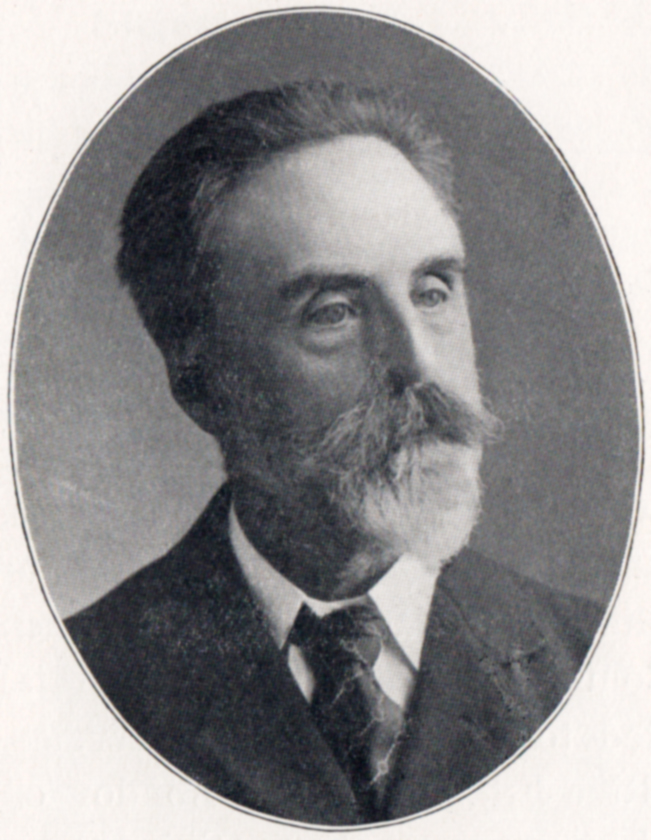
Ulster dialect is not Ulster-Scots
"...The great majority of persons writing on this subject seem to think that by Ulster dialect is meant that form of speech prevalent in County Antrim and the Ards district of Down, and that a story, say, unless written in the Lowland Scottish prevalent in these districts is merely Irish, not Ulster dialect. This mistake, arising from either ignorance or want of thought, upon examination of the question, becomes quickly apparent..."
It's a very convoluted bit of writing, but what he's saying is that general Ulster dialect, and Ulster-Scots, are not the same thing. There is evidence everywhere of people who still need to grasp this simple fact.
(from The Dialect of Ulster by John J Marshall, UJA, 1904. His predictions of the decline of rural speech because of "newspapers and an ever-increasing volume of cheap literature" will mean that "in another hundred years, dialect stories... will be read with the aid of a glossary...")
Monday, October 25, 2010
Promoting Northern Ireland in 1971
I was going through a box of old tourism brochures this morning (I have a collection of them going back to the formation of the Ulster Tourist Development Association in the 1920s - how sad is that?!) and found one from 1971. The scanned page below was the inside front cover. (Click to enlarge).
Sunday, October 24, 2010
The Lower Lights - A Hymn Revival
Thanks to Philip for sending these to me - beautifully filmed old-fashioned acoustic harmony-based sacred music - spectacular! The track listing reveals The Lower Lights to be a Mormon-based collective of musicians who mix old standard hymns with some specifically Mormon pieces, one of which - If You Could Hie to Kolob - sounds almost identical to The Star of the County Down - listen here for yourself. Visit the website | Visit Bandcamp.com site
Friday, October 22, 2010
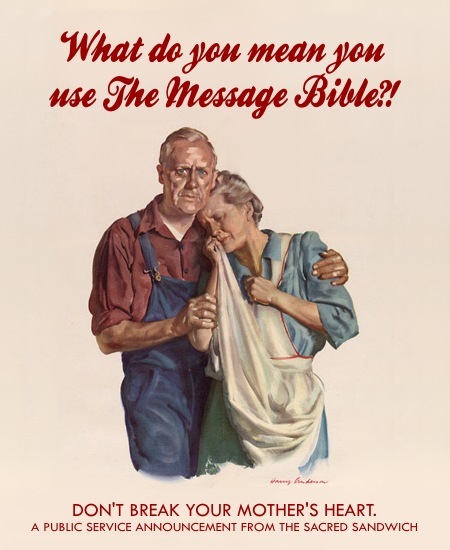
A few slices from SacredSandwich.com
Sacred Sandwich is on my list of links down the left hand side of this blog, but I hadn't been on it in a while. It's beautifully designed, but much of the content is a bit too American to work for a Northern Ireland audience. However, these made me smile this morning:



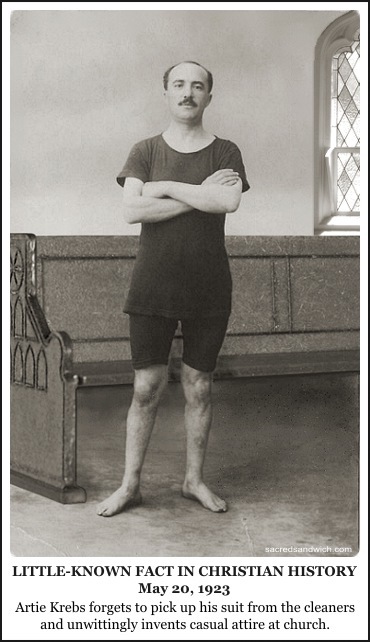

Thursday, October 21, 2010
Templepatrick, Donaghadee - the Taylor and Skinner maps of 1777
This map of the road from Portaferry to Donaghadee and Newtownards is from Taylor & Skinners Maps of Ireland, 1777. It has some interesting features:
- the road south of Donaghadee turns inland at where today's Millisle is, and goes through where Carrowdore is, but neither Millisle nor Carrowdore were signficant enough to be marked on the map, if they even existed at all
- the coast road south of Millisle (which today goes through Ballywalter, Ballyhalbert, Portavogie and Cloughey) wasn't significant enough to be mapped either. So perhaps that eastern part of the Peninsula was relatively underdeveloped or primitive compared to the upper and western parts
- the close-up is of the Donaghadee area, which shows "Temple Patrick" where St Patrick was reputed to have landed (having sailed from Portpatrick in Scotland, directly across the 18 miles of open sea), but which has been missed by all "official" versions of the Patrick story. It also shows the ruined church which was within the walls of Temple Patrick graveyard, and the house and orchards which had been founded by Patrick Montgomery who arrived from Scotland around 1606, which were big enough to be visible from the sea.
The Montgomery family had deep connections and commercial interests at Donaghadee, Newtownards, Greyabbey and Portaferry going back to 1606. This may be why these particular roads were so well developed and which by the time Taylor and Skinner mapped them had become the most important routes on the Peninsula.
You might be able to see a dotted line running across Strangford Lough just south of Newtownards - "Rd to Comber when the Tide is out" - there's a suicide mission! (Click the images to enlarge)

NB: Taylor and Skinner's Maps are available online here.
Wednesday, October 20, 2010
River Cottage future
When we were in Devon in the summer, we stopped off in Axminster to visit Hugh Fearnley Whittingstall's River Cottage Café. We arrived at 10am, there were very few people there, which gave me a chance to take some pics of the rustic eclectic interior. It has the feel of a church hall or old classroom, furnished with handmade tables and whatever wooden chairs that the local charity shop had:
The River Cottage series is one of the few things we make a point of watching on tv - the ethic and the aesthetic of what Hugh FW does captures a lot of how I grew up and of how we try to live as a family. However his vegetable patch is far more successful than ours... I also think that there are some markers in his work which show how those who seek to represent "the community" could work, or should work, especially within rural areas.
"...River Cottage is not a charity, but does aim to be a ‘more than profit’ organisation. This means, firstly, that we are ready to re–invest much of our income in developing our ideology and the base of our activities. It also means that we should be ready to hold back from, or turn down, business that conflicts with our ideology and our commitment to ethical business practice. Thirdly, we feel we should also be making links with, and finding ways to support, other organisations who share our ideas..." (from "About Us")
Perhaps our economic climate of cuts might cause us to stop and consider what "rich" really means - an ethic of local produce, sustainable living and homegrown austerity were things that our parents and grandparents treasured. In fact, they didn't actually treasure them at all, it was just how they lived. After all, "a man's life consisteth not in the abundance of the things which he possesseth."


Tuesday, October 19, 2010
"She roars wi' her elbows tae save her een".
This was a figure of speech used to describe my father's aunt Lucy (1893-1962) - she was renowned as somebody who pretended to cry when she didn't get her own way. Today she might be called a drama queen or an attention seeker. Picture somebody rubbing their fists in their eyes (to hide the lack of tears) and flapping their arms up and down at the same time, almost like wings, and you'll get the idea.
Monday, October 18, 2010
Jardine's Book of Martyrs
A few years ago I enjoyed a long lunch in Edinburgh with three young academics, all of whom are deeply knowledgeable about the 17th century, Presbyterianism, the Covenanters and the life and times of the common people of that era. One of them, Dr Mark Jardine, had just completed further studies into the Covenanters' "United Societies", and was also advising BBC Scotland on their television series Scotland's History which was presented by Neil Oliver. Mark recently began to blog in astonishing detail about many of his researches, which you can read here at Jardine's Book of Martyrs. Mark was also involved in the excellent BBC Radio Scotland programme about Alexander Peden which was presented by Richard Holloway (Chair of the Scottish Arts Council) and broadcast in November 2009. Work of this calibre, which informs the output the broadcast media, is badly needed on this side of the water.
Sunday, October 17, 2010
Anither wee yin fae Ballyfrenis
Another wee rhyme from my aunt Betty:
"Lift the tither fit, lift the tither fit, lift the tither fit my dear
Lift the tither fit, lift the tither fit, let the watter rin clear"
There were other lines that she can't remember just now - can you help?
Misquoting Macbeth
"Daddy, I know a line from Macbeth", said Charlie (7) to me on Saturday afternoon. "Bubble, bubble, toilet trouble..." - at which point I fell about laughing!
Friday, October 15, 2010
When they hanged Archibald Warwick in Kircubbin
Exactly 212 years ago on 15 October 1798, Rev Archibald Warwick, the 29 year old licenciate of Kircubbin Presbyterian Church was executed by public hanging. The gallows were raised between the church and the manse, in an area which today is a public car park. Thousands gathered to see their beloved minister die. His crime was his role in the 1798 Rebellion and the attempt to overthrow the government. His family were all from Loughriscouse outside Newtownards and he was buried in the family plot at Movilla Cemetery - the grave can still be seen there today.
Thursday, October 14, 2010
When Donaghadee was renamed "Montgomery", circa 1626
(Click the pics to enlarge)
Yes, it was, by none other than Sir Hugh Montgomery himself. And at the same time he decided to rename the opposite port, Portpatrick in Scotland, as "Port Montgomery". I've blogged about this stone before, but here's a photograph taken just a few weeks ago. Also below is a close-up from a 1734 book of the list of ministers who attended the famous 1638 Assembly in Glasgow, one of whom was James Blair, minister of "Port Montgomrie". His neighbour at Stranraer was John Livingstone, formerly minister of Killinchy; his colleague at Ayr (spelled here as "Air") was Robert Blair, formerly minister of Bangor. Blair, Livingstone, and John Stewart "late Provest of Air" had all been onboard the emigrant ship EagleWing. And Robert Adair of Kinhilt was probably living in Ballymena.

Wednesday, October 13, 2010
America's "Two Nations"
There's an interesting article here on the BBC website, which has some familiar echoes for those of you who, like me, are interested in the history and culture of Ulster. Whilst we have an historic triple-blend (which I'm told is how Lowland Scots produce their whisky) of Irish, Scottish and English, America has been presented as a much more exotic combination of cultural and racial groups - a "melting pot".
However, the article contends that America is "two nations", but neither divided by culture or race, nor neatly divided geographically down the Mason/Dixon line into the North and South of the Civil War / War Between the States of 1861-65. No, the division is by "their attitude to the state and its role in the economy". I haven't been paying much attention to the growth of the Tea Party movement in the US, but this article has made me take notice. Government should serve the people, rather than people serving the government. We only have to look south of our own border to see the impact of reckless economic policy and an out-of-control ruling class. In previous centuries the reaction of the general public would have been rebellion and revolution.
Let's see what next Wednesday brings to us here in the UK.