(the original seal pictured above is in the collection of the National Museum of Scotland. It features in Scottish Heraldic Seals by Stevenson & Wood, Glasgow 1940. The inscription reads "S' COLON DAVIDIS BOYD DE TOURGIL" and is believed to date from 1599.)
One of the men who came across from Scotland to Ulster with Hugh Montgomery in 1606 was David Boyd. Here's a brief biography.
1. Origins in Scotland
To give him his full title, Colonel David Boyd of Tourgill (also spelled Tourgil or Tuyirgill) was the youngest son of Robert Boyd, the 5th Lord of Kilmarnock. They lived at the original Dean Castle outside Kilmarnock, on an estate which had been granted to the Boyds by King Robert the Bruce for their service at Bannockburn in 1314.
2. Military Service in Holland
He is known to have served in a Scottish regiment in the wars in Holland (the three volume set entitled History of the Scots Brigade in Service of the Netherlands include a reference to him being in Holland on 24 January 1583.) Hugh Montgomery also fought in Holland at the same time - it is possible that they enlisted together.
3. Boyd of Tourgill
He had letters of legitimation under the Great Seal 11 July 1582, and a grant of the lands of Tourgill (a region to the north east of Largs in north Ayrshire) on 8 August 1598. Boyd, named as Dauid Boyd of Tourgill, also appears among a list of twelve Scottish nobles who were witnesses to the "Contract between King James VI, Ludovick Duke of Lennox and Hugh fifth Earl of Eglingtoun for the marriage of the Earl and Gabriela Steuart, Sister of the Duke" dated 10th and 13th April 1598.
4. Family Feud
He was twice the victim of attempted murder - in April 1599 he was "set upon and wounded... in the High Street of Glasgow" by his cousin Adam Boyd, who on 31 July in the same year then attempted to murder him at Kilmarnock.
5. Marriage and the Ross family of Kilmarnock
He married a wealthy widow, Margaret Wallace. Her former husband, George Ross, had the title of Hayning / Hanyng / Haining, an estate situated along the Cessnock River somewhere near today's Riccarton and Hurlford villages. She was known as the "Dame of Hayning" and had one daughter, Maria Ross, to her first husband. In March 1592 a land dispute arose within the Ross family, and the King's Advocate, David McGill, was sent to intervene in the row (source here). Like so many of the era, McGill was also attracted to Ulster - he was invited by Sir Hugh Montgomery who made him curate at Newtownards Priory in 1607, and later at Grey Abbey where his memorial can still be seen today. Other members of the Ross family also came across the water, one of whom, Robert Ross, settled in north Down some time before 1617 and rented 1500 acres from Sir James Hamilton at Portavo near Groomsport. (Peter Carr's excellent book Portavo: An Irish Townland and its Peoples provides a lot of detail about the Ross estates.)
6. Life in Ulster
Boyd arrived with Montgomery in 1606 and soon was granted lands. Con O'Neill directly granted him Ballymacarrett, another parcel of land near Glenmachan at the old church of Knockcolumbkille, and a townland called "Ballymurty". Boyd also secured seven townlands from Montgomery, totalling 1000 acres just to the north of Greyabbey. The family residence was built in the townland of Ballycastle, the site of which was probably where the well-known B&B Ballycastle House is today, on the Mount Stewart Road. Boyd is also said to have had lands near Glastry.
7. Influence in Scotland
Despite his estates in Ulster, Colonel Boyd was Provost of Edinburgh in 1613. The precise date of his death is unknown, but is thought to have been some time before 1623.
8. Children
He is known to have had one son, Robert Boyd, who after his father's death continued to occupy the lands Montgomery had granted. A John Boyd, possibly Robert's son, was in possession of land at Drumfad near Millisle in 1676. Colonel David Boyd may also have had a daughter, Jane, and another son, Thomas. A Thomas Boyd was elected MP for Bangor in 1651; another died at Portavogie in 1660. An Alexander Boyd was the tutor to William Montgomery, the writer of the Montgomery Manuscripts, and taught him fluent French.
Miscellaneous
• Description of David Boyd's Seal here
• Photo of Tourgill Burn here
• Photo of Tourgill Glen here
• Photo of Tourgill Lodge here
• His niece, Marion Boyd, was the wife of another major Ulster landholder, James Hamilton the 1st Earl of Abercorn.
• Colonel Boyd's sister, Egidia or Giles, was the wife of the head of the Montgomery family, Sir Hugh Montgomery the 4th Earl of Eglinton.
• Chapter in The Scots Peerage, detailing the Boyds of Kilmarnock.
• See previous blog post about the Boyds at Portavogie.
• Dean Castle is run today by East Ayrshire Council
Conclusion:
The early Scots in Ulster are not mysterious unknowable figures - there are plenty of good sources available which, when pulled together, paint vivid pictures of who these people were and of their achievements. The more is uncovered about them, the more obvious it becomes that Ulster was not merely a Scottish colony - it was in fact an extension of Scotland. People like Colonel David Boyd retained significant influence in Scotland even though he had relocated to County Down. The cultural ties established in the early 1600s are still evident today.
.
Sunday, November 21, 2010
Brief biography: Colonel David Boyd of Tourgill (15XX - 162?)


Tuesday, October 26, 2010
Brief biography: William Hugh Patterson (1835 - 1918)
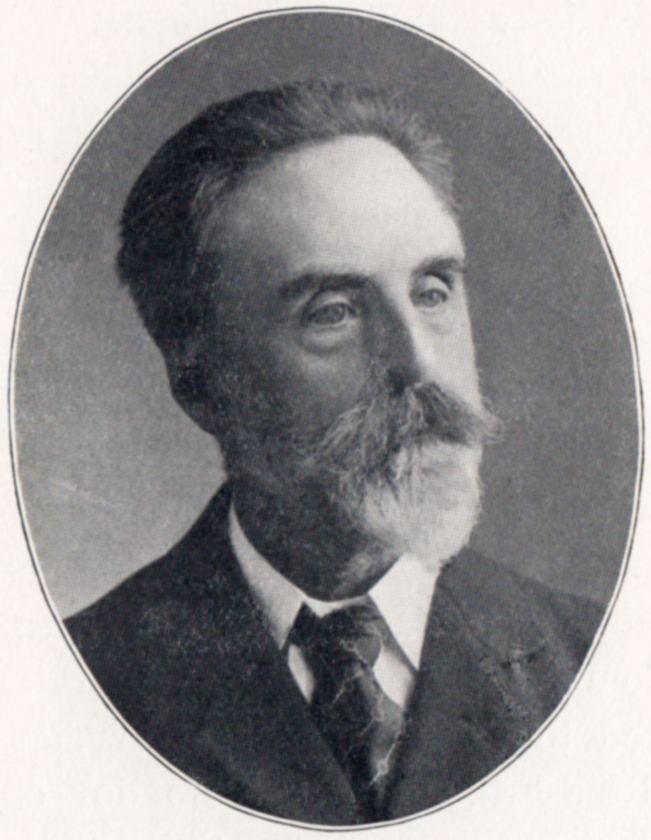
(Having mentioned Patterson in this recent post, I thought a sketch of his life might be of some interest to readers here at the 'Burn.)
William Hugh Patterson was born in Belfast in 1835. His family had been linen merchants and ironmongers for at least two generations; he was educated at Inst and Queens University and also worked in the family business. His grandfather was Robert Patterson (1750 - 1831). William's father, also called Robert Patterson (April 18 1802 - February 14 1872) was a successful businessman; he also wrote hymns which appeared in John Beard's collection for Unitarians. Robert was famous naturalist, publishing a series of important books on the subject.
William shared his father's interests and also developed a passion for history. In 1858 he married Helen Anderson, daughter of John Crossley Anderson of Knockbreda. In 1863, aged just 28, William was a founder member of the Belfast Naturalists' Field Club, and in 1869 the Club published his booklet entitled "A Notice of some Ancient Tombstones at Movilla". In 1872 he published "The Christmas Rhymers in the North of Ireland". Helped by other correspondents, he published perhaps his most famous work - "A Glossary of Words and Phrases used in Antrim and Down" - in 1880. He described the words in the Glossary as being "in the main of Scottish origin...(which had)... naturally underwent changes consequent upon the lapse of time since their introduction to an alien soil". For Patterson the origin year was "about the year 1607, when... immigration, previously a mere rivulet... became a flood". (The actual year was of course 1606).
His prestigious address was Garranard, Circular Road, Belfast - the same road that C.S. Lewis grew up on, and where Craigavon House had been built in 1870. He was a member of the Royal Irish Academy, the USPCA, and a Board member of the Royal Victoria Hospital and of the Belfast School of Art. Patterson signed the Ulster Covenant at Strandtown Halls, off the Belmont Road in Belfast. (see PRONI digital image). He died in 1918.
MISC:
• Princess Grace Irish Library entry
• He was a contributor to the Ulster Journal of Archaeology (here's an example of his work from 1896 on the subject of "Ulster Settlers in America")
• Dictionary of Ulster Biography entry
• Patterson was the uncle of Robert Lloyd Praeger (1865 - 1953)
• He was brother of Sir Robert Lloyd Patterson (1836 - 1906)
(NB: additions and corrections to this biography are very welcome)
Friday, October 08, 2010
Duncan McNeill's Hymn Book, American edition, 1928

(click on the pics to enlarge)
I've blogged about Duncan McNeill (also spelled as M'Neil and McNeil) before - he was a Glaswegian Baptist Pastor (of a church in Orr Street near Bridgeton Cross) whose singing ministry in the early 1900s resulted in him recording a few 78s and in writing his own songs and hymns, which eventually became his own self-titled hymn book. 100,000 copies were printed and sold in Britain. People both in Ulster and Scotland have given me old copies, I think I have 4 or 5 of them now (you can see a scanned cover of one at the bottom of this post) and Graeme and I have recorded some of his songs over the years.
McNeill came back to mind recently when I was sent an American edition of his hymn book (cover shown here, published 1928). So I did a bit of desk research and it transpired that McNeill travelled across the Atlantic in 1926 and pastored in Kimball Avenue United Evangelical Church in Chicago from 1928 until 1933. As he says in the foreword "during the two years I have been singing and preaching the Gospel in America, I have received thousands of requests for copies of the words and music of my song testimonies. After singing them over the radio, from different stations, I am deluged with requests thru the mail for the book from which I sing..."
During his time at Kimball Street, the church history says that"...under his leadership the church continued to emphasize evangelistic meetings. Outreach continued with outdoor Sunday evening services at the corner of Kimball and Fullerton prior to the evening service at the church. Fellowship groups developed and thrived during this period. The Kimball Young People's Fellowship, led by church's young adults, provided Bible studies and social activities for the church's young adults. Relationships that formed in that group continued long after many of them had moved from the area. Christian Comrades, a group for women, began under the leadership of Grace Linden and others. The 'Cozy Corner' monthly newsletter continued for years and was sent around country, connecting friends to one another and Kimball Avenue. Other organizations included the Protheons, Philathea Club, Excelsiors (for men), Shipmates, Lifesavers, the Women's Missionary Socity and the Ladies Aid Society. The 40 voice choir, under the able direction of George Underwood and Clyde Barton, performed annual concerts and Easter cantatas. Several men entered the ministry..."
Fast forward to the present day. Last Sunday night at Maranatha Mission Hall in Carrowdore, the speaker was a man from Ahoghill in County Antrim. He brought a soloist with him, who sang the Duncan McNeill song "My New Address", which is more usually known as "Along the Glory Road". It was a favourite song of my grandfather's and is in the American edition of McNeill's hymn book, but not in the Scottish one - the chorus goes:
"My house is Free Salvation, tis on a good foundation
The doors are marked with Jesus' precious blood
My house is Free Salvation, near Hallelujah Station
Just a little bit along the Glory Road"
Also in the 1928 American edition of the hymn book is "Happy Joe", which I learned at Sunday School back in the 1970s when it had the very un-PC title "Darkie Joe" (lyrics here) and which might have been recorded in Belfast in the late 1940s and early 1950s.
• There's a compendium of McNeill's Scots language songs over on my "Sacred Scotch Solos" blog.
• Listen to Duncan McNeill singing on Raretunes.org
• If you know more about him, and if he has any descendants today, please get in touch.


Saturday, September 18, 2010
The Paintings of John Luke (1906 - 1975)

(Left: John Luke's mural at Belfast City Hall, showing Belfast's Royal Charter of 1613, painted in 1950. Click the image to enlarge).
Even though I went to the Art College in Belfast (UU at Belfast, 1990 - 1994) I have limited knowledge of our local artistic heritage. I opted to take a commercial route with my own career - solving other people's communication needs and helping them sell products, rather than the self-expression route of the fine artist. So I ended up as a graphic designer with a love of old tourism posters. (By the way, if you hire a graphic designer and they present concepts to you by saying "well, what I wanted to do with this was..." you have my permission to shoot them. Their job is to answer your brief, not indulge themselves or enhance their portfolio. Too many these days flounce around like they're presenters on Changing Rooms).
The Foundation and BAHons courses I took had no art history modules, but I made good money painting Iron Maiden album covers on schoolbags during my teenage years and can draw Gill Sans by hand - both of which I found far more useful than learning about dead Italian painters. However, one Ulster artist whose work I have always greatly admired is John Luke (1906-1975). The first painting of his that I saw was "The Road to the West" (painted in 1944) which was then (and might still be) in the UTV art collection.
John Luke has an interesting background, in that his parents were from Ahoghill (some say Randalstown) and moved to booming industrial Belfast where John was born in Lewis Street. Apparently his early works included painting King Billy on gable walls. Later he painted the magnificent mural in Belfast City Hall which shows the Royal Charter if 1613 being read (see pic above). So I Googled him the other day and found to my horror that one of his public murals, about 30 feet by 20 feet, languishes in the possession of a Belfast demolition firm (see story here) - a firm who were involved in a publicly funded £20m construction project and who then claimed the Luke mural under a salvage clause in the contract. (The mural was probably paid for out of the public purse in the first place, by the old Belfast Corporation. You might also think that a firm who have presumably done very well from the public contracts over the years might demonstrate some goodwill and return the mural to the people of Northern Ireland?).
Anecdotally, I am told that some of Luke's family were Brethren evangelists, but John became a vegan Buddhist and died in poverty from a malnutrition-related illness.
Rory Fitzpatrick speaks of Luke's work - "...how many people looking at the work of the Belfast artist John Luke would recognize in it a theme going back to the beginnings of the Scots-Irish?... it is always Sunday in Luke's work, families walking their dogs through the green, drumlin country in the warm afternoon, or evening after work as a father comes home to a white Ulster farmhouse set in formal idyllic landscape. Luke himself called it 'the eternal, now' but it is in essence that curiously innocent Scots-Irish vision, the land of peace and plenty, often expounded in the past from Presbyterian pulpits and expressed in Biblical language...". (from God's Frontiersmen, p 274).
If any of the Luke family read this, I would love to hear from you.
NB - As far as I know, all of these paintings are copyright of Luke's estate, these digital images been sourced from various websites.
> Ulster History Circle biography and plaque
> Wikipedia entry for John Luke
The Road to the West, 1944

The Old Callan Bridge, Armagh, 1945

The Lock at Edenderry, 1944

Ballygally Castle, 1939

Landscape with Figures, 1948

Sunday, September 05, 2010
The life and writings of James M'Henry of Larne (1785-1845)
"Work! An' was it for that, after a', that I left the snug toonlan' o' Maughrygowan, an' cam' owre the ocean, whan I thocht I wad become a gentleman on my very landin! Work! why what waur could I hae done at hame, than to hae laboured for my daily bread! But I was nae quite at that need either. Eh! Sirs - Nelly, puir lass! is as little likely to become a 'lady in Pennsylvania' as the sang we used to sing says, that she was in her ain country!".
............
These are the first words spoken by Gilbert Frazier, an Ulster-Scots emigrant who left the countryside between Coleraine and Londonderry in April 1723, and sailed with his wife Nelly to Philadelphia. Gilbert was the key character in the novel The Wilderness; or, Braddock's TImes - a Tale of the West, which was published in New York in 1823.
It was written by James M'Henry who was born in Larne on 20 December 1785, and may well have been inspired by his own life. He studied medicine at Glasgow University, while there he published a poem about the 1798 Rebellion - which he would have witnessed as a teenage boy - entitled Patrick: A Poetical Tale of 1798 (published by McKenzie, Glasgow 1810). M'Henry returned to Co Antrim and became a doctor in Larne in 1811 - he then moved to Belfast in 1814 and emigrated to Pennsylvania in 1817. He lived there for 25 years during which time he became one of the most celebrated writers and novelists of his generation. He was Editor of the American Monthly Magazine, first published in 1824 (first volume is available on GoogleBooks, featuring some of his own work, and runs to a colossal 574 pages). In 1842 he returned to Ulster and became American Consul in Londonderry, a post he held until his death on 21 July 1845.
The characters of M'Henry's works were predominantly Ulster-Scots - in the preface of Hearts of Steel (1825) he wrote that "the majority of actors in both works belonged to the population of Ulster; the lower and middle classes of whom speak a dialect very similar to that spoken by the Scotch Lowlanders, from whom they are mostly descended". When Lady Morgan / Sydney Owenson's 1806 novel The Wild Irish Girl characterised Ulster as "... a Scottish colony; and in fact, Scotch dialect, Scotch manners, Scotch modes, and the Scotch character almost universally prevail..." he may have been pleased by her recognition of the cultural distinctiveness of the Province - but when the description went on to attack the alleged "chill", "calculating industry" and "luxury" of Ulster he was far from happy.
He is said to have used the preface of Hearts of Steel to respond directly to Owenson, but also more broadly to writers of her ilk, who were elevating the idea of romantic Gaelic Ireland and lambasting Scottish Presbyterian Ulster . Have a read at the bottom of page vi and the top of page vii - doubtless Owenson was one of the "tribe of romance writers who have... spread this false notion of the Irish character which has gone abroad through the world. That these writers in general knew extremely little of the people they undertook to describe is evident..." - which of course, in the addition to my recent blog post entitled "He Shoots He Scores", is still an issue today.
Chapter Two of The Hearts of Steel has been described as a "tour de force" - the deathbed scene of an old Antrim farmer called John Rainey, in which he admits his part in a crime of passion that saw him commit a murder, which the dying victim mistakenly said had been carried out by Rainey's best friend. Rainey was then tasked with giving his friend fifty lashes at Carrickfergus Castle, during which the innocent man died - making Rainey a double murderer. The language is marvellous.*
M'Henry has also been described as a "personal friend and ardent admirer" of another son of east Antrim, President Andrew Jackson, and in 1829 published a volume entitled "Jackson's Wreath or National Souvenir" (available here on GoogleBooks). James M'Henry was a hugely significant figure of his generation, regarded as the first "Irish-American" novelist and deserves to be better known in Ulster today. Like so much of Ulster-Scots heritage M'Henry has been forgotten and ignored. Nobody is sure where he was buried - his brief entry in the Oxford Dictionary of National Biography says he died at Larne. A blue plaque either near Larne (if his birthplace or even grave could be traced) or the site of the former Consuls' premises in Londonderry should be considered.
(If M'Henry were alive today, he might even have been featured in an episode of "Jackie's the Boy".)
LINKS:
- Memoir of James M'Henry's life
- The Wilderness on Archive.org
- biography of James M'Henry (p43 - 55)
-The Wilderness as a searchable text base from Stanford University, California
* this chapter was featured in Frank Ferguson's Anthology of Ulster-Scots Writing (Four Courts Press 2008). This blog post was inspired by a series of old emails from 2005 that I recently stumbled over, from John Erskine, Philip Robinson and Richard MacMaster. With thanks to all of them for their interest and for sharing their thoughts and information.
Monday, May 17, 2010
George Francis Savage-Armstrong's "Ballads of Down", 1901
(NB: If you're reading this on Facebook, you can read this post in full on my blog).
A while ago, Fiona McDonald posted on her blog about this writer, who also features in Dr Frank Ferguson's excellent Ulster-Scots Writing: An Anthology. George Francis Savage-Armstrong (1845 - 1906) was born in Dublin (his father was from Wicklow and his mother was from Co Down) and his wife, Marie Elizabeth, was from Belfast. Her father was Rev John Wrixon, rector of St John the Evangelist Church on the Malone Road.
"GFSA" was a prolific writer and poet (full bibliography here). He was Professor of English and History at Queen's College Cork and at one stage was a contender for the position of Poet Laureate. His later writings included much County Down history, as well as "Ballads of Down", a collection of 92 songs and poems published in 1901.
Many of these are in Ulster-Scots, which he describes in the glossary as follows - "...the Downshire dialect, with its variants, is an Ulster development of Lowland-Scottish - principally Ayrshire - brought over by Scottish settlers in the reign of James I... the dialect is more or less marked according to the locality and to the degree of the speaker's education. Some of the peasantry have it so strongly as to be hardly intelligible to a stranger...". Even with his own academic pedigree, his English poetry is described in the Dictionary of National Biography as "competent but pedestrian" - nevertheless, "GFSA" retained a sound handling of Ards Peninsula Ulster-Scots.
Here's an example of his work, a poem called A Cannae Thole Ye!
Ye may be clivver, may hae won
A wheen o' honour 'nayth the sun
But, whatsaee'er ye've earn'd or done,
A cannae thole ye!
Ye may be genial noo and then
Wi' helpless waens an' humble men;
But, though ye'd gilt auld Poortith's den,
A cannae thole ye!
Ye may be guid; ye may be great;
Ye may be born tae rule the State;
But, though ye rowl'd the wheels o' Fate,
A cannae thole ye!
Ye may hae drawn yer watery bluid
Frae Noe's sel' that sail'd the Flood;
But, though in Noe's breeks ye stud,
A cannae thole ye!
Ye may be lord o' mony a rood;
Yer smile may mak' a monarch prood;
But, though the De'il afore ye boo'd,
A cannae thole ye!
It's nae that ye hae din me wrang;
It's nae A feel a jealous pang;
It's jist that, be ye short or lang,
A cannae thole ye!
A CONTROVERSIAL CAREER:
GFSA attracted some opposition during his career - here's an excerpt from his DNB entry:
"...He was antagonistic to the Irish literary revival and was severely criticized by W. B. Yeats. In ‘“Noetry” and poetry’, his second review of Savage-Armstrong's Poetical Works (9 vols., 1891–2), Yeats judged Savage-Armstrong's work to be either rhetorical or crude, but conceded that the ‘Irish’ verses were memorable. In 1898 Savage-Armstrong addressed the Irish Literary Society, London, on ‘The Two Irelands in Literature’, arguing against Matthew Arnold that Gaelic literature had ‘not much style, very little melancholy, and very little natural magic’. He praised the foundation of Trinity College, Dublin as having initiated ‘Irish literary production in the English tongue’ (The Times, 28 May 1898). Yeats responded ferociously, attacking the barrenness and negativity of Savage-Armstrong's Ireland, arguing that he knew little of Gaelic literature, that he represented an obsolete tradition and that he resented being sidelined by the writers of the revival; Yeats's attack was an expansion of his first review of Savage-Armstrong's Poetical Works, in which he had asserted that ‘Mr. Armstrong has cut himself off from the life of the nation in which his days are passed, and has suffered the inevitable penalty’...."
Threatening, almost sinister, stuff - showing that even 100 years ago swimming against the intellectual mainstream was a dangerous activity. GFSA spent the last years of his life at Strangford House where he died on 24 July 1906. Some of his collected material is held at the William Andrews Clark Memorial Library (UCLA).
CHILDREN and WWI:
The Savage-Armstrongs had three children, all of whom were caught up in the events of World War One:
Francis Savage Nesbitt Savage-Armstrong (5 July 1880 - 23 April 1917) became a Lieutenant Colonel in the South Staffordshire Regiment. He joined the Army on 19 Sept 1900 and served during the Boer War. He served in France & Flanders from 3 Nov 1914, was twice Mentioned in Despatches, and was awarded the D.S.O. (see London Gazette 23 Jun 1915). He was killed in action on 23 Apr 1917 and is interred in the Poit-du-Jour Military Cemetery, France.
John Raymond Savage-Armstrong (13 May 1882 - 1918?) became a Captain in the 4th Leinster Regiment. He was wounded at the "Battle of Hill 60" at Ypres in April 1915, and was released on sick leave. He seems to have returned to Strangford House - Northern Ireland's Digital Film Archive contains two of his letters which were written around the time of the 1916 Easter Rising - one written to him by a Miss Julia Taylor of Dublin, and one written to him by his son (also called Raymond).
Arabella Guendolen Savage-Armstrong served as a nurse at the Richmond Military Hospital during World War I, and after this, was active in social settlement programs like the Hackney Girls' Club, the Pell Street Club and the Sandes Soldiers' Home at Magilligan, Co Londonderry.
IMHO, the Ulster-Scots material in "Ballads of Down" is worth reprinting for today's generation.
Tuesday, February 09, 2010
The Hardy Brothers - a Scotch-Irish Argentinian sugar empire.
(NB: If you're reading this on Facebook, the original post is from my blog) I have an old book with a modest title: "The Scotch Irish in History as master builders of Empires, States, Churches, Schools and Christian Civilization" by Rev James Shaw, published in Illinois in 1899.
Here's an example, not of that book's content, but of its ethos, and of the Ulster-Scots entrepreneurial vision which 100 years ago made Belfast a dynamic, prosperous and outward-looking international city, driving some of the biggest industries in the world. Richard Hardy (1844 - 1891) and Charles Hardy (1859 - 1913) were originally from Ballymena. They set up an import/export business which sold linen into South America - and in turn they also set up a huge sugar plantation and refinery in Argentina and brought sugar back here. They also generated their own electricity which made Las Palmas the first town in the country to have public street lights! Here are two summaries:
..........
"...(Hardy) was one of those hard-bitten, tenacious men that Antrim rears, with all the dogged obstinacy of the Scotch and the intelligence of the Irish, whom you find struggling and prospering throughout the seven seas. His father kept a small draper's shop in Ballymena, but it could not hold the wanderer and his dreams. After a spell in Australia, he came to Buenos Aires, where he started a small dry goods store, made money selling Belfast linen, and married a native lady. Then he became an estanciero, and in the end sold his shop and fenced lands to stake his whole fortune on the development of the sugar and tannin business in the wild Chaco. It took a brave man to create this oasis of industry in the heart of the jungle, but he did it..."
(From Men, Manners and Morals in South America, published 1920)
..........
"...It was about the year 1874 that Messrs. Hardy Brothers, of Belfast, established the importing firm of Hardy & Co., in Buenos Aires; the late Mr. Richard Hardy was the head of the firm, and the business grew so fast that they found themselves in a very short time at the head of a large trade in Irish linen and hessians. The finest linens from Ireland were introduced into this market by the firm and found a splendid sale, and the sugar business, which was then in its infancy and creeping up, generated a demand for bagging which Messrs. Hardy & Co. for many years supplied. No merchant in Buenos Aires watched the market more keenly or studied the currents of trade more closely than Mr. Hardy ; he saw the tendency of the country to protective customhouse duties, and with a zeal deserving a better result he was the first to start flax growing in the Plate and literally spent a thousand pounds on an experimental flax farm in Quilmes.
He brought out the best machinery, scutched the flax here and spun the Argentine yarn in Ireland; but one way or another the result was not favorable; he then turned his mind to the manufacture of hosiery and under-clothing, introduced the best machinery and all those great and important manufactories of stockings and undershirts which exist in the city to-day were founded and introduced by Mr. Hardy. He traveled over the country in every direction, studying its adaptabilities and requirements; he visited Tucuman and was in and out through every sugar factory in that province; he traveled over Entre lUos and Corrientes.
It was a period remarkable for what is termed concession fever; everyone was taking out concessions, and Mr. Hardy followed the current, visited the Gran Chaco and took out a concession in the year 1880 to start a sugar plantation and factory at Cerrito, which is beautifully situated at the confluence of the three rivers: Parana, Upper Parana and Paraguay ; and here he made his first start in sugar planting, with such unlooked for success that he soon discovered the area of arable land for the planting of sugar cane was too limited for his views... He at once applied to the government and under the terms of the land laws received a territory of four hundred square miles, and it is on this magnificent territory that he constructed the factory and built up the establishment which we now visit.
The Messrs. Hardy's sugar establishment at Las Palmas, in the Chaco Austral, is the largest, the grandest and most successful of all the sugar plantations in the Chaco ...the Hardy sugar factory of Las Palmas is paved with sovereigns, from the port to the factory, from the factory to the Indian village of Cancha Larga, from the colonies still further out, back to Mr. Hardy's bouse; in every field, in every Indian path, in every "senda" we see the impress of the gold sovereign..."
(from the Louisiana Planter and Sugar Manufacturer, 10 July 1909)
..........
"Belfast and the Province of Ulster in the 20th Century" (Pike, 1909) records two men called Hardy, but they seem to be of a different family than the above. There's a brief biography online here. If anyone out there knows more, please get in touch.
Wednesday, February 03, 2010
James Traill of Tullykin (Killyleagh)
(NB: If you're reading this on Facebook, the original post is from my blog) The Hamilton Manuscripts record a man called James Traill of Tullykin (1595 - 1663). There are lots of different spellings of the place, like Tallachin / Tolychin / Tullochin / Tullychin, and the name lives on today - there's a Tullykin Road just outside Killyleagh. He was born in Scotland (probably Blebo in Fife, just 5 miles from St Andrews) on 15 October 1595. His brother Robert Traill (1603 - 1676) was the famous minister at Greyfriars Kirk in Edinburgh. Here's an article about the family, called "The Covenanting Traills", some of which is in Scots. According to the article another member of the family, Colonel James Traill (possibly Robert and James' father) acquired 1000 acres in Knockninny in Co Fermanagh during the Plantation. The other major grantees in Knockninny were the Balfour brothers - second cousins of the Traills - who built Castle Balfour in Lisnaskea around 1620 (pic shown here, click to enlarge).
James Traill was no dozer. He had a degree in theology from Leiden University in the Netherlands, and spent time with the Ambassador to Paris. Robert Traill too was in France, joining James there in 1625 and staying until around 1630 - he was later described as a "Grim Geneva Minister".
Around 1633, Sir James Hamilton appointed Traill "...He choosed for him a very learned, discreet, and religious master, one Mr. James Trail..." to be tutor for his son. The son was "...to travel some years for his improvement, which he did the length of Rome, very safely and successfully, and returned with great improvements in such things whereunto his genius allowed..."
So James Traill showed young Hamilton jr, the ways of continental life. Traill wrote to Hamilton sr. from Paris in October 1633, summarising their trek around France. It wasn't a holiday - the letter says that young Hamilton started his day at 7am with two hours study of French or Latin, then classes in dancing and fencing, then oral French, followed by an hour of translation. Once he had a grasp of French he was going to move on to study "logic and mathematics". At the start of the day and at the end were his "duties of piety". Traill went on to outline a proposed "circuit of France", plus a trip to Geneva and Italy - Florence and Rome in particular.
When they came back, Traill joined Oliver Cromwell's army and rose to Lieutenant Colonel. It's not very PC, but Cromwell said of him "If only I had 10,000 James Traills, I would drive the Pope out of Italy" - a country that Traill was already very familiar with!
Traill married Mary Hamilton (daughter of James Hamilton's brother John - and therefore a cousin of Hamilton jr.) in 1647. However in 1649 James Traill had to leave Ulster "...on account of malignants..." and went to stay with his brother Robert in Edinburgh. Robert also knew the Hamiltons well - he and Rev James Hamilton (who was another cousin of Hamilton jr.) were both ministers in Edinburgh and signed the Solemn League and Covenant together on 11 April that same year. They also both accompanied their friend and coleague James Guthrie to the gallows in 1661 when he was executed by order of King Charles II.
Some time in the 1650s, James Traill's payment for his military service was said to be "...land in lieu of his back pay and this land near Killyleagh he named Tullochin. The last portion of this property was sold in 1770, by his grt grandson, the Rev. Hamilton Trail, who died in 1795, aged 75." The land was part of the Killyleagh estate which was by now owned by his former protégé, James Hamilton jr. ( pic below of the church with Hamilton's Killyleagh castle in the distance - click to enlarge)
Hamilton jr. wrote his will on 18 June 1659, naming Lieut-Col Traill as one of his executors, and died just two days later on 20 June 1659. He was buried at Bangor Abbey. Traill himself died about four years later, on 18th May 1663 and was buried at Killyleagh. There is a large memorial to him inside Killyleagh Parish Church, just down the hill from James Hamilton's castle - and where the Rowan Hamiltons still live today. The inscription on the memorial reads:
"Heere lyeth the body of Lef. Col. Jam(es) Traille who having severall years faithfully served his mast. in ye warr against ye Irish Rebells departed th(is) life at Tollachin 18 May 1663, haveing had issue by his wife Mary Traille als Hamilton, daughter to John Hamilton of Hamiltons Baun in ye county of Ardmagh, Esqr., broth(er) to ye Right Honl. ye Lord Viscount Claneboys; 4 sons & 8 daughters, James, John, Hans, James, Jane, Ann, Mar(y), Mathelda, Sarah, Ellenor, Magdalen, Margaret. Here lieth the body of Elizabeth Trail alias Read of Hollypark who departed this life 10 Jan 1818. And also near to this lies the remains of her husband, the Revd. Archibald Hamilton Trail of Hollypark, Killinchy, who departed this life 16 Apr 1844 in the 89th year of his age."
There's a humourous, but derogatory, stereotype where the first generation of Ulster-Scots settlers are dismissed as "sheep stealers and cattle thieves" or (to use an often-abused mid 17th century source, Rev Andrew Stewart of Donaghadee, who wrote about the settlers from England and Scotland) "the scum of both nations". These might be amusing, but they're very far from the whole story. James Traill is a perfect example of a sophisticated Europhile who was as comfortable in his youth with the Ambassador in Paris as he was in later life in his wee townland outside Killyleagh in County Down.
And if you've got a spare £375,000, there's a very nice house for sale at Tullykin right now!
Friday, December 18, 2009
Con O'Neill (15XX - 1618) - the first Ulsterman to be remembered on a gable wall?
Con O'Neill, head of the Clandeboye O'Neills, is a fascinating character. He was the last of the great clan to own the massive areas of Upper Clandeboye, Lower Clandeboye and the Great Ards - which stretched from almost Ballymena to Killyleagh and included the whole of north Down and the Ards Peninsula. I was recently sent a superb article about his estate, and how it was sold off townland by townland.
Con's lifetime saw the end of old medieval Anglo/Irish Ireland and the emergence of a new modern Ulster with Scotland at the centre of Ulster's development.
A clear message of Con O'Neill's life is just how much co-operation there was in east Ulster between him and the lowland Scots, when he traded two thirds of his estate with the Scots Hugh Montgomery and James Hamilton. The legal documents of the sale of Con's estate are fascinating records, and prove beyond all doubt that the three men worked in close co-operation with each other.
In particular, Montgomery and O'Neill had a close friendship. After all, it was Montgomery who sprung Con from Carrickfergus Castle, it was Montgomery who secured the Royal pardon for Con in London, and the two men travelled back to Ulster together via Edinburgh.
On 24 December 1605 O'Neill and Montgomery signed "Articles of Agreement" with each other, within which "the parties covenant not to injure each other, but to aid and assist and defend each other and their tenants from wrong". They agreed to hold joint inquiries if any disagreements arose between their tenants, backed by a financial commitment of £1000 to each other, all written in the language of the Scottish laws of the time.
During his latter years Con moved from his grand castle of Castle Reagh to Ballylenaghan / Knockbracken (around 1608), and then to the lower tip of the Ards Peninsula to the remote townland of Tullycarnan (around 1616). Con died around 1618, and was said to have been buried at the old church of Knockcolumbkille, which was situated in what is now Glenmachan or Garnerville in east Belfast. A while ago I found an 1800s drawing of what was claimed to be Con's gravestone, which at that time had been built into the gable wall of a local farm building. It's probably long-gone by now. But it's an ironic Ulsterism that he ended up on a Belfast gable wall!
Con's old estate was in Antrim and Down - two of the counties which weren't included in the "official" Plantation - because by the time it got underway both counties already had a huge Scottish population. Of course you get the usual tiresome old story of "Planter and Gael", a stereotype narrative which seeks to pitch two peoples (incomers and natives) against each other, and which airbrushes away the uniqueness of the Scottish contribution to Ulster by lumping the Scots in with the English settlers. I suspect there's going to be a lot of that over the next few years, with the 400th anniversary of the beginning of the Plantation of Ulster in 2010.
But we don't need to reinforce old selective myths and thereby fuel old hostilities. We need to return to the primary sources, the landscapes, the places, the buildings and the artefacts - and look afresh at them to find a newer, fuller, story to tell.
......
"...The Scots are a middle temper, between the English tender breeding and the Irish rude breeding, and are a great deal more likely to adventure to plant Ulster than the English..."
King James I
Tuesday, December 08, 2009
Andrew Melville and the Ulster Scots
In the course of various things I've been reading recently, there's an emerging strain that connects some of the most influential early lowland Scots in Ulster right back to the Reformation, and in particular via Glasgow University.
• Andrew Melville (photo of his statue in Stirling shown above, taken back in 2008) was John Knox's successor and a giant of his times, a Scot who spent time in France and Geneva as the Reformation soared. He "acquired European fame as an outstanding scholar in the literary world". By the time Melville reached the continent, John Calvin was dead, but Melville developed a close friendship with one of Calvin's closest associates, Theodore Beza. Andrew Melville came back to Scotland in 1574, becoming the Principal of Glasgow University. Melville blended his intellectual genius with spiritual leadership when he became the Moderator of the (Presbyterian) General Assembly in 1582. He famously humiliated King James VI by saying "Sirrah, ye are God's silly vassal; there are two kings and two kingdoms in Scotland: there is king James, the head of the commonwealth; and there is Christ Jesus, the king of the Church, whose subject James the Sixth is, and of whose kingdom he is not a king, not a lord, not a head, but a member." James never forgave him.
• 1605: Two of Andrew Melville's students were the architects of the first big Ulster-Scots settlement: - two Ayrshire Scots, Sir James Fullerton and Sir James Hamilton were at the centre of the land-deal with Irish Gaelic chieftain Con O'Neill of Clandeboye. Fullerton had been a student of Melville's at Glasgow University (described in McCrie's Life of Andrew Melville as "one of his most intimate and steady friends") and Hamilton was believed to have been one of Melville's students at St Andrews.
• Hamilton and Fullerton had arrived at Dublin in 1587 and set up a school. A few years later they were both made fellows of Trinity College Dublin where they influenced and educated the young James Ussher*, the future Archbishop of Armagh. It has been said of Ussher that "in his earlier life he held rigidly the opinions of Calvin" (reference here), no doubt passed down to him by Hamilton and Fullerton, both of whom had been trained by Andrew Melville.
• 1606: Melville imprisoned / the settlement begins - By this stage King James VI of Scotland had become even more powerful, having also become King of England and Ireland in 1603. In 1606 he summoned Melville and some other Scottish ministers to London, where Melville vigourously protested against the King's ambitions to become head of the Church. Melville argued that a free General Assembly was essential - so the king had him arrested and imprisoned in the Tower of London for four years. It is hard to imagine the effect that the loss and vindictive persecution of a man like Melville would have had on Presbyterian Scotland. That same year the General Assembly had its first experience of what was described as 32 years of "kingly interference". 1606 was of course also the year that the aforementioned James Hamilton, and Hamilton's Ayrshire neighbour and rival Hugh Montgomery, began the large-scale permanent lowland Scots settlement of east Ulster. And as increasingly anti-Presbyterian laws were being regularly passed in Scotland in the early 1600s, the migration of Scots to Ulster grew stronger and stronger. A flow of young ministers followed the flow of people.
• 1606 - 1623: Glasgow University after Melville: Melville never returned to Scotland (after being released from the Tower he was forced into exile in France for the rest of his life) but his intellectual and spiritual legacy lived on. He was succeeded at Glasgow University by Thomas Smeaton (who had been in Geneva with Melville in the 1570s) and later by Robert Boyd. Boyd appointed a young Ayrshire graduate called Robert Blair to be Regent of the University. Blair would later become renowned in Ulster-Scots history as the minister at Bangor and the effective leader of the Ulster-Scots. At Glasgow, Blair's students included a James Hamilton (future minister at Ballywalter) and John Livingstone (future minister at Killinchy). During Blair's time at the University, one of his professorial colleagues was David Dickson, who later became minister at Blair's home town of Irvine in Ayrshire, and who was involved in the famous revival at nearby Stewarton. At exactly the same time Blair, Hamilton (and later) Livingstone were at the centre of the simultaneous Ulster revival just across the North Channel, centred around Sixmilewater.
• 1623 to the 1660s: The three young ministers and Glasgow graduates Blair, Hamilton and Livingstone became three of the most important figures in Ulster-Scots / Scots struggle of the Covenanters against the interference and opposition of the state against the will of the people - an experience which forged a Scottish migration into a solid Ulster-Scots community. All three stood against the increasingly tyrannical crown, all three were onboard Eagle Wing, after which all three returned to Scotland - where they played a central role in church and community life until their deaths.
• Melvilles in Ulster: According to the Montgomery Manuscripts, Melvilles who were descended from Andrew's brother James began to arrive in County Down, from Fife, around 1610 - in fact, a Jane Melville married William Hamilton of Newcastle in the Ards Peninsula, a younger brother of Sir James Hamilton.
Perhaps these Melvilles were just following the path which their ancestor Andrew Melville had laid the foundations for.
(* for more information about James Ussher, Crawford Gribben's book is hard to beat!)

Wednesday, December 03, 2008
Sandy Halliday's Sacred Scotch Solos
I was sent another copy of "Sacred Scotch Solos" recently, this time a different edition from someone in Canada. It has a lovely biography of the author/compiler, Sandy Halliday:
................
"...In issuing this revised and enlarged edition of Sacred Scotch Solos, written by the late Mr. Alexander Halliday, we feel that a few notes regarding the writer will not be out of place. He was of but humble Scottish birth, with no advantage to fit him for the battle of life, but one, i.e. a mother who feared God and made Alexander a child of prayer. Like many other such mothers, she had the sorrow of seeing him a wayward lad, but her faith failed not, and she doubtless was crowned with joy when in the middle of September, 1915, she could say in "the home on high," in the words of one of his own hymns :-
"This my son safe hame has come frae a faur kintree."
From the day of his conversion his was a joyful life. He could not keep from singing :-
"His life flowed on in endless song, above earth's lamentation,"
there was a great contagion in it. His songs were caught up and echoed far and wide - Canada, Australia, Africa, the trenches in France, and the rugged rocks of the Dardanelles have been made to resound with them. We cannot claim that there is any literary finish about them, but in some there is a happy heart lilt, in others a tender pathos, and in nearly all, a note of urgent invitation to the Saviour he himself had found so powerful and so precious.
"Sandy Halliday," as he was popularly known, did not confine his efforts to hymn-writing and hymn-singing, but he was wholehearted in all aggressive Christian work, especially labouring in the Anderston district of Glasgow in association with the Anderston Working Men's Mission. His labours with it extended over forty years. He was ever at home working amongst the children, and he will not be forgotten for at least another generation, because of the place he found in the heart of many a bairn. But we are sure that even when these are all gone, his Scotch Solos will still keep his memory green, and be sung far and wide to the glory of God and the Salvation of Souls..."
................
It includes an advert for Redemption Songs, and old editions of Redemption Songs that I have include adverts for two other old Scottish hymnbooks that I've found Scots language hymns in - Duncan McNeill's Hymn Book and Songs from the King's Highway. So there was obviously a wee cluster of evangelicals, and small publishing industry, in the late 1800s and early 1900s producing all of this material - and all printed by Pickering and Inglis.
Click below to read the biography, and on the facing page the last ever hymn that Sandy wrote.

