
Tuesday, February 28, 2017

"Only a Sinner, Saved by Grace"

(clip above is all I could find, and a faster tempo than I’m familiar with)

I read this article recently. I don’t know the author, have come cross the name a few times. Perhaps he will write an equivalent which looks in the other direction.

It irked me on a number of levels. One of these is the implication that sectarian attitudes in Northern Ireland only flow in one direction, out of only one community. There are individuals within all communities who think they are better than others. At a very trivial level, people in my neighbouring village think that they are better than the people in the next village along. Some people in Bangor do think they are better than people from Newtownards, it’s not just a cliché. Every ‘tribe’ around the world has graceless, even supremacist, individuals and ideas. 

Some within cultural Protestantism can think that way. But real, theological, Protestantism is the very opposite. “Grace Alone” is one of the cornerstones of the Reformed faith. What this means is that there is nothing in oneself to be proud of. Here’s an example.

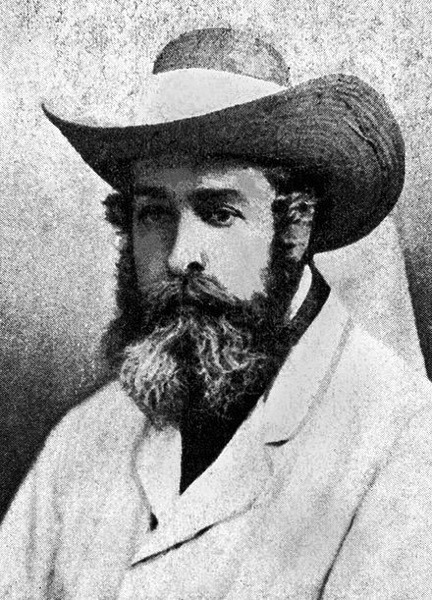
James Martin Gray (1851–1935) was a well-known figure in evangelical circles in the USA. His father Hugh Gray (1805-51) was from Bangor, County Down, and many generations of the family had lived at Gray’s Hill. Hugh’s father James (1782–1859) is named on a gravestone in Bangor Abbey graveyard. It is possible that he was related to Betsy Gray of 1798 Rebellion fame.

Hugh married Letitia Patterson at First Bangor Presbyterian Church in 1834 and they emigrated to New York around 1835. However Letitia died and Hugh later married a Mary Ann Martin. Across the two marriages Hugh was father to eight or nine children, of whom James was the youngest.

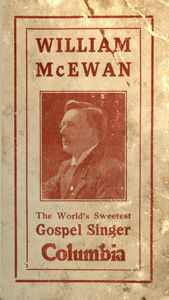
James' Wikipedia entry gives lots of detail of his life. Here is a sizeable bibliography of his writings. Some of his writing is still available digitally. He is little-known today, but here are the words a hymn he wrote which is known worldwide, which has a belter of a melody which was written by Daniel Towner:

Naught have I gotten but what I received;
Grace hath bestowed it since I have believed;
Boasting excluded, pride I abase;
I’m only a sinner saved by grace!
 
Only a sinner saved by grace!
This is my story, to God be the glory,
I’m only a sinner saved by grace!

Once I was foolish, and sin ruled my heart,
Causing my footsteps from God to depart;
Jesus hath found me, happy my case;
I now am a sinner saved by grace!

Tears unavailing, no merit had I;
Mercy must save me, or else I must die;
Sin had alarmed me, fearing God’s face;
But now I’m a sinner saved by grace!

Suffer a sinner whose heart overflows,
Loving his Savior to tell what he knows;
Once more to tell it, would I embrace—
I’m only a sinner saved by grace!

It’s one of those classics which could have featured in a John Ford movie. When you grasp that you have absolutely no merit of your own to bring to the table, then there’s no opportunity for pride. The liberty of 'Grace Alone' is a concept which destroys once and for all works-based religious effort. And so you have no basis to regard yourself as better than anyone else

Gray was in England in 1912 and was recommended to return to the USA onboard the Titanic, but he stuck to his travel arrangements and sailed a week sooner on a different boat. 

JamesMGray

Sunday, February 26, 2017

The question "What will this do to our community?" tends toward the right answer for the world - Wendell Berry

Wendall berry

Saturday, February 25, 2017

"If they don't like you, they'll cut off your project"- Huey Perry and how the government conspired to stop his anti-poverty community empowerment initiatives in West Virginia

Hqdefault

In the aftermath of the 1960s ‘War on Poverty’ campaign by President Lyndon Johnson, and his 'Poverty Tour’ referred to in this recent post, a young man in Mingo County, West Virginia (a county which was particularly Scotch-Irish in composition and outlook) called Huey Perry, pictured above just last year, decided to get involved in helping his local community. (West Virginia is often said to be the most Scotch-Irish of all of the states. Here are some recent posts on the subject - on Governor William Alexander MacCorkle and also this general article).

The context of the initiative was described by Huey in this 1992 interview:

There was total political control over everything and it was a pattern that evolved and developed over a number of years where the local politicians felt that they had to control every aspect of the community and every aspect of people's lives. And, of course, this was an easy system for them 'cause it perpetuated them into office and kept them into office and so, even the welfare recipients, first would go to the county politicians to get themselves placed on the welfare roles. So, they felt that they had to do that first, although they qualified for the welfare system. They would use that passageway into it, and, of course, this pleased the politicians because they knew they had a voter. As long as they could control this person and make them think that they controlled them, then they were subservient to that system.

Well, Huey got organised but was a bit too successful. And so the government, threatened by the community empowerment he had achieved, and how people had become self-sufficient, pulled his program. During his project he uncovered cronyism, electoral fraud, the siphoning of public funds to buy influence and patronage, and colossal abuses of power by those in authority. And so in 1972 Huey published the whole episode in his book They'll Cut Off Your Project: A Mingo County Chronicle, recently republished by West Virginia University Press.

The picture above is a still of Huey just last year explaining the story of the project (the video can't be embedded here so you’ll have to go to YouTube to watch it). 

Here is the intro to Chapter One:

Standing on the streets of Williamson, West Virginia in the winter of 1966, Huey Perry dazzled a New York Times reporter with the achievements of his native Mingo County’s thirty community action programs. Roads into the back hollows had been repaired; schoolhouses had been renovated. Carpenters assisted by men on relief had torn down abandoned shacks and built and painted new homes. Swimming pools had been fixed; a park overlooking the dramatic valleys had been built. As director of the county’s antipoverty program, Perry swelled with his pride in his work. “This must be the most beautiful community action group in the nation,” Perry told the Times. Thanks to Perry’s tour, the reporter noted that six-hundred children now attended Head Start classes, three-hundred teenagers took part in self-help employment projects, and medical checkups had become routine.The crowning achievement, which had garnered the headlines for the story, rested with the new grocery store: “Poor in West Virginia Town, Worried About the High Price of Food, Open Own Grocery.” Perry called it, “poor power.” By taking over an abandoned store and selling shares at ten dollars a shot, unemployed residents in the area had refashioned the shelves into a community grocery store, which ultimately had triggered a sharp reduction in food prices.

For the thirty-year-old Perry, described as “a tall, rangy young man,” by the Times reporter, it was “important for the poor to mobilize their resources collectively.” The story takes a turn here: the reporter did not buy completely into the storybook idealism unfolding on the back streets of Williamson and in the tiny settlements of Big Branch and Cinderella. She had been sent to Mingo County to chronicle the controversy as much as the accomplishments. “Grocers are angry,” the reporter noted. “Other businessmen are uneasy. Old line politicians are upset.” The local state senator and members of the Chamber of Commerce had already gone to Washington, charging that the Mingo County antipoverty program “was attempting to create a political machine by mobilizing the poor.” Federal investigators had already arrived. A local businessman told the Times: “It’s all a Communist plot.”

This community-level grassroots politics is just as much part of the Scotch-Irish story as are the Presidents in the grandeur of the White House. Even in that context, starting with Andrew Jackson, ‘our’ Presidents were men of the people, not from the aristocratic class. I would argue that ours is a 'bottom-up' culture, with genuine 'people-power' as the driver. You can see this in the Scottish Reformation of the early 1500s just as much as in the hills of West Virginia in the 1960s, never mind here in Ulster over successive centuries.

• Here is a recent and thought-provoking post by Elizabeth Catte, linking and contrasting Huey Perry's work and experiences with the JD Vance Hillbilly Elegy view.

• Her article – There is no neutral there: Appalachia as a mythic “Trump Country” – is essential reading.

NewImage

Friday, February 24, 2017

The Colrain (Massachusetts) Flag, 1812

Rhoda Shippee FlagA SCOTCH-IRISH SETTLEMENT, 1735
The town of Colrain in Franklin County in north west Massachusetts was settled in 1735, having originally been called ‘Boston Township No. 2’, but then renamed in 1743 for the Ulster emigration port town of Coleraine. One of Colrain's early settlers from Ulster was a Matthew Clark, born in Carrickfergus around 1700. Others were called Smith, Ulster-born yet descendants of ‘Scotch Presbyterians’. One source describes these first settlers as ‘intensely Protestant and generally Presbyterians and next to the devil they abominated the king’. In a short history of the town, author Belden Merims wrote that –

'And settled it was, by a hardy band of Scotch-Irish Presbyterians seeking freedom to worship as they wished. They had not found that freedom in eastern Massachusetts, where they had come as early as 1720 from northern Ireland, which they had not found hospitable. However, in 1743 they renamed their town Coleraine after Coleraine, Ireland ...

REVOLUTION AND THE ‘COLRAINE RESOLVES’, 1774
The Boston Tea Party took place on 16 December 1773. About six weeks later, the men of Colrain gathered to author the Colrain Resolves, on 31 January 1774 - so therefore a year earlier than the Fincastle Resolutions. Colrain then only had a population of 297; the leading men of the town were Hezekiah Smith, Daniel Donelson, William Stewart, James Stewart, John Woods, John Morrison, Joseph Caldwell and Thomas Bell – provoked to action because they were convinced that ‘the sole authority of the British Parliament is unjust, arbitrary, inconsistent and unconstitutional … when our valuable liberties and privileges are trod under foot … it is the duty of every true-hearted American to free themselves from impending ruin …’. Merims wrote –

… Colrain’s Scotch-Irish settlers had no love for the English. Resentments festered, and in January, 1774, at (John) Wood’s Tavern the prominent men of the town gathered and drew up what became known as the Colrain Resolves. Predating the Declaration of Independence by 18 months, the six resolves declare the rights of the individual, objection to taxation without representation, legal authority for independence, the right of the group to self-government, the necessity for action, a listing of specific grievances, the necessity for independence rather than mere reform, and the struggle for independence transcending the individual.'

This interesting article says that the Scotch-Irish were more literate than others in the region, and that these Resolves have ‘a clarity which those of other towns lack’. Here they are in full. 

THE COLRAIN FLAG, 1812
A generation later, in May 1812, Colrain was the first place to raise a US flag at a public building, which was the local schoolhouse. The flag was made by two sisters called Rhoda and Lois Shippee, and had 15 stripes and 15 stars, which was the design of the first official US flag up until 1818. A memorial stone marks the spot today.

FURTHER READING:
• Here is an 1844 history of Colrain, lots of great detail included. It is interesting that the minister of the Presbyterian church there in 1769, Rev Daniel McClallen, had been born in Pennsylvania in 1737 but educated in Ireland. He was perhaps related to one of Colrain’s leading citizens, Hugh McClallen who was born in Maghera around 1743. Daniel’s grave can be seen here, Hugh’s can be seen here.

• The Early Settlers of Colrain, Mass. by Charles H. McClellan (1885) is online here. The author proposes that James Stewart of Colrain had been present at the Siege of Derry in 1688

• The Scotch-Irish in Colrain, A Community Study in Eighteenth Century Massachusetts by Nancy Dolberg (published 1976) 

Thursday, February 23, 2017

Rev Hugh Knox (1727–90), newspaper advert, late 1700s

He was one of the subjects of a previous post, due to his formative influence on the young American revolutionary Alexander Hamilton. Here’s a newspaper advert for some of his books. Even though in the remote Caribbean, Hugh Knox maintained regular correspondence with prominent people in America and Britain. Yet another potentially brilliant uncovered story.

0119801 T

Tuesday, February 21, 2017

"We the People" (forget the celebrity President)

C5MtyisWQAAhYiE As the media world continues to obsess about Trump, one of our own prominent radio journalists told his audience today the every night he watches Fox News just to see what Trump has been up to. (He's a smart guy, I hope he was jesting - but it was a quip with significance, and shows the scale of the Trump personality). It's tragic and yet also perfect - perfect because for our celebrity age we now have the ultimate celebrity villain giving other celebrities opportunity to say publicity-grabbing things about him, which feeds the media machine and a generation of one-time news journalists who have become little more than gossip columnists then sensationalise and excitedly regurgitate the latest remarks and tweets, and invite other semi-celebrities to comment on them too.

Meanwhile, one journalist in particular has stuck to time-honoured methods by getting beyond the spokespeople to the real people. Chris Arnade is a man you need to read. Here is his latest Guardian article. This is what my recent post 'The President's Poverty Tour' was getting at. Arnade has a pile of similar articles, he takes great photographs (shown here) and he will be visiting Britain in a few weeks' time.

• Follow Chris Arnade on Twitter here. C5BvbPAWYAAC1VRC5MwdrpWQAUeGOKC4vr4jwWcAAVr1h

Monday, February 20, 2017

Sidney Edwards Morse on the Scotch-Irish, 1822

Virginia 1822 SE MorseAnother source,  a good generation before the ‘Famine Irish’ arrived in vast numbers, showing the usage of the term Scotch-Irish, this time in a fairly academic volume entitled A New System of Modern Geography or a View of the Present State of the World (Boston, 1822). The author, Sidney Edwards Morse, was a brother of the inventor Samuel Finley Breese Morse, and the family was of Ulster descent. The book is online here. 

The Morse brothers were both born in the 1790s; their father Jedidiah Morse born in 1761 was a Congregational pastor in New England and a descendant of Armagh-born Ulsterman Rev Dr Samuel Finley, a President of Princeton College. Jedidiah had published similar stuff in 1819, again using the term ‘Scotch Irish” (source here), and even earlier in 1810 (source here) and 1802 (source here). The earliest of his publications with the term seems to be 1789 (source here), where he also describes those in North Carolina as "descendants of people from the North of Ireland, and are exceedlingly attached to the doctrines, discipline and usages of the church of Scotland. They are a regular industrious people".

The breadcrumb trail of usages of the term ‘Scotch-Irish’ seems to be now be pretty much a continuous stream from the 1718 emigration families right up into the 21st century.

Sunday, February 19, 2017

The President's "Poverty Tour", Appalachia, April-May 1964

Donald trump signDue to his seemingly endless flow of the bizarre, the incompetent and the ridiculous, since his inauguration Donald J Trump has become even more of a figure of ridicule and hate. I can’t think of a media outlet apart from Breitbart which could be considered anything other than anti-Trump. In some cases I think the media has rushed to exaggerate and misrepresent. But he has made it easy, very easy for them to do so. I am not a fan of Trump, but I am drawn towards the people who put their trust in him at the ballot box, who saw him as being their last opportunity for change in the corporate-political empire.

At least now the media is doing its job again, having been sycophantic Obama-worshippers for the past 8 years (giving only passing coverage to bombing campaigns and drone strikes, for which statistics vary, the destabilisation of other nations through ’springs’, etc), and who right up to the last minute were openly backing Clinton, who was just another establishment candidate. Yes Trump is a billionaire. But the establishment – media, Democrats and Republicans – all openly hate him. And that's a big reason why so many people voted for him.

However, what this media Trump-a-geddon has done is wipe out some of the intelligent journalism which was starting to emerge during 2016, which sought to explain Trump's rise, and which revealed a hidden demographic - a forgotten, abandoned, American underclass far from the urban and coastal élites. The people of last year's bestseller Hillbilly Elegy, which became a bestseller because it connected the journalist class with people they did not know even existed. For a brief few months, those people had a voice, albeit a small one. Now they are once again forgotten as all eyes are focussed on Trump himself. 

So the ‘progressive’ chatterati are virtue-signalling at an industrial scale, every Trump gaffe causing Twitter-tsunamis. Mutual back-slaps of how right on they are. Middle class progressive evangelicals are just as prone to this as anyone else, except they add a bit of Jesus into the mix. They enjoy pointing out online how they are more like Jesus than others are. This used to be called "raising legitimacy to ultimacy", and is a form of Luke 18 Pharisaism. The posturing - whether just to make political points, or when also wrapped in a theological gloss, is tiresome and self-aggrandising.

Well, forget Trump. He is merely the outworking of those forgotten millions. And underneath the fashionable outrage, the progressives are as disinterested in the working class and underclass as ever before - whether Trump voters, UKIP voters, Brexit voters, post-industrial parts of Scotland that I have been to and know people in – or in our own context, people in estates which are still in the grip of paramilitarism. Few of Northern Ireland's 'trendy vicar’ types would be seen dead at a band parade or inside an Orange hall, either through their own choice or the soft policies of those they answer to within their congregations. I have seen many churches on the 12th July and on other parade dates, situated along the parade routes with hundreds of 'unchurched' people standing outside, but with the doors shut and the building deserted. It's not only bad evangelism, it's bad neighbourliness, it's bad community engagement.

Previous Presidents also made publicity capital from these forgotten millions. Below is a film of Lyndon Johnson in the ‘Rust Belt’ and Appalachia in 1964. You can imagine how these images were carefully staged for maximum effect. Just like today. This 2014 retrospective makes for interesting reading.

Whether President or progressive tweeter, they are one and the same, both are merely exploiting the poor for their own publicity advantage.

• PS - I know those who do care, and a number of young ministers who are not scared to get their hands dirty and get stuck in. They're not doing the posturing. They're doing the hard work, far below the radar. Full credit to them.

• PPS - after posting this piece, I see that the Lancashire Post in the north west of England has a similar perspective. I have always had a soft spot for John Pilger’s view of international politics, as this article demonstrates so well.

Friday, February 17, 2017

"We didn't know that Presbyterians had suffered too"

William harris covenanters 1887


Last Friday evening I had the privilege of speaking to West Belfast Historical Society on the subject of the Covenanters in the 1600s. I tend to stick to doing talks in my own local area but one of the Society’s members had heard me give the talk in Newtownards about 18 months ago, and invited me to give it to WBHS. As the date approached I was a bit apprehensive; demographically West Belfast is overwhelmingly Catholic, and the meeting was to be in a Catholic church parish centre. So I made doubly sure that everyone understood the ground I’d be covering, a few weeks beforehand.

Stories of the Reformation, of standing up against successive monarchs (the great majority of whom were 'Established Church'), of defying the state, of being arrested and imprisoned and executed. Of ‘18,000 martyrs” as it says on the grand memorial at Greyfriars Kirkyard. It all went really well, and the conversations afterwards were great. A comment that a number of people made to me at the end, independently of one another, was "We didn't know that Presbyterians had suffered too”. 

There is a lesson here. It is critically important to share stories beyond our own communities. We need to rethink how the 1600s are discussed and understood.

• In 1689 no Presbytery meetings were held from March until September, and when these resumed it was to hold 'a solemn day of thanksgiving for the great mercy of a begun relief from bondage' (source here).

• A deputation of ministers was sent to London to bring a message to the new King William "former and present sufferings, well known to those who lived amongst them ... that all sufferings for nonconformity may be for the future prevented" (source here)

The more I read the more I am convinced that the 'innumerable crowds of people' who greeted William at Carrickfergus 'with continual shouts and acclamations' were expressing their great relief that at least 50 years of struggle against previous monarchs and parliaments had finally come to an end.

Maybe there will one day be scope to re-frame these important stories.

The Revolutionary Knoxes: Ulster-Scots origins of Major-General Henry Knox (1750–1806) and Rev Hugh Knox (1727–1790)

Not long after Newtownards man Rev John Moorehead (previous post here) had emigrated and became the first Presbyterian minister in Boston around 1728, founding the church called “Church of the Presbyterian Strangers”, he conducted a wedding.

It was just the second one he had ever done. The date was 17 February 1736, the happy couple were William Knox (born c. 1712) and Mary Campbell - just like Moorehead they were fresh Ulster emigrants (possibly from near Belfast, but more likely having emigrated from Belfast - although other sources say William was from Londonderry) coming to terms with life in the New World, and from most accounts it seems life as outcasts, unwelcome in English-dominated Boston. A number of early Presbyterian churches had been burned down by “hostile Yankees”, such as nearby Worcester (source here), and I have seen another source - which I can’t put my finger on just now - that describes one being destroyed during its construction.

William Knox appears to have become a soldier, because in the same church records (online here), on 3 August 1749, “Mary Knox, wife to Capt. Wm. Knox, had a son baptised called Henry”. The “Church of the Presbyterian Strangers” was on Bury Street, later Long Lane, now Federal Street, and the Knox family home was at 247 Federal Street.

William had a successful shipbuilding business and bought a wharf at Boston Harbour, but the business failed and he later abandoned the family and went to the Caribbean where he eventually died, on St. Eustatius island, in 1762.

[A Knox relative already in the Caribbean was Rev Hugh Knox, who had been born in Ulster around 1727/28. He was ordained in New York in 1755 and was appointed minister on the remote island of Saba, where he stayed for 16 years, before moving to the island of St Croix around 1772. Some sources say he was a formative influence upon the young Alexander Hamilton, helping to raise the boy after his father had died when he was aged just 11, and his mother just two years later. Hamilton is known today through the biographical musical of his life. Some of Rev Hugh Knox’s sermons were later published, including An Essay on Civil and Religious Liberty in 1777]

Henry Knox was a boyhood friend of David McClure (previous post here), did well at school, got a job in a bookstore, and was embroiled in the Boston Massacre of 1770 when soldiers opened fire on a mob who were attacking them. Henry had tried to intervene and prevent the bloodshed which eventually took place.

Henry went on to become the youngest major-general in George Washington’s army, then chief artillery officer, and when Independence was won, Knox was appointed Washington’s Secretary of War. No doubt he and Alexander Hamilton wold have met many times in Washington’s service, and might have talked about their common Ulster-Scots influences - because Rev Hugh and Henry were correspondents (see here)

NewImage

Monday, February 13, 2017

Sir John Melville of Carnbee, Fife – buried Inch Abbey, Downpatrick, 1628

Inch Abbey 005L


This man came to Ulster in the early 1600s and once had a grand gravestone at Inch Abbey, Downpatrick (pictured above). It is described in detail in Walter Harris’ The ancient and present state of the county of Down (1744) and also repeated in the footnotes of Rev George Hill's Montgomery Manuscripts. Harris mistakenly called him James rather than John, an error which was repeated by Hill. The inscription is described as follows:

"S. Anno 1628. d.
"Then on the top of the Scutcheon in one quarter,
I.M., and in the other quarter, A. R. At the foot of the
Scutcheon on one side are these words thus placed: —
" Christo et Cruce
In Spero.
and underneath this inscription : —
" INSIGNIS. MILES. MELVILLUS. CARNBIA. PROLES.
MOLE. SUB. HAC. LAPJDUM. MORTUUS. ECCE. JACET.
SCOTIA. NATALEM, CELEBRAVIT. HIBERNIA. FUNUS.
INTUS. HABET. TUMULUM. SPIRITUS. ASTRA. COLIT.
SEXAGINTA. OCTO. FELICES. VIXERAT. ANNOS.
QUADRAGINTA. NOVEM. EX. HIS. ANIMOSUS. EQUES.
MILLE. ET. SEXCENTOS. VICENOS. EGERAT. ANNOS.
ET. OCTO. CHRISTUS. CUM. TUMULATUS. ERAT."

This would suggest he was 68 years old (‘sexaginta octo’), so was therefore born in 1560, and it seems was a knight for 49 years so therefore had been knighted around 1579-80. He is identified as 'Sir John Melville of the Carnbee family at Inch, near Downpatrick' in the 1881 book Scottish Arms being a Collection of Armorial Bearings. It appears that he was a man of some influence; having been knighted by King James VI, Melville assisted in 1593 to revise the means of tax collection in Scotland (source here).

Carnbee is a parish in Fife, where the Melvilles lived for many generations, as far back as the late 1200s. They had been in Scotland since at least 1165 as shown in a charter from King William the Lion of Scotland to Galfrid and Gregory de Melville (source here).

The volume The East Neuk of Fife by Rev Walter Wood (1887) records the Melvilles having arrived at Carnbee by 1296. There is a short biography of Sir John and his second wife Alison Ross (the ‘A.R.’ on the gravestone) which speaks of them having to sell their Granton estate near Edinburgh in 1598. Interestingly, Sir John had been declared a rebel, having begun to build a mill on the land of King James VI at Kingsbarns without royal permission. Perhaps these events were what caused him to move to Ulster. Carnbee was then acquired by the Moncreiff family.

PS: It is worth mentioning that the Echlins and Monypennys, also from Fife, came to east Ulster in this period, both families settling at Portaferry, just a boat trip from Inch. An earlier Melville from Fife was an ally of John Knox’s during the Reformation, and was hanged in 1548 for his involvement in the murder of Cardinal David Beaton.

……………..

PPS: Herman Melville (1819–91), author of Moby Dick, was descended from this Sir John Melville: "Herman Melville, the most powerful of all the great American writers, was born on the 1st August 1819, in New York. His father, Allan, was the fourth child of Major Thomas Melville. The family was of old Scots lineage, being descended from that John Melville of Carnbee who was knighted by James the Sixth”. Allan Melville had visited Scotland on a genealogy visit in the early 1800s, armed with a family tree. He also traced Boston Tea Party patriot Thomas Melvill (1751–1832) and General Robert Melville (1723–1809) to our same Sir John - source here.


5792892 1

Saturday, January 28, 2017

"The Silent Ulster Vote" - a podcast from 2012

18

I am thankful to Bruce Carlson of My History Can Beat Up Your Politics for posting this on Twitter earlier. I’m only 15 minutes into it and it’s really excellent - detailed, packed with content, a lot of which I had never heard before. Listen to it here: 

Friday, January 27, 2017

Ulster Historical Foundation - "The Northern Muse" - 60th anniversary

NewImage

This event next Saturday evening promises to be truly excellent. I'm especially looking forward to seeing inside historic First Presbyterian Church in Rosemary Street in Belfast, and to hearing Nigel and Dianna Boullier playing authentic old-time County Down fiddle tunes. Nigel is the author of the remarkable Handed Down: Country Fiddling and Dancing in East and Central Down (available here).

• Book your ticket online; the Foundation is a charity and donations are suggested at £25 per person. Click here.

"You're Scotch-Irish, aren't you?" - Michael Stipe of REM

Rs 172658 454631556

I had expected some of this. I had met Stipe before, in Athens, Georgia, at the time when R.E.M. had just signed with Warner Brothers and was about to release Green. At the end of the conversation, he began studying my face. "You're Scotch-Irish, aren't you?" he said.

"No," I said. "I'm not."

"You have a very Scotch-Irish face."

"I'm not Scotch-Irish."

He reached out his hand and touched the back of it to my face. "You have Scotch-Irish cheekbones," he said. "I'll bet you have that somewhere in your background. I'm very good at figuring out where people came from."

(from this 2003 interview in Esquire magazine)

Wednesday, January 04, 2017

Niall Ferguson on the plantation of Ulster, Virginia, Canada and Australia

There are some drawbacks in the script, but the general approach is pretty good.

Friday, December 30, 2016

"proud of his Scotch-Irish heritage" - Vick's VapoRub & the Richardson family of Greensboro, North Carolina

Product Vicks Vaporub

Lunsford Richardson II (1854–1919; Wikipedia entry here) is a name not many people know today. But his product is a world-famous brand. Here’s an article from the latest edition of the official North Carolina magazine, OurState.com. His original name – Richardson’s Croup and Pneumonia Cure Salve – was too long for the small jar, so he gave the honour to his brother in law, Dr. Joshua Vick.

Richardson’s son Jacob Henry Smith Richardson (1885– 1972) was a successful salesman for the firm, and he is said to have been "proud of his Scotch-Irish heritage” (source here). The Richardson-Vicks Collection is held at Greensboro Historical Museum.

Lunsford was a renowned advocate of African-American rights, borne out in October 1944 by the WW2 liberty ship S.S. Lunsford Richardson being named after him with a plaque affixed stating it had been at the "special request of the leading Negro citizens of North Carolina to honor the memory of a white friend." 71-year-old Watson Law, a Black friend of the Richardsons, was present at the official launch event at Brunswick, Georgia. Henry's attitudes seem to have been similar:

... Richardson was proud of his Scotch-Irish heritage and considered the South more "American" than other regions whose populations included more immigrants. He named North Carolina's racial heritage as one of its assets in an article about how the state could survive the Depression and improve its economy. His correspondence and writings contain numerous references to his racial attitudes, including a letter to the South African Information Service comparing apartheid to segregation in the American South ...

The Richardsons were of course Presbyterians, very involved in First Presbyterian Church in the town. According to this 1980 source, the first Ulster-Scots settlers in the Greensboro area arrived in 1753, a direct 'church plant' from Nottingham Presbyterian Church in present-day Maryland. Rev David Caldwell (bio here) was one of the town's outstanding historical figures - today an Historical Centre stands in his memory.

NB: Lunsford Richardson I (1808–56) had been a Democratic Senator in the North Carolina State Legislature for a time around 1854. He owned a mill on Little River in Johnson County, which was at risk of collapsing during a flood on 14 July 1856. He tried to save it but was drowned, a tragedy witnessed by his wife and daughter, and some men who were trying in vain to rescue him. A general biography of the family is included in Makers of America; biographies of leading men of thought and action which is online here. It traces the Richardsons to England and Scotland; the Scotch-Irish element must have been intermingled through the generations. The same book says this:

… the men have proven themselves capable, combining the shrewdness of the Scotch and the wit of the Irish. For two hundred years and more, the Scotch-Irish race has been a potential and beneficent factor in the development of the American Republic. All things considered, it seems probable that the people of this race have given color, to a great extent, to the history of the United States ...


Our difference 1890 vicks croup pneumonia salve mobile

Tuesday, December 20, 2016

The Avett Brothers - Away in a Manger

The words have been attributed to Martin Luther, the other more familiar tune written by Ulster-born William James Kirkpatrick. Here are the wonderful Avett Brothers of North Carolina playing it. It is a bit of a cliché perhaps, like most Christmas songs it has been over-done and the familiarity can breed contempt. Yet underlying the schmaltz is a deep eternal truth - that through Jesus Christ, God provides what He demands. And through faith alone in Christ alone we are made right with God. He didnt come as a moral teacher. He came to be Mediator and Substitute. The Gospel is truly ‘Good News’ because the pressure is off. Christ has done it all. Amazing grace.

Sunday, December 18, 2016

Duncan MacNab (1820–96) and Saint Patrick's Scottish origins

440px Duncan McNab 1820 1896

Duncan MacNab (also spelled McNab) was a Catholic missionary to the Australian aborigines. Born in Morven in the Scottish Highlands, nearly 100 miles north of Inverness, he arrived in Melbourne on 29 July 1867 along with the Archbishop of Sydney, John Bede Polding, on board the ship Chariot of Fame. McNab became a great champion for aboriginal rights and he features in the Australian Dictionary of Biography.

His entry there gives a clue as to his departure from what had been 20 years of parish life in Scotland – "He dabbled in Gaelic literature and at Airdrie in 1862 fell foul of Irish parishioners, probably by arguing the Scottish birth of St Patrick”.

There is a huge full-page letter from McNab in the 28 June 1862 edition of the Glasgow Free Press newspaper where he lays out his case and counters his critics. Some weeks previously McNab had been accused in the pages of the paper by a fellow Catholic priest as follows – “I know well he hates everything Irish … [he is] a fair type of his Scottish order, in his contempt for, and opposition to, everything Irish: people, politics, habits, all except the Irish faith … an anti-Hibernian spirit in our Scottish friends? And yet where would they have a church today … were it not for the always open purse of poor despised and sneered-at Pat?" It is pretty rough stuff.

If the subject was controversial, McNab wasn’t going to lie down as he gave a lengthy ‘archaeological dissertation’ address on the subject in St Margaret’s schoolroom in Airdrie on 25 September 1865, which was published in Dublin by James Duffy the year after (online edition here). According to the history section of the church’s website, McNab had given a similar talk in Bathgate too.

Matters came to a head after he published a pamphlet to prove that St. Patrick was born in Scotland, and followed this with a lecture at Bathgate that was seen as being anti-Irish. Certainly rivalry between Scots and Irish Catholics was common at the time, among the clergy as well as the laity, and Father McNab was undoubtedly one of its victims.

There are some other brilliant stories about McNab there:

He dealt with repeated rumours that the Orangemen were preparing to attack his church and raze it to the ground, by letting it be known that he kept gunpowder in the house and would blow the church up rather than have it desecrated. It appears that this was no idle threat either, as Father Van Stiphout records that he found a small keg of gunpowder in a press in the house when he came there in 1893. 

• A 1989 thesis about McNab can be found here.
• His Wikipedia entry is here.

I really do need to pull together all of the Patrick-related Scottish and Ulster-Scots material I have gathered up over the years and get it published as a booklet or online.

NB: Many other writers, before and after McNab (such as Professor James H Todd of Trinity College Dublin and the Royal Irish Academy, who was also a Treasurer of St Patrick’s Cathedral in the city) have agreed with him that Kilpatrick near Dumbarton is the most plausible birth place for Patrick. However, the birth place issue is just one small part of a larger collection of Scottish Patrick traditions which today’s storytellers and tourism initiatives choose to ignore.

NewImage

Saturday, December 17, 2016

William McKeague and "The Star Spangled Banner", 1750

Music travels. It turns out that around 1750 a Fermanagh man, William McKeague of the Sixth Enniskillen Fusiliers, composed a tune called “The March of the Royal Inniskillings”, probably based on an earlier Irish tune called “Squire Bumper Jones” from 1723. “The March of the Royal Inniskillings” was later picked up by John Stafford Smith in England and travelled across the Atlantic where it went on to become a world-famous anthem. Article here.

Tuesday, December 13, 2016

Ballyrawer, 1930s

My Wilson ancestors lived in a wee house at Ballyrawer/Ballyraer outside Carrowdore for generations. It was sold out of the family and was bulldozed just a few months ago. My aunt Betty supplied me with these photos just a few weeks ago. One shows the house, photographed from just across the Woburn Road within the old Crommelin ‘plantin’ of Carrowdore Castle which I mentioned here before in this post, around 1930. My great uncle Henry Wilson (1923–2003) and his sister Rhoda Wilson (1927-201?) are standing at the front gate, then just weans. Also below are the Wilsons’ maternal grandmother, Lizzie Kerr (1889–1966, who married Hugh Wilson, 1886–1967) and her mother Mary Kerr (d. 1945), presumably photographed around the same time.

My thanks are due to distant relative John Blair from Ajax in Canada (he is a descendant of these same Kerrs) who was able to confirm for me the tradition of a generation of our ancestors living in the house at no rent for a generation. John has pinned that down to a timeframe from 1879 (the houses were described as 'free for 17 years) until at least 1930 (described as 'free').

Ballyrawer1930 HRMary Kerr and Lizzie Kerr 1930