Tuesday, October 31, 2023

Saint Patrick 1600 - looking ahead to 2032

2032 will be the 1600th anniversary of the start of Saint Patrick's mission to Ireland. In 1932, for the 1500th anniversary, there were multiple high-level commemorations, publications, events and pageants. Perhaps something similar might be appropriate

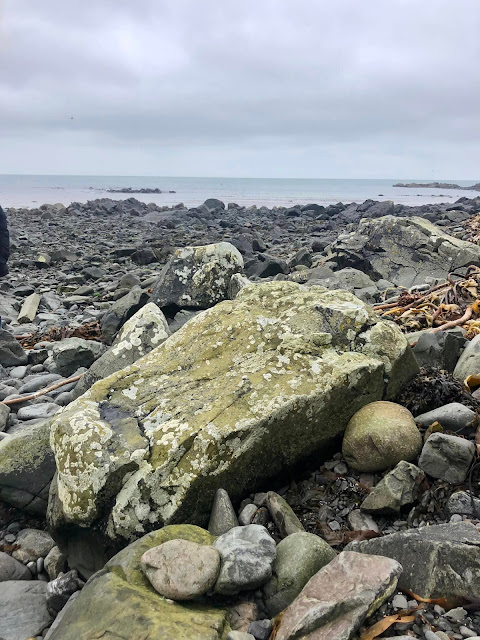
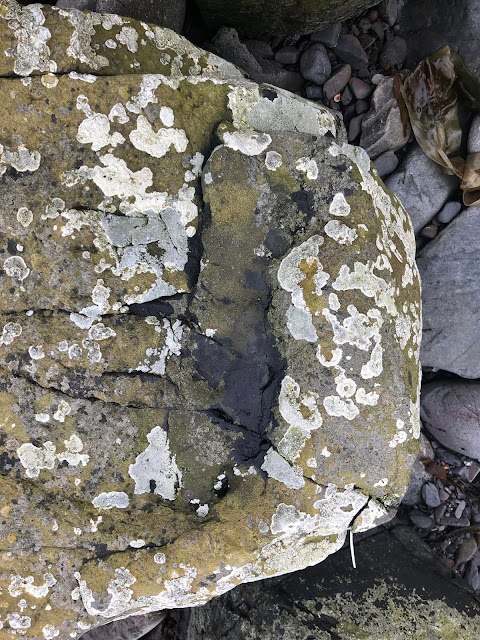
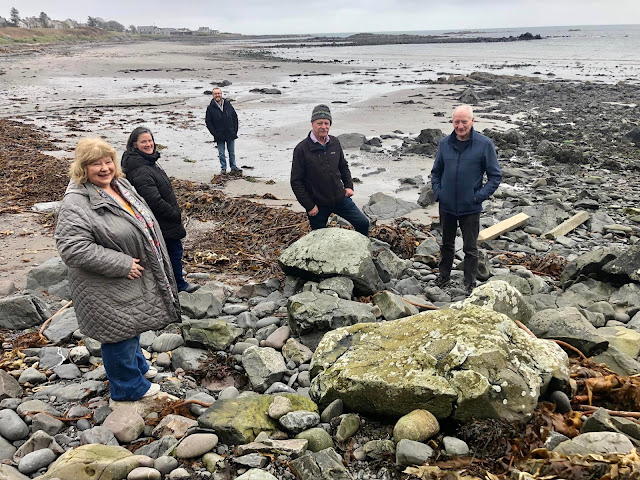
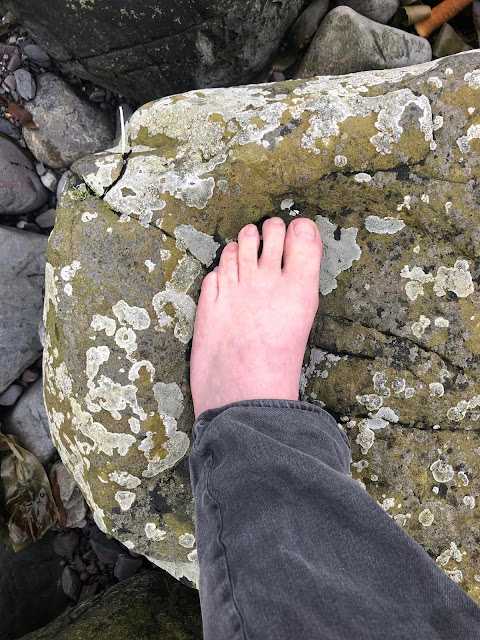
Back in March I did a fun wee “pilgrimage” to Templepatrick beach south of Donaghadee - my first visit to St Patrick’s Rock to put my foot in his (reputed) footprint, and to see the adjacent overgrown stone entrance of the once-famous well. John and Tom came here often as boys, when the mineral-rich water could be drunk and enjoyed. Felt a bit like Moses when I took off my boot! No magical powers detected thus far. 

Many thanks to Shirley Cochrane for organising - I’ve wanted to see this for many years. Delighted to have done so on St Patrick’s Day. Portpatrick is on the opposite shore, so-named as tradition holds it was his point of departure from Scotland to Ireland. There should be an interpretive sign at the car park here before the local traditions are lost.


Monday, October 30, 2023

The murder of Jane McCrea, 1777

Even though the Declaration of Independence was announced on 4 July 1776, the British crown continued to fight the colonists for some years afterwards, often recruiting various Native American tribes to reinforce their army's attempts to take back America, right up to the eventual Treaty of Paris in 1783. (When war was re-declared in 1812, once again the Indian tribes were involved, siding with the British. The American Indian Wars are important to be aware of - Wikipedia here.)


One awful incident of this alliance was the murder in July 1777 of Jane McCrea, the 18 year old daughter of Ulster-born (some sources say Scottish-born) Presbyterian minister the late Rev James McCrea of Bedminster, New Jersey (1711–1769). 

Most accounts say that the McCrea siblings were divided by the unfolding Revolution - some were loyal to the crown, the rest were American 'patriots'. Jane was betrothed to a David Jones who enlisted in the British Army in 1776.


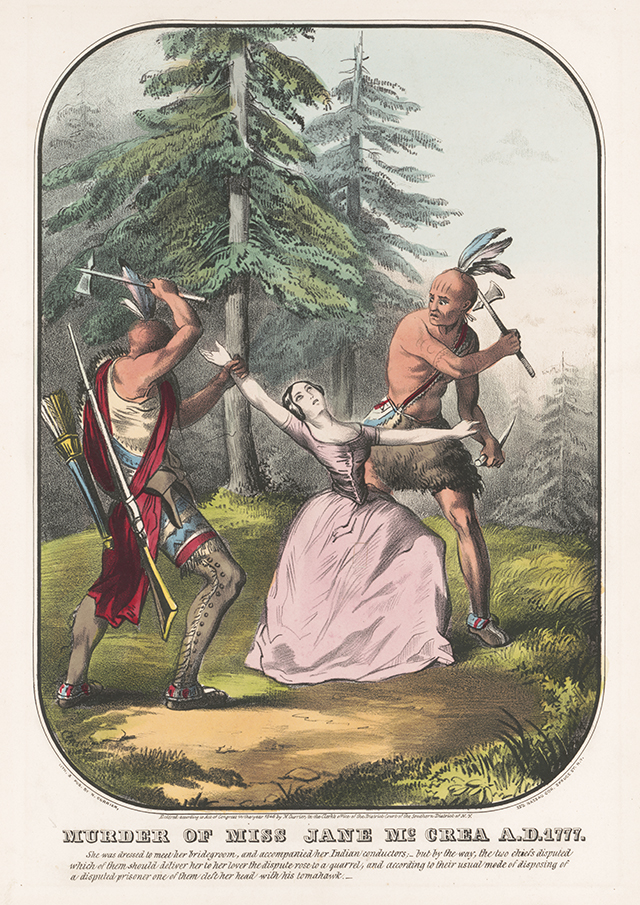
Travelling with her friend Sarah McNeil (perhaps journeying to her wedding to marry Jones) near Fort Edward in the Hudson Valley in the east of New York State, on 27 July 1777, Jane was killed by gunfire from Indians in General Burgoyne's army. She was also scalped.

Jones recovered her bullet-ridden body; her scalp was sold by her killers.


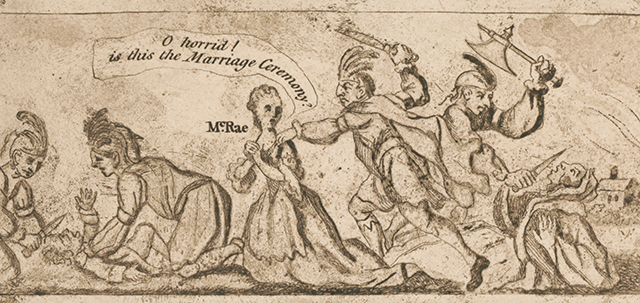
Her story, as a martyr heroine,  is said to have galvanised the pro-independence American cause. The story - perhaps akin to our own Betsy Gray - was told in print, and later in art (here's a print from 1857) for many generations. A memorial was raised over her grave in 1901 by the Daughters of the American Revolution.


... it was also a politically useful tool, both during the war and after.  It cast the British and Native American forces who fought against the infant American republic as heartless perpetrators of terrible violence, even against innocent Loyalists like McCrea.  Thus, the yarn had staying power, remaining popular decades and decades after the actual event ... 

• previous post here about Meggie Stinson and Jenny Wiley
 

Sunday, October 29, 2023

James Thompson & Bro, Louisville, Kentucky

I have mentioned James Thompson a few times here before. I have a pile of lockdown-era research about him, his family, and their extensive business connections in Louisville and Londonderry that I need to collate some time. Meanwhile here are two adverts from the Burlington Clipper newspaper of Vermont in 1903 - around this time he was doing massive whiskey deals in the region of $250,000 and $500,000 (in today's money, about $7.5m and $15m). His distilling and bottling empire was one of the biggest in America.


Monday, October 16, 2023

BBC Northern Ireland - "Talkin' Tay" - coming on Sunday night


"Yer tea's ready".

And here it is – Talkin' Tay, a kind of sequel to 2021's Whiskey Talkin' will be broadcast this coming Sunday night and will also be on iPlayer for 30 days, (which is how the vast majority of people watch television now). 

Sean has done a mighty job in selecting only the very best ingredients and blending them all together into a flavoursome, yet light and refreshing, one hour documentary.

Huge thanks to everyone who agreed to be on-screen, and to those who helped behind-the-scenes. Go on, put the kettle on!

• Article on NorthernIrelandWorld.com here

• Recent interview on BBC Radio Ulster's Kintra, with Helen Mark, Rab Lennox and Jonnie Crawford is online here

...............................

During the production, and a few lines of which make the programme, I put out a kind of 'appeal' on my Facebook page based on the three rhymes below, each of which follows the same template but localises to specific areas. Two more versions were posted there by friends - maybe there are others forbye.

V1
Donaghadee drinks the tea
Millisle drinks the brandy
Carrowdore is the sportin’ place
And Balbriggan cock-a-dandy
(from my grandfather, William Wilson. Balbriggan was another name for Ballyfrenis)

V2
Moneyreagh for baps an tay
Ballygowan for brandy
Magherascouse for breedin’ soos
But Cummer is the dandy
(from a retired school principal friend, Bill Curry, who grew up in Comber)

V3
Kilrea for drinking tay
Garvagh for asses
Limavady for Irish lace
And Coleraine for lasses
(from Sam Hanna Bell’s ‘Within Our Province’)

V4
"Killyleagh for baps an' tay, Strangford is for brandy"
(from a friend on Facebook)

V5
Lisnaskea for Drinking Tay,
Maguiresbridge drinks Brandy,
Lisbellaw grows rotten straw,
But Derrylin's the Dandy.
(from a friend on Facebook)


Wednesday, October 11, 2023

'Irish Presbyterians and Home Rule' – The case of Edwy and Margaret Farrington, Galway, 1906–12.


Another rare publication from the 'Home Rule' era has come my way, and it's just as fascinating as the others I've speed-read recently (see previous recent post here). It's the 24 page report of the Irish Presbyterian Anti-Home Rule Convention of 1912. The index lists all of the key speakers - a 'great and the good' collection of business leaders, academics and ministers.

Among those - within the address by Limerick-born Daniel Martin Wilson KC and therefore it's easy to miss - is the experience of a farming couple from Galway. Here is the account of Edwy Farrington, further contextualised thanks to the marvel of digitised, searchable newspapers on the British Newspaper Archive and other online sources.


The Farringtons were recorded in the 1901 Census of Ireland as living in one of the only six houses in Ballinloughan, Aughrim. Edwy Farrington (sometimes reported as Edwyn or Edwin) was born in England, and his sister Enid Clare was born in Scotland – at that time he was Church of Ireland and she was Congregational. A quick Google search shows that other Galway Farringtons had migrated to Lancashire in the late 1800s. Later on, six Farringtons – some born in England, some born in Ireland – would be killed while serving with Irish regiments during the Great War from 1914-18. So, perhaps Edwy and Enid's parents had also gone over to England or Scotland, and then they came back. Edwy was involved with the Salvation Army in Galway.

In 1891 farmland known as Barrett's Hill, at Cashla / Coshla, three miles from Athenry, was 'bought out of the Bankruptcy Court' by a Presbyterian called Joseph Kidd who was originally from Donaghmore near Newry, but most recently from Culkeeran, Moy, County Armagh. It was said to be 'mountain land of the worst kind'. Edwy tilled the land and built a house. Joseph Kidd died there on 30 December 1895, aged 83, and Edwy married his daughter, Margaret.

All was well until May 1906. The couple became unwelcome in the community, and they said that the influence of the United Irish League was in some way responsible. In March 1907, the South Galway Branch of the United Irish League was mentioned in Parliament for intimidating a farm worker. Back in 1901, the League had been involved in the murder of a Hugh Thompson at Belcoo in County Fermanagh. In 1909, the League was implicated in a murder at Craughwell just 10 miles away from Cashla, and in 1920 the activities of the League would be linked to two murders in Cashla itself.


• 1908 attacks
A report in the Galway Express on 24 October 1908 shows that Edwy Farrington had applied to the county court for compensation for two incidents – one was that 'some person or persons' on 19 August did 'maliciously and wantonly injure and maim a milch cow by breaking one of its legs'; the other was that on 4 September 'some person or persons' did 'maliciously and wilfully fire into a dwelling house'. A few other newspapers reported the incidents too - the Evening Irish Times of 24 August said that 'certain persons in the locality want to get the land'. There are also newspaper references to one of the Farringtons bullocks being poisoned.

• 1911 Census of Ireland
The Farringtons stuck it out, for a while at least. In the 1911 Census of Ireland Edwy and Margaret Farrington were still living there. They had become Presbyterians. They had no children but had three labourers living with them, all Church of Ireland men from County Cavan. This summary of their 1911 Census returns shows that three RIC policemen were also living in one of the Farringtons' farm outhouses for a time – one from Galway, one from Antrim and one from Sligo. Maybe for protection? 

• February 1912 in Belfast
The next year Edwy was in Belfast, on 1 February 1912, to take part in the anti-Home Rule meetings at Church House which were attended by 40,000 Presbyterian men from all over Ireland. 20 special trains were put on to carry the spectators into the city.  Edwy Farrington was present but his statement was read to the audience by Rev J W Gibson of Broadway Presbyterian Church. Here are scans of the account –


It doesn't say which church Edwy belonged to, but it was plausibly Ballinasloe Presbyterian, which was one of only three Presbyterian congregations in the entire county around that time. The minister of Ballinasloe, Rev James Whigham, published this famous illustrated map of all of Ireland's various Presbyterian congregations in 1886.


Edwy Farrington's statement was widely published in the newspapers across Ireland who covered the Anti-Home Rule Convention. Some papers poured scorn, alleging the 1912 equivalent of 'fake news' - the Sligo Champion of 10 February 1912 was one of them. 

• March 1912 - selling the farm
Having farmed the ground for around 21 years, but less than six weeks after his big public statement in Belfast, Edwy decided to get out of Galway. On 12 March 1912, the farm - totalling 116 acres and 3 roods - was put up for auction. The Galway Express of 23 March 1912 includes a large notice for the further sale of the 'cattle, sheep, pigs, farm implements, crops, etc.' at 'Cashla Lodge' by an E. Farrington Esq.

There is no indication if Edwy ever received any practical help or support from those who had fêted him in Belfast, who platformed his experiences to help further their ends.

Edwy must have died (but I've not been able to find exact details) because the Galway Observer of 28 April 1917 includes another notice regarding the sale of the farm - a public notice between Mary L Kidd spinster, Sarah Kidd spinster, and Margaret E Farrington, and the Congested Districts Board for Ireland. Some readers will understand the significance of that better than I.

Margaret E Farrington died in hospital in Enniskillen on 13 February 1935.

................................................

• The 24 page report pamphlet is packed with detail and is an insight into both the actual 'lived experiences' as well as the anticipated fears of Presbyterians in Ireland at the time – voices which are seldom articulated in our era. 

• Much of it is pretty strident stuff, as one might expect, but in other places it is also generous and more inclusive than I expected. Take for example this extract from the Resolution which was passed:

"... In our opposition to Home Rule we are actuated by no spirit of sectarian exclusiveness, and we seek for no ascendancy, religious. or otherwise. Many of us were active sharers in the struggle which, over forty years ago, secured religious equality and initiated land reform in Ireland; and, if permitted, we are all of us ready to co-operate with Irishmen of every creed in the advancement of the social, moral, and material prosperity of our common country ..."

And this, from Thomas Sinclair who was about to author the Ulster Solemn League and Covenant:

"... Neither do we meet in any spirit of hostility to our Roman Catholic fellow-countrymen. There is not a man of all the many thousands who throng our halls and churches to-day who does not number many personal friends and well-wishers amongst his Roman Catholic neighbours. We are all ready, as opportunity offers, to co-operate with them in the social, economic, and moral advancement of our land. Not a few of us still survive who worked with them in the great political struggles by which religious equality was established in Ireland, and Irish land reform initiated. We seek no ascendancy over them. We ask for no privilege which is not equally theirs also. Our difference with them on religious grounds lies in the political claim which the supreme authority of their Church sets up in matters affecting civil right and religious freedom. This claim, as free-born children of Reformed principles, we can never admit, and in resisting that policy which we are certain would make the Church supreme in an Irish Legislature ..."

• Some more detail on the Farringtons can be seen here on www.irishconstabulary.com, outlining the Coshla / Cashla 'protection post' having been set up in 1908 because of their intimidation.


Sunday, October 08, 2023

"Pioneers and Presidents" - BBC Radio Five 1995, BBC Radio Ulster 1996 - presented by Wendy Austin


Back in December 1995 BBC Radio Five Live broadcast a six part series presented by Wendy Austin, entitled Pioneers and Presidents. It was re-broadcast on Radio Ulster in May 1996. I taped them, and then made up very simple covers during my lunch breaks. I found them again recently. Radio is a great medium and, given the amount of fresh scholarship there has been during the internet age, it would be brilliant for these to be re-done, bigger and better, for the present generation.


Wednesday, October 04, 2023

Karl Marx and William of Orange - 'the Glorious Revolution was “the first decisive victory of the bourgeoisie over the feudal aristocracy” '


What an unlikely combination. “Marx considered that the Glorious Revolution was “the first decisive victory of the bourgeoisie over the feudal aristocracy”.  Article online here from 2019 by the Communist Party of Britain Marxist-Leninist, which is a review of historian Dr Steven Pincus' 2011 book on the era.

"The revolution was not about religion, not about identity politics ... It was a long step towards a more secular society, in which disputes about religion were less significant than debates about economics and politics."

The Karl Marx article that the extract above came from appears to have been printed in the New York Daily Tribune on 11 July 1853. See here on marxists.org

Marx also refers to William Cobbett, who he thought was prone to "look for popular liberty rather in the past than in the future", and who was the author of A History of the Protestant Reformation in England and Ireland which is regarded as a fair and balanced account of those events (online here).


Tuesday, October 03, 2023

David Ramsay, 'A Sermon on Tea', 1774 - "T stands for tattling, E for extravagance, and A for absurdity"


Not long after the Boston Tea Party of December 1773, (the 250th anniversary of which is coming soon) David Ramsay's 'sermon' about tea was printed in King Street, Lancaster, Pennsylvania, by fellow Scotch-Irishman Francis Bailey. Bailey would become a printer of some renown, but his career is eclipsed by that of John Dunlap. Ramsay - who I have posted about here before - was born in America to Donegal parents, and would become known as the Father of American History. 

"It is about 100 years since this herb, worse than Pandora’s Box, was introduced into Europe. In which time mankind have lost some inches of their stature [height], many degrees of their strength, and disorders have assumed a new complexion. The Histeriea [hysteria], which as the derivation of the word imports, was peculiar to the fair sex [women], is now become common to both, and has reduced the robust masculine habit of men to a feminine softness. In short, it has turned the men into women, and the women into God knows what ... Nervous complaints have so greatly increased that, according to Dr. Cullen’s Nosology, they form 612 different diseases. The human frame is so debilitated that scarce any disorder completes its course without the frequent occurrence of spasms."

“Tea, says Dr. Tissot, has so much increased diseases of a languid nature in the countries where it has been introduced that we may discover by the health of the inhabitants of any city, whether they drink tea or not.” 

"Tea-drinking is also a political absurdity. This baneful herb is the match by which an artful wicked ministry intended to blow up the liberties of America." 

• High-res images of A Sermon on Tea are online here.


Friday, September 29, 2023

Presbyterians against Home Rule for Ireland, February 1912 - "We ask no favour; we have no ascendancy – we never had – and we seek none"


This famous event of February 1912 perplexes many. What on earth had happened between the apparent widespread Ulster Presbyterian support for rebellion against the government of Ireland in 1798*, but their General Assembly's almost total opposition to Home Rule for Ireland in 1886, in 1893 and in 1912?

I came across an address from the February 1912 Presbyterian 'Anti Home Rule Convention' in an obscure book entitled Intolerance in Ireland, Facts Not Fiction – By An Irishman which was written anonymously in 1913. I acquired it just recently and had never heard of it before. It has over 200 pages detailing all sorts of persecutions of people from the various reformed denominations across Ireland, between around 1893 and 1913. Most have been collated from newspapers of the time, and first-hand interviews.

It is pretty mind-boggling as these stories are not told or known any more. Appalling anti-Catholic prejudice has been well documented, and rightly so. Equally appalling anti-Presbyterian, anti-Baptist, anti-Methodist, anti-Church of Ireland prejudice is, as far as I know, hardly documented at all. This 200 page book focuses on the province of Munster where the anonymous author lived; he says in the introduction that the "persecution in Ireland" is "continually going on all over the country, in Ulster, Leinster and Connaught as well as Munster. If a complete book were written it would fill many volumes".

Anyway, this specific Presbyterian address was entitled 'An Appeal to the Free Churches of England and Wales', and was issued by the Moderator and the Chairman of the Committee on the State of the Country.  It ends as follows -


With old newspapers from 'these islands' now available digitally on websites such as the British Newspaper Archive, it is now easier than ever to research and see what actually took place. So, not only could the accounts in this book be verified, but others could be found too, if they were indeed given any coverage during those highly charged and partisan times.

This is also a good example of why free speech is so important, because throughout history pretty much every 'ruling elite' has sought to suppress information and free expression. We often speak of the 'free press' in terms of the freedom of the press to report and comment. However, no press is free in a financial sense. They are all owned by someone, and financed by someone – and advertisers add another layer of influence. The owner's objectives, and the flow of money, are two of the things that control what gets reported and how it gets reported.

Wherever in the world it happens, the toxic combination of institutionalised religion and politics, the pursuit of social control and political influence, and the power and wealth which comes with that, is the complete opposite of what Jesus Christ himself said when he told the Roman puppet colonial governor Pontius Pilate 'my kingdom is not of this world'.

Institutional power is not the same as personal faith.

.....................

* As ever, it's not that simple. A read of Rev William Steele Dickson's Narrative of the Confinement and Exile (1812) is a good place to start to see the complexities. He was minister at Ballyhalbert and Portaferry and my father has spoken of him to me a few times - even though their lives were almost exactly 200 years apart - such was Steele's enduring legacy in our area.

• Another story which has relevance - which I am thankful to a friend for introducing me to quite recently - was the Dungannon Convention of 15 February 1782. That's another essential context for understanding the pre-1798 era.


Thursday, September 28, 2023

William Gibson, Banbridge Home Ruler, and 'Ulster Scotch'

I found this reference to 'Ulster Scotch' in this 1912 publication. It was produced for an English audience and full of quotes from fairly high-level people endorsing Home Rule for Ireland. Gibson was from Banbridge but I know nothing more about him. Interesting that the term 'Ulster Scotch' was in usage and understood.


Monday, September 25, 2023

Uganda, Iddi Amin and the 'outsiders'


I travelled across southern Uganda in August, retracing my wife's early years when she lived there - her father was a young medic there for some years, setting up rural hospitals and working with Save the Children Fund. I took these pics in the capital city, Kampala. This infamous leader is why, like so many others, Hilary and her family were forced to leave Uganda.

We heard some truly horrifying stories when we visited this former 'armoury' within the grounds of the Kabaka's Palace. The 'outsiders' were only his first objective, after they'd been ousted he then got to work on his own 'internal' opponents. Amin used to send soldiers out into the streets to round up random civilians, forced them into this concrete bunker where they stood shin-deep in water. And then an electrical charge was applied.

Uganda has 5 kingdoms (the Kabaka is the King of one of those, called Buganda) and 56 tribes with different languages, all of whom have their own migratory stories of how their ancestors arrived here, and then there are clans within each tribe. People from Arabia, India and Europe have also come to Uganda.

The “outsider” is often a convenient scapegoat. “They” are to blame for all of the problems. The brutality of President Iddi Amin’s era from 1971-79 shows that conflict doesn’t require outsiders, flags, ethnic or cultural differences, or politics - just a human heart that is fixated upon the selfish pursuit of power and greed.

But it’s easy for us to see the flaws in others, especially notorious or celebrated individuals like Idi Amin. Human nature is universal. Buy a mirror.

It seems that these days, every week in Ireland, there is more vicious vitriol than ever. Someone asked me a while ago if violence could ever return to Ireland. He was shocked when I said "yes". There is a generation on the way up who have been radicalised and propagandised. The human heart is, as the Bible says, "deceitful above all things and desperately wicked, who can know it?". And the first human death in the Bible - when Cain killed his brother Abel - was a religious murder.

As Scottish writer Robert Louis Stevenson’s classic novel tells us, we all have within us both the charming Dr Jekyll, and also the potential to become a monstrous Mr Hyde. 


Thursday, September 21, 2023

'The Orange Way' - in the footsteps of William - a 350 mile walking trail from Brixham to London

Much as I love Northern Ireland, sometimes to understand 'us' better it's good to escape 'us'. I'm in Devon a few times in the year and on my most recent visit a few weeks back I have found that there is an 'Orange Way' - a trail which follows the route taken by William Prince of Orange in 1688, from his landing place at Brixham Harbour on 5th November 1688 all the way to his arrival at St James's Palace in London on 18th December 1688. There are statues of William in both places, and various monuments and memorials along the way.

I was aware of scattered places in the south of England which have links to William's era, but I didn't know there was a coherent, mapped, walking trail which follows the route that he actually took. It's 350 miles / 560 kilometres long, and a few walkers, writers and bloggers have published their own journey experiences and advices. Leslie Ham published his account, The Orange Way: A Long Distance Walk in 2003. He broke the route down into 15 sections.


• Brixham Harbour on the 'English Riviera' at Torbay is beautiful. It's one of the UK's most important harbours and plenty of my Portavogie neighbours know it well, having landed catches there over the years. A famous statue of William was installed at the head of the harbour, by public subscription. The foundation stone was laid on the bicentenary of his landing in 1888. The inscription says that the statue was unveiled one year later by His Excellency Count De Bylandt and C.A. Bentinck, a descendant of one of those who arrived with William. Local dignitaries from England, Holland, the US Navy, the Royal Navy and also the Grand Orange Lodge of England took part in the ceremony. Here are a few pics of it - it was made by W & T Wills of London. 


To be honest the face is terrible, but the nearby fish and chip shops are outstanding. Various cafés and ice cream shops are named for William.

• There is also an obelisk in memory of William at the side of the harbour, which, according to HistoricEngland.com, was built exactly 200 years ago in 1823. There used to be a gas lamp on the top, and a flat stone known as "King William's Stone" at its base, which said "On this stone and near this spot, William Prince of Orange, first set his foot on his landing in England, the 5th November 1688". In Thomas Babington Macaulay's monumental History of England (1848) he wrote this description:

... (William) landed where the quay of Brixham now stands. The whole aspect of the place has been altered. Where we now see a port crowded with shipping, and a market place swarming with buyers and sellers, the waves then broke on a desolate beach: but a fragment of the rock on which the deliverer stepped from his boat has been carefully preserved, and is set up as an object of public veneration in the centre of that busy wharf...

A later account (Christian World, 7 October 1870, page 7) says that the obelisk was 'in a dingy, disreputable state' but that Macaulay rescued the monument - it had originally been near Brixham fish market, and then was moved to the ballast bank, where it was "allowed to lie there as a thing of no use. From this ignominious resting place it was rescued through Lord Macaulay. Happening to visit the neighbourhood with some ladies, he inquired for the obelisk and found it at the ballast bank. Whereupon he sharply reprimanded the Brixhamites, and the result was the present monument".

The obelisk has been moved around Brixham a few times, it was moved to its current position for the tercentenary in 1988. The harbour-facing side of the obelisk now contains the original inscribed stone; the street-facing side has an inscription from 1988 when Queen Elizabeth II unveiled it in its current position.


• Parliament House, Stoke Gabriel is a short distance from Brixham and its where William reputedly met with local allies including Sir Edward Seymour, to discuss their plans for Revolution. It's a beautiful building, I had visited it before back in 2010 (see previous post here) but this time I had a chat with the owner who recently purchased and renovated it, and it's now available as an AirBnB. An inscribed stone memorial in the garden commemorates the tradition of William's Parliament.


• At Newton Abbot, there is a memorial stone marking at St Leonard's Tower at the base of the pedestal where Rev John Reynell read aloud William's Declaration for the first time (the pics below are not my own). 


And so on. You get the general idea.

Is the 'Way' authentic? Yes. The route was journalled at the time by some of those who accompanied William, such as the Rev. John Whittle, one of the chaplains in William's army. His detailed An Exact Diary of the Late Expedition of His Illustrious Highness the Prince of Orange, (Now King of Great Britain) From His Palace at the Hague, To His Landing at Torbay; And from thence To His Arrival at White-Hall. Giving a Particular Account of all that happened, and every Days March. By a Minister, Chaplain in the Army. was published the next year, on 23 April 1689.


More recently, in 2022, author Philip Badcott published The March of William of Orange through Devon which is another excellent, detailed, account.


The trail snakes its way eastwards across England, through villages and market towns, and past buildings which have various associations with William's journey.

• At the end of The Orange Way, the splendour of London is a very different experience to the Devon countryside and coastline. The 1907 statue of William, at Kensington Palace, and his own final destination at nearby St James's Palace, conclude 'The Orange Way'. There's a kind of 'circle of life' moment at St James' Palace - this is where cousins William and Mary were married in 1677, neither of them realising that just 11 years later they'd be back in the very same building preparing to be crowned King and Queen, having deposed her father, King James II.


• Completed after their reign – and so William and Mary never set foot in it – the Old Naval College at Greenwich isn't on the official 'Orange Way', it's about 10 miles further east of the two London palaces. But it should be added for completeness, as a kind of appendix, because it's where the magnificent painted ceiling, described as Britain's Cistine Chapel, can be seen. Created from 1708-24 by artist Sir James Thornhill, its formal title is The Triumph of Peace and Liberty Over Tyranny. Pics below are from my visit there in summer 2019.


England's 'The Orange Way' a very different kind of 'Orange Walk' than the ones we are familiar with in Northern Ireland and Scotland.

Our NI prism has diminished understandings of the full history and significance of what took place in 1688. Far from our narrow contexts, William and Mary's Bill of Rights of February 1689 is depicted in stone in the Reformation Wall in Geneva, Switzerland, which was built in 1909. I am hoping to visit it early next year. 

These historical events are far bigger than the myopic Northern Ireland context. Perhaps, one day, they can be re-told and re-defined.

The beautiful, gentle, Ulster-esque landscapes of Devon are a marvellous context to start to rediscover 'King Billy'. The Orange Way is the sort of trail that a travelling historian like Michael Portillo, Tony Robinson or Julia Bradbury could do a superb TV job with.


• The Orange Way Wikipedia entry is here
• Blog by Edna MacLoy here
• Hiking blog Komoot.com here


.............

Whittle's diary is online on GoogleBooks here. It recalls William's arrival in London as this –

"...Most of the Nobility congratulated his Highness's safe arrival at St James's and on the 20th (December) the Aldermen and Common Council of the City of London attended his Highness upon the same account and the Lord Mayor being disabled by Sickness Sir George Treby Kt Recorder of the Honourable City of London made an Oration to his Highness to this effect: 

Great Sir, 

When we look back to the last Month and contemplate the swiftness and fulness of our present Deliverance astonished, we think it miraculous Your Highness, led by the Hand of Heaven, and called by the Voice of the People, has preserved our dearest Interest, the Protestant Religion, which is Primitive Christianity restored. 

Our Laws which are our ancient Title to our Lives, Liberties and Estates and without which this World were a Wilderness. But what Retribution can we make to your Highness? Our Thoughts are full charged with Gratitude. Your Highness has a lasting Monument in the Hearts in the Prayers in the Praises of all good Men amongst us. And late Posterity will celebrate your ever glorious Name, till Time shall be no more. 

December the 25th the Lords Spiritual and Temporal assembled at the House of Lords Westminster and there agreed upon and signed an Address wherein they humbly desired his Highness in this Conjuncture to take upon him the Administration of Publick Affairs both Civil and Military and the Disposal of the Publick Revenue for the preservation of our Religion, Rights, Laws, Liberties and Properties and of the Peace of the Nation, and that his Highness would take into his Care the Condition of Ireland and endeavour by the most speedy and effectual Means to prevent the Dangers threatening that Kingdom..."


It's quite the Christmas present – "Dear William, please run the country, and sort out Ireland". 

• Brixham in Devonia, by Charles Gregory (1896) has lots of information. Online at the British Library here.


Below: OS map 1865, with King William III Monument marked.


Below: OS map 1869, with King William III Monument marked.


Below: OS map 1874, with 'stone' beside the fish market marked. This is pretty much where the obelisk is today.