Monday, December 20, 2021

Keep re-inscribing the old stories – visiting the first stone restored by 'Old Mortality'


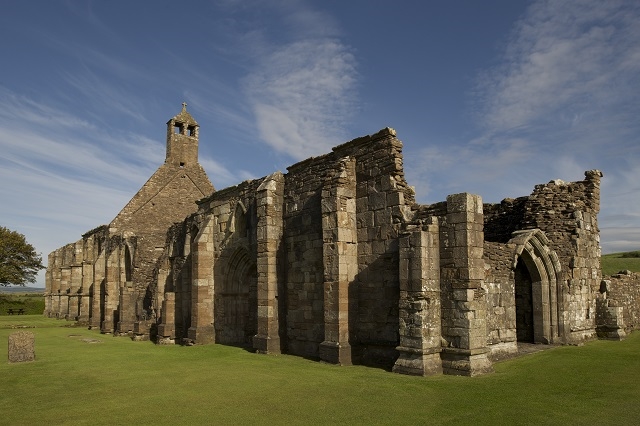
Back in September and October when filming in Scotland I visited the beautiful Glen Trool valley in Galloway Forest Park where, in 1685, six Covenanter men were murdered by the state for holding an unauthorised prayer meeting. The location of their killing and burial is at Caldons, on the edge of the loch. It wasn't well signposted and it took a few wrong turns before I found it. The stone which is there today is a recent replacement, within a protective walled enclosure – the original stone is in nearby Newton Stewart Museum (the stone had reportedly been vandalised in the 1980s, and so was taken away for safe keeping). Here is a pic of it when it was still at Caldons –


Why go? Well, Caldons was the very first Covenanter stone to be re-inscribed by famous stonemason Robert Patterson (1715–1801), who was also known as 'Old Mortality'. He spent much of his life travelling around Scotland to re-inscribe the weathered, eroded inscriptions of Covenanter gravestones, for fear that the stories would be lost forever. In 1816 Sir Walter Scott even wrote a novel about him, of the same name. Scott mined numerous classic sources to construct the storyline.

Keep re-inscribing the old stories. As Plato once said, "Those who tell the stories rule society". 


Wednesday, December 15, 2021

The Kennedys of Ayrshire, Ulster and Fife

There's a kind of a 'black hole' knowledge gap about Ulster's connections with Scotland in between the two massive events of A) the Bruce campaign of the early 1300s, and B) the arrival of Hamilton & Montgomery in 1606. That's almost three centuries that need to be properly uncovered and explained. One family where some major research should be done is the Kennedys of Ayrshire, later the Earls of Cassilis (pronounced Cassells). They had been gifted a title and land by Robert the Bruce, and both the Hamilton Manuscripts and Montgomery Manuscripts show that a new wave of Ayrshire Kennedys came to Ulster with them in the early 1600s.

But in between those two big dates the Kennedys had various castles and family seats along the Ayrshire coast, firstly at Dunure and also at Culzean. Their name can be found in histories of Maybole (where the Kennedys founded a college in 1246; source here) and Ballantrae, and there is of course a Castle Kennedy near Stranraer. This rhyme gives some idea of their influence –

From Wigton to the toun of Ayr,
Port Patrick and the cruives of Cree;
Man need not think for to byde there,
Unless he court with Kennedie."

The first Lord Kennedy was Gilbert Kennedy of Dunure (1405–1489) and was titled in 1457. His parents had been Sir James Kennedy and Lady Mary Stewart who was daughter of Robert III King of Scots. So the Kennedys were powerful and influential within Scottish society.

Crossraguel Abbey, Ayrshire – Churches, Cathedrals & Abbeys | VisitScotland

The Kennedys were deeply involved in ecclesiastical life and history of the magnificent Crossraguel Abbey just outside Maybole (shown above). Two big things came to my attention again recently. 

BANGOR: John Kennedy, Abbot of Bangor Abbey was appointed to that position in County Down in 1395. His seal and matrix are on display in North Down Museum in Bangor. The illustration here is from the Ulster Journal of Archaeology, Second Series, Vol 7, No 1 (January 1901). The seal was reportedly found at Saul Abbey; the text reads Sigillum Rev. Patris Johanis Kenedy, Abbatis de Bangor (translation: The Seal of the Rev. Father John Kenedy, Abbot of Bangor).

Rev William Reeves' 1847 Ecclesiastical Antiquities of Down, Connor and Dromore has nothing to say about Kenedy; neither does Rev. James O'Laverty's 1878 An historical account of the Diocese of Down and Connor, ancient and modern. But it is possible that John Kennedy was of the Ayrshire family. Certainly the Abbot of Crossraguel Abbey was also titled 'Ambassador to Ireland' in 1429 (source here).


ST ANDREWS: James Kennedy, Archbishop of St Andrews (1408–1465) in Scotland was appointed to that position in 1440. He was a younger brother of the first Lord Kennedy. He succeeded Henry Wardlaw who had founded the University of St Andrews in 1413. Archbishop Kennedy was a key figure in the development of the town as a centre of ecclesiastical learning. He was buried in St Salvator's Chapel, with a magnificent memorial tomb (see here). His seal looks pretty similar to that of John of Bangor –


• The family history, published in 1849 and entitled Historical Account of the Noble Family of Kennedy, Marquess of Ailsa and Earl of Cassilis is online here.


Tuesday, December 14, 2021

Ards Football Club, founded 1900

A friend sent me this new video recently. Ards Football Club are my local team, one of my uncles was a devoted supporter but I only ever went to see them play a few times. Ards have not had their own ground for about 20 years when Castlereagh Park was sold off and demolished. There are new efforts to 'bring them home'. As regular readers here will know, I have traced the first football pitch in Ireland to the area around the War Memorial in Newtownards (see previous post here). Maybe there's a 'fly on the wall' style documentary in this –

Monday, December 13, 2021

'Rabbie Reimagined: Gibson, Burns, and Belfast' – Linen Hall Library marking the 120th anniversary of the Andrew Gibson collection


I had the immense pleasure of taking part in an online event for the Linen Hall Library last week – an unscripted conversation with Dr Carol Baraniuk. I even got the opportunity to play some mandolin and to read Burns's own research notes about the tune The Caledonian Hunt's Delight, which he said had come from Ireland or possibly the Isle of Man. He used it for Ye Banks and Braes of Bonnie Doon. It's been posted onto YouTube and you can watch it below. We could have talked all night! 


Tuesday, November 30, 2021

"Oh That Will Be Glory for Me" – Charles M Alexander, 1905

I've posted here about this song before, nearly three years ago (previous post here). It was the first worldwide gospel "hit" in the new-fangled era of recorded music. Below is a YouTube video of  Alexander's original recording. My aunt Agnes, my late mother's closest sister, is in her final days and is preparing for her onward journey; she has chosen this as one of the hymns for her funeral service.


And somebody has quite recently done this to it –

Tuesday, November 09, 2021

"Ulster-Scots is basically just bad English. It's not a language its just bad pronunciation"

So said one of NI's most lauded musical figures in a very recent FB video stream. Class prejudice dressed up as intellect, a cheap shot to amuse one's socially superior peers. I am thankful to the friend who brought it to my attention.

Thursday, October 21, 2021

"Historical Belfast" podcast – Thomas Carnduff: The Shipyard Poet From Sandy Row

I was delighted earlier in the year to have the opportunity to freewheel a bit on a Zoom conversation with Jason Burke for his Historical Belfast podcast, mostly about Independent Orangeman Thomas Carnduff but also then a bit more broadly about contextual things too. Carnduff, like Mary Ann McCracken and other cultural figures, is sometimes "claimed" by one side or the other in our present day – but in fact they challenge and defy our present-day categorisations, and their lives and cultural interests cut across the social lines that we today imagine to be set in stone.

You can listen to it online here, I'm on at 11:55. 

Tuesday, October 19, 2021

Doug Elliott, 1947–2021– "friend, ulster scot"

(reproducing here a Facebook post from a week ago)


If you hear a piper in Ballyholme at 3:30 this afternoon, it will be FMMPB Pipe Major Richard Parkes MBE, to accompany my friend Doug Elliott on his final journey. I came off the ferry from Scotland last night to find that, after a long illness, he had died. Although he had become understandably private in recent years, some of you will have known him, and I am sure June and Gareth and family would be happy for you to be present at Sheridan Drive later.

Doug was a phenomenon – a working class lad who became one of Belfast’s renowned architects and conservationists of his era; he rescued the Ormeau Baths building, regenerated the Gasworks site, won multiple RIBA architectural awards, assisted Field Marshal Montgomery Pipe Band (he and June took me to Glasgow to see FM win the Worlds on two occasions, for which an integral part of the pre-competition ceremony was a Friday night meal for the band and entourage at Café Gandolfi. We did some graphic design work together for the band as well, around '07. Doug, Richard and the FMMPB team invited me to compere a gala concert at the Ulster Hall, which I was truly honoured to do for them, on 30 March 2009  – previous post here).


Doug and I had known each other since the late 90's, we became friends around 2002 – and especially so when he conceptualised our house design about a decade later. He taught me to love Milanese espresso whilst introducing me to the vernacular Ulster traditions work of Prof Estyn Evans at QUB.

This is the square window we spent many afternoons beside - at the back of one of the award-winning landmark Gasworks buildings that he designed, and which his BATIK interiors and modern furnishings business moved to from their Adelaide Street former linen warehouse - overlooking the city and imagining new futures. Those of you who were part of GCAS may not know that around 2005 we had some chats with Doug about relocating the entire group of companies from Russell Court into this building.

His lasting legacy to me - friendship, guidance, clarity of thought, a respect for the rural - and a perfectly conceptualised family homestead that belongs to the landscape of the 'far east' Ulster townland that my family have toiled for centuries.

When we began that design process, Doug sent Hilary and I off many times, to absorb Philip Robinson's marvellous buildings conservation at the Ulster Folk and Transport Museum, and the Ulster American Folk Park, to immerse ourselves in their details and proportions, for inspiration but not straight reproduction. "Not allowed kerbs! No tarmac! Let the weeds grow!" We’ll finish it one day.


My friend Doug Elliott. Time is short. Life is precious.

(pic of Doug and June is from the FMMPB Facebook post).


DA Chart – "A History of Northern Ireland", 1927


I picked this book up recently, as I was keen to see how Northern Ireland 'officially' presented itself in the years following its establishment. Published in 1927, D.A. Chart (1878–1960; biography here) was the renowned Deputy Keeper of the Public Records Office of Northern Ireland from 1924 – 1948. There are some interesting narratives in it (it starts in ancient times, it agrees with the Patrick & Clyde origin story, the Edward Bruce campaign of the 1300s is in there, and his summary of 1798 is interesting). The county descriptions are pretty much the same as the Ulster Tourist Development Association publications from the same decade, which were written by people like St John Ervine.

Given Chart's soaring scholarship, the book is disappointing. As an example of his true mastery, his 1942 paper The Break-Up of the Estate of Con O'Neill, Castlereagh, County Down, published in the Proceedings of the Royal Irish Academy Vol 48, is quite brilliant. It's also a critically important piece of work as it presents a detailed analysis of contemporary sources on the historic land transactions in north and east County Down which took place from 1571–1623, from an original Chancery Inquisition that PRONI had just acquired in the 1940s, with original letters patents. Perhaps PRONI still have it. Chart's paper starts with the Sir Thomas Smith failed English colony of 1571–5, and then jumps forward to 1605 and the James Hamilton & Hugh Montgomery era.

Of particular interest to me within it are –

• an Articles of Agreement document dated 24 December 1605 in which Hugh Montgomery and Con O'Neill "covenant not to injure each other, but to aid assist and defend each other and their tenants from wrong. If controversy arises amongst their followers, it is to be judged by the parties or two or four of their most discreet and impartial followers. At the time of the ensealing of any deed or feoffment each party is to deliver to the other a bond of £1,000 for observing the covenants".

A man I know who did a PhD on the era told me he'd found evidence that, in the decade prior to this Agreement, the Montgomeries had been supplying the O'Neills with arms during the Nine Years War. The Montgomery-O'Neill relationship is a fascinating dynamic.

• a document dated 25 April 1606, written by Hugh Garvan, the Clerk of Crown in Scotland, in 'Ervine' / Irvine in Ayrshire

The Hamilton & Montgomery Settlement began just days after, in May 1606. Some people today assume, or allege, there has only ever been perpetual adversarial conflict here – but often the primary sources erode those claims away. It is dangerous to overlay present-day assumptions on the past. We all have much to relearn and to reassess.


Wednesday, October 06, 2021

The 'Loyal Left'?

My grandmother worked on a factory floor
Sewing leather for minimum wage...
My daddy grew up, on the wrong side of poor
Rubbin' nickels together for heat.
Well, he and his sister had barely got by
With the clothes and the shoes on their feet.

Red, white and blue
Those colours mean something
Those colours stay true.
Like my family before me,
I'll feel it too.
The blood that's in my veins,
Runs red, white and blue.

That song by Aaron Lewis is of course from an American perspective. Here in the UK there's been a lot of talk about the former 'Red Wall' in the northern half of England – working class post-industrial cities and communities that have been unassailably Labour Party strongholds for generations. Until very recently. Over the past generation the Labour Party's power centre shifted southwards geographically, and upward socially to the white collar professional classes, largely abandoning values and interests of the blue collar working classes, and branding them as 'gammon' and other epithets. Recent research says that of all of the Labour MPs today, just 7 of them had a working-class job before they entered politics.

In Northern Ireland, and especially the madder corners of Twitter (which provides fascinating insights into the deficient, deranged, radicalised worldviews of the new 'connected' generation) you will see utter nonsense like 'Unionists can't be socialists". Where do you start with that?  

There is within the UK what might be called a 'Loyal Left' – people who are working class and who also strongly identify with their community and nation, whatever that nationality means for them (and also the distinctives of internationalism, rather than homogenised globalism). This is the case in every democracy in the world. How could it be otherwise? As GK Chesterton once wisely wrote –

A poor man has much more interest in good government than a rich man. A poor man must stay and be misgoverned; a rich man has a yacht.


To get back to the theme of the song above, my mother worked in the Berkshire textile factory in Newtownards until I came along; I eventually went to the grammar school in the town. Other kids in my year had parents who were teachers in the school - my mother's cousin Patsy was one of the dinner ladies. I was reasonably bright, but I often felt pretty inferior and inadequate in school – but I also made lots of good friends there, of all classes and viewpoints, some of whom I have recently reconnected with. The only way to treat people is as individuals, and take them as you find them.

I do hope that the craziness of Twitter is, as some have suggested, organised and choreographed from 'bot farms' – because if it is in fact authentic and spontaneous, and revealing of widely-held attitudes, then society is heading nowhere good. As Eric Hoffer wrote:

Mass movements can rise and spread without belief in a God, but never without a belief in a Devil.

If your neighbour is your devil, your ideology is poison.

Thursday, September 16, 2021

Lukas Nelson & Family - Turn Off The News And Build a Garden

I turned off the news about 18 months ago, not long into Covid. I feel sorry for newsrooms having to re-present the same issues over and over again. I am also wary of narratives, and the damage caused by the perpetual state of fresh crisis that is presented to us daily.

This recent article on The Critic by Henry McDonald caught my eye as he paints a wider context which resonates with me. I know nothing about the book he is reviewing but the broader brush that he uses aligns with much of my memory of the decade from say 1997–2007 here in Northern Ireland –

"...the rest of us who reported on the Good Friday Agreement’s creation and the subsequent demise of Trimble’s UUP thinking it was all to do with Tony Blair chucking him under a bus..."

Everyone sensible that I know understands that Northern Ireland society needs agreement. But what type of agreement, and is that type of agreement even possible?  The latest difficulties are not the first difficulties. Rose-tinted selective nostalgia leaves everyone unprepared, and the clickbait style reporting of everything as an unprecedented disaster only ups the ante.

Turn off the news and build a garden
Just my neighbourhood and me
We might feel a bit less hardened
We might feel a bit more free
Turn off the news and raise the kids
Give them something to believe in
Teach them how to be good people
Give them hope that they can see
Turn off the news
And build a garden with me

Thursday, August 26, 2021

Waitrose – Jerk Prawns with Scotch Bonnets – by Melissa Thompson


During the summer I always enjoy a lot of local seafood, including the massive Strangford Lough langoustine prawns which James Martin has featured on his TV shows, and woodfire cooking on our Stadler oven. YouTube's algorithms have figured me out and sent me this video. I'd definitely prefer a 'proper' Portavogie prawn than this variety, but the recipe and end result look great. Check out Melissa Thompson's work online here.  

Thursday, July 08, 2021

Inglorious Monarchs

It only takes a light knowledge of history to quickly realise that all leaders – whether hereditary kings and queens, or elected politicians – are deeply flawed. Psalm 146 exhorts the reader to "put not your trust in princes". Part of our problem today is that we are so bombarded with the latest news that our mental inboxes quickly fill up and we subsequently have very short memories. We can't recall events of last week, so we are subject to the push and pull of whatever today's new drama and outrage is, with little or no wider context or memory to measure it against.

A familiarity with the history of the Bible is a huge help. The Hebrews wanted a king. They had not had one before, for the previous 400 years they had a sequence of twelve Judges instead, both male and female, ruling over their familial tribal confederation. One of them, Deborah, is shown below.


But all of the other non-Hebrew tribes around them had kings, so they demanded one too. So, through Samuel the prophet, God gave them a warning about what would inevitably happen if they did get a king – "he will take your sons... he will take your daughters... he will take your fields and your vineyards and your oliveyards... and you shall cry out in that day because of your king" (1 Samuel 8 v 11–18). 

They insisted, and so they got their King. The first, Saul was succeeded by David, who was then succeeded by Solomon. All three were deeply flawed. After the 120 years of their collective reign the kingdom split into two, along those ancient tribal lines – called Judah and Israel – each with its own king, and the majority of them  oppressed the people. There are charts which track them all, showing which were good and which were evil (one example chart from Pinterest is below). Understanding this history is a very useful education. Monarchs can be bad.


Fast forward to the Reformation that had been simmering in some localities in Europe for a few centuries, but which eventually exploded with Martin Luther in 1517 in the advent of the printing press. With the Bible being translated into various vernacular languages, a newly literate people could read and think for themselves. The power and politics of the theocratic superstate the Holy Roman Empire (Wikipedia here), which owned vast amounts of land and puppet Kings across Europe, could not stand idly by while its dominance was challenged.

The teenage King James V of Scotland allowed his young relative, the 28 year old abbot Patrick Hamilton, to be burned alive in the street in St Andrews in 1528. James V's widow, Mary of Guise and the Regent James Hamilton, ordered George Wishart, a teacher of Greek, to suffer the same public fiery fate in the same streets in 1546. Monarchs can be bad.

Wishart's burning was witnessed by John Knox (some accounts say that Knox had offered to be burned along with Wishart); Knox later went to Geneva in Switzerland to assist with the production of the Geneva Bible of 1560 (Wikipedia here). The Geneva Bible wasn't just the text, it also had marginal interpretive notes to aid the reader. Its authors chose to advise the readers that 'monarch' can be 'tyrant' – more than 400 times. The 'tyrant' references in the pages of the Geneva Bible were evident to its readers.Knox returned to Scotland and had a number of famous verbal confrontations with Mary, Queen of Scots from 1561–1564. 

Knox's successor, Andrew Melville, had a famous public clash with Mary's son, King James VI, in which he made clear to James that he was merely

"... God's silly vassal; there are two kings and two kingdoms in Scotland: there is King James, the head of this commonwealth, and there is Christ Jesus, the King of the Church, whose subject James the Sixth is, and of whose kingdom he is not a king, nor a lord, nor a head, but a member..."

James VI was apt to banishing people who stood up to his abuses of power, such as Rev Robert Bruce of Edinburgh. Monarchs can be bad.

So the new King James decided to commission his own Bible, removing those 'tyrant' references, which was published in 1611. Interestingly in Ulster the Geneva Bible persisted for some time (Hugh Montgomery gifted large presentation editions of it to six of his Ulster-Scots County Down churches in the 1620s) and the readers of that Bible would soon experience monarchical tyranny for themselves. Monarchs can be bad.

More to follow...


Sunday, July 04, 2021

Happy 4th July; think independently


It's that day again, celebrating the success of the American Revolution and marked forever on 4th July 1776, the day that the Declaration of Independence – overseen by Charles Thomson from Upperlands and printed by John Dunlap from Strabane – was signed. The Revolution was a 'Scotch-Irish rebellion' as some commentators at the time said. Liberty before loyalty (to the crown or the state), community before nation, and maybe people before power. A 'covenant' of sorts. You'll read or hear very few NI commentators today who understand this, or who can recognise that this has surfaced at various points along the arc of Ulster-Scots history. Think independently. 


Thursday, June 24, 2021

2014

Connecting with the previous post, made almost fifty years later in 2014 this short film by Charlie Brooker and Adam Curtis might help explain a lot of our recent disorienting world... "no one was sure what was real or was fake ... its a strategy of power" – sometimes called "non linear warfare". A short profile of the architect of this strategy – Vladislav Surkov – is on the BBC Radio 4 website here.

Tuesday, June 22, 2021

1966

This isn't my usual content here, but YouTube offered it to me and it is certainly very interesting. Also, if it is from 1966, it has many prescient themes for what engulfed Northern Ireland around that same time. 

Sunday, June 06, 2021

Voddie Baucham

Friday, June 04, 2021

Irish Whiskey Review livestream


Had a lot of fun doing this livestream chat with Marty McAuley and Justin Macartney – and of course with Fionnán O'Connor last Saturday night, ahead of the BBC broadcast of Whiskey Talkin'. More on that to follow...

Thursday, June 03, 2021

Football's Coming Hame

Well done to the marketing people at Adidas for this stroke of Scottish genius, painted onto a wall in Glasgow ahead of the European Championships which begin next week. 

Football is not just a sport, it is a deep form of popular identity formation, both locally around towns and cities, and also for nations or countries.

I have travelled back and forth to England a lot from 1992 onwards. I distinctly remember summer 1996 – the summer of the Euro '96 tournament being hosted there, and of course the famous anthem Football's Coming Home – as the summer when Englishness and St George's Flags seemed to suddenly explode in popularity. Flags were flying in pubs and gardens and town centres to an extent I'd never seen before. And being from NI, I am fairly flag-conscious!

The wave of 'Cool Britannia' was a factor in Tony Blair's Labour Party coming into government less than a year later in May 1997 (remember Things Can Only Get Better?) – yet these things also enhanced the sense of individual nations within the UK. That autumn, in September 1997, the Scottish Devolution Referendum was held, and by summer 1999 Scotland had its own Parliament once again. And ever since, Scottishness has become more and more distinctive.

Englishness and Scottishness have revived and diverged over those past 25 years. Football might have kicked it all off in 1996. 

Wednesday, June 02, 2021

Untidy desks and three perspectives on the "culture wars"


In this interview, Eric Kaufmann says that "if your desk is messy you're more likely to be liberal on immigration" (go to 28:40). So that's me defined – and might help explain why I see the Ulster/Scotland relationship as one of a continuum of two-way (im)migrations rather than one-way top-down power-led oppressor-imposed "colonialism".

I first came across Kaufmann around 2007 when he did an academic review of the then Institute of Ulster-Scots Studies at the University of Ulster. There's a lot that's interesting stuff in this interview with Thaddeus Russell around the whole "culture wars" and "wokeness" stuff that's so hot right now. Russell himself is an interesting figure, he says on his own website that "during my early childhood our house on Woolsey Street in Berkeley hosted Black Panthers, IRA guerrillas, and Marxist intellectuals from all over the world."

Another angle is by Mary Eberstadt of the Catholic Information Center in Washington DC who sees it all as a surrogate family, a social purpose for the family-less generation, as she explained in this recent Triggernometry interview –


Finally, this fascinating, detailed and lengthy article in Jewish periodical The Tablet by Michael Lind – The Revenge of the Yankees: How Social Gospel became Social Justice – looks back to 100 years ago in the USA when it was an American Northern Protestant 'Social Gospel' ideological élite who sought to set the nation's cultural agenda. He makes the connection between that movement and today's increasingly authoritarian secular 'wokeness' (which again seeks to set the cultural agenda) and proposes that it is in fact a direct descendant. Here's a killer quote –

"The increasingly powerful and intolerant woke national overclass justifies its cultural iconoclasm in the name of oppressed minorities. But this is just an excuse for a top-down program of cultural imperialism by mostly white, affluent, college-educated managers and professionals and rentiers. Woke attitudes are much less common among Black Americans and Hispanic Americans than among the white college-educated elite.

What we are witnessing is a power grab carried out chiefly by some white Americans against other white Americans. The goal of the new woke national establishment, the successor to the old Northeastern mainline Protestant establishment that was temporarily displaced by the neo-Jacksonian New Deal Democratic coalition, is to stigmatise, humiliate and disempower recalcitrant Southern, Catholic, and Jewish whites, along with members of ethnic and racial minorities who refuse to be assimilated into the new national orthodoxy disseminated from New York, San Francisco, Washington, D.C., and the prestigious private universities of New England. Properly understood, the Great Awokening is the revenge of the Yankees." **

Kaufmann and Russell get onto similar ground as Lind, by asking if what's happening around these issues is neither racial, nor economic, but is in fact a class conflict (go to 24:00) –

"... could it still be about class? Class is defined both culturally and economically – you can have working class culture and be rich, and vice versa ... it's been largely a civil war between those who are 'of college' – who went to college and speak the language of humanities departments – and those who are not of that world and that culture. Higher education has defined the culture of the dominant liberal class..."

The world is changing. There is always lots to think about. The easy answers are usually wrong.

• Thaddeus Russell's website is here


** PS:  Where Lind goes wrong is that he slips into 'groupthink', and fails to explain that the group term 'Protestant' is not a singular entity, but a widely diverse categorisation. 'Protestant' – both in Ireland and in America – can often be an unhelpful term, just used as a lazy umbrella which in fact camouflages a multiplicity of differing ideas, denominations, communities, the powerful and the powerless, etc. It should be theological, but seldom is any more. The 'Protestant' concept in the context of Michael Lind's article is the very same WASP 'Protestant' concept that JD Vance, author of 2016's Hillbilly Elegy, dissected when he said this in his opening pages –

“I may be white, but I do not identify with the WASPs of the northeast ... Instead, I identify with the millions of working-class white Americans of Scots-Irish descent who have no college degree.”