
Monday, March 25, 2019
Saturday, March 23, 2019
Brexit, Trump, etc - The Ulsterisation of 'western' politics
(Images here from the 2005 movie V for Vendetta)
......
I've avoided committing these kinds of thoughts to pixels, apart from briefly here in June 2016, but here goes. I still think that culture is more important, enduring, and flexible, than politics.
Regardless of your stance on Brexit, I think that we are observing the 'Ulsterisation' of UK politics, and perhaps politics across wider 'western' society. But it hasn't happened overnight. It has been developing, ignored, for the past few decades. Like the plot of some sci-fi B movie, unspoken forces were seeded underground a long time ago and have been creaking and hatching ever since. Suddenly they have now broken through. The wreckage is everywhere.
Countries which have for those decades ignored their social fractures and tensions, are now experiencing the sort of 'two tribes' politics which we specialise(d) in here, and for which we used to be chastised by various world leaders. Now their successors are experiencing similar dynamics within their own populations.

Brexit has forged two political communities in the UK which have very little to do with the old party loyalties of the past 100 years. The state of the Conservative and Labour parties show this - both are riven on the issue. The endless diet of coverage galvanises these two communities into hard camps. 'Leave' and 'Remain' are no longer just administrative preferences, they have quickly become badges of personhood, defining the new human tribes of 'Leavers' and 'Remainers'. There are few shades of grey in between. As with here, for generations these tribes have read their own newspapers, listened to their own spokespersons, absorbed their own journalists. They do so even more so now, creating 'echo chambers' of 'bias confirmation', consuming what suits their tastes from the digital media menu, messages which reinforce that you are right and good and they are wrong and bad.
As with here, socially these tribes hardly ever encounter each other. They live in different worlds. When they find themselves in each other's presence, there is a discomfort or near-horror; social etiquette causes them to avoid the big issue and maintain polite small-talk. So there is little or no interaction, little or no empathy. 'They' must be defeated.
The two communities have widely differing life experiences, inherited understandings, lifestyles, and aspirations, and the EU Referendum was simply an outlet for that. David Goodhart has famously described these as the somewheres and the anywheres (BBC video here). Since June 2016 they have become committed opponents, suspicious of each other and unable or unwilling to empathise with the other. Maybe even now forged into enemies. Just listen to the phone-in shows. Watch the social media arguments. Speak to your friends in England in particular. If you make a light-hearted remark on the subject you do so at your own peril.
Once-sensible media voices become fevered. The decline of the traditional media has turned into a dogfight for survival in the online world, where advertising revenue depends upon clicks, and so the outrage machine has developed to generate anger, and to then convert that anger into income. One community gets told lies about the other, about people who were until very recently their neighbours. Hideous caricatures are painted in your mind about the type of people they are. You start to believe the exaggerations. You get radicalised.
Just why did 17.4 million people vote 'Leave'? Are they all - as the mainstream media would have us believe - stupid, gullible, racist, bigots? Gordon Brown's 2010 accusation that 65 year old Rochdale woman Gillian Duffy was a 'racist' comes to mind. Emily Thornberry's similar remarks about 'white van man' in 2014 are another example. Trump voters are similarly characterised by the loudest American voices.
I doubt that these simplistic diagnoses are the full story. Because no 'decent person' wants to be any of those things, perhaps the smears are strategically deployed with the intention of causing a recoil, and thereby stopping some of those people from ever voting that way again. But smarter voices - like this video from the Cato Institute – have a deeper set of thoughts.
The entire UK has been polarised and Ulsterised – along lines that are different than ours, but with similar social effects. And it has of course added a whole new world of complexity here, and the issues around the border and 'backstop'. Northern Ireland has lived in an ambiguous dual-nationality detente since 1998. There is no room for ambiguity now.
Whatever happens in the coming weeks, the tectonic plates have utterly shifted, releasing huge subterranean pressures, and the future will not just be a simple reset to a pre-2016 world. Whether there is a Brexit or not, the underlying issues which caused Brexit in the first place have never been fully identified and taken seriously by government, not reflected upon by the media and the nation, not considered by neighbours. Those issues still, dare I say it, remain.
But there will be no going back.
(PS: Acclaimed Rolling Stone journalist Matt Taibbi's forthcoming book, Hate Inc. - link here - looks like it will be an important one.)


Thursday, March 21, 2019
Beware of some academics – "The Globalization of Irish Traditional Song Performance" by Susan H. Motherway (2013)
My rather odd inclusion in this 2013 book (GoogleBooks edition here) came back to mind the other day. I stumbled upon it a few years ago, with some surprise and then bewilderment. The author - who made no contact with me or the other guys in the group (as confirmed by the list of contributors) - dissected the CD booklet notes, and overlaid an analysis, perhaps fulfilled the course requirements and satisfied the publisher's expectations. But this mangling is what can sometimes happen when normal low-key people's lives become 'content':
"the constructivist nature of Ulster-Scots music, the political overtones of this music, and the perceived low standard of performance are preventing Ulster-Scots from entering the global market".
It might come as a surprise to Susan H Motherway, but sometime people of very limited ability simply enjoy music for their friends, families and local communities with not a care in the world for what the politics and sociology fixated few, or the 'global market', think. I would suggest that some of the other references within the chapter are ... revealing in their tone and implication.
The first 'Low Country Boys' CD Gran Time Comin is/was a local effort with limited sales and popularity. So, using it as some kind of cultural quality or legitimacy indicator is like comparing Portavogie Rangers with Real Madrid. I remember the late, renowned, Geoff Harden reviewing one of our performances where he said something like 'vocally okay but instrumentally mediocre'. He was probably right!
This is not an isolated example. Numerous academics have used Ulster-Scots as content fodder for their own purposes, I have experienced and observed this myself, and I know it has been the experience of many others. These academics selectively home in on the themes and material which suit their own momentary interests, but to the exclusion of the wider available canon. On one level it doesn't really matter. But it leaves behind a trail of (potentially) skewed misrepresentations, with a gloss of academic authority. These live for a long time both online and in libraries, and cast a long shadow of influence. But the course is passed, the grades are achieved, and they move on to the next subject.
In my own design and interpretative work, I make very sure to consult and clear people's contributions before printing. Folklorists of times gone by would go to great lengths to treat their contributors with respect and to present them with authenticity. This seems to not apply as an ethic for some academics. Plenty of knowledge but no understanding, and no desire to understand.
In a world now obsessing about 'privilege' (some of which is to me exaggerated and divisive, but some of which is absolutely true) then surely there is academic privilege. This entitles some in the academy to scrutinise and critique people who are much further down the social hierarchy, who have much less power, who don't have access to well-funded career paths, publication contracts and intellectual and social influence - 'punching down' if you will.
Be careful out there.
Monday, March 18, 2019
Liberty first, loyalty second

This is the natural order. Liberty is the essential and, if liberty is provided, then loyalty is warranted. John Brekell (1697-1769) was an English Presbyterian and an inheritor of that tradition which demanded liberty first, and from that, loyalty second.
It makes no sense to be loyal to a state - whether monarch or government - which is restricting individual or community liberty. This is I think the consistent instinctive position of the Ulster-Scots community, even though they/we might not understand that or articulate that. There are numerous examples of this. So it makes no sense to be a 'loyalist', without a commitment from the state - no matter what part of the world you live in, no matter what historical era - that your liberty is secure. Liberty at risk has often galvanised Ulster-Scots to resistance and revolution.
As the 'Father of Black History', and son of freed slaves Carter G Woodson famously wrote in 1916 –
'… the strongest stock among these immigrants, however, were the Scotch-Irish, "a God-fearing, Sabbath-keeping, covenant-adhering, liberty-loving and tyrant-hating race" which had formed its ideals under the influence of philosophy of John Calvin, John Knox, Andrew Melville, and George Buchanan. By these thinkers they had been taught to emphasise equality, freedom of conscience, and political liberty ... when they demanded liberty for the colonists they spoke also for the slaves ... the ideals of the westerners were principally those of the Scotch-Irish, working for "civil liberty in fee simple, and an open road to civil honors, secured to the poorest and feeblest members of society" ... they therefore hated the institution [of slavery] ... on the early southern frontier there was more prejudice against the slave holder than against the Negro ...'
Liberty first, loyalty second.
Thursday, March 14, 2019

Saturday, March 09, 2019
Presbyterian whiskey - Samuel Wilson Boyd (1860–1932) "... bottled-up happiness, it drives away the heartache..."

Boyd & Company Old Irish Whisky artefacts and memorabilia come up quite regularly.
For about a decade Samuel Wilson Boyd (1860-1932) was Chairman of The Old Bushmills Distillery Company having been the founder and owner of Boyd & Co. Distillers, Belfast. Born in Belfast, his latter years were lived at Fairbourne, Fortwilliam Park in Belfast. He was a member and 'liberal subscriber' at Fortwilliam Presbyterian Church (which closed its doors in October 2018).
His first job was with the Belfast spirits firm Mitchell & Co, who also had interests in Glasgow. Their founder, William Charles Mitchell, was born in Glasgow in 1834 but came to Belfast in the 1860s to manage the 'crowned king' of Ireland's distilleries, Dunville & Co.. Mitchell was a founder of the St Andrew's Society in Belfast.
Around 1902 Boyd bought Thomas Quinn & Co of Hill Street, which later became Boyd & Co. He was chairman of the Ulster Anti-Prohibition Council and also of the Distillers and Wholesale Wine and Spirit Merchants Association.
The Census of Ireland in 1901 and 1911 shows that the family were then living at Claremont House, 1 Ardenlee Avenue (I think the Martyrs Memorial Free Presbyterian Church is now on the site). Their son Cecil was killed in the Great War; he is named on the roll of honour in Whitehead Presbyterian Church. The family sold the house in August 1919.
1923 was a big year for Boyd – he bought the Bushmills distillery, and later that year all of the offices and warehouses that Bushmills owned in Hill Street. He also took to the stage that same year as you can see here:

He oversaw Bushmills becoming a limited company in 1930, with two of his sons as co-directors. He toured America for some time, investigating the effects of Prohibition. He died in June 1932, the funeral was conducted at Fortwilliam Presbyterian and he was buried at the City Cemetery.


Edwin Henry Shaw and the Scottish Saint Patrick mosaic in St Anne’s Cathedral, Belfast

Edwin Henry Shaw was yarn merchant who lived at Ailsa Lodge, Craigavad. and had business premises in Bedford Street, Belfast. He was the benefactor who paid for the building of the Chapel of the Holy Spirit in St Anne’s Cathedral, which includes the spectacular mosaics by sisters Gertrude and Margaret Martin, one of which is a ‘tympanum’ that depicts St Patrick sailing from Scotland, with a Scottish saltire flag at his feet (shown above).
The two London-based artists spent at least 4 years on the Cathedral, from 1928-1932, having previously worked on similar commissions at Westminster Cathedral and the Houses of Parliament (see their Patrick, Columba and Brigid mosaic below).
What is particularly interesting is that none of the newspaper reports remark on the prominent Scottish imagery on the mosaic – suggesting that the traditions of Patrick’s Scottish origins were widely understood and accepted in that era.
The Chapel was consecrated on 5 June 1932 and dedicated on 9 June by the Bishop of Warrington and Bishop of Birmingham, which was a ticketed event. The Belfast News-Letter reported that the Bishop of Birmingham said ‘I take it that we rightly see in the Saint a Christian of Western Britain, whether his home was near the Clyde or in South Wales’. The paper also said that the mosaic showed ‘the coming of St Patrick, and his divinely appointed work of bringing light and liberty to Ireland’.
The Dean remarked that ‘Belfast had not hitherto found much room for the expression of religious emotion in terms of art, architecture, music, warmth and colour, owing in part to the circumstances of its growth, in part to their cold northern climate, and in part to their native Puritanism’.
It seems that Shaw had wanted to remain anonymous, but his identity became known against his wishes.
When Edwin Henry Shaw died in 1944 the newspapers of the time say that he left behind an estate of £216, 153. He had made multiple personal bequests, but the great majority was equally shared among five organisations – the Cathedral, the Royal Victoria Hospital, the Church Missionary Society, the South American Missionary Society, and the Royal United Kingdom Beneficent Association.
Edwin Shaw was the brother of Brevet-Major S H Shaw, who died in 1904 and left his estate to Edwin and their sister Elizabeth. Their father had been Charles Wolfe Shaw.

Tuesday, March 05, 2019
James Craig and family, 1921

(photo above from 1921)
Every now and again I dip into the St John Ervine 1949 posthumous biography of James Craig, entitled Craigavon Ulsterman. Ervine frequently uses the term Ulster Scot to describe the Craig family origins. Craig is best known as the first Prime Minister of Northern Ireland, and notorious for his usually decontextualised quote 'Protestant Parliament and a Protestant State'. It came up recently in conversation with a friend, whose perception of Craig has been almost entirely formed by repetition of that infamous 1934 soundbite, but who was unaware of the context, which is on Wikipedia here. Most people don't know that it was said in response to similar remarks from his Southern Ireland counterparts. Others out there will know the sources, I don't have them to hand here.
The biography also includes an interesting extract from 's Seán Ó Faoláin's acclaimed 1939 biography of Éamon De Valera, which appears to confirm that there was discrimination in the South - 'neither north nor south need pretend that the other is alone in this kind of penalisation on account of religion and private opinion'.

Efforts to create what might be called a mono-cultural ethnostate on the island of Ireland, or in one or other jurisdiction on the island of Ireland, should be equally acknowledged, and equally repudiated. It was not restricted to north or south. But our future can be better if we re-examine and critique our pasts, not just reinforce soundbites for ideological advantage. We choose what baggage we carry with us. Inflamed grievances will take us nowhere good.
Ireland is an island of cultural variety, and the province of Ulster arguably contains the most variety of all, if you can think beyond the stereotypes. Vikings, Anglo-Normans, Huguenots, Quakers, Moravians, Jews, Italians, Eastern Europeans - as well as the Irish, English and Scots.
We can also have differing worldviews from our neighbours. Neither is necessarily 'wrong', or 'bad', or 'evil' - but maybe just radically different through experience, understanding, perspective and aspiration. Realising that is important – whether in Northern Ireland specifically, the wider UK in terms of 'remainers' and 'leavers', or in the USA with the issues that led to the election of Donald Trump.
The 2021 centennial of Northern Ireland, handled well, presents an opportunity to improve understanding and relationships - by challenging 'fake news' narratives, by setting aside cherished mythologies, and by trying to improve everyone's cultural future.
As politics across the western world unravels, culture is still where the positive potential is.
.................
Below - a 1929 poster showing the co-operation of the Irish Free State and Northern Ireland on the agricultural and fishing industries. The respective tourism bodies openly proposed a joint marketing campaign in the USA including a billboard in Times Square in New York. Yet to listen to today's 'accepted wisdom' we might assume a history of constant conflict. It's not true - be wary of those whose careers depend upon creating that impression.


Andrew A Watt & Co – Londonderry and Glasgow
Huge thanks to Abby Wise for directing me to this mirror on my recent trip to Edinburgh. Wonderful Ulster-Scots artefact!

Saturday, March 02, 2019
When did 'we' stop telling 'our' sad stories?

Recently I've been working on a number of history projects, absorbing and learning stories which are new to me. Last week I was over in Scotland for a few days - literally a flying visit, from Belfast to Edinburgh - and spent a day on the old town where I re-visited some of the historic Covenanter sites. The photo above is of current restoration work on the famous monument to '18,000' martyrs in Greyfriars kirkyard. As ever, this has caused me to think and has also brought back some memories.
The 'we' and 'our' in the title of this post are references to broad present-day Ulster Protestant evangelical communities. I grew up on many sad stories - like the Covenanters, like Corrie Ten Boom, like Richard Wurmbrand and many others who suffered behind the Iron Curtain, like 'Brother Andrew', like Jim Elliott, of my grandparents and parents' personal stories of their own poverty during the 20th century in rural Ulster. Stories of suffering and one might say 'injustice'. We had a few copies of Foxe's Book of Martyrs which I eagerly read. There are many more examples. Even the many innocents who were murdered during the Troubles are mostly brushed aside.
For some reason 'we' have stopped telling our sad stories. They are socially impolite. A mixture of stoicism and amnesia, a 'press release' mentality and shallow optimism has skewed our self-image, and therefore others' impression of us. Stories stay 'safe' out of concern of causing discomfort or offence. But if 'we' insist we have always been comfortable - or victorious - then we have nothing interesting to say, and that somebody else, or some other group, must have been victims.
I know plenty of people - on both sides of our 'divide' - who have no idea of these histories and experiences. I gave my illustrated talk on the Covenanters a few months ago, to a mixed audience, and at the end one man in the Q&A session said "I had no idea you people had suffered too'.
Modern evangelicalism, in particular musically, emphasised up-tempo major keys and positive themes and notions of triumph and victory. Sermons have morphed into pep talks and life lessons and 'applying the text to Monday'. No wonder many whose life experiences are mostly minor keys and doubts and difficulties have stopped turning up on Sundays.
The 'We Are The People' slogan is not true. 'We' have suffered too. So 'We' need to tell our stories in a more rounded way, furthering both our own understanding, and the understanding of our neighbours and how they view us.
Thursday, February 14, 2019
The 'Border Clearances' and the Graham Reivers in Roscommon
(this was emailed to me by a friend a few years ago)
After the so-called ‘Ill Week’, when the riding clans of the Scottish borders raided deep into England after the accession of James I in 1603 in search of plunder, radical measures were taken to bring law and order to the Borders.
In the crackdown that followed ‘terror tactics’ were used. ‘Clan leaders, were dealt with. Thirty-two Armstrongs, Batys, Elliots, Johnstons and others were hanged. Fifteen more were sent into exile and 140 outlawed and in that year alone a force of 2,000 Scots left the region to fight for the Dutch in their war with Spain’.
The Graham family were singled out for ‘transportation’ or ‘transplantation’ to County Roscommon. They were to be settled together in order ‘the better to conserve their language and manners without mixture’. It proved impossible to keep the Grahams in Roscommon.
There was later a formal proposal to transplant them to Ulster in 1610. In practice, this was to happen unofficially. While keeping the Grahams together did not work in practice, the manner in which so many Scots were planted together in Scottish precincts during the Plantation of Ulster may well have helped to ‘to conserve their language and manners’.
Sources: Calendar of State Papers Ireland, James I, 1603-6, 1606-8, 1608-10; Michael Perceval Maxwell, Scottish migration to Ulster; Robert Bell, 'Sheep Stealers from the North of England': The Riding Clans in Ulster: History Ireland, Vol. 2, No. 4 (Winter, 1994), pp. 25-29
Tuesday, February 05, 2019

Saturday, February 02, 2019
Telling stories today
Over the past year or so, I’ve noticed that people now respond to stories in very different ways than they used to.
Stories of victory are now a turn-off. But stories of struggle and suffering really grip people.
Stories of triumph and success bring assumptions of domination and exploitation. But stories of oppression and injustice create empathy and support.
Most stories can be told both ways. If you tell yours the wrong way, you will lose your audience.
John Colter & the Blackfeet escape
When recently watching an episode of Steven Rinella’s brilliant Netflix series Meateater, (some clips on his YouTube channel here) he mentioned John Colter’s remarkable story.
Born in 1774 in Stuart’s Draft in the Shenandoah area of Virginia, and of Ulster-Scots descent on both sides of his family, his tale is one of heroism in the face of barbarism and brutality. When he was young the family moved to frontier Kentucky and in 1803 he signed up to be one of the “Nine Young Men of Kentucky” who joined the Lewis & Clark expedition which headed into the then unknown West from 1804-1806. The other eight were William Bratton, Joseph Field, Reubin Field, Charles Floyd, George Gibson, Nathaniel Pryor, George Shannon, and John Shields.
In 1808 John Colter and John Potts were attacked by a war party of Blackfeet Indians. Potts was cut to pieces, Colter was stripped naked and Potts’ blood and remains wiped all over Colter's body. The Blackfeet allowed Colter a head start but then pursued him, intending to kill him too. An experienced trapper, he found refuge in a beaver dam which he hid inside and eventually escaped.
Not for the squeamish!
Saturday, January 26, 2019
Dr Samuel Greenfield (1899–1952) aka Sam Carson - Belfast's Orange, Folk and Sacred singer


Carson's real name was actually Dr Samuel Greenfield, born in North Queen Street in north Belfast in November 1899. He went to Queen’s University Belfast, served in the Royal Army Medical Corps during World War I, then was appointed to Purdysburn Fever Hospital before setting up his own GP practice in the house he was born in.
He was also an accomplished singer; in the 1920s he was taking part in and winning folk song singing contests at music festivals. At some stage in the 1930s he began singing on BBC radio broadcasts and soon was recording 78s for a number of record companies, of Orange ballads, Irish folk songs (as either ‘Dan Quinn’ or ‘Barney O’Leary’) and also popular hymns.
He was President of Castleton Male Voice Choir, a member of Fortwilliam Golf Club, Whitehead Golf Lub, and County Antrim Yacht Club at Whitehead. He died at his home at 56 Cable Road in May 1952, with his funeral service being held at St John’s Church, Ballycarry.
His wife was Kathleen Alexander from Whitehead; their children were John, Geoffrey and Mary. Kathleen became the first woman chairman of Whitehead Urban Council, she died in 1967.
I am pretty sure that his original recordings were just a bit earlier than the more celebrated ones by Larne man Richard Hayward (1898–1964) who was probably a more accomplished singer, writer, broadcaster and playwright with broader cultural interests than Greenfield, all of which would have helped keep Hayward’s profile high. This Belfast Telegraph advert from 18 November 1932 includes Carson’s rendition of ’The Hat My Father Wore’.

This web page has a list of Carson recordings for the Regal Zonophone label among others which were issued in October & November 1933. This page has another Regal issued in 1933. There’s another selection here for Regal in 1934 with some as Barney O’Leary. There are some hymns listed here on Columbia in 1936.
PS: His father Robert Greenfield was celebrated in the Belfast Telegraph of 19 December 1946 as ‘our oldest bather’ - aged 86, he was a frequent swimmer in the sea at Whitehead.
• Advert from the Belfast Telegraph, July 1936

• An interesting 1938 article

• 1934 advert from a County Wicklow newspaper


Monday, January 14, 2019
Revival Hymns & Plantation Melodies (1882) - Part Two
As a brief update to this recent post, this website gives a really interesting overview of this important Kentucky hymnbook, compiled by Marshall William Taylor who was mixed-race, part Scotch-Irish.
It includes an early version of Wayfaring Stranger, (called ‘I’m Just a-Going Over Home)
“… as the ancient Hebrews perpetuated the plaintive songs of their captivity, so the freedmen of the South, by this volume, will keep in mind their longings for freedom and their spiritual - joys dominating over their oppressed and afflicted condition. It is a valuable contribution to the history of the colored race in America…"
Wednesday, January 09, 2019
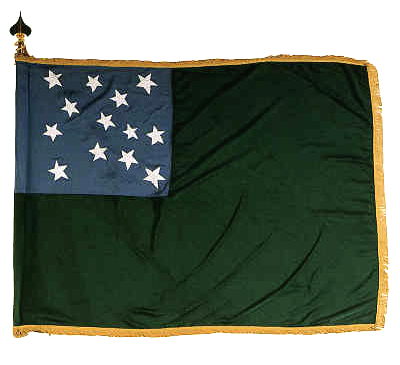
"Live free or die: Death is not the worst of evils."
So said General John Stark whose parents were from Londonderry. He was born in Nutfield, New Hampshire, which was later renamed Londonderry, in 1728. Nutfield commemorates its 300th anniversary this year. More info here.
Monday, January 07, 2019
Lyle & Kinahan Belfast - Old Scotch Malt
Spotted these two photos on Facebook - another example of a Belfast drinks firm who also produced a brand of Scotch.


Thursday, January 03, 2019
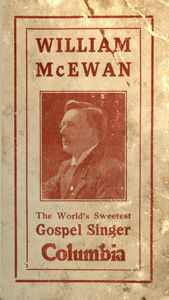
Charles McCallon Alexander (1867-1920) - Tennessee Scotch-Irish pioneer of Gospel music, and his 1905 Columbia recordings.

A Presbyterian Tennessee farm boy of Ulster-Scots descent. A big personality - ‘jovial, gregarious and outgoing’. World-famous singer of his generation who toured the globe. Frequent visitor to Ulster. Publisher of a series of much-loved hymnbooks. Pioneer recording star. Preferred ‘percussive piano’ instead of stately organ music.
Those of us who grew up in the ‘wee halls’ rather than the ‘big churches’ will be familiar with the (usually red) series of Alexander’s Hymns books which first appeared in 1902 and remained as firm favourites well into the 1980s - they’re still used today in some places. These were published by Charles McCallon Alexander, a world-famous singing evangelist, a towering figure in a truly transatlantic gospel world. This book summarises his life very succinctly; I’ve dug a bit deeper for what follows below –
[NB the biography that is quoted from extensively below was written by Charlie’s widow, the wealthy English chocolate millionaire Helen Cadbury, who he had met following one of his major events in Birmingham in England. They married in 1904, he died on 12 October 1920 and the biography appeared in autumn 1921. So the quotes below are ‘filtered’ through Helen’s understanding and words, edited from Charlie’s diaries and his extensive library. It’s a well-crafted and content-rich tribute to him, but I hope that interviews with Charlie might exist somewhere, to hear his story as the Tennessee mountain boy would have told it himself, in particular his understanding of his ancestry and varied musical influences]
1.'In My Tennessee Mountain Home’
Charlie, as he liked to be known, was born at a place called Meadow, near Cloyd’s Creek, near the town of Maryville in Blount County on the edge of the Smoky Mountains in east Tennessee (I spent a week in a log cabin in nearby Townsend back in 2002) - the family attended Cloyd’s Creek Presbyterian Church, which is shown below. Charles' posthumous 1920 biography traces the ancestry of both his father and his mother; his father John Darius Alexander was descended from
'… John McKnitt Alexander, one of the famous family of seven brothers who had fled from the North of Ireland to escape religious persecution. Everywhere they carried their staunch Presbyterian faith, providing many a minister to teach the evangelical truth so dear to their fathers. Young John Darius had been educated in a Quaker school at Friendsville, not far from Cloyd's Creek. He had set his heart upon being a minister, but finding the difficulties in his way too great, he had devoted himself to farming. Comfort came to him in his disappointment through the love of the gentle girl who eventually became his wife. Martha McCallon came of a Scottish-Irish farming family, and lived with her mother and grandfather, her father having died early …'
I’ll not recap Charles’ life - you can read the biography here - as what is of most interest to me is his role in gospel music history.

Charles recounted that his first exposure to popular hymns was at the family fireside:
‘… in our log home amid the hills of Tennessee. My mother sang sweetly and my father was famous throughout all the region round about as a musical leader. He purchased the first book of modern Gospel songs that came out when Moody and Sankey were doing their work ...”
That would have been in the early 1870s; the family had been to hear Moody and Sankey in Knoxville in 1870. He studied for a while at Maryville College, and then taught music in the area for a time. In the early 1890s Charles relocated to Chicago to the Moody Bible Institute - which as far as I know was a mixed-race/integrated college. Charles Alexander, who had been to hear the legendary duo in Knoxville as a 13 year old, was now one of their staff. Dr James M Gray, whose parents had emigrated from Gray’s Hill in Bangor, was one of the senior figures at the Institute.
3. From Chicago to the World - the early repertoire
He was by now a mighty soloist, in the days before electrical amplification, with a loud rich voice. He teamed up with a few different evangelists until, in 1902, he joined Dr Reuben Torrey - their first overseas mission was in Australia, with the famous little red hymn book a key tool in their arsenal. Their repertoire on the Australian tour included ‘God Be With You Till We Meet Again’, ‘Oh That Will Be Glory For Me’, ‘Give Me That Old Time Religion’, ‘Oh Wonderful Story’, ‘Count Your Blessings’ and ‘A Little Talk With Jesus Makes It Right All Right’, of which Alexander said
“...Now this is a song with a hook in it, it will get hold of you and do you good! It will stick to you like a burr!…"
Here is a version of that song, as recorded a generation later by Ernest Phipps during the famous 1927 'Bristol Sessions’, close to where Alexander had grown up.
They then sailed for India, and then to England. Alexander understood the supernatural power of music - its ability to touch the heart and soul. And he had a method of sorts:
“… There is a wonderful influence in song, and that influence spreads with great rapidity when once it gets started. To become quickly popular, songs must be easy to learn; there must be a simple, easy, flowing melody, and a small range, not much over an octave, and a picture in every line of every verse. The words must be simple, but full of faith, hope and promise. I never make up any final list of songs before I go to a meeting. As soon as I come on the platform I begin to study my audience, and then select my first song in accordance with my impression of what the people desire, or of what may reach them. If the first verse does not go well, I go no further with it, and sing something else. It is not my method to sing new songs exclusively ; I frequently have a new one first, in order to get the people interested, and then follow with an old one which has appropriate relation to the other. For instance, what can be more effective than to begin with ' He will hold me fast,' and follow with ' Safe in the arms of Jesus ' ; or, after the solo, ' Is He yours ? ' ' Blessed assurance, Jesus is mine ' ? "
The cynical will say that Alexander and others used music to manipulate their audiences. I think that’s unfair when you read his biography and appreciate the roundedness of what he was aiming to achieve.
“… It was a great discovery for Charles Alexander, when he realized that busy men who thought they could not sing, or take time for singing, were like a crowd of boys, when they came together in a meeting, and sang just as heartily. He found that down in every man's heart there is a love of song, and that even the men who had no sympathy with Christianity as they knew it, liked the Gospel hymns, and would come to hear them …"
4. A fusion of Scottish Psalms and songs – and ‘negro melodies’
Then there’s this brilliant summary of the development of popular hymns:
“… This brings to mind the way in which Charles Alexander always traced the music of Gospel songs, which was wafted over the British Empire from America, to the influence of the negro melodies. In contrast to the regular rhythm of the older standard hymns, a Gospel song has a lilting swing and flow that is essentially American, and owes its origin to the pathetic strains of the days of slavery. Yet there must have been some other influence behind those negro melodies, for they are nowhere found amongst the Africans in their own continent. Charles Alexander's theory was that they were built up by the Southern negroes, in the pathos of their helpless condition, upon the foundation of those minor strains of the old Scottish psalms and songs, brought over by the pioneer settlers from the land of their birth to the Southern mountains of their adopted country. Whenever he wanted to train a writer of Gospel hymns, Alexander would always try to get him saturated with the rhythm and bubbling freshness of the music of the coloured people. Another thing he learned from this source was the constant reiteration, in the words of a hymn or chorus, of some one main thought that he wished to lay hold of the mind. This may be seen in his choice of the hymns he made use of, and in those which he helped to inspire.
... he always insisted that, to a very large extent, children get their theology from the hymns which they sing. As this again is true of grown-up people as well, Alexander felt that no pains should be spared to ensure that the teaching of the hymns in his collections was strictly in accordance with that of the Word of God ; and he preferred, wherever possible, the actual words of Scripture. This was the reason why he loved so dearly the hymns written by his old friend Major D. W. Whittle, so often set to music by his co-worker James McGranahan ..."

5. 1903 - the first tour of Britain and Ireland
McGranahan’s ancestors were from Belfast, where he later sang. The city was on the Torrey–Alexander schedule - they had already packed the Royal Albert Hall to the rafters (free of charge to all who attended - story here); they had 7000 people in St Georges Market in Belfast in 1903. They also held campaigns in Bangor, Dundalk and Londonderry. Thomas Sinclair, who would later write the text of the 1912 Ulster Solemn League & Covenant, had this to say:
“… I have been much struck with the great sanity with which this mission has been conducted. We sometimes associate such movements with extravagances. There was absolutely an absence of anything of the sort in these meetings," Rev. W. H. Brownrigg, of the Church of Ireland, said : " The time through which we have passed has been one of marked spiritual revival such as I have never before been connected with."
The five weeks in Belfast were followed by ten days in the adjoining coast town of Bangor, where the rising tide of blessing overflowed again into the larger city. Here an instance of Alexander's tact occurred, during a visit to the home of a Christian family whose members were church-workers. While looking in a drawer for some photographs, a pack of playing-cards was discovered. Said the lady of the house : "I hope you do not think we play for money. We have a friendly game now and then amongst ourselves, or when the young folks have friends to visit them." Alexander replied, smiling, " I didn't say anything about the cards. Why do you apologize for them ? " " But surely you do not think there is any harm in playing, do you ? " was the question asked after a short interval. " Do you think it would help you to get your friends to surrender to Christ ? Would it be easy, after a game of cards, to start a conversation which would lead them to Jesus ?..."

6. The 1905 Recordings
In early 1905, apparently after much reluctance, he was persuaded to enter a recording studio. ‘Talking Machines’ had become popular and record companies sprang up to feed the demand, constantly on the look for popular singers to record, market and profit from:
“… London was already ringing with the new melodies which had captivated the great throngs at the Royal Albert Hall day after day. The (Columbia) Gramophone Company approached Alexander with a handsome business proposition for the making of a number of records, which, with the additional royalties, would have brought him in a large sum of money. To their surprise he definitely refused at first. On further persuasion he said : "I will not accept one penny for myself, either now or later. But I'll give you some records, both in song, and in spoken incidents, if you will take a big space in one of the leading London dailies, and print the " Glory Song " above your advertisement, also adding that I am giving you the records free, without remuneration or royalty. Astonished by the unselfish generosity of the proposal, and finding it useless to persuade him to receive any payment, the conditions were readily acceded to, with the result that the "Glory Song" entered hundreds of thousands of homes in Great Britain; while, by means of the gramophone records, the very voice of the singer carried its message in song, and told incidents of the meetings to people even in far-off lands. It was reported at the time that the sales during the first few days amounted to ten thousand records…"
He recorded ‘The Glory Song’ on a Monday afternoon, the manufacturing began straight away, and records were being delivered to shops on the Friday. I’ve found adverts in newspapers in Omagh and Newry, as well as Belfast and Bangor, announcing the availability of the famous Alexander debut recordings. It was a phenomenon, and hundreds of thousands of copies were sold.


Here are two of Alexander's 1905 recordings, from Archive.org. You can imagine the huge anthemic chorus of 'The Glory Song' being belted out by thousands of voices:
• ‘The Glory Song'
• ‘Tell Mother I’ll Be There'
This webpage by Norman Field catalogues all of Alexander's known recordings, also listed on this page.
Demand was huge, there are various newspaper reports saying that the company was inundated with orders and that the song was re-recorded by other artists almost immediately. And back in Nashville in October 1906, Torrey and Alexander would take the stage which their evangelist friend Sam Jones had helped to establish - the Ryman Auditorium, which later became the home of the world-famous Grand Ole Opry. More to follow...


Subscribe to:
Posts (Atom)