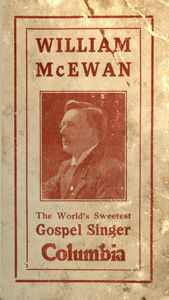

(a PS to this post from yesterday).
If the old man who railed against me around 1988 or so for daring to play a guitar had any understanding of his own traditions, he would have known that over the years his predecessors played stringed instruments in gospel meetings. Here’s a photo of the famous Scottish evangelist Jock Troup at Pickie Pool in Bangor, playing a banjo-mandolin. (from this September 2013 post).
Forget your own history and you end up in all sorts of contradictory places...
Monday, August 14, 2017
"hippies with banjos in the meetings"


'Don't Let the Politics Make You Crazy' / 'Without knowledge of history we are condemned to perpetual childhood, endless darkness, collective blindness'
Although Dave Rubin is American, there is much in his video above that we in politics-obsessed Northern Ireland can learn from. Politics is important, but it is not of ultimate importance. Let's consider our own position, of Unionism v Nationalism. Earlier this year there was, according to some media outlets, a near-collapse of the Unionist political psyche in the Assembly Election in March when Sinn Fein came within less than 1200 votes of being the largest party. There were then months of panic and fear until the snap General Election in June which saw a huge subsequent upsurge in DUP votes, gaining their highest vote ever, over 50,000 ahead of Sinn Fein, and unprecedented influence within the UK Government. That electoral pendulum might well continue to swing back and forth. Who knows?
The lesson is that if a community's sense of its identity is solely political the community is therefore vulnerable – at the mercy of the wrong election result, or of a back-room deal made between politicians, or who is the First Minister, the Prime Minister or the President. As discussed on a Radio Ulster panel last week on a hypothetical future ‘United Ireland’, one respected commentator said that Unionism would be forever finished – “… give them a few stickers to put on their bicycles, but everything is gone, their constitutional identity is gone, their personal identity is gone, their political identity is gone … there is no way Unionists can ever get back into the United Kingdom again … all that is gone’.
Deep breath. Let’s rethink this pessimistic worldview. As the Sunday School chorus goes, ‘The foolish man built his house upon the sand...'
A cultural identity however is a much deeper and nuanced thing, and can withstand all sorts of setbacks and challenges. In previous generations, Ulster-Scots people who chose to emigrate took with them a clear *cultural* sense of who they were. Even though their *political* nationality and the flag they lived under would change due to emigration, or to their changed circumstances meaning that they were compelled to forge a revolution, their *cultural* identity remained clear.
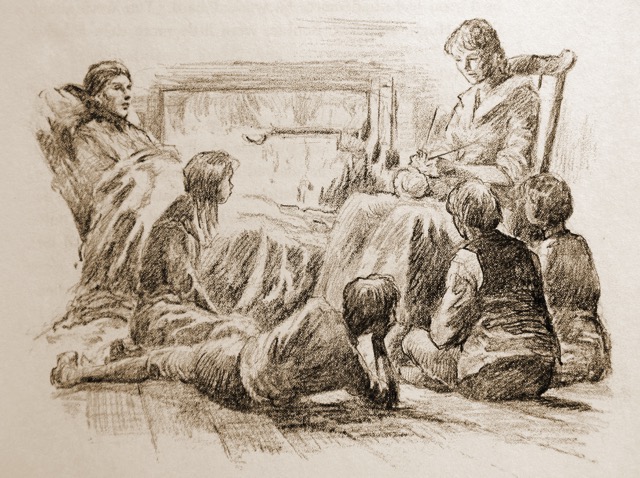
The 1700s USA records have multiple references of Ulster people who had a clear understanding of the Reformation, Presbyterian history and the Covenanters, the Williamite Revolution, the Siege of Derry, their own exodus across the Atlantic and the 1798 rebellion. These themes were handed down for many generations, at firesides by people like Andrew Jackson’s mother Elizabeth (pictured below in an old book I have on the shelf). I’ll not repeat them all now, but if you’re in any doubt about that claim just trawl back through years of posts here to see acres of evidence for that.
Ulster-Scots history predates the Union, has mostly supported the Union but not entirely, has been compelled to rebel against the British Government in various ways throughout the centuries, and it might potentially outlast the Union. It is cross-border, it traverses seas and oceans. And flags. Whether Brexit is ‘hard' or ‘soft', whether it works out or is a disaster, if it happens at all or is smothered in fudge. Whether Scotland leaves the United Kingdom or remains.
Politics is ‘downstream’ from culture. Culture is more powerful, more international, more enduring, more open to others, and in many ways can be much more unifying.
“… Philip Melanchthon, Luther’s right-hand man and perhaps the Reformation’s most effective spokesman, was a revolutionary educational reformer, father of one of the movement’s many lasting legacies. Without knowledge of history, he wrote, we are condemned to perpetual childhood, endless darkness, collective blindness. There are none so blind as those who will not look at history, and it is time to open our eyes to the past, in order to face the future …”
– from this recent article in The Guardian
https://www.theguardian.com/books/2017/aug/11/reformation-2017-christopher-kissane-history
PS - the post was rushed out just as I was heading off for a week's holiday. The obvious omission is the political border on our own island. When that political decision was taken, were those on the 'other' side of it suddenly any less culturally Ulster-Scots than the rest? Or those who have moved southwards from Northern Ireland into the Republic of Ireland, for reasons of work, family, education, etc?. Today, is the Ulster-Scots community in, for example, Donegal, Cavan and Monaghan, any less Ulster-Scots than those in Northern Ireland. Of course not.
Sunday, August 13, 2017
Rodney McElrea, 1938-2017
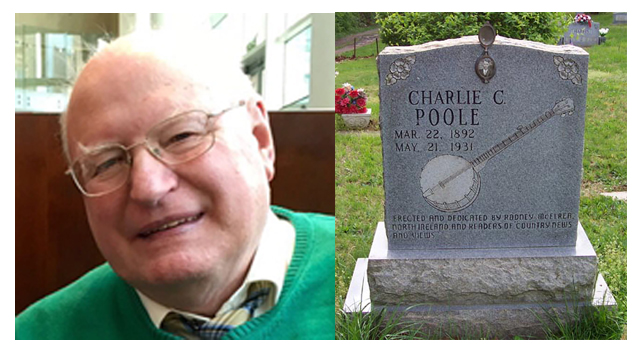
There are so many people that I wish I had met. One of these, Rodney McElrea, died just a few weeks ago, his funeral at Omagh Gospel Hall in County Tyrone. For the time being at least I’ll not be able to meet him. There are some excellent articles about him on Richard Hawkins' Bluegrass Ireland Blog (see here and also here), and a 2012 PhD thesis about his life as a collector, by Eve Olney (see here). Rodney’s name is inscribed across the ocean, on the gravestone of Charlie Poole.
Rodney had been a member of the Hall in Omagh since 1966; for those of you who know, many Brethren Halls have no music at all, and some only at the evening service, and so this makes it even more interesting that music was such a major part of his life.
In my own experience, I can recall being challenged by an older man - via a sermon - at the Hall I grew up in when he discovered I was learning to play the guitar. Our family did the Gospel Hall on a Sunday morning (my father’s influence) and a Mission Hall in the evening (my mother’s influence) - and the Sunday School at each - four meetings every Sunday! The mission hall was where my own musical inspiration came from. My ‘crime’ was that I had been spotted playing the guitar at Frances Street Gospel Hall youth fellowship in Newtownards one Sunday night, and the following Sunday morning back in Portavogie the man launched a sermonette about “hippies with banjos in the meetings”. I kid you not. Words like that don’t get forgotten! I moved on a few years afterwards.
Here’s another post on Bluegrass Ireland which refers to my friend Andy Gordon, one of those people who has been a regular encouragement to me over the years, and who was a close friend of Rodney's). I managed to find Andy the music for the hymn which was sung at Rodney’s funeral, from the Redemption Songs hymn book, which is posted below.
As well as this hymn, What a Friend We Have in Jesus, and Amazing Grace were sung. The night before Rodney died, Andy and I met up at a coffee shop in Bangor to marvel at a lovely old Gibson mandolin, and I got glared at by another customer for daring to play it a bit. I’m hoping that it makes an appearance at one of our ‘open house’ music evenings later in the year.
Music is really important. So is being intentional with your time, to meet with new people and spend time with folk you know.
"Praise him with the timbrel and dance: praise him with stringed instruments and organs” - Psalm 150v4

PS - tonight at Carrowdore Mission Hall we finished the meeting with the Philip Bliss hymn Almost Persuaded. Written in 1871, it is one of many from the 1800s and early 1900s which were recorded by early country musicians. Bliss died trying to save his wife from a burning train wreck in 1876. Here is the Louvin Brothers' 1950s version
Friday, August 11, 2017
"the simplest hymn would give him the keenest pleasure and a psalm could move him to tears of joy"
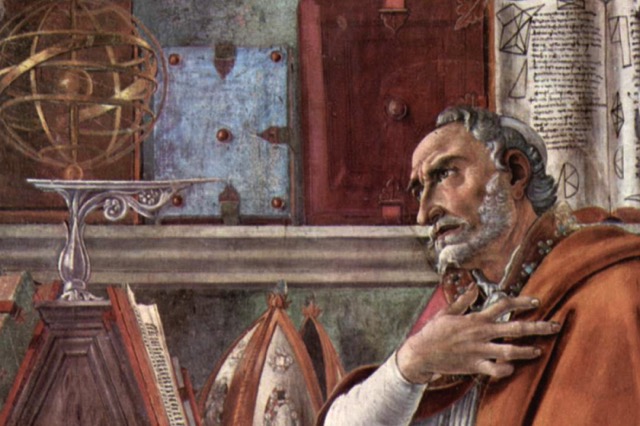
I’m grateful to a friend for sending this article to me, both because it’s about music and the tensions around its use in religious contexts, but also because it majors on Augustine of Hippo. He lived in today’s Algeria, and was one of the most influential early Christians, someone that Martin Luther and also Bangor’s own Robert Blair looked back to.
Increasingly it can be seen that the Reformation wasn’t about installing a new system, it was restoring the original factory default settings.
Augustine’s famous book City of God is being cited again today by some Reformed theologians, as it was written at a time when the familiar world order (the Roman Empire) was falling apart, and there was a need to recalibrate exactly what Christianity meant while all around it crumbled. History just repeats itself. Keep calm and carry on...
- full article here, on HistoryToday.com
Sunday, August 06, 2017
... on the other hand, progress is essential - Fordson Tractors Ards Peninsula advert, 1921
Here’s a 1921 advert for Fordson tractors, showing that horses were to become a thing of the past and a new Fordson would prove it. Why not book a demonstration on the Ards Peninsula? Even a young woman would be happy to operate it, neatly turned out in her Sunday clothes! Other Fordson ads of the time claimed it could replace 4 horses, for a cost of £260 new.
Women worked the land just as hard as men did. In his 2016 book Tribe: On Homecoming and Belonging, (on Amazon here) Sebastian Junger points out that the agri economy is/was the most gender-equal of any economic system. Everybody is/was being killed by hard work.

When did ordinary become 'artisan'?

I often feel like I grew up at a kind of social tipping point, overlapping two almost unbridgeable eras. It is easy to see that in terms of the ‘digital revolution’. About half way into my Art College years in Belfast, from 1990–1994, the new-fangled Apple Macintosh computer arrived. There was a room with about 20 ‘Classics’ in it, and - shock horror - an LCII with a colour screen. It was, suddenly, mind-bogglingly advanced. I had started my degree course learning the time-honoured disciplines of rub-down Letraset sheets, life-drawing classes and actual darkroom photography - and finished it with full colour printouts, scanners, Photoshop image manipulation and the warped typography of Letrastudio software. What we gained in convenience was lost in craft. And those old crafts today cost a lot more to buy. (but of course, new skills come along)
Now if you want a photo of a warm sunset, take any old photo and just add a filter effect to it. Hey presto, instant warmth. Not warm enough? Easy, just alter the colour balances. Back in the day, that would have needed you to understand light, seasons, sunrise times, weather, and try to work with nature to capture its phenomena - at just the right millisecond-accurate moment of shutter opening and the workings of a mechanical camera and the varieties of physical film you could choose.
Something similar has happened with food. I grew up on a wee farm with food merely as fuel or flavour, not as ‘expression’. Food has now taken on a social significance and aesthetic that I suspect would have been unimaginable not that long ago.
They say that in Ulster even city dwellers are only one or two generations away from the land. Our parents and grandparents would be astonished to find people today paying high prices for food which was once self-produced almost every day. Spuds from the garden, bread from the oven, eggs from the hens, bacon or beef or fish bartered with the neighbours, berries from the plants or hedges, coffee and tea from the corner shop as a swap for something you’d made or grown. Herring stored in big salted clay crocks all winter long. Salted ling hung in the stone shed at the foot of the garden. A pig you’d reared yourself, which had been killed and scalded in boiling water and then hung in that same stone shed.
The population move from working the land to ‘professional’ jobs in towns, and then mass-production and importation of food during the second half of the 20th century has once again, gained in convenience but lost in craft. And those food crafts now cost a lot more to buy - at modern-day Farmers’ Markets, which had been ordinary weekly events in every small town for centuries, up until say the 1960s. I go sea-angling for leisure, my grandfather’s generation did it for survival.
These changes have also brought with them an affluent snobbery. I like sourdough bread because it’s tough and chewy and tastes ‘real’, like the bread my mother and aunts used to make - and not like fluffy mass-produced ‘big brand’ rectangular pan loaves. However, a sourdough loaf in a bakery can cost 3 - 5 times more than a pan loaf. I remember when a ‘baguette’ was simply just a ‘crusty loaf’. I remember my mother making massive trays of jam & sponge which she’d knock out in 10 minutes and then cut up into squares. Now something similar to one of those squares might cost you £2.50 each in a coffee shop.
My granny Thompson flat refused to use tea bags. She was a strictly loose-leaf tea woman, served in her wee working kitchen and stewed all day in an enamel pot on the Doric stove. Today, some loose-leaf teas are luxuries, and sometimes expensive ones. Check this out - a new ‘Scots Breakfast’ tea in a chic new Glasgow tea bar. Or this one in Birmingham from Laura Ashley.
The vocabulary that has grown up around these expensive choices is also socially exclusive. Here’s a really interesting article on a similar theme, by David Brooks in the New York Times. If you talk to people in the health service, they will cite lifestyle as one reason it is hard to get senior medics to move out of greater Belfast. And in some cases the same has been observed for ministers - a phenomenon the Church of England has experienced too.
Traditional food has a nostalgia for me, it takes me back 40 years to how life once was for everybody. But then it was ordinary, not artisan. It was completely democratic, of the people, and not elitist. I object to the chic guff that often surrounds it now. Today, to find what was once ordinary you need to either:
a) find people who haven’t lost those skills and traditions, or
b) be willing to pay relatively high prices to buy the closest modern equivalent.
Or else,
c) learn those things for yourself, and pass them on.
Wednesday, August 02, 2017
Rev John Wilson portrait, Boston and Charlestown (1588–1667)
This is the minister who came to Ulster along with John Winthrop Jr in 1635. Rev John Wilson’s 1846 biography is online here. He pinged back and forth across the Atlantic, during the era when the Anglican, and Head of the Church of England, Charles I, was persecuting non-conforming Protestants and Presbyterians. Even though Wilson was ‘officially’ minister of congregations at Boston and Charlestown, he also preached in Ipswich/Agawam in the early 1630s - the exact area that Eagle Wing was bound for. So it makes perfect sense that he would come to Antrim to meet with Blair, Livingstone and McLellan.
From page 55 of the biography it seems that Winthrop and Wilson had been on a return voyage from America in Autumn 1634, bound for Barnstaple in Devon, when they were almost shipwrecked off the coast of Galway, but they managed to land. They then headed to Dublin. Wilson sailed for England but was driven back to Kinsale in yet another storm which sank a few other ships.
“... Being thus forced to make some stay in Ireland, both he and the governor’s worthy son exerted themselves strenuously to promote the interests of religion in New England, wherever they came … their travels extended into Scotland and the north of England; and wherever they went, they gave much satisfaction to Christian people about the prospects of New England, and stirred up many to make it their future home ...
The biography says that Winthrop and Wilson then sailed for New England around 10 August 1635, arriving in Boston on 3 October 1635. These dates vary a little from the Ulster accounts, but the overall narrative is exactly the same.

Tuesday, August 01, 2017
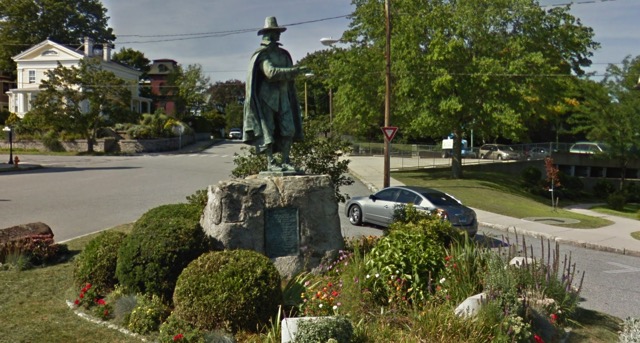
John Winthrop Jr statue, New London, Connecticut
This is the guy that the ‘Eagle Wing’ ministers were corresponding with, and who visited them here in Ulster at least twice. It was installed in 1905.
Sunday, July 30, 2017
Sweet Portaferry
In his seminal 1901 volume, Ballads of Down, George Francis Savage-Armstrong included his version of ‘Sweet Portaferry’.
As thy Castle's grey walls in the low sun are gleaming,
Sweet, sweet Portaferry, and the evening draws near,
And I drift on the tide to the ocean down-streaming,
And leave to the night-wind thy woodlands dear,
All, all the splendours of years gone over.
The glad bright life of thy halls of rest,
Like the spell of weird music when fairy-wings hover.
Sweet, sweet Portaferry, sink in on my breast !Dear home of my sires by the blue waves of Cuan,
Sweet, sweet Portaferry of the ivy-clad towers.
Where in childhood I ranged every dell the ferns grew in,
And gathered in handfuls bluebell-flowers.
Farewell ! I leave thee, afar to wander,
Alone, alone, over land and sea ;
But wherever I roam, O, my heart will grow tender,
Sweet, sweet Portaferry, in dreaming of thee!
It is set to the tune of the same name which was part of Edward Bunting's famous collection The Ancient Music of Ireland, first published in 1796 – and therefore contemporary with the earliest Ulster-Scots 'Rhyming Weavers’. Their work also contains songs and airs but which have never been viewed from that perspective. Perhaps there is a project there for somebody to assemble a similar collection.
There are other, better-known, lyrics for 'Sweet Portaferry’. I am not sure which version came first, but I first heard them on a cassette given to me by the late George Holmes, which he had helped to produce, entitled 'Songs of the Ards', probably some time in the 1980s.

Saturday, July 29, 2017
Preparing to Fly: 'Eagle Wing' in 1635 (from New England to Antrim)

During 1635, two important figures in the fledgling New England Massachussetts Bay colony visited Ulster, to meet in person with the Ulster-Scots Presbyterian ministers who they had been corresponding with, and who were planning to sail across the Atlantic in pursuit of religious liberty.
In January 1635, John Winthrop the Younger (above left) visited Ulster to meet with the ministers; he “did earnestly invite and greatly encourage us”. He had founded an English Puritan colony at Agawam/Ipswich in 1633.
He was back in October 1635, this time with Rev John Wilson of Boston (above right). Both men visited Sir John Clotworthy in Antrim with the Ulster ministers again – where “divers godly persons were appointed to meet at his house to confer about their voyage to New England”.
Clotworthy's original castle is long-gone, but Antrim Castle Gardens still exist, on the banks of the Sixmilewater River. Perhaps there should be a plaque there to commemorate this important American link?
Thursday, July 27, 2017
"Us Boys"
Over the years various Co Antrim folk have told me of this film, shot in the late 1990s. I have found a version on YouTube, with German subtitles. Information from the production company is here.
Wednesday, July 26, 2017
Isabella Barber Ferguson of Ireland and South Carolina (1754–1823)
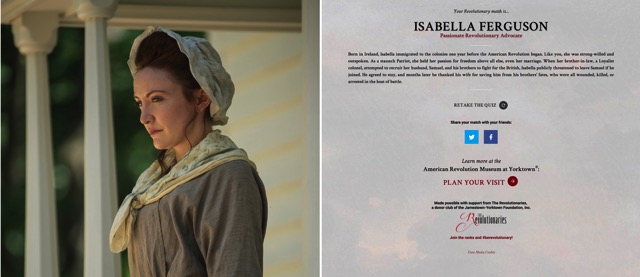
She was a Revolutionary heroine, whose story is featured in the new American Revolution Museum at Yorktown, Virginia.
A Presbyterian Covenanter, born to Samuel Barber and Isabella Starett, she had emigrated to America around 1773. She “sat under the preaching of a learned minister and had been regularly catechised and indoctrinated both in the Scriptures and the political creed of her people”. She married a Samuel Ferguson but Samuel’s sympathies were with the Crown and his brother, Colonel James Ferguson, led a troop of 150 men. The Colonel led his men past the Barber homestead, hoping to impress his brother into joining the British army. It failed. Isabella declared:
I am a rebel, glorying in the name. My brothers are rebels, and the dog Trip is a rebel too. Now, James, I would rather see you with a sheep on your back, than tricked out in all those fine clothes. Rebel and be free, that is my creed!
Samuel listened to his wife and then confirmed to his uniformed brother:
Could Isabella be convinced she might be able to turn the whole lot of Covenanters, for she is never afraid to speak her mind.
Samuel didn’t join up, and James was killed not long after. There are numerous heroines in popular Ulster-Scots history, such as Betsy Gray and Margaret Wilson. You can read more about Isabella Barber Ferguson in this reprinted edition which was originally published in 1848.
• Take the Museum online quiz and see which Revolutionary era character is most like you.
• Her gravestone can be seen here on FindaGrave.com
Tuesday, July 25, 2017
Wayfaring Stranger - re-broadcast tonight, tomorrow, Thursday
For the next 3 nights on BBC2 Northern Ireland, ‘Wayfaring Stranger’ is being re-broadcast at 7pm. Set your digiboxes!

Monday, July 24, 2017
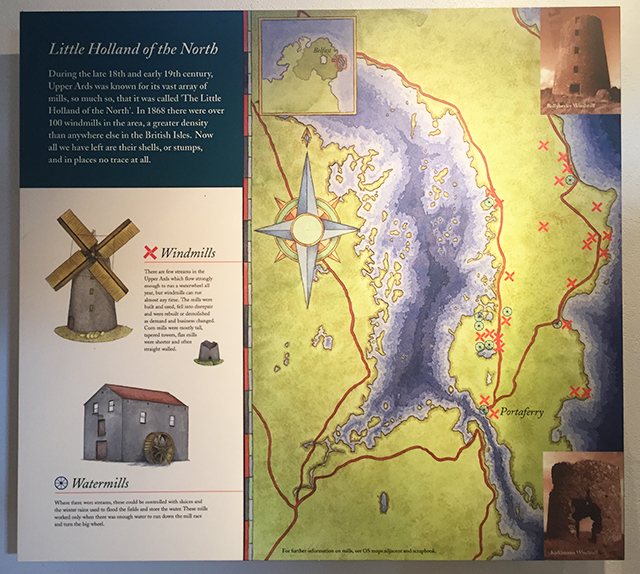
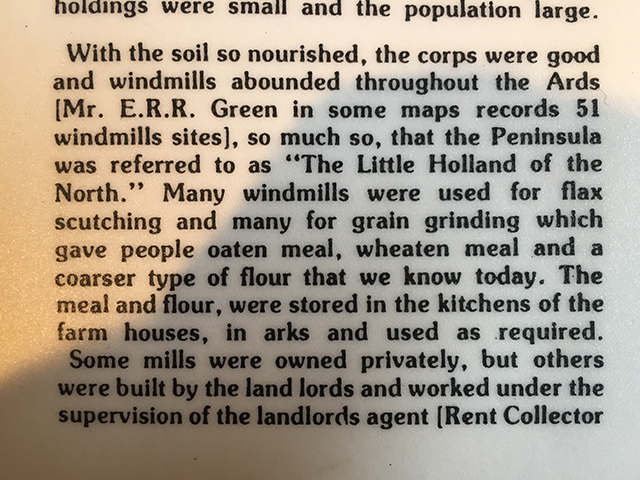
The Ards - 'The Little Holland of the North'
Some photos here from recent drives around my home turf - the newly refurbished Ballycopeland Windmill near Millisle (which now features on a Royal Mail stamp) and the old windmill stump at Knockinelder. It seems from the Montgomery Manuscripts that it was Lady Elizabeth Montgomery who oversaw the construction of watermills in every parish of the Montgomery lands in the Ards in the early 1600s. Initially the Scots used the ‘quairn stones’ hand-ground technique commonly used by their Irish neighbours, but later a ‘Danish mill’ was introduced. There were of course water mills in Ireland prior to the arrival of the Scots - in fact, as the same Manuscripts say (on page 63) water mills can be traced to the 3rd Century:
... It is certain that mills driven by water were known in Ireland at a very early period, and appear to have been at least as generally used in ancient as in modern times. Irish authorities, and with them Irish traditions, are unanimous in representing that the first water-mill ever known in Ireland was introduced by Cormac Mac Art, who reigned during a part of the third century, and that the good king brought his millwright from Scotland ...



Sunday, July 23, 2017
Rev W. R. Megaw (1885–1953): From Carrowdore to Princeton to Ahoghill: minister, author and naturalist.

Rev R.T. Megaw was minister of Carrowdore Presbyterian Church in the 1880s. In 1885 his son, William Rutledge Megaw was born. He would have been knocking about Carrowdore in my great-grandparents’ time. He followed his father towards the Presbyterian ministry and after a childhood in Carrowdore he went to RBAI, then Queens University and finally to Princeton in the USA.
He returned to Ulster and took up the role of minister at Trinity Presbyterian Church, Ahoghill in County Antrim in 1910. A local poet wrote this quite superb Ulster-Scots poem just after hearing Megaw’s first sermon, on Sunday 10 April 1910:
First impressions aft are lastin’
Whither bad ur whither guid,
Pardon, an’ I’ll tell ye my yins
In a simple bit o’ screed;
Born an’ broucht up in the district,
Niver bein’ far frae hame,
Sma’ wunner that my words are common,
An’ ideas awfoo tame
Foo dull this day.
Hooiver, freens, this peacefoo fixture
Minds me o’ lang years ago,
Whun the church wus mair auld-farrent
Baith inside an’ oot ye know;
What the venerable F. Buick
Preach’d the Word tae rich and poor;
Sacred be his name fur iver
Fur flingin’ wide the Gospel door
Foo guid that day.
Whas sturdy henchman an’ assistant,
Mr McConachie o’ fame;
A fearless, faithfoo Gospel preacher,
Regerdin’ whom we think nae shame,
Assisted an’ succeeded later
By him wha cud “catch-his-pals”;
Bit Mr Pyper did “surrender”
Tae the folk o’ “Derry Wal’s”
Foo firm this day.
Revertin’ mair til’ present moments,
Wae expecations reemin’,
Anent Trinity Church o’ hope,
Whar “Love” and’ faith are beamin’,
Becas his Mester sent alang,
His servant, young Mega’,
Noo weel ordain’d as pastor here
By Presbyterian la’,
Foo nice this day.
Son o’ the Manse, wae bright career,
He comes, we trust, fur guid,
Provin’ himself baith in an’ oot
A clargieman indeed;
We wish tae see the “B” degree
Knock’d oot by cubit’s darts,
An’ like the sang replaced ‘fore lang
By “M” atrimonial “A” rts
Foo gled some day.
The prayers an’ expositions, friens,
O’ Young Mr Mega’
Did me a world o’ lastin guid
Afore he preached ava’,
Although his sermon, weel got up,
Wus jist as weel laid doon,
He hurl’d the darts right at our hearts,
An’ no’ up at the moon
Foo heich this day.
His theme wus Christ the Crucified,
Nane else he wants til’ know,
Nur preach til’ plase himsel’ alane,
Nur heich, middle, ur low;
Yit varied as the rainbow’s hues
He show’d this theme til’ be
Heich as the sky, wide as the earth,
An’ like the michty sea
Foo deep this day.
The la’ the Prophets, big an’ wee,
An’ Gospels wur the same,
Epistles sweet, al’ pointed tae
The Crucified’s dear name;
Wae sic’ a theme an’ sic’ a place,
An’ sic’ a time as this,
An’ sic’ a school, an’ sic’ a church?
The hale thing jist means bliss
Foo great this day.
– Randerin’ Rhymer, Cullybackey, 11th April, 1910 (reproduced from this website)
Megaw published at least three books: Nature’s Speech (1930), Ulota (1934) and Carragloon: Tales of Our Townland (1935), and edited the second edition of A Flora of the North East of Ireland with R.L Praeger which was published in 1938. Megaw was a prominent member of Belfast Naturalists’ Field Club, as a specialist algae and moss collector. He became President of the Club, and also became a member of the Royal Irish Academy,
Despite all of his education and erudition, a Carrowdore childhood and an Ahoghill ministry means he would have understood the poem with nae bother.

Wednesday, July 19, 2017
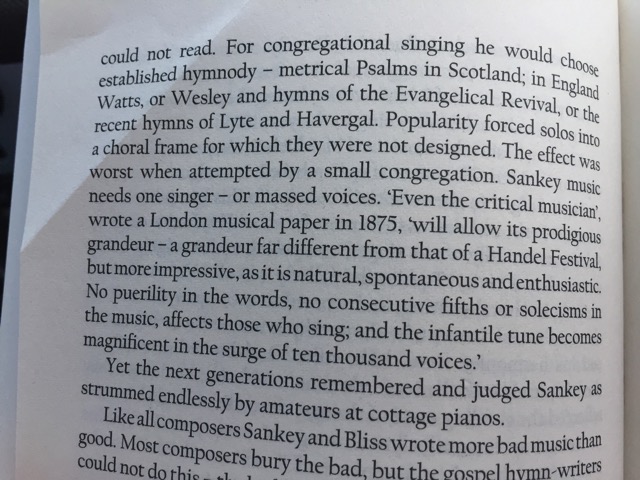
Sankey's hymns - "Scottish and Irish in its construction"
Last week I was up at the annual Keswick at Portstewart convention, with about 1000 people in a big tent. The event has been going for over 100 years every summer. The bookstall people were doing a bargain offer on a book about the American evangelist DL Moody, for just £1. How could I resist?
Moody’s musical partner was Ira D Sankey, of Scotch-Irish ancestry, and their music made a vast impact worldwide. Here’s a few pics of pages from the book, recalling the observations of a Glasgow journalist on Moody & Sankey’s début in Scotland in the 1870s. Now bear in mind that Scotland had never heard this kind of sacred music before. And it was in its own way scandalous as it introduced a 'new' sacred musical style different from the Psalmody tradition. But, like the Wedderburns before in 1520s Scotland, Sankey’s hymnwriting bore the recognisable hallmarks of popular folk music:

Monday, July 17, 2017
The Ancient Ards: Ballyhalbert motte & standing stone


IrishSights Archaeology has some great drone footage of various local features; Ardquin Abbacy below was where an 'Inquisition' was held to pin down which parcels of land were owned/claimed by local landlords, before King James VI & I approved the Hamilton & Montgomery scheme of 1606.
Sunday, July 16, 2017
"The genetic make-up we see is really one of perhaps 1400 years ago"
According to this article from The Telegraph in March 2015, not much has changed since about 600AD:
The ‘People of the British Isles’ study analysed the DNA of 2,039 people from rural areas of the UK, whose four grandparents were all born within 80km of each other. Because a quarter of our genome comes from each of our grandparents, the researchers were effectively sampling DNA from these ancestors, allowing a snapshot of UK genetics in the late 19th Century before mass migration events caused by the industrial revolution.
I think I might have volunteered for this project, which (if I am right) I applied for in writing and was then invited to the Belfast City Hospital to give a blood sample for (at which I nearly fainted, which is why it sticks in my mind). It was somewhere around 2005 I think.
Below is the map from the Telegraph article showing the various peoples & regions at around 600AD (it’s not accurate for Ulster by the way - Dalriada was just one of the eastern ‘kingdoms’ - see previous post here), and then below it is the project’s genetic map from 2015.
There is a clear ‘genetic cluster’ of people with the same ancestry in Ulster and western Scotland. Genetically, people across Ireland and Scotland are not very different. Culturally of course there is much variation even within both. The Lowland Scots that Ayrshiremen Hamilton & Montgomery brought over to settle on the former O’Neill lands in 1606 were the direct descendants of those whom, 300 years before, earlier Ayrshiremen Edward Bruce and Robert the Bruce had brought over to form an alliance with those O’Neills in 1315.
And of course the links and two-way migrations go back much farther than that...
• Project website is here
• Project Wikipedia is here

Sunday, July 09, 2017
"Sacred Parodies of Secular Folk Songs"
I hope to be in Fife later in the summer, and am planning to visit Dundee to see not only Desperate Dan but also the plaque to the Wedderburn brothers. This 1938 article about them, by Anne Gilchrist in the Journal of the English Folk Dance and Song Society, provided the title for this post.
Soon after he became unintentionally famous in 1517, Martin Luther's writings travelled across the North Sea into the ports of Edinburgh and St Andrews, smuggled inside barrels as illegal contraband. The Wedderburn brothers became committed Lutherans, and spread the newly-Reformed Gospel through music and street theatre. They took the familiar folk songs of their day and wrote new, Reformed, lyrics. Some of their work has been recorded in recent years.
I also then remembered that earlier this year I heard a man at the People’s Hall in Portavogie sing a gospel song to the tune The Fields of Athenry. His version was much better than the YouTube one below! But you get the idea.
Orange tunes are great for this, as are Irish tunes such as Galway Bay and The Wearing Of The Green, and Scottish tunes like The Rowan Tree and The Road and the Miles to Dundee.
The Wedderburns were at it in the 1520s, and it’s still being done today. Luther said he had nearly killed himself with religious devotions, confessions:
"I was a good monk, and I kept the rule of my order so strictly that I may say that if ever a monk got to heaven by his monkery it was I. All my brothers in the monastery who knew me will bear me out. If I had kept on any longer, I should have killed myself with vigils, prayers, reading, and other work."
And then he opened the Bible and began to read what it said. The message he found there? No-one can make themselves right with God. Jesus Christ came to do that job, and He has done it all. 'It is Finished’.
It’s an offer that’s open to all who will receive it. Luther didn’t invent it, it had been there all along. It can be traced right back from 1500s Luther to the New Testament churches of the first century. He was just in the right place and the right time, with new technology - the printing press - to take it to the world in a simple and relevant format. Religion as control was replaced by a liberating faith. Read more about Luther’s world-changing discovery and influence with these free PDFs.
(UPDATE: this week only, renowned US Presbyterian R.C. Sproul is giving away a FREE 10-part download about Luther and the Reformation - click here)
Outside the city wall
I heard a large crowd calling,
Mocking, scorning those who suffered there
As they hoisted up on high
Three more men condemned to die
The voice of one man echoed through the air
“Eli lama sabachthani
My God why have you turned your back on me”?
“It is finished,” then he cried
As he hung his head and died,
Messiah crucified for you and me
Outside the city wall
I watched the darkness falling
As the power of sin and death had done their worst
And the one who made the light
Hung abandoned in the night
And he who made the oceans said “I thirst”
Outside the city wall
I heard a young man calling
“Woman, take this man to be your son”
And he turned his face to see
One who said “Remember me”
And said, “ with me to paradise you’ll come”
Outside the city wall
I heard a young man calling
“Forgive them Father, they don’t understand
For the man was God’s own son
And His work on earth was done
And then he placed his spirit in Gods hand

Thursday, July 06, 2017
“American ancestry” = Scots-Irish ancestry?
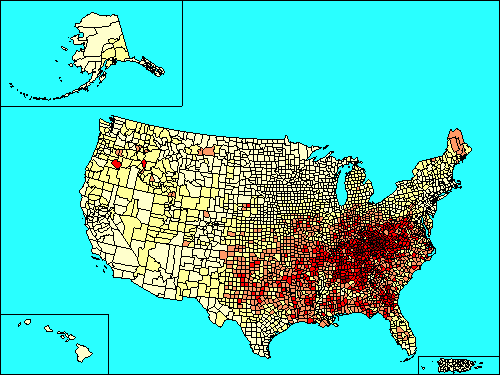
I’ve had to abbreviate that title from a longer quote in this very interesting article:
... Areas with a high prevalence of “American ancestry” also tend to have a prevalence of Scots-Irish ancestry, which was a large cohort of Protestant immigrants in the 1700s who arrived in the U.S. from northern Ireland and southern Scotland with few resources and wound up settling predominantly in the uplands, partly because the fertile lowlands were already occupied and partly because the emptiness of the hills was more amenable to their anti-establishment leanings. “American ancestry” may function something of a stand-in for having Scots-Irish or “borderer" ancestry ...
I've been to the one which comes out top of the league table, Virginia's 9th District, twice or maybe even three times. I remember remarking to our kids when were in Bristol last July (on the Virginia / Tennessee state line), buying a burger in the café where Hank Williams was last seen alive, that from looking at the people around us - the other customers and the staff - their shape, their faces, their complexions, that we could have been in Newtownards or Ballywalter.
Last November Virginia's 9th voted 68.8% for Trump.
Subscribe to:
Posts (Atom)