Tuesday, February 16, 2016

A new first minister?

We have a new First Minister here in Northern Ireland - Arlene Foster. I am sure she will do an excellent job in her new role(s). But there might be a different first minister, in a sense.

• Edward Brice (1613) and Patrick Anderson (1612)
The first Presbyterian minister in Ireland is known to have been Rev Edward Brice of Ballycarry. He arrived there in 1613 from Scotland.  There was an earlier minister - Rev Patrick Anderson from Kirkoswald (see previous post here) - but whilst he was a minister in Scotland from 1607 there is no indication that he carried on when he came over here in 1612

• Patrick Hamilton (1609)
Recent research has indicated, that - on paper at least - another minister was appointed here, earlier than Brice, in 1609. His name was Patrick Hamilton (a namesake of the martyr of St Andrews who was burned at the stake in 1528) and he was given the pulpit of Ballyhalbert, where generations of my ancestors are buried. You can see him on the list below, with his nephew Rev James Hamilton taking over at Ballywalter seventeen years later in 1626.

SAM 4941 pic

This Patrick Hamilton was the youngest of six brothers, the oldest being Sir James Hamilton, originally from Dunlop in Ayrshire. Their father was the minister in Dunlop, Rev Hans Hamilton (1536–1608) who took over the ministry of Dunlop in 1563. As a man of the Scottish Reformation he would have certainly been a Presbyterian, and therefore so would his sons.

So, even though this Patrick seems to have been given Ballyhalbert by his big brother who had just acquired it as his negotiated share of the O'Neill estate, there is no firm evidence that Patrick ever settled in Ballyhalbert. Presumably he might have visited to admire his brother's land acquisition in the Ards and North Down - many of the other brothers certainly did come over. Patrick became minister at Innerwick / Enderwick 32 miles east of Edinburgh around that same time. He participated in the famous 'free' General Assembly of 1638, one of the ministers of the Presbytery of Dunbar. This followed the tumult of Scotland's National Covenant of 28 February that year, and which was known to have been signed by 1000 people in Newtownards.

Innerwick Kirk today, this building dates from 1784. The first church on the site was founded prior to 1165

027

From the Hamilton Manuscripts

– The sixth brother, Patrick, had his younger education at home in learning, wherein he became very hopeful, and was put to college for further improvement and [?]. He followed the study of Divinity, wherein his proficiency was so great that he was called to, and settled in, the ministry at Enderwick, in East Lothian in Scotland, where he lived all his lifetime, painfully and acceptable to all concerned, in a very staggering time.

The sixth brother, Patrick, married one [?] Glenn, daughter of a gent, of the neighbourhood where he was Minister, viz., Enderwick, a very frugal wife, but not altogether so prudent as his station and disposition required; and he had children by her, James, Alexander, Archd., and Elizabeth. He lived in very good esteem and usefullness in his Ministry, and among the gentry in that whole country, and left his family competently provided; died of middle age, and was buried with great regret at the church where he was Minister.

Interestingly, on 27 May 1628, big brother Sir James granted Patrick the townland of Granshaw outside Comber. Patrick and his wife Elspeth were granted rights of 'denization' in 1631. Three of their sons came to Ulster - James became COI rector at Dundonald and Holywood, Alexander settled at Granshaw and for a time Archibald was Presbyterian minister in Bangor.

Patrick Hamilton died in 1640 and was buried at Innerwick.

Ballyhalbert church today. It was restored by Sir James Hamilton in the 1620s but by the late 1600s was in disrepair. Materials from Ballyhalbert, Ballywalter and Inishargy churches were salvaged to build a new church at nearby Balligan. The original Ballyhalbert 1620s rooftimbers are still intact.

SDC10777SNC15684 Balligan Church today SDC10787 SDC10791 SDC10796 SDC19266 SDC19293

Monday, February 15, 2016

This is the Gospel. Luther movie (2003)

Monday, February 08, 2016

'Kirk and Covenant', Belfast 1660

Kirk and Covenant

Barbour Threads of Lisburn advert

Barbour Whale

Friday, January 29, 2016

The Ulster connections of the 1650 Psalter

Psalter 640On 6th August 1649, the General Assembly appointed a committee to “overtake the review and examination of the new paraphrase of the Psalms”. This would form the second Scottish Psalter, the first having been compiled in 1564–5. Those appointed were –

• Rev James Hamilton (1600–66; formerly of Ballywalter)

• Rev John Smith (d 1667; chaplain to General Leslie's Scottish army; minister of Burntisland, Fife - also 'Bruntilland')

• Rev Hugh McKail (d. 1660; had been in Ulster in 1644, and whose brother Rev Matthew McKail had been here from 8th Sept - 8th Dec 1643)

• Rev Robert Traill (1603–78; whose brother James Traill lived in Killinchy, to whom there is a large memorial inside Killyleagh Parish Church, tutor to Sir James Hamilton jr. Another brother - William Traill - was minister of Ballindrait in Donegal)

• Rev George Hutcheson (1614–74; he had been sent to Ulster by the General Assembly in February 1644)

• Rev Robert Lowrie (1606–78; had been minister of Perth, then Edinburgh, but 'conformed' in 1660 and was nicknamed 'The Nest Egg'. He became Bishop of Brechin)


The final volume, entitled The Psalms of David in Meeter: newly Translated and diligently compared with the Original Text and Former Translations, etc. Allowed by the Authority of the General Assembly of the Kirk of Scotland was agreed on 8th January 1650. (see page 94 here). This continued as the standard Psalter well into the 20th Century, around 1930.

(Matthew McKail had been minister at Carmunnock south of Glasgow from 1639–1649, and then moved to nearby Bothwell. The Salty Scrivener blog has an excellent telling of the horrific torture and martyrdom of his brother Hugh's son and namesake, young Hugh McKail).

The 1650 Psalter blog has further detail

Monday, January 25, 2016

20/20 vision

3c326d71d37f3038d9101ae70a0b2529


Over Christmas, a man I know well reported to me that he had just changed optician. On his first visit to the new one, he was told that he was descended from people from the west of Scotland, as his eye was identical to the eye shape of people there. The optician had studied at a university and then worked in Scotland for many years. This was a new one to me but I am thinking of paying a visit for my own research purposes.

"Luther's version ... I am about to translate that version into the Scotish language" // The forgotten Scottish Reformer - Alexander Alesius

This man – known variously as  Alexander Alane / Alesius / Ales / Aless – keeps popping up in recent reading. A native of Edinburgh, born in 1500, he was in Fife when young Patrick Hamilton, not long back from Luther's Germany, was arrested and trialled before a kangaroo church court. 

Alesius played an important role linking the Reformations of Scotland, then Germany, then England. He is believed to have been planning to translate Luther's German Bible into Scots, but it's more likely that he intended to use the original Greek and Hebrew manuscripts which Luther himself had used. Ales is said to have been the first Scot to meet Jean Calvin - this was at Worms in Germany in December 1540. In his time in England he was occasionally referred to as Alexander Alesius, Scotus, Doctor Theologiae.

Somebody needs to write Alesius' biography in a modern, accessible format. Meanwhile this blog post might help to direct others to the best online sources I've been able to find:

• The 1857 book by Peter Lorimer*, entitled Precursors of Knox, has a lengthy section on 'Alexandre Alan, or Alesius' (click here) . The back of the book shows that Lorimer intended to publish a standalone biography of Alane, entitled Alexander Alane, commonly called Alesius, the Wanderer, but this may have been publishers' enthusiasm as I've not been able to find it anywhere.

• Various footnotes from p232 onwards contain a lot of detail about Alesius work and writings, including his eyewitnesa account of the martyrdom of Patrick Hamilton (in the original Latin) on p236, and details of his change of surname from Alane to Alesius (p241).

• Lorimer's work The Scottish Reformation A Historical Sketch has much on Alesius, in chapter I section IV and in chapter II section III (click here), including a letter he wrote to Philip Melancthon describing a brutal martyrdom of a husband and wife in Perth in April 1544.

...Three days ago, there were here several countrymen of mine, who declare that the cardinal rules all things at his pleasure in Scotland, and governs the governor himself. In the town of St Johnston, he hung up four respectable citizens, for no other cause than because they had requested a monk, in the middle of his sermon, not to depart in his doctrine from the sacred text, and not to mix up notions of his own with the words of Christ Along with these a most respectable matron, carrying a sucking child in her arms, was haled before the tribunal and condemned to death by drowning. They report that the constancy of the woman was such, that when her husband was led to the scaffold, and mounted the ladder, she followed and mounted along with him, and entreated to be allowed to hang from the same beam. She encouraged him to be of good cheer, for in a few hours, said she, I shall be with Christ along with you. They declare also, that the governor was inclined to liberate them, but that the cardinal suborned the nobles to threaten that they would leave him if the condemned were not put to death...

• A very detailed and accessible account of his life can be found in Christopher Anderson's The Annals of the English Bible Vol II (1845) from p 426 onwards which is available here. This includes a very odd account from Alesius' own childhood memory where he was 'teleported' it was thought due to him wearing portions of scripture around his neck, as he says '... in certain parts of Ireland it is the practice still, to operate as a charm ...'. Not unlike Acts 8 v 39. The Historical Index at the end is a useful summary of his life.

• The Post-Reformation Digital Library has 36 titles by him (click here)

• The COPAC web catalogue contains 134 items linked to him in some way (click here)

• A street in Leipzig is named after him (Alexander-Alesius-Straße, 04316 Leipzig). He was a Professor at the University from 1542–65, where he died on St Patricks Day in 1565.

• A 2013 PhD thesis entitled Propaganda and Persuasion in the early Scottish Reformation by Elizabeth Leons Tapscott is online here and is packed with information about Alesius.

 ..............

* Rev Peter Lorimer (1812– 1879) was born in Edinburgh but moved to London and became Professor of Hebrew and Biblical Criticism at the English Presbyterian College of London (now Westminster College, Cambridge). Perhaps somewhere in the College archives are Lorimer's manuscripts on Alesius. There is an article on the College website about Lorimer.

** Christopher Anderson (1782–1852) was also Edinburgh born, founder of the Gaelic School Society and the Edinburgh Bible Society. In 1830 he published Historical Sketches of the Native Irish which is available here on Archive.org. Biographical Wikipedia page here.

Friday, January 22, 2016

A Slave from Scotland, 1775

Over the centuries, people of all colours and from all cultures have either been slaves or have traded in slaves. Here is an advert from the Virginia Gazette in 1775 which tells an interesting story - a black slave who could 'speak Scotch and sing Scotch songs', due to having been in Scotland for many years.

Wednesday, January 20, 2016

Newtownards Priory, 1888

These images are from The Irish Builder, 1st November 1888. The drawing is by John T Rea of Glenside, Holywood. The reference to 'Henry VIII's Bible' would point to the William Tyndale translations of the early 1500s. The words read "Take heed to thy footsteps when thou enterest into the courts of thy God" (from Ecclesiastes 5 v 1) and "I was glad when they said unto me we will go into the house of the Lord' (Psalm 122 v 1). Others smarter than me can pin down the original source!

The ornate doorway and these scriptural details were added by Sir Hugh Montgomery during his restoration of the building, thought to have been as early as 1607; a 1607 datestone inside the building today is a clue. Montgomery's in-laws, the Shaws of Greenock, were renowned stonemasons in Scotland who carried out all of the maintenance and repair work to all of the Royal buildings. William Schaw was Master of the King's Works and reputedly the founder of another type of masonry.


Thursday, January 07, 2016

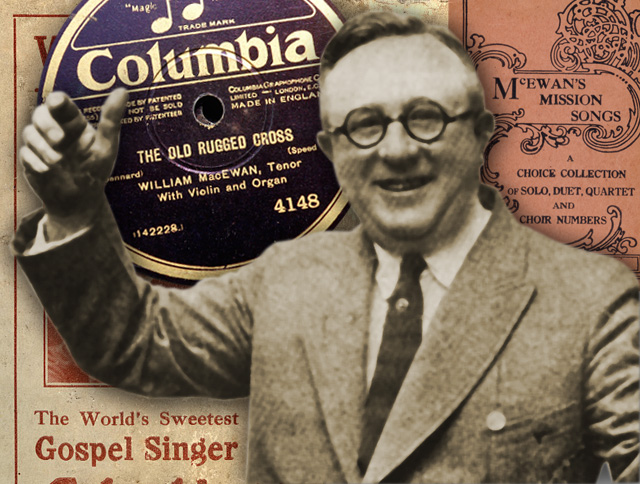
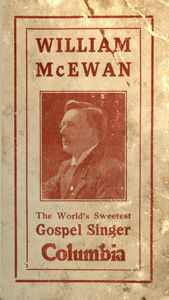
William MacEwan of Glasgow and New York (1871–1943) ........ 'The World's Sweetest Gospel Singer'.

#alttext#I am gradually refreshing a series of blog posts from 2011 to have their own dedicated blog which you can find here.

Tuesday, December 29, 2015

James Cleland and the Snake Experiment

Plasci003 aaa 0042 3

In 1831, James Dowsett Rose Cleland (1767-1852) of Rathgael near Bangor decided to test the legend that St Patrick had not only driven the snakes from Ireland, but that he had also made the island uninhabitable by them. Cleland went to Covent Garden in London, bought six snakes (natrix torquata), and brought them home where he released them in his own garden.

Within a week one of them was killed six miles away at Milecross near Kiltonga outside Newtownards, causing great excitement and concern among the local population. It was taken to the naturalist Dr James L Drummond (1753-1853), Professor of Anatomy at Belfast Inst, who was horrified by the discovery of a snake in Ireland. One minister preached on the subject, suspecting the end of the world was nigh, and another linked the snake’s appearance to cholera.

Rewards were offered for the other snakes - three were soon killed fairly close to Rathgael, but the whereabouts of the other two was unknown. However, according to the Belfast News Letter of 9 December 1831, Cleland gave two specimen snakes to the Belfast Natural History Society.

The story has been printed in many publications ever since, most of which are based upon a detailed account in Edinburgh author Robert Chambers' (1802–71) famous volume Book of Days which was published in 1864. The writer of this account said that he had ‘resided in that part of the country at the time, well remembers the wild rumours' – locals are said to have called the dead snake a ‘rale living sarpint’. Another of his publications - Chambers’ Edinburgh Journal, regularly published stories from Irish history.

Here’s the relevant article from Book Of Days, which interestingly also contains many of the other Scottish traditions of St Patrick which I have mentioned here often before.

In 1847 Chambers wrote this of a visit to Dublin:

When lately in Ireland, I was, like all other tourists, struck with, and interested in, two things the opposite of each other — one, the surprising number of objects of antiquity, indicating a former age of wealth, literature, and refinement ; the other, the absence of all present moral vigour, with a wretchedness the very nearest thing to an entire negation of property and comfort. You see the remains of ecclesiastical edifices with the most gorgeous carvings ; stone crosses lying prone in the dust, any one of which would be the marvel of an English county ; and in museums you are shown books of vellum, in the ancient Irish character, bound in gold and silver, and ornamented with precious stones, which are said to be worth, in the present day, thousands of pounds.

In the collection of the Royal Irish Academy I was shown a copy of the gospels which had belonged to St Patrick ; an almost coal-black little vellum book, that could not be a day less than fourteen hundred years old ; and also a similarly antique copy of the Psalms of David, which had been the property of the pious Columba, who went as an apostle to Scotland about the year 563. The eventful history of these literary relics was of course duly verified, and afforded, among other things, room for much melancholy reflection.


Tuesday, December 15, 2015

Glenfield & Kennedy (Kilmarnock) water pumps

I've been noticing these over the past while. Here on the Ards Peninsula two are in Cloughey (pink and brown) and one in Millisle (green). There's a more elaborate one in St Johnstown in Donegal with a lion's head. Glenfield & Kennedy were a huge firm in Kilmarnock in Ayrshire, selling products around the world. It seems that they were suppliers to local authorities in Ulster, and Ireland as a whole. SAM 4762 SAM 4761 SAM 4769 SAM 4768 SAM 3881 SAM 3879 Bradley 0498

Tuesday, December 08, 2015

"We'r Needin tae Talk Aboot Wir Language" – Michael Dempster | TEDxInverness

The Ulster Irish Society of New York (founded 1926)

Unknown

Founded in 1926, the Ulster Irish Society of New York seems to have been an influential group in its day, hosting swish annual banquets at top hotels in New York, with guest speakers such as pioneer aviator Amelia Earhart and Eleanor Roosevelt. It is interesting that there was a time when 'Ulsterness' was chic and fashionable, even in the New York City of the 'Roaring Twenties'.

Unknown 1

At the top table in the pic above is typography legend, Illinois-born Frederic William Goudy who presumably must have been of Ulster ancestry. His family surname was originally spelled Gowdy but this was changed in 1883, his parents were John Fleming Goudy and Amanda Truesdale.

One of the big Gowdy histories, published in the USA in 1919, says this –

'… The pioneer ancestors of this branch of the Gowdey-Goudey family, like so many other early American settlers bearing the name, represented the sturdy Presbyterian stock who carried their "Articles of Faith" with them when they left the vales of Ayrshire in Scotland for their new home in the "Ards" on the Peninsular in the County of Down in Ireland; and the elements of moral and religious character conspicuous in unnumbered generations of their fore-fathers were cherished by them and transmitted as a priceless heritage to their posterity …' –source here

As for Amelia Earhart, here's what she said in her 1933 address to the Society, who presented her with a roll of linen woven from flax from the field she landed in, near Londonderry –

" I never had greater hospitality than was shown me in Ireland, " concluded Miss Earhart. " I am going back some time, and I am going to take Mr. Putnam (her husband) with me to see if it is as beautiful as it looked to me on landing. And now I am going to tell you something which may be of interest to you - my mother's father's parents came from Londonderry."

Wednesday, December 02, 2015

The first church building in Portavogie

Fishermans Hall


The Fishermen's Hall, or Fishermen's Mission Hall, was built in late 1886 and opened in 1887, on a site on the Warnock's Road. I remember being in it on at least one occasion in the 1970s. A 'tin tabernacle', it is long-gone, finally demolished in the 1980s. One of the leading men in its establishment was Thomas Shaw, an Elder of Kircubbin Presbyterian Church. A newspaper advert in 1886 said that –

"… it is intended that the Building will be used for Weekly Services, Prayer Meetings, Sunday Schools, and Bible Classes, all to be conducted on Evangelical Principles. Subscriptions from those interested in the moral and spiritual welfare of our Fishermen, and who may desire to show practical sympathy with this praiseworthy effort, sholl be thankfully acknowledged ...".

For 40 years this was the only evangelistic outreach in the village, apart from the occasional event in the Orange Hall, of which an 1885 newspaper article said "… in addition to its legitimate uses, serves admirably for either a religious service or a 'whisky ball' ...". Perhaps this accelerated the desire for a distinct place of worship!

The village had flourished in the mid 1800s. In the 1850s it was said that there was only a few houses, but by 1885 there were nearly 300, and a population of around 1000 people with 400 men employed at the fishing in the summer herring season.

Portavogie Presbyterian Church, and the non-denominational People's Hall, both opened in Portavogie in 1926.

As far as the wider locality is concerned, at nearby Butterlump a Gospel Hall had been founded - also in the 1880s - by James Patton, a watchmaker of Newtownards following a trip he had made to Stranraer to meet a preacher named John Walbran. In later years my grandfather was involved at Butterlump. Cloughey Presbyterian Church dates from 1841, and St Andrews Parish Church at Ballyeasborough from 1850.


Tuesday, November 24, 2015

'The Truth About Ulster' - Frank Frankfort Moore (1914)

F Frankfort Moore

Frank Frankfort Moore (1855–1931) was born to Presbyterian parents in Limerick. He was a brother-in-law of Bram Stoker, and was a prolific writer. He was educated at Inst in Belfast and became a journalist with the Belfast News Letter. This volume, now online, has some superb observations about Ulster life - some scathing, but mostly packed with truth. Here's a gem of an extract:

'… We reckoned it no feat to cross that narrow channel, and to watch the Galloway hills, already seen to be green by anyone looking out from Donaghadee or Ballywalter, become clearer and brighter with every hour's sailing, until the beautiful undulations of the shores of Lough Ryan were on each side of us, and we could run our boat comfortably into a natural harbour with a sandy ground to drop our anchor into. And when we hailed one of the fishermen outside his own cottage, we found him and his people speaking exactly the same dialect as was spoken on the Irish coast which we had left a few hours before; for the Scotch of the County Down coast from Bangor to Portaferry, is the Scotch of the coast of Galloway …'

Saturday, October 31, 2015

Yin for Hallowe'en

Tam o'Shanter from Spiral Productions on Vimeo.

Tuesday, October 27, 2015

Francis Boyle and the "ladies of the night" of Donaghadee – Hornbook's Ghaist.

(Fully understood, Ulster-Scots poetry isn't just a source of old words and vocabulary. The poems take the reader to a different time and place, to better appreciate how society functioned in days gone by. With thanks to Fiona McDonald for permission to reproduce this 2009 post from her blog).

Here's a poem written by Francis Boyle (c1730–post 1811) of Gransha County Down from his 1811 volume Miscellaneous Poems. His was the Gransha near Dundonald rather than the one near Bangor. Although it is often said that Ulster-Scots writers merely imitated the works of Robert Burns, many of Boyle's poems were written before Burns work was published, although this one does appear to have been influenced by Burns.

Interestingly, Robert Burns wrote 'Death and Dr Hornbook' in 1785 as a satire about John Wilson, the son of Glasgow weaver who initially came to teach at Tarbolton and later kept a shop where he also sold drugs and gave out medical advice. A 'hornbook' was a sheet of paper with basic learning tools such as the alphabet, numerals and the Lord's Prayer and this would have been mounted on wood and covered by a protective plate of transparent horn. Burns wrote his poem after hearing Wilson going on about his medical knowledge at the Tarbolton Masonic Lodge. Here's Boyle's poem:


HORNBOOK'S GHAIST

It happen't ance in Donaghadee,
No' monie perches frae the kee,
A gentleman I chanc't to see,
'Mang ither foks,
Wha deign't to talk a while wi' me,
An' sklent his jokes.

He saw that I was auld an' gray,
An' had but little for to say,
My garb was neither mean nor gay,
Just kintra weed,
An' as it was a frosty day,
Had tie't my head.

He took me for some kintra clown,
Wha liv't far distant frae the town;
He'll rue his folly I'll be boun',
To slight my leuk;
I'll spread his fame the kintra roun',
In my new beuk.

I hear he has attain't some skill,
To wait on women when they're ill,
An can prescribe sic dose or pill,
As mak's them worse;
An' braid receipts for them he'll fill,
To swall his purse.

But yet mair famous for his cures
O' batter't bawds, an' pockie whores,
While here an' there he taks his tours,
'Mang brothel-houses;
He sudna scorn my mental pow'rs,
Nor slight the Muses.

These sportin' Does, like Mrs. Clarke,
That win their wages i' the dark,

An' warm their logies wi' their wark,

Which staps their water

They maun gie Hornbook monie a mark

To mak' them better.


Young Tarry-breeks is come ashore,

Thro' storms an' tempests that did roar -

Revisits now his paramour,

The sportin' maid,

An' swears she's sprightly, aft an' fore,

An' fit for trade.


Some folk will say he's but a quack,

But that maun be a great mistak';

He cur't young Jamie, Wull an' Jack,

An' teuk their fees,

An' mim-mouth't Meg, the ridden hack,

O' her disease.


Nae Hornbook bred in shire o' Ayr,

Wi' our new doctor can compare;

My lads, jog on, an' never spare

To warm their tail;

Twa or three days in Hornbook's care,

Will mak' thee hale.


As Jock does live at the sea-side,

He sud bathe aften in the tide;

To brace his nerves, an' clean his hide,

In the saut water;

Perhaps this might allay his pride,
An' stap his clatter.

Monday, October 19, 2015

Brilliant political advertising - SNP 2015

A friend showed me this the other day, I hadn't seen it earlier this year around the time of the UK General Election. Absolutely superb.

Braidstane Castle, Ayrshire, home of the Ulster Montgomeries

Braidstane Castle (detailed Wikipedia entry here), nowadays Anglicised in neighbouring farms as 'Broadstone', is long-gone. Dismantled in the 1700s, all that remains now is a stone boundary wall. It's just a short drive from Gateside near Beith in north Ayrshire, along Reek Street, to a bend in the road that normally wouldnt cause a second glance unless you knew what was once there. For here, Con O'Neill and Hugh Montgomery lived it up for three days in 1604, celebrating Con's escape and impending Royal pardon from Montgomery's friend King James VI & I, and also celebrating vast amounts of County Down land which Montgomery was going to receive in return.

Here it is, named as 'Braidstam' in Blaeu's map of 1665, not quite as big as the neighbouring Montgomery castles of Hessilhead and Giffen.

Braidstam v1 1665 Braidstam v2 1665


Here it is again, on Andrew Armstrong's map of Ayrshire, circa 1775 (See here for full res version)

Broadstone 640 1775

Somebody has recently marked the site on Google Maps (link here)

Broadstone Farms Big Broadstone Farms 640

More to follow...