Tam o'Shanter from Spiral Productions on Vimeo.


(Fully understood, Ulster-Scots poetry isn't just a source of old words and vocabulary. The poems take the reader to a different time and place, to better appreciate how society functioned in days gone by. With thanks to Fiona McDonald for permission to reproduce this 2009 post from her blog).
Here's a poem written by Francis Boyle (c1730–post 1811) of Gransha County Down from his 1811 volume Miscellaneous Poems. His was the Gransha near Dundonald rather than the one near Bangor. Although it is often said that Ulster-Scots writers merely imitated the works of Robert Burns, many of Boyle's poems were written before Burns work was published, although this one does appear to have been influenced by Burns.
Interestingly, Robert Burns wrote 'Death and Dr Hornbook' in 1785 as a satire about John Wilson, the son of Glasgow weaver who initially came to teach at Tarbolton and later kept a shop where he also sold drugs and gave out medical advice. A 'hornbook' was a sheet of paper with basic learning tools such as the alphabet, numerals and the Lord's Prayer and this would have been mounted on wood and covered by a protective plate of transparent horn. Burns wrote his poem after hearing Wilson going on about his medical knowledge at the Tarbolton Masonic Lodge. Here's Boyle's poem:
HORNBOOK'S GHAIST
It happen't ance in Donaghadee,
No' monie perches frae the kee,
A gentleman I chanc't to see,
'Mang ither foks,
Wha deign't to talk a while wi' me,
An' sklent his jokes.
He saw that I was auld an' gray,
An' had but little for to say,
My garb was neither mean nor gay,
Just kintra weed,
An' as it was a frosty day,
Had tie't my head.
He took me for some kintra clown,
Wha liv't far distant frae the town;
He'll rue his folly I'll be boun',
To slight my leuk;
I'll spread his fame the kintra roun',
In my new beuk.
I hear he has attain't some skill,
To wait on women when they're ill,
An can prescribe sic dose or pill,
As mak's them worse;
An' braid receipts for them he'll fill,
To swall his purse.
But yet mair famous for his cures
O' batter't bawds, an' pockie whores,
While here an' there he taks his tours,
'Mang brothel-houses;
He sudna scorn my mental pow'rs,
Nor slight the Muses.
These sportin' Does, like Mrs. Clarke,
That win their wages i' the dark,
An' warm their logies wi' their wark,
Which staps their water
They maun gie Hornbook monie a mark
To mak' them better.
Young Tarry-breeks is come ashore,
Thro' storms an' tempests that did roar -
Revisits now his paramour,
The sportin' maid,
An' swears she's sprightly, aft an' fore,
An' fit for trade.
Some folk will say he's but a quack,
But that maun be a great mistak';
He cur't young Jamie, Wull an' Jack,
An' teuk their fees,
An' mim-mouth't Meg, the ridden hack,
O' her disease.
Nae Hornbook bred in shire o' Ayr,
Wi' our new doctor can compare;
My lads, jog on, an' never spare
To warm their tail;
Twa or three days in Hornbook's care,
Will mak' thee hale.
As Jock does live at the sea-side,
He sud bathe aften in the tide;
To brace his nerves, an' clean his hide,
In the saut water;
Perhaps this might allay his pride,
An' stap his clatter.


A friend showed me this the other day, I hadn't seen it earlier this year around the time of the UK General Election. Absolutely superb.
Braidstane Castle (detailed Wikipedia entry here), nowadays Anglicised in neighbouring farms as 'Broadstone', is long-gone. Dismantled in the 1700s, all that remains now is a stone boundary wall. It's just a short drive from Gateside near Beith in north Ayrshire, along Reek Street, to a bend in the road that normally wouldnt cause a second glance unless you knew what was once there. For here, Con O'Neill and Hugh Montgomery lived it up for three days in 1604, celebrating Con's escape and impending Royal pardon from Montgomery's friend King James VI & I, and also celebrating vast amounts of County Down land which Montgomery was going to receive in return.
Here it is, named as 'Braidstam' in Blaeu's map of 1665, not quite as big as the neighbouring Montgomery castles of Hessilhead and Giffen.

Here it is again, on Andrew Armstrong's map of Ayrshire, circa 1775 (See here for full res version)
Somebody has recently marked the site on Google Maps (link here)

More to follow...
Don't take my word for it. His father was famously a member of the Harland & Wolff Burns Club. Germaine Greer once wrote that "George was a genuinely hard man, but hardness results in fragility. His working-class Ulster-Scots upbringing afforded him no way of coming to terms with that fragility". He spent his latter years living near his family outside Portavogie, in a relatively new house built on ground my father used to own and where I used to gather both spuds and straw bales – exactly three fields from where I now live. We can see the gable end from our front step. Here he is, looking Burns-esque, resplendent in full tartan.
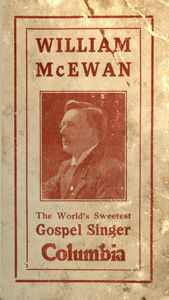
A week ago my friend Joe Rae called in on his annual road trip around Ireland. Joe and I got in touch many years ago through a shared appreciation of the song My Ain Countrie which was recorded by William MacEwan in 1911, and we have stayed in touch ever since. Joe lives in the hills above Beith in North Ayrshire. On previous visits I have made to see him, and his late wife Jean, he has taken me to the site of Braidstane Castle, which was the home of Sir Hugh Montgomery back in 1606, and also to the ancestral home of Montgomery's great rival, Sir James Hamilton, in the Main Street of the village of Dunlop which is also in Ayrshire. I took Joe on a wee jaunt around the Ards - up to Ballywalter, then to Donaghadee (specifically the Parish Church with the Montgomery memorial stone over the doorway), and then to Grey Abbey. Later that evening we went to the unveiling of a newly-restored cow tail pump in Greyabbey village, where I was pleased to introduce Joe to various Ards folk including Bill Montgomery, the head of the Ulster Montgomeries and a collateral descendant of the original Braidstane Montgomeries. The photo above could be captioned as: Joe Rae from near Montgomery's Braidstane visiting Donaghadee to see a Montgomery of Braidstane stane.
Maligning and ignoring Ulster-Scots is nothing new. This is from novelist James McHenry's introduction to his 1798 Rebellion book O'Halloran, regarding the aunt who funded him to write it –
In an excellent essay entitled 'Irish and American Frontiers in the Novels of James McHenry' by Stephen Dornan, from the Journal of Irish and Scottish Studies (Volume 3 Issue 1), comes this observation on the 'three stranded' cultural nature of Ulster –'…amidst the multitude of volumes which she had perused on these subjects, she was surprised to find none that gave anything like an accurate account of the people among whom she had spent her whole existence … she was much chagrined with the carelessness with which even professed travellers through Ireland have uniformly mentioned its northern province. Some, she would say, seem to treat the people of Ulster as altogether beneath their notice; others take delight in making them the objects of misrepresentation and slander; while none manifest for them that sympathy and respect, to which, from their spirit of enterprise and industry, they are assuredly entitled…'
'… McHenry saw Irish society not in terms of a binary between Protestant and Catholic, but rather as divided in triangular terms between Anglicans, Roman Catholics and dissenters. He was annoyed at Owenson’s wilful exclusion of the dissenting element from the moment of resolution in The Wild Irish Girl, in which Anglican ascendancy Ireland is symbolically united and reconciled to ancient Catholic Gaelic Ireland through the marriage of Horatio and Glorvina. The Anglican and Catholic traditions are symbolically reconciled, whilst the Presbyterian tradition is acknowledged by Owenson, but ultimately excluded …' – Published by the AHRC Centre for Irish and Scottish Studies, University of Aberdeen - online here.Over 200 years later, these themes sadly persist.
(The more you look the more you see, the more you dig the more you find. In looking for something else I came across this man recently.)
Captain Henry A Chambers (1841–1925) was born in Iridell County, North Carolina, which is said to have been nicknamed 'Scotch-Iridell" due to it being almost entirely Scotch-Irish in population. He attended Davidson College, joined the Confederate Army in May 1861 and was wounded at the Battle of Five Forks in Virginia in 1865. After the war he settled in Tennessee, becoming an Attorney and a member of the Tennessee House of Representatives. He was also a senior Freemason in the Grand Lodge of Tennessee (whose website features the portrait shown below)
His papers are held at the University of North Carolina, including a family history. Of the Chambers who settled there in 1754, having moved south from Pennsylvania, he wrote that –
"... They were all probably descendants of the James Chambers whose name appears on the rent roll of the Scotch farmers who settled in Ireland under the auspices of Hamilton & Montgomery in the reign of King James I of England (VI of Scotland) ..."
– from the Statesville Sentinel, 31 Dec 1914
The first Chambers in his line reached Philadelphia in 1726, a group of four brothers who had sailed from County Antrim. Chambers contributed to a huge family history compiled by William D Chambers in 1925, all of which is now online here. He said that Iridell County was full of:
"... families bearing such names of Scotch extraction as Freeland, Fleming, McHney, Chambers, Summers, Steelen, Murdock, Patterson, McNeely, Roseboro, Graham, Kerr, Irvin, Woods, Johnson, Hall and Ramsey. Most of them, whether church members or not, were of the Presbyterian or Calvinistic faith ..."
His papers include his Civil War diary, which shows his interest in reading and history even during army drills and training:
Monday, Sept. 28, 1863
Had company drill in the morning and battalion drill in the evening by Col. McAfee. After the evening drill, we had dress parade. A Rev. Mr. Rugland preached tonight. I was engaged in reading Macaulay’s History of England in my leisure time.Monday, Jan. 18, 1864
I was engaged during the forenoon in writing and in the afternoon in reading Macauley’s England. I have become deeply interested in this history. The iniquitous reign of James II is now drawing to a close and it is instructive and interesting to see what desperate measures he and his courtiers are resorting to...Tuesday, Jan. 19, 1864
I am becoming more and more interested in Macauley’s England. He groups his historical characters in such a way that his narrative excites something with the same interest that a well written novel produces. His reflections, his searching analysis of character, his felicity of style, all contribute to charm one with his history. I have today read his account of the influence and circumstances which induced Wm. Prince of Orange to interfere with the government of England and have arrived at the end of the 9th of the long chapter where James, after retreating before the prince and finding his friends and army deserting him, resolves to follow his wife and little son to France. Last night George W. Carr of my company got a sick leave of twenty days. This evening, Samuel S. Benson was sent to the hospital and we received orders permitting five enlisted men to be furloughed for every 100.
At the infamous battle site of Manassas he reported that there had been whiskey smuggling into the Confederate camp by Irish girls –
Thursday, Jan. 9, 1862
On this day we were on duty in the muddiest of the muddy places, Manassas Junction. It was cloudy all day –that and a thick fog rendered it almost impossible to distinguish objects more than twenty paces distant. This morning, we police confiscated some goods in the shape of two boxes filled with “fire water”. These boxes were being smuggled into camp by two of the “fair daughters of Ireland”.
In 1915 he serialised a 15-part 'History of the Scotch-Irish' for the Statesville Sentinel, a remarkably detailed account which drew heavily upon Charles A Hanna's (1863–1950) landmark two-volume set The Scotch-Irish, or, The Scot in North Britain, North Ireland and North America (1902).
When you get your head out of the Northern Ireland goldfish bowl, where sectarian narratives are imposed upon pretty much everything, and where intra-Protestant divisions separate the churches, you forget the global power of the term, of what it stands for, of the simplicity of the faith.
Together For the Gospel is a biennial conference in the USA, where the leading minds (speakers and authors) get together on common ground – black, white, Asian, Latino. I am sure they have differences. But when they set those aside the outcome is powerful.
So what exactly did Jesus Christ achieve? Did He do it all? Or did He just do some, and now you have to do the rest? If we were capable of making ourselves right with God through our own efforts or religious observances, then, reverently speaking, Jesus Christ made a terrible mistake and wasted His time. Is your hope in Him, or in yourself?
Here's next year's T4G video as they lay the groundwork for the 2017 500th anniversary of Martin Luther's 95 Theses.
T4G 2016: We Are Protestant from Together for the Gospel (T4G) on Vimeo.
In Ulster Province, Erin's northern strand
Five shiploads joined to leave that far off land.
They had their ministers to pray and preach
These twenty families embarked in each.
Here I would note and have it understood,
Those emigrants were not Hibernian blood,
But sturdy Scotsmen true, whose fathers fled
From Argyllshire, where protestants had bled
In days of Stuart Charles and James second
Where persecution was a virtue reckoned,
They found shelter on the Irish shore
In Ulster, not a century before
Four of these ships at Boston harbor landed;
The fifth, by chance at Casco Bay was stranded…
– from 'Jamie Cochran, the Indian Captive' (the opening poem in the 1898 edition)
Some years ago I was fortunate enough to acquire a copy of Incidental Poems by Robert Dinsmoor (1757–1836), the 'Rustic Bard' of New Hampshire, which was printed in Haverhill, Massachussetts in 1828. Dinsmoor reveals at the start of the book in a chapter entitled 'Life of the Author written by himself' that his ancestry can be traced to Achenmead (originally thought to have been near Peebles, but also said to be north of Kilwinning in Ayrshire) in Scotland, then to Ballywattick near Ballymoney in County Antrim, and then to Londonderry New Hampshire - and so it's no surprise that he uses a fair amount of Scots / Ulster-Scots in his poetry. The volume includes references to Robert Burns, Belfast-born Elizabeth Hamilton and Hector MacNeill. Songs appear which are written to tunes such as 'Boyne Water' and 'Scots Wha Hae'.
The book also includes a poem by his uncle, Samuel Dinsmoor, which is also in Scots / Ulster-Scots. Standouts in the collection are 'The Sparrow', 'Skip's Last Advice' and the reproduction of Elizabeth Hamilton's 'My Ain Fireside' definitely warms the cockles.

Lots of Dinsmoor material is now easily available online:
• Incidental Poems(1828) on GoogleBooks here
• Poems of Robert Dinsmoor the Rustic Bard (1898) on Archive.org here
• The Earliest History and Genealogy of the Dinsmore-Dinsmoor Family (1891) on Archive.org here
• The History of Windham in New Hampshire, a Scotch Settlement - Supplement (1892) on Archive.org here
• The History of Windham in New Hampshire, a Scotch Settlement (1892) on Archive.org here
• Among the Scotch-Irish, with history of the Dinsmoor family (1891) on Archive.org here
• Article about Dinsmoor, by Prof Michael Montgomery, on UlsterScotsAcademy.com
The song on page 39 – To All Scots-Irishmen, Citizens of America - blends William of Orange, William Wallace and George Washington.
Thanks to Robert for this. Douglas Wilson is an author and a friend/sparring partner of the late Christopher Hitchens.
I've been meaning to highlight this book for some time. There is a Finding the McCains group on Facebook. Published in December 2014 and written by Mississippi-based Barry McCain, a long-time reader of this blog, it is available on Amazon in both paperback and Kindle formats. The Amazon summary reads as follows:
'Finding the McCains,' is an account of one Mississippi McCain’s 40 year odyssey to find his family in Ireland. Senator John McCain and his cousin, novelist Elizabeth Spencer, both include a short history of the Mississippi McCain family in their respective memoirs 'Faith of our Fathers' and 'Landscapes of the Heart.' This history is a romantic tale of Highland Scots who supported Mary Queen of Scots and who fled to Ireland after her downfall in 1568. The search for the McCains became a mystery story with clues, false turns, many adventures, and then ultimate success through Y chromosome DNA testing. In 2008 the McCains were reunited with their family that remained in Ireland, after 289 years of separation. The McCain history includes people and events familiar to readers of Irish and Scottish history; Redshanks, Iníon Dubh, Mary Queen of Scots, the Earls of Argyll, the Ulster Migration, and the Scots-Irish, are all part of this family’s story. Faint memories of this past were told for generations in Mississippi and as the research progressed the facts behind these memories were uncovered. Another theme in the book is the Scots-Irish. Contemporary histories about the Scots-Irish present stereotyped and romanticized accounts of this dynamic group. 'Finding the McCains' reveals a more complex history and shows the cultural conflation common in Scots-Irish popular history. 'Finding the McCains' is also a genetic genealogy how-to guide for people of Irish and Scottish ancestry.
Niall MacGinnis (1913–1977) was Dublin-born, educated at Stonyhurst College (a Jesuit school) in Lancashire and then at Trinity College Dublin. In this 1953 portrayal of Martin Luther's life, MacGinnis does a fine job in the lead role - the movie was nominated for two Oscars. Here is his Wikipedia entry. Interestingly for Northern Ireland readers, MacGinnis had played fictional IRA leader Terence Elliott in the 1936 movie Ourselves Alone (which was directed by Belfast man Brian Desmond Hurst). MacGinnis later served in WW2 as a Royal Navy surgeon.
Go to 30 minutes:– "…and when I found it, it was as if the gates of heaven were opened to me … Christ, man only needs Jesus Christ …"
UPDATE: Thanks to Jack for letting me know that Brian Desmond Hurst was originally named Hans Hurst, he signed the Ulster Covenant at Belfast City Hall in 1912. During the Great War he changed his name to Brian Desmond, perhaps to avoid being thought of as German.

In 1696, William Montgomery, author/compiler of The Montgomery Manuscripts, was visiting his relative Hugh Montgomery at Derrygonnelly in County Fermanagh. The house had previously belonged to Sir John Dunbar, the high sheriff of County Fermanagh, who had settled in the county in 1615. Hugh Montgomery (1651–1722) was a captain in the army of William III, and had married Dunbar's granddaughter and heiress, Katherine. One of Sir John Dunbar's ancestors, Patrick III, Earl of Dunbar (1213–1289) had married Christiana Bruce (1246–1275), aunt of King Robert the Bruce. So the Dunbars were Scottish aristocracy with a Bruce connection. Here's where it gets interesting… During his three night visit in 1696, William Montgomery wrote that he had seen:
"… a rarity att that house, to witt, a two-edged sword of excellent metall (which this Hugh never caused to be made) … I am of the opinion that no smith in Ireland can forge soe good a blade … the sword is inscribed on ye right hand side of ye blade thus – Robert Bruscius, Scotorus Rex, 1310, and on ye reverse side Pro Christo et Patria D:ER …"In the mid 1800s a search for the sword was carried out but with no success, and in 1867 a letter appeared in The Scotsman and The Northern Whig, appealing for its whereabouts. In 1899, the sword surfaced and was brought to the Society of Antiquaries in London, but they cast doubt on its authenticity. Charles Alexander, the Baron de Cosson, and a Fellow of the Society, thought that the sword wasn't old enough to be from the time of Bruce. He thought it closely resembled 17th century swords inscribed by Edwardus Prins Anglie. I can't find any other record of the sword since then. I think that folklore is often more valuable that verifiable history, in that folklore reveals what people want to believe and is an insight into their values and aspirations. Forgery or not, presumably the sword is out there somewhere and whoever owns it today is the custodian of an important Ulster-Scots artefact.
That's not my picture!
Back at the end of June we took a weekend in Scotland to we could do a trip to Staffa, the Scottish end of the Giant's Causeway, and a lifelong ambition of mine. The aim was to go on the weekend with the longest day, so we could enjoy sitting outside till 11pm and beyond in near daylight. Despite that plan, it was damp and overcast, but we made the most of it. Don't go to Scotland looking for sunshine!
It is a good job for the Northern Ireland Tourist Board that Staffa takes a bit of effort and money to get to, because it is far more impressive than the Causeway. It has no visitor centre, just breathtaking terrain miles from the mainland. Here's how we did it. After flying from Belfast to Glasgow, we hired a car and drove 2hrs north to Oban.
1. Stay in Oban the night before
Oban is a popular small Victorian resort town which the ferry terminal does not detract from, with lots of hotel options, but taking a family of 5 is pricey. The best deal we could find was The Royal Hotel in the middle of the town, who had a family room which would sleep five people. A lovely place, and a few weeks after we were there, Roman Abramovich visited on his cruise of the Western Isles.
• B&B per night for the room was £180 x 2 nights = £360.00

2. Book the Oban to Mull Ferry well in advance
I had foolishly assumed a ferry to the isles would be regular, and just a case of turning up for the sailing. Nope. There are 7 sailings per day (timetable here) We just managed to get one of the last remaining tickets for the 7.30am ferry from Oban to Craignure. Sailing time was 45 minutes and the ferry was a pretty good standard, not unlike the P&O boat from Larne.
• Cost for car + 5 was £129.85 return
Arriving at misty Craignure
We then drove from Craignure to Tobermory (22 miles, took about 45 minutes), got some grub there in a nice wee café at the seafront, and then drove back to Craignure. The drive is brilliant, like a car advert in places, with views to Ardnamurchan Point. Having retraced our drive back to Craignure we then headed to Fionnphort. That drive took an hour, most of it was on single track roads.
Abandoned boats on the road to Tobermory
3. Book a trip from Fionnphort to Staffa with Staffa Tours
Arriving at Fionnphort was lovely, small and unspoilt harbour, with Iona and Iona Abbey just across the Sound. There were crowds of people there, easily 200 or so, all waiting for the Calmac ferry to Iona. As we waited 3 coachloads more arrived. We boarded the Staffa Tours boat - probably the cleanest small boat I have ever been on, excellent service, and smooth sailing.
• The cost for 2 adults and 3 children was £105.00 return
Creels at Fionnphort
Calmac Ferry to Iona, and Staffa Tours boat arriving
Onboard the Staffa Tours boat
4. Sailing to Staffa
There were maybe 50 or 60 people on the boat, mostly from Spain but some from New Zealand as well as Scots. Sailing through the sound which separates Iona and Mull was quiet, misty, and serene. Then it was about 30minutes across the open sea to Staffa - which due to the mist we didn't see until we were almost there. It loomed out of the mirk like a scene from Jurassic Park.


5. On Staffa
Initially, the boat backed up into the mouth of Fingal's Cave, which was a remarkable sight. The concrete steps at the landing stage led up to the grassy top of the island – the walkway route to Fingal's Cave was just a trek along the hexagonal basalt and only a handrail. It was a bit scary in places, maybe because of the suffocating health & safety culture we have all got used to in modern life, but it was also exhilarating. We could have stayed longer on Staffa – we only got around an hour there.


In terms of the cost, as you can see it's not a cheap family holiday. To these costs you have to add flights, car hire, petrol and food. Despite this, I would recommend anyone to go to Staffa, it's definitely worth doing - but it would be better in clear weather, where the rock formations would have more contrast. You might also get to see the dolphins and puffins which usually appear in better weather.
Belfast artist Joseph William Carey's paintings of Staffa, circa 1900

Tent meetings have been a feature of Ulster evangelical life for centuries. Methodist missionary Matthew Lanktree's diary of 1818 records that at the bottom of our lane here at Ballyfrench, men would rig up a tent out of ships' sails and hold large Sunday services and communion meetings there.
Later in the 1800s in the Cullybackey area there were large tent meetings called the Fenaghy Camp Meetings, the first of which were held in mid August 1887. Thousands gathered at these meetings for many years - a reported 12,000 in 1889. Special trains from Belfast were laid on to bring people to the 10-tent site, five of which were for refreshments throughout the days of meetings.
The organisers started well, by aiming to bring the most well-known preachers to rural Antrim. D. L. Moody was due to attend in 1892 but was prevented from doing so due to his son falling seriously ill.
In 1887 it was hoped that Charles Haddon Spurgeon would be the main speaker, but the organisers seem to not have done much forward planning and only wrote to him in July. On the 16th July Spurgeon, a man who seldom minced his words, wrote this amusingly frank reply:
Dear Sir,
I wish I could come to you. But the request almost amuses me. Do you really think that I am waiting about for work, or hanging on a nail to be taken down at a few days notice? Why my dear Sir, I never have a leisure day. When the year begins, it is usual to have every day allotted down to its close, and all arranged to be used if the Lord will.
Engagements for the week you seek have been made so long ago that I cannot tell you when, and the year 1888 is already in great part allotted unless I go to heaven.
It is always impossible for me to leave hom at short notice; and indeed the work of the Lord at home will not often allow for my absence at all.
Yours very heartily,
C. H. Spurgeon
In the end, a Scotsman of County Antrim parentage, Rev John McNeill - known in his day as 'the Scotch Spurgeon', preached that first year instead of Spurgeon, and again in 1892 as a stand-in for Moody.
In 1858 Spurgeon had drawn large crowds to Botanic Gardens in Belfast, with trains bringing people from as far as Dungannon and Monaghan to hear him preach.
(from 100 Years at Portstewart: The Story of a Keswick Convention by Rev Joseph Fell, 2014)


