Friday, October 31, 2014

Happy Reformation Day - Knox 500, and Luther (nearly) 500

Horizontal14

While turnips are being snedded and pumpkins are being carved to mark Hallowe'en, today is also Reformation Day. Today in 1517 Martin Luther nailed his 95 Theses to Wittenberg castle door and began the re-awakening of the liberty of the Biblical Gospel. 

There is no greater spiritual burden to lay on someone, than to tell them that their eternal destiny depends upon their own behaviour. There is no greater release than to hear 'Jesus paid it all' , that Christ fulfilled the Law completely, forever, on our behalf.

The Biblical message of faith in Christ, not the Church's message of reliance on supposed 'good works', made Luther right with God. Christ's perfect righteousness, not his own imperfect self-righteousness. The Gospel, not the Law.

Knox 500 has been a relatively low-key project in Scotland this year, marking the 500th anniversary of the birth of John Knox, the leader of the Scottish Reformation. Their conference in Edinburgh starts tomorrow and runs until Wednesday. I am pleased to be assisting in the early stages of a Luther 500 project here at home. All to be revealed in due course.

Alex Salmond was spectacularly wrong on Radio Ulster a few weeks ago. He said this:

“It’s not for us to decide who goes up and who goes down – that lies in other hands… people are judged on the legacy and impact of what they did, and on that basis Ian will be on pretty firm foundations as he meets his Maker.”

Theology fail. As the Getty modern hymn states, "In Christ alone my hope is found."

For by grace are ye saved through faith; and that not of yourselves: it is the gift of God: Not of works, lest any man should boast. - Ephesians 2 v 8-9

(Image from Davy Morgan Photography)

Thursday, October 30, 2014

Offers starting at £80,000

  An original Robert the Bruce seal, from 1322. More details here.31604133 1 x

Tuesday, October 28, 2014

Cultural humility in action

This book has some title - The Scotch-Irish in History As Master Builders of Empires, States, Churches, Schools and Civilization. An early version of 'We are the People'?!!

Available free on Archive.org here.


SAM 0571

Monday, October 27, 2014

The greatest of the myths

"... the greatest of the myths is that of the non-existence of the Ulster Scots as a separate people with a distinguished history and rich traditions. Lip service is paid by British and Irish politicians to the idea of a Protestant cultural identity, usually by polite mentions of the Twelfth of July as a folk festival; no attempt is made to probe beneath the cultural surface ..."

– God's Frontiersmen, the Scots-Irish Epic, by Rory Fitzpatrick (1989), p274

Thursday, October 23, 2014

When cousins argue

It is 1500s France. Pierre-Robert Olivetan is translating the BIble into French, from the original Hebrew and Greek manuscripts. He gets into a debate with his cousin, a highly-educated young lawyer called Jean:

'.... "There are but two religions in the world," we hear Olivetan saying. "The one class of religions are those which men have invented, in all of which man saves himself by ceremonies and good works; the other is that one religion which is revealed in the Bible, and which teaches man to look for salvation solely from the free grace of God."

"I will have none of your new doctrines," Jean sharply rejoins; "think you that I have lived in error all my days?" ...'

Jean Calvin of Noyon was soon after brought to realise that Pierre was absolutely right.

Tuesday, October 21, 2014

2014 - 300 years of Scots language publishing in Ulster?

Lindsay david

Here's another anniversary. In 1714, the printer James Blow, who had come to Belfast from Culross, Fife, in 1696, printed the first of a series of Scots language poetry books.

Belfast, and Ulster generally,  must therefore have had a large enough 'market' of Scots-speaking residents to make these books commercially viable. The first of these volumes was The Works of the Famous and Worthy Knight, Sir David Lindsay of the Mount, alias, Lyon, King of Arms, which had first been published in Edinburgh in 1568. Linen Hall Library in Belfast has one of the original James Blow editions.

David Lindsay (1490-1555) had also lived in Fife, about three miles north of Cupar, but later moved to Haddington. He was attending the Royal Court in Scotland around the time that Patrick Hamilton was martyred at St Andrews in Fife, burned at the stake outside St. Salvator's College where Lindsay had been a pupil in 1508. Lindsay is thought to have been at the siege of St Andrews castle in the 1520s which saw John Knox emerge as the leader of the Scottish Reformation.

In addition to poetry, in 1542 Lindsay also compiled a spectacular album of Biblical, European and Scottish heraldry which is available online here.

ElectricScotland.com has a lengthy biography which says that 'until Burns appeared, he was in fact the poet of the Scottish people, and was appealed to as an infallible authority on the Scottish language'. Here is a later edition of his Works. He also appears as part of the 'living history' experience at Stirling Castle. Wikipedia has a detailed entry about his life.

It is interesting that post-Williamite Ulster was reading pre-Reformation Scots language poetry.

Culross is a beautifully-preserved 17th century village and visiting there today gives some idea of what Scottish-built market towns of 17th century Ulster might have looked like. Some pics below from a visit in May 2013.

(UPDATE AND POTENTIAL CORRECTION - There may have been an earlier Belfast printing of Scots language poetry, an edition of Alexander Montgomerie's The Cherrie and the Slae, printed in 1700 by James Blow's colleague and brother-in-law Patrick Neil)

SAM 1345

SAM 1344SAM 1343SAM 1340SAM 1338SAM 1337SAM 1335SAM 1334

Thursday, October 16, 2014

Ulster for your Holidays, 1925

This, as far as I can ascertain, is the first-ever poster advertising Ulster as a tourist destination. I have been collecting this type of stuff for about 20 years and have now got an almost complete set of the annual books which the Ulster Tourist Development Association (UTDA) published. That's a bit geeky and sad, but having worked in advertising and design for that same amount of time, it's interesting to me to consider how images were crafted, and how that developed over the decades. I'll not reveal too much though as this will be on tv sometime soon - my thanks to the individual who shall remain nameless who asked me to get involved, and for the fresh insights that person brought to me as well.

It definitely looks like the UTDA blew the marketing budget on the beautiful colour poster campaign (to attract attention) and then scrimped on the follow-up book - two spot colours on the cover and 136 black and white text pages.

Each county gets a chapter, and then there are sections on Angling, Golf, Bowls, Tennis, Winter Pastimes (football, rugby, hockey, coursing, billiards, boxing, lacrosse and hunting). Motoring and Motor Cycling, Swimming and Aquatics, Yachting and Cricket. Photographs are limited, but maybe reprographic quality back then was an issue.

The editorial slant taken in the book is not what one might expect from the post-Partition era - although it's a bit of a stretch when the Foreword by UTDA Organizing Secretary Ernest Patton compares Ulster with 'Switzerland and Italy, the lure of the Riviera and the beauty of Chamonix' and that Ulster is 'the world's premier pleasure and health resort'. I can see no mention of our current obsession, the Titanic. Funny that.

You could analyse these images forever, and how they were intended to counter the news reports of street violence which were being carried around the world. A newspaper report from 1925 entitled 'Pleasure Province' said 'it is unfortunately too true that for many years now Ireland has been practically a forbidden land to the holiday maker, so uncertain have been the conditions of life and travel therein'.

(The UTDA was founded in 1924 is said to have been masterminded by a Belfast solicitor called Robert Bailie. Almost immediately the LMS Railway bought new trains to service the additional demand it expected for GB visitors wanting to visit NI.)

30813086 1 l

1925 Ulster brochure

Tuesday, October 14, 2014

James McGranahan in Glasgow, 1880s - "noo the hale hoose is like a kirk!"

'.... A touching narrative is related by a worker at the Evangelistic Services held in Glasgow by Major Whittle and Mr. James McGranahan, reminiscent of those stirring days in the early eighties. The hymn which wrought so great an impression, as recorded in the following incident, was written by Ellen M. H. Gates. Here is the first verse :

"Oh, the clanging bells of Time! Night and day they never cease ; We are wearied with their chime, For they do not bring us peace ; And we hush our breath to hear, And we strain our eyes to see, If thy shores are drawing near : Eternity! Eternity!"

The narrator observed in Bethany Hall, one Lord's Day evening, an old fellow-workman of his. Knowing that he had been a very irreligious man, he determined to call at the workshop to have a word with his old mate. A day to two later when he called upon John, he soon found that something was working in his mind altogether different from the old things.

"Look here," said John, "I didna think there was muckle truth in religion, but I'm a wee bit staggered aboot it jist noo!"

"I was glad to see you in the Hall," said his friend; "but tell me what has staggered you."

"Weel, ye see, I've a sister, ye ken, an' a wee while ago she was hearing aboot the meetin's in Bethany Hall. So somehow she an' her companion jist like herself, but gey fond o' singin' gaed to the meetin'. Aweel, when she cam' hame, she jist put past her things, an' sat doon by the fire, nae speakin' a word. Syne, the wife noticed her een were fu' o' tears. ' What's the maitter, Aggie ? ' Nae answer. 'Gang tae bed, there's a guid lass ; ye'll hae to be up sune the morn'.

The tears cam' faster.

'Oh, Mary, I canna, I canna gang to bed. I've been hearin' a hymn the nicht I'll niver forget.  Oh, I seem to hear the sound o' bells from somewhere, callin' "Eternity ! Eternity ! " Oh, I'm gaun into ETERNITY ; an' oh, how dark it is jist noo! Gang to my bed ! Na ; I'll gang to my knees.'

An' so she did.

"The wife tauld me this," continued John, " an I gaed ben awhile, but I only glowered at her. Weel, the next night she gaed again, an' she sune came hame wi' her companion, an' they baith seemed sae glad, sae happy the gither, an' talked aboot "I am the Door ; by Me if any man enter in he shall be saved." They declared they had entered in.

Anyhow, they were happy. Next nicht the wife gaed tae, an' noo the hale hoose is like a kirk ! I've been gaun, an' I want tae ken mair aboot these things ; so I an' Wullie here, are comin' on Sabbath nicht, an' Aggie an' some mair o' her companions ; an' mither an' me would like tae hear that song Aggie heard." ...'

- from The Romance of Sacred Song, David J Beattie (Carlisle, 1931). Mr Beattie was an avid researcher of hymn writers, and published a series of books about hymns. His family still live in the Carlisle area and have contacted me a few times over the years.

James McGranahan (1840 - 1907) was born in Adamsville, Pennsylvania, but his grandfather grew up near Belfast and later emigrated to America. McGranahan was a close friend of Ira D Sankey and like Sankey was a world-famous song leader at large evangelistic rallies, as well as a noted hymnwriter and hymn tune composer. In the early 1900s there was a Presbyterian minister in Ulster who shared his name.

Thursday, October 09, 2014

Oor Wullie and the National Library of Scotland - new schools website (for weans tae lairn Scots)

Oor Wullie Blog

I remember having this idea nearly 10 years ago (March 2006 to be precise) but the people tasked with trying to get it off the ground didn't get beyond a first meeting. Like many Ulster-Scots folk, I grew up with Oor Wullie and the Broons annuals every Christmas (turn about). Some of the words I didn't completely understand as they are in 'Scottish-Scots' but I was able to follow the majority of it. 

This new website is a collaboration to bring Scots language into the classroom. Braw.

Tuesday, October 07, 2014

The Importance of establishing family traditions

 Click here for a very interesting piece on ArtofManliness.com


Saturday, October 04, 2014

The United Scotsmen - The Trials of James Patterson and David Black, 1798

For all the talk there is on this side of the water about the United Irishmen and their brief Rebellion of 1798 (often romanticised, and even propagandised, but not well understood) there is little or no talk about the United Scotsmen.

On 20 September 1798 the court in Perth heard the trials of two United Scotsmen - James Patterson and David Black, both from Dunfermline. The account of their trial can be read here.

'...in the course of the years 1796 and 1979, a number of seditious and evil disposed persons did, in different parts of Scotland, and particularly in the county of Fife, form themselves into a secret and illegal association, denominated "The Society of United Scotsmen"... the election of a National Committee of a Secret Committee consisting of seven members...'

Patterson and Black were accused of taking the secret oath of the United Scotsmen at some point in 1797 and of then administering the oath to others from August to October of the same year. In November and December they organised meetings in the houses of various people - John Nicol, Isobel Moutry, James Wilson, James Ritchie, James Henderson and Andrew Rutherford, and up until June of 1798 they distributed pamphlets such as 'The Rights of Man' by Thomas Paine and their own 'Resolution and Constitution of the Society of United Scotsmen'. They tried to persuade a soldier, Henry Keys of the West Lowland Fencibles, to join their cause. 

In denying the charges, Black said he had been directed to a house meeting being conducted by a man from Ireland, who refused to identify himself, but who had sympathisers in Glasgow. He claimed that 'some persons from Ireland were the original founders of the Society of United Scotsmen' - and that their secret means of communication with one another was to put a pin in the left sleeve of their coats, upside-down. There was also a handshake which involved 'clasping the hands together, by intersecting the fingers'.

Patterson was found guilty and sentenced to be 'transported beyond seas', and to be executed if he ever came back to any part of Great Britain.

.....................

The same document gives an account of the trial in Edinburgh of another United Scotsman, George Mealmaker of Dundee.

.....................

I have posted some articles about the United Scotsmen here over the years. Elaine McFarland's 1994 book 'Ireland and Scotland in the Age of Revolution' is an eye-opener and a refreshing change from 'Hibernocentric' accounts of the period, giving exhaustive details of the interconnections across the water. And William Steele Dickson's Narrative is essential reading, his first-hand account of his involvement when minister of Glastry and Portaferry, and his own role in forging the links with Scotland. You'll also find a contemporary organisation called the United Englishmen.

Tuesday, September 30, 2014

Multicultural Ulster, 1948

"... The north-east corner of Ireland has produced men in the front rank out of all proportions to her numbers" ; and a plausible explanation, says Dr. Murray, is the cross-fertilisation of cultures. Many strains find conflux in Belfast character - Irish, Scottish, French, Huguenot and German. All have fused, evolving a distinct type ; independent, sturdy, pushful and, above all, determined..."

– from Ulster for Your Holiday (1948)

Monday, September 29, 2014

Midland & Scottish Air Ferries advert, 1934 (Ulster - the central link)

This was the first airline in Scotland, founded in 1933. In 1934 it was advertising Ulster as a 'Mecca of Tourists and Holidaymakers... a land of lilting mountains, bewitching lowlands and rugged coastal scenery'. Seemingly Ulster was chosen as a 'hub' for the company's services between Scotland and England. It used Aldergrove as its Belfast airport. The fares in 1933 from Belfast to Glasgow were £2 single, and £3 10s return. 

The Scottish Screen Archive website has a clip from a silent movie from 1933 of a Midland & Scottish flight to Belfast from Renfrew. It'd be interesting to see the whole film. Click here

Midland  Scottish 1934 640

Northern & Scottish Airways advert, 1937

Fly with Northern and Scottish Airways Ltd. Direct from Newtownards to Glasgow in 60 minutes, Campbeltown in 30 minutes, with connections on to the Western Isles. Baggage allowance was 33lbs (15 kilos) per passenger, price was 40/- single or 60/- return. Flights on Sundays except to the Western Isles. The company was founded in 1934 by George Nicholson - there is a Northern & Scottish Airways collection in Glasgow Museum. The company became Scottish Airways later in 1937.


Northern  Scottish 1937 640

Sunday, September 28, 2014

Was Ulster the original Scotland?

...so they say, and so these old maps indicate. In ancient times, the north of Ireland was called 'Scotia'.

SAM 0331

SAM 0335

Saturday, September 27, 2014

Biography of George Francis Savage-Armstrong

I am off to Wicklow tomorrow to give a short biographical presentation about George Francis Savage-Armstrong (1845-1906) as part of the La Touche Legacy Festival of History - The Great War Roadshow (see previous post here). GFS-A is an example of a meaningful cross-border connection, an example of how there are many common experiences across Ireland regardless of province, region or ancestry, right throughout history. He was known as the Poet of Wicklow, yet was enchanted by his mother's County Down origins and of the stories and the Ulster-Scots vocabulary which she brought with her to Dublin, aged 38, when she married Edmund John Armstrong.

The Great War connection is that GFS-A's son, Francis Savage Nesbitt Savage-Armstrong, served with the 1st Battalion of the South Staffordshire Regiment and was killed on 23 April 1917, aged 36. His other son, John Raymond, served with the 4th Leinster Regiment, and his daughter Arabella was a nurse at a military hospital in England and later at Magilligan.

I'll post the entire script here when I get back from the event, as well as an audio recording of an improved version of the script being read by a well-known local voice. 

Postscript: I'm very thankful to Rosemary Raughter for the invitation to take part tomorrow, for the initial contact we made with one another via a few blog posts of common interest, and for the opportunity to jointly present the first session tomorrow. I hope that this will be the first of many new bonds which can be developed.  

............................................................................................................................

Introduction
There aren’t many poets writing in the Ulster-Scots they learned at their mother’s knee who were in the running to be Poet Laureate. Yet that’s the story of this writer, poet and historian.

George Francis Armstrong was born in Dublin on 5 May 1845. His father, Edmund John Armstrong, was also Dublin-born but his ancestral roots were among the Armstrong clan of the Border Reivers between Gretna and Langholm. George’s major Ulster-Scots inheritance was through his mother Jane. She was the third daughter of the Rev Henry Savage, the Church of Ireland rector of Ardkeen on the Ards Peninsula. (Rev Henry Savage (1772–1815) had served as a Lieutenant in the Downshire Militia, but preached his first sermon in Bangor on 24 November 1793. He moved to Ardkeen in 1794, and married Anne McGuckin in 1798.) Jane was born at ‘Nuns Quarter near Kirkcubbin’ on 30 July 1801, and grew up at Glastry House near Ballyhalbert. Her first 38 years would have been steeped in Ulster-Scots community life. Edmund Armstrong and Jane Savage married at Holywood, County Down on 23 October 1839 and settled in Dublin.

Birth and influence of his mother
George was born in 1845 and was the couple’s third son. From his later writings it’s clear that his mother had an enormous influence upon him and his works -

‘... the present writer is primarily indebted, above all else, to her; and he claims the privilege of paying particular tribute to her memory here in this history of the Savage family; - to her wonderful power of recollecting innumerable facts and incidents; her vivid manner of describing and narrating what she had seen and heard; her warmth and earnestness of feeling; her extraordinary knowledge of character and observation of human life; her wit and humour and exquisite mimicry; her intense love of her own kindred and of the neighbourhood in which she had spent her earliest and happiest years; her hereditary pride; her admiration of everything that was noble and heroic in the history of her ancestry ...’ (from the 1906 edition of The Savage Family in Ulster, p308)

'... Geordie, come hame tae yer mither Come hame tae yer mither, yer ain Come hame tae yer puir auld mither Alane by her blake he’rth-stane! ...'

–– The Prodigal Son', Ballads of Down, p 46.

A posthumous selection of his poems, Poems: National and International was published in 1919 and appropriately began with a piece entitled ‘The Poet’s Address to His Mother’.

Academic Career
George graduated from Trinity College Dublin in 1869 (when the College was founded in the late 1500s, one of the founding Fellows was James Hamilton from Ayrshire, who later brought hundreds and possibly thousands of Lowland Scottish families to the Ards Peninsula, beginning in 1606. This established the Ulster-Scots cultural and linguistic community in which, 200 years later, Jane Savage was raised). The next year he became Professor of History and English Literature of Queen’s College in Cork. During the next thirty years a stream of publications flowed from his pen, inspired by travels to Italy and Greece and also a trilogy of Old Testament stories entitled The Tragedy of Israel. His vocal opposition to Gaelic revival literature brought a high-profile disagreement with WB Yeats. From Armstrong’s surviving papers (which are now held at UCLA in California) it seems that he was a student of Robert Burns’ poetry.

Marriage, and the death of his Mother
On 24 April 1879 George Francis Armstrong married Marie Elizabeth Wrixon from Belfast – her father was rector of St John the Evangelist Parish Church on the Malone Road. It's interesting that his beloved mother was the daughter of a Church of Ireland clergyman, and so was his new bride. But just a few months later, 3rd January 1880, Jane Savage-Armstrong died while at Richmond Hill in Surrey, and was buried in the family plot at Monkstown, County Dublin.

Back to The Ards
The death of his mother seems to have triggered in George a desire to research and record many of the stories of the Ards which she had passed down to him. In 1884 he visited the ruins of Ardkeen Church between Kircubbin and Portaferry, where his grandfather had been rector, where his mother attended as a child, and where so many of his ancestors had lived and were buried. He found it in dire condition, ‘a piteous spectacle’ where ‘rabbits had made their burrows’ and had ‘thrown up quantities of bones from the graves beneath’.

Over the next few years Armstrong, with the Rev Hugh Stowell of Christ Church Ardkeen (which had been built in 1847, and the former church building then abandoned), carried out a major renovation of the church ruins, graveyard and grounds. It may have been these experiences which inspired poems such as ‘The Haunted Hill’:

'... Then dinnae crass Ardkeen at night
Whun winter’s murk and dreary;
‘Mang a’ the lanesome nuiks in Airds
By night there’s nane sae eerie
Thon Castle Hill is haunted groun’
By elves an’ ghaists it’s guarded
There spectre Chieftains pace the fiels
Ower which lang syne they lorded…

…Young Donald laughed with cruel scorn
“Gang hame til Portavogie!
A’m nae the lad tae cower wi’ fear
At curse uv witch or bogie
This night the auld Kirk’s ruin’s wa’
A’ll climb athoot a lather
An’ whaur the conies root the graves
A deed mon’s banes A’ll gather! ...'

–– The Haunted Hill, Ballads of Down, p 22.

In 1888 the scale of his love for his mother’s Ards was revealed when the 400 page volume The Ancient and Noble Family of the Savages of the Ards, was published. It traced the origins of the Savage family in Ulster from their arrival in 1177. Aided by notable historians of the time such as Rev George Hill, Rev William Reeves, Rev Classon Porter and Sir Samuel Ferguson, it’s a superb volume of meticulous genealogy, local history and family anecdotes. Now, as the official chronicler of the Savage family, in 1890 he added Savage to his own surname, becoming George Francis Savage-Armstrong, or G.F. S-A.

'... Some thinks he’s a Savage come up frae Ardkeen
An A dar’ say they’re richt, fur he comes like a frien ...'

–– Mikkel Hayes’s Story: the Spectre of Knockdoo, Ballads of Down, p 199

Ballads of Down, 1901
Having completed the hard task of chronicling the history, he now turned his talents to creative writing. Between 1892 and 1899 Savage-Armstrong took many of these old tales and other lore of County Down and crafted them into a volume of poems, many in the Ulster-Scots speech of the Ards. In 1901, when GFS-A was 56 years old, Ballads of Down was published. As a collection of 92 songs and poems it shows that despite his Dublin birth and academic career, he retained a sound handling of the speech and stories of his mother. The volume was dedicated ‘to the memory of my mother’.

The first Ulster-Scots poem has a familiar Burnsian structure:

'... Amang the lanesome Doonshire hills
Aroon me noo the chaffinch trills
An through the droppin’ daffydills
The bluebells brighten
But ither breezes roon her roam
An ither mountains gird her home
An ither seas wi’ flickerin’ foam
Forenent her whiten ...'
–– Chaffinches, Ballads of Down, p 13.

How did he view the vocabulary and language?
In the ten page Glossary he rejects outright that it is “Irish brogue” and says that:

"... the Downshire dialect, with its variants, is an Ulster development of Lowland-Scottish - principally Ayrshire - brought over by Scottish settlers in the reign of James I... the dialect is more or less marked according to the locality and to the degree of the speaker's education. Some of the peasantry have it so strongly as to be hardly intelligible to a stranger ...".

The dry wit of ‘A Cannae Thole Ye’ is a joy to read even today:

'... Ye may be clivver, may hae won
A wheen o' honour 'nayth the sun
But, whatsaee'er ye've earn'd or done
A cannae thole ye!

Ye may be genial noo and then
Wi' helpless waens an humble men;
But, though ye'd gilt auld Poortith's den,
A cannae thole ye!

Ye may be guid; ye may be great;
Ye may be born tae rule the State;
But, though ye rowl'd the wheels o' Fate,
A cannae thole ye!

Ye may hae drawn yer watery bluid
Frae Noe's sel' that sail'd the Flood;
But, though in Noe's breeks ye stud,
A cannae thole ye!

Ye may be lord o' mony a rood;
Yer smile may mak' a monarch prood;
But, though the De'il afore ye boo'd
A cannae thole ye!

It's nae that ye hae din me wrang;
It's nae A feel a jealous pang
It's jist that, be ye short or lang,
A cannae thole ye! ...'

– A Cannae Thole Ye!, Ballads of Down, p71.

Press Opinions of Ballads of Down
The volume was well received in Ulster, Ireland, Scotland and further afield:

• "the Ulster character and the Ulster dialect have never before found such expression in literature as these delightful 'Ballads of Down.'" - Leisure Hour

• "the spirit which breathes in the national poet of Scotland breathes to a very considerable extent in 'the Poet of Wicklow.'" - Brighton Gazette

• "he is distinctly at his best in the dialect poems, some of which have a homely pathos which is not a little touching." - Liverpool Post

• "there is a genuine charm... and something of Lowland Scotch pith and grit" - Manchester Guardian

• "Mr Savage-Armstrong... is the truest voice that Ulster life has yet found" - Review of Reviews

• "To the Scottish reader these poems will prove especially attractive... that the spirit that pervades these songs is akin to the genius of Scottish poetry will be apparent to every reader... his latest volume shows how deftly he can touch themes of peasant-life in Ulster, and how cleverly he can manipulate the quaint dialect of County Down." - Dundee Advertiser

• "the general excellence of his work will not be questions... his metre is never at fault... to Scotch readers there will be an added interest to his volume from the fact that a number of the poems are in dialect - an Ulster form of Lowland Scotch" - Aberdeen Free Press

• "He shares with Burns a certain swift, unaffected draughtsmanship, and creates for his reader a vivid sense of the natural characteristics of the scene depicted. In his management of the dialect he is wholly admirable" - Irish Times

• "the dialect-verse... has its tender love-strains, its sly humour, and its pathos, which to those who are 'sons of the soil' must make a special appeal" - Northern Whig

Death, burial and memorial edition
He lived at Beech Hurst, Bray, Co Wicklow (which sadly is no longer there) until 1905 and moved to Strangford. GFS-A died aged 61, on 24 July 1906 at his home of Strangford House, a grand home on an elevated site overlooking ‘The Narrows’ towards Portaferry. His coffin was carried by boat across the water, and was buried a few miles further north at the old Ardkeen Church of which he was so fond, in the Glastry Vault on the external wall of the ruined building. Today it is heavily overgrown, below is an illustration.

GFSA Tomb at Ardkeen 1

 '... It’s no that A believe the Deed
Can ha’nt an’ scaur the leevin
Tae Mon the Blessed Buik haes said
Tae dee but yince is given
An’, haein’ deed, anither lan’
Becomes the sperrit’s centre
It’s bad’ this Airth far’weel, an’ can
Nae mair this Airth re-enter ...'
–– The Elders Experience, Ballads of Down, p 188.

When he died he had just completed an enlarged version of The Savage Family in Ulster, which had just been sent to the printers. It was published in August as a memorial edition; the title page includes a famous quote from John Barbour’s 1375 poem The Brus– ‘All Hail the Flower of Ulster!’ – a reference to the Savage family who fought against Edward Bruce’s invasion of 1315. As Edmund Nugent wrote in the foreword to the 1906 edition:

‘... As he often said, he wished to do for the Ards of the nineteenth century what William Montgomery of Rosemount had done in the seventeenth, and leave to future generations the picture of the localities and people as they existed in his day...'.

Children and the Great War
He and Marie had three children, each of whom served in the Great War
• Francis Savage Nesbitt Savage-Armstrong (died 1917), Lt Col South Staffordshire Regiment
• John Raymond Savage-Armstrong (died circa 1952), Captain 4th Leinster Regiment
• Arabella Guendolen Savage-Armstrong (died circa 1950s) Nurse at Richmond Military Hospital, England / Soldiers Home, Magilligan

There is a memorial to the family inside the newer Ardkeen Church, which reads:

'... To the glory of God and in memory of Edmund John Armstrong, died 12 10 1870, buried Old Cemetery, Monkstown, Co Dublin His wife Jane, daughter of Rev Henry SAVAGE of Glastry died 3/1/1880, buried Monkstown Their sons; Henry Savage died an infant 31/7/1840, buried Mount Jerome; Edmund John, died 24 2 1865, buried Monkstown Their daughter Ann Eliza, married Capt WT CROFT, 65th Regt, died 29/1/1930, buried Tonbridge Their son George Francis Savage-Armstrong [the Poet], died 24/7/1906, buried St Mary's, Ardkeen Their sons, Francis Savage Nesbitt, 1st South Staffordshire Regt Lieut-Colonel, DSO, South Africa 1901-1902, 1st Ypres 1914, Neuve Chapelle 1915, wounded Festubert 16/5/15, killed Arras 23/4/17 John Raymond, Captain Leinster Regt, wounded Hill 60 near Ypres 21/4/15 Their daughter Arabella Guendolen, VAD 1914-18 war, died 20/8/52, buried St Mary's, Ardkeen Port after stormy seas; rest after toil My peace I give unto you ...' (source: History from Headstones.com)

Conclusion
George Francis Savage-Armstrong is sometimes overlooked because he was an academic who lived most of his life far from a traditional Ulster-Scots community – in stark contrast to the celebrated Weaver Poets and the Kailyard novelists and storytellers. However he had a deep emotional connection to the County Down upbringing and influence of his mother, he was aware of his cultural inheritance and of his obligation to respect, record and preserve. His Ulster-Scots poetry - whether ghost story or legend, love story or somber warning – even 100 years after it was written still has the power to amuse, entertain and touch the reader.

............................................................................................................................

Rosemary Raughter gave an excellent presentation on the Wicklow aspects of GFS-A's life, his appreciation of the landscape, his close relationship with his brother Edmund, and his literary inspirations. In the Q&A session at the end, one gentleman asked two questions - one was on the controversy with Yeats and whether GFS-A therefore was not 'a friend of the Celtic people', and also whether GFS-A had written about the 1798 Rebellion. My reply was that in later life, as shown in Ballads of Down, he uses a lot of imagery such as fairies, ghosts, and local legend, so perhaps his attitudes changed over time. On 1798, it is certainly curious that given the volume of tradition in the Ards area, he didn't make any reference in Ballads of Down. Rosemary drew attention to one Wicklow poem where it is mentioned. But perhaps with his grandfather having been an Anglican cleric, and a former Militia man, living in a Rebellion hotbed at Ardkeen (a relatively obscure place, but which was the setting for SR Keightley's novel The Pikemen - A Romance of the Ards of Down, published in 1903), GFS-A was conflicted on the era. I should have pointed towards The Ancient and Noble Family of the Savages of the Ards in which he records a lot of Peninsula history and tradition about the Rebellion.


............................................................................................................................

Savages Title Page

Title page of The Ancient and Noble Family of the Savages of the Ards (1884) Savage Family in Ulster 1

Title page of the revised, posthumous, A Genealogical History of the Savage Family in Ulster (1906) Francis Savage Armstrong

Portrait of Francis Savage Nesbitt Savage-Armstrong

906843 10151499982482878 656816511 o

Ardkeen Castle Hill, south of Kircubbin, on Strangford Lough

903853 10151499983627878 794337505 oThe wall of Ardkeen old church

885053 10151499984287878 644050010 oOld Ardkeen church, where Rev Henry Savage was Rector from 1794 (and throughout the 1798 Rebellion). The family's 'Glastry Vault' is under the ivy against the wall.

901852 10151499987617878 1957117278 o

The view from Castle Hill towards the Mournes.

SAM 0323

Christ Church Ardkeen, at 'The Quarter' near Cloughey was consecrated on 27 May 1847. The Savage-Armstrong family memorial is inside the church. Strangford Castle

Strangford Castle - the original castle on this site is thought to have been built by the Anglo-Norman Savage family around the late 1400s Strangford House

Strangford House, GFS-A's home at the end of his life, overlooks the harbour and ferry quay. Portaferry Castle

Portaferry Castle was also built by the Anglo-Norman Savage family, in the late 1500s. It was restored by the Scottish Montgomeries in the 1630s, who had married into the Savage family.
Sunday, September 21, 2014

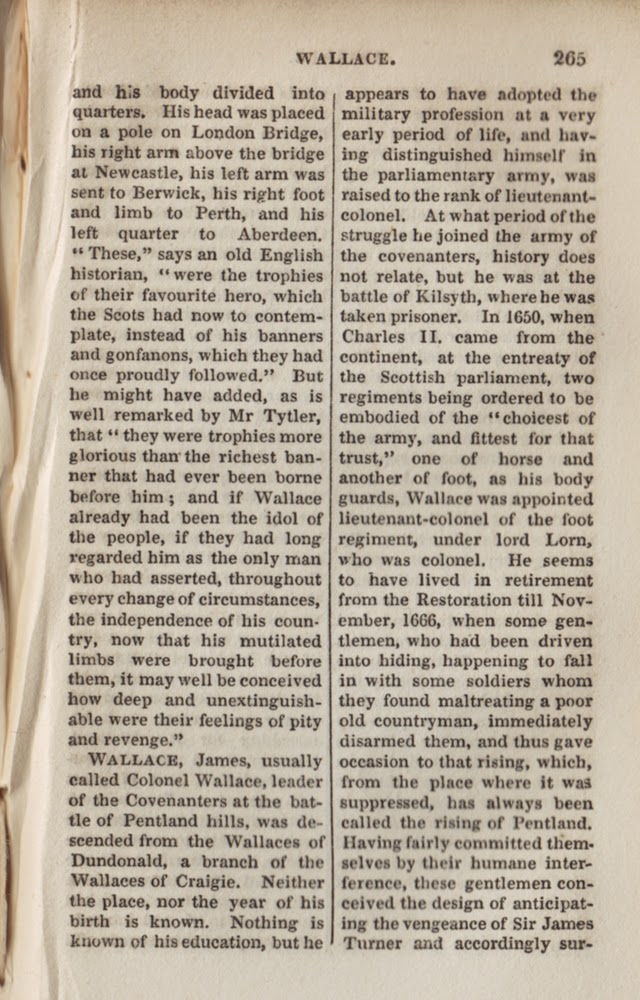
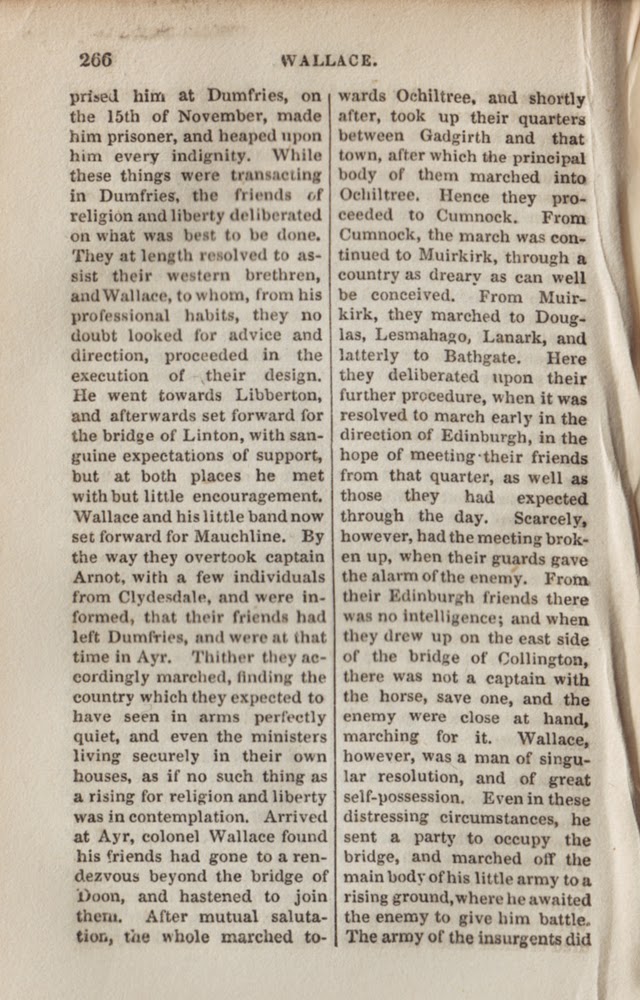
James Wallace of Auchans, Redhall and the Pentland Rising (Battle of Rullion Green)

James Wallace is not a well-known figure, but he has appeared on various posts here over the years. Below are scanned pages from A Biographical Dictionary containing Lives of the most Eminent Persons of all Ages and Nations, by R. Bell Chambers Esq (London, 1835). Hopefully this will be of interest to someone researching the story of the Covenanters.

James Wallace Blog 1James Wallace Blog 2James Wallace Blog 3James Wallace Blog 4

(PS: The full text of this biography can be found on Electric Scotland here)

Wednesday, September 17, 2014

Some rough thoughts on Scottish independence.

Union Flag Breakup 


I hope they vote No. I can understand if they vote Yes. Here's a blog post I wrote in July 2012 which still sums up my thoughts on the subject. It'll be gye ticht.

Private Richard C Couch, 10th King's Regiment (Liverpool) - Great War New Testament

I've never been able to find anything out about this soldier (either on the Museum of Liverpool King's Regiment website here, or the Commonwealth War Graves Commission website here) and can't recall how his National Bible Society of Scotland / Pocket Testament League New Testament came into my possession. I'm posting it here in case his family are trying to find out about him - if so, I am happy to send this to you. The full text reads:

Private Richd. C. Couch
10th King's (Liverpool)

with the address:

7 Eisteddfa Rd
Llywynfria
Glamorgan

...............................

The 10th Battalion of the King's Regiment were also known as Liverpool Scottish. Wikipedia has some excellent information and photographs about them here. Two of their units stayed in Britain during the Great War, which might explain why Couch isn't coming up on those website databases. A Richard Couch does however appear in an article in the Evening Telegraph of Monday 11th September 1916, entitled 'Wounded Highlanders Reach Glasgow', a story about 226 wounded soldiers being sent by train to Stobhill Hospital in Glasgow. He is named as Private Richard Couch of the Black Watch - but no details of his injuries are given.

...............................

SAM 0278SAM 0279SAM 0281SAM 0283SAM 0284

Happy birthday to the Hillsborough A1 road

On 18 September 1974, the Hillsborough By-Pass road was opened. It was a motorist's transformation, and is once again in the news. The pages of The Leader newspaper of Dromore published a poem on 27th September entitled 'The Conversation between the A1 and the Hillsborough By-Pass at the time of the Opening of the Latter'. Written by the renowned artist Patric Stevenson (1909-1983) it is in Scots, and was inspired by Scottish poet Robert Fergusson's 'Mutual Complaint of Plainstanes and Causey, in their Mother Tongue' (see here). Interestingly at the end of the poem he added a footnote which says 'inconsistencies in dialect in these verses are deliberate and intended to suggest a fundamental lack of feeling of national identity in some parts of the north of Ireland'.

The whole poem is available online here - it's a strong piece of writing and worth being highlighted. Here's the first verse:

... I dinna think ye wad believe The kind o' treatment we receive; I've liv'd owre lang in by-gone days Tae thole the gross, ill-mannered ways In which the roadmen noo behave. It's God's ain truth till say that they've Insulted me wi' mony lines An' sundry cabalistic signs Thick painted on me asphalt cheek (I'm smartin' frae a job last week When cats'-eyes set within me skin Fair pierced me like a javelin) ...

Stevenson might just have been employing Scots as a literary device, rather than because of any personal affinity, but there was once a deep Ulster-Scots speaking pedigree in the area. The Northern Tourist (1830) recorded: "Speaking of the lower orders [of people] residing in the neighbourhood of Lisburn, Hillsborough, Dromore and Ballinahinch... they are a decent, industrious, well-disposed and orderly people... the language is now English with a strong Scotch accent - in the middle of the last century it was broad Scotch... the greater proportion of the inhabitants are Protestant Dissenters... the men are in general tall, and square-shouldered, retaining in their high cheek-bones much of the characteristic countenance of their Scottish ancestors - most of the women well-looking. Their dialect, having in it much of the Scotch accent... but the better classes speak very correctly...

Other books from the 1800s and right up into the early 1900s say similar things about the district, and many of the families I have met in the area who have been living there for generations will still use Ulster-Scots words and expressions - but of course the area has become very affluent and so the population has changed a lot over the past number of decades, so the words are not as commonplace as they once were.