I mentioned a few posts ago that I've been creating a new "blogfolio" (a combination of a blog and a portfolio). It's not quite finished yet, but here it is. It gives an overview of about 45 design projects that I've done over the past 4 or 5 years. The blogfolio needs a bit of re-ordering, but comments are welcome!
Tuesday, July 29, 2008
David Hackston slideshow
This post is an experiment. If you click here, you should be taken to a Flickr slideshow of some images of David Hackston's grave at Cupar in Fife. This is the cover image on the Covenanters in Ulster heritage trail.


Monday, July 28, 2008
Final comments on the 12th (for a while)
Just read this by Ed Curran in today's Belfast Telegraph, which builds on an article from Alex Kane which was in the News Letter a few weeks ago (the News Letter site is down today, but his article is discussed here), which in turns picks up on some thoughts I had written as part of this November 2007 post on this blog).
I'm sure that the 12th is a debate/discussion that has a long way to travel. If (in a secular sense) the future of Northern Ireland society depends on a new articulation of our history, and identities, then the next number of years will be very interesting.
And, to whet your appetites, the next two articles about The Covenanters in Ulster which will be published in The Ulster-Scot have the potential to be absolutely central in our community beginning to rethink its past.
PS: I don't necessarily agree with what these two are saying, but the discussions themselves are interesting.
[ UPDATE: Alex Kane's article is back online, here ]
Thursday, July 24, 2008
The Final Frog!

There's always one - a slow one that's miles behind all the rest. This wee frog was released tonight, the last of our batch. All the others (49) went about 2 weeks ago, at which stage this one was still just a big blob of a tadpole with back legs, a big tail, but no sign of any frog characteristics and not even any wee stubs for front legs.
We thought that he must be a mutant, one that would have died already if he'd been in the wild, and we didn't hold out much hope for him. So for the past two weeks he's been swimming about all by himself, nibbling on wee bits of raw fish.
Then all of a sudden he started to change, front legs and eyes emerging, tail shrinking, a late developer making up for lost time. A week ago he was still a tadpole with legs, but here he is earlier tonight sitting on my hand, on his way to the corner of the field where all of the rest were let loose.
So there are (hopefully) 50 wee froglets leaping about at Ballyfrench, the first generation of a new breed.
Recommended brother duets
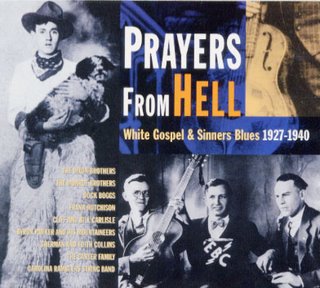
Had quite a few emails from people asking for recommended brother duets style CDs. As a starter, I'd suggest the brilliant Prayers from Hell - White Gospel & Sinners Blues 1927-1940, which is available in some specialist record shops and also here from Amazon.com. Here's a review. It includes the wonderful track What Would The Profit Be? by the Monroe Brothers, who were Bill and Charlie Monroe. They recorded as a brother duet in the 1920s and 1930s, before Bill created the high-speed picking style that became known as bluegrass.
The Louvin Brothers and brother duets
(A hinnae pit ocht on ma blog aboot music in a brave while, so here's a wee yin that'll hiddae dae)
I've been re-listening to lots of the old 1920s - 1950s "brother duet" style of hillbilly and old-time gospel music. The simplicity is just marvellous, two brothers with instinctive untaught harmony singing, often learned in the simple rural churches where they grew up, and traditionally just a guitar/mandolin combination as the only instrumentation.
It's not just that I like this style, in the sense of subjective taste. I have an affinity for it in all its rustic roughness, a sense of connection that goes far beyond just enjoyment. I'm sure it's cultural, an example of the Ulster-Scots-American fusion of styles and faith that emerged from the revivals of the 1850s both here and in America. But that's a whole other blog post!
Meanwhile here are a few YouTube clips about brother duets and the Louvin Brothers in particular. As the voiceover of the first clip says, "Baptists of the hellfire and brimstone variety!"
Tuesday, July 22, 2008
Covenanters in Ulster website
I've spent the last few days revitalising the Covenanters in Ulster site. Still need to do some work on the GoogleMaps version of the forthcoming heritage trail. Click here to visit the site.
Thursday, July 17, 2008
Murdoch Nisbet, the Lollards of Kyle, the Covenanters and the New Testament in Scots
Some time in the late 1400s there was a man in the district of Kyle in Ayrshire (to be precise, in Hardhill in the parish of Loudon) called Murdoch Nisbet (1470? - 1558). Not much is known about him, but he had a mighty impact in his day. He is believed to have been a "notary", a high-ranking civil servant. But he had another, some might say subversive, side. Because Murdoch Nisbet's faith and personal conviction led him to defy the norms of his time. Murdoch was a Protestant, to be precise, a Lollard.
Background:
Protestant ideas were not new to Scotland - there had been some Protestants in Scotland before Murdoch's time. For example, an English ex-Franciscan monk, James Resby had been burned at the stake in Perth in 1407, and around 1433, a Bohemian/Czech Protestant called Paul Craw had been burned at the stake in St Andrews.
Nisbet was a Lollard (a follower of the teachings of John Wycliffe) - specifically he was one of the Lollards of Kyle. In 1494 a group of 30 Lollards of Kyle were summoned by the Archibishop of Glasgow to stand before King James IV of Scotland on a charge of heresy. The charges were dismissed, but it was a sign of the times. Murdoch Nisbet is known to have "fled over seas". Now if you were living in Ayrshire, about 12 miles from the coast at Troon, where would "over seas" be? Hmmm....
Murdoch's Manuscript:
Anyway, wherever Murdoch Nisbet ended up, whether it was England, Germany or Ulster, he took with him a manuscript that he'd been secretly working on - a translation of the New Testament into vernacular Scots. He translated from Purvey's 1395 revision of Wycliffe's Bible. It's not known how long Murdoch was away from Scotland, but when he came back with some other Lollards who had also fled, the persecution was still underway.
Nisbet probably returned to Ayrshire in the 1520s, to a Scotland where Patrick Hamilton would be burned at the stake in 1528, and where two other Lollards - Jerome Russell and 18 year old Alexander Kennedy - would be burned in Glasgow in 1538, and the renowned George Wishart also burned in St Andrews in 1546. In between these famous Scottish martyrs were many more, but lesser-known: Henry Forrest (1533), David Stratton and Norman Gourlay (1534) and the five Edinburgh martyrs Thomas Forrest, Keillor, Beverage, Duncan Simpson and Robert Forrester (1539). So:
"... Murdoch, being in the same danger, digged and built a vault in the bottom of his own house, to which he retired himself, serving God and reading his new book. Thus he continued, instructing some few that had access to him, until the death of King James the V (note: James V of Scotland died in 1542, aged just 30, probably from cholera) ... Murdoch, tho' then an old man, crept out of his vault and joining himself with others of the Lord's people, lent his helping hand to this work through many places of the land, demolishing idolatry where ever they came..."
Nisbet's house had been sited on land that later became Loudoun manse glebe, at the curve of a burn. Apparently there are old foundations still there, marking the location of the building.
John Nisbet the Covenanter
Murdoch died in 1558 (the year before John Knox's tumultuous return to Scotland from Geneva) and left his New Testament manuscript to his son Alexander Nisbet, who left it to his son James, who left it to his son John. This John Nisbet was a soldier of renown, and was at Scone when the duplicitous King Charles II swore the Covenants in 1650 as part of his scheme to exploit the Covenanters and to use the Scottish throne as a stepping stone to what become his Restoration in 1660. John became a famous Covenanter hero, he was at Lanark in 1666 as the Covenanters marched toward Edinburgh and ultimately the Battle of Rullion Green.
At Rullion Green, John Nisbet
"received 17 wounds, was stript naked and left for dead, yet as much strength and life reserved, as enabled him to make his escape in the night, tho' it was a twelve month before he recovered. At Drumclog he did good service, behaved to a wonder, yet was preserved; at Bothwell he fought openly and boldly..."
Time went on and John Nisbet listened to great Covenanter preachers like Donald Cargill, Richard Cameron and James Renwick, and through the persecutions of the early 1680s "...he contended against the sinful compliance of these times..." He was martyred aged 58 at the Grassmarket of Edinburgh on 4 December 1685, leaving three sons, Hugh, James and Alexander.
1905: Manuscript published
Anyway, Murdoch's old manuscript was passed down to James, who was a Sergeant at Edinburgh Castle, who gave it to Sir Alexander Boswell to keep in his library at Auchinleck in Ayrshire (only 10 miles away from where Murdoch had written it nearly 200 years before). It stayed here until 1900 when Lord Amherst of Hackney allowed it to be published by the Scottish Text Society. The manuscript is today in the collection of the British Museum.
These 1905 editions are rarer than hen's teeth, but here's the cover of my copy:

Murdoch Nisbet is remembered today in his home town of NewMilns in a number of ways - a small award-winning housing development is named after him, there's a plaque inside the local church, which is also the same church that has a number of Covenanter memorials, including one to Murdoch's descendant John Nisbet mentioned above.
(italic quotes above are from A True Relation of the Life and Sufferings of John Nisbet in Hardhill, first published 1718, which had been written by the James Nisbet mentioned above)
Links:
Wikipedia on Murdoch Nisbet
1949 Newmilns Reenactment of Murdoch Nisbet
1949 Newmilns Reenactment of John Nisbet and Covenanter martyrs
Good to see there were what we now call "living history" projects on Covenanter themes over 60 years ago! Here's a photo of John Nisbet's memorial at Loudoun Parish Kirk in Newmilns, photographed back in February.

Glasgow Evangelical Gospel Mission


Last August I went to the World Pipe Band Championships in Glasgow. Just round the corner from my hotel I found the Glasgow Evangelical Gospel Mission (269 High Street). Here are a few photos of their marvellous building and shopfront display. May they never change it!
Hilary and the Guitar
Mark Anderson wins the "Quip of the 12th" competition - he stepped out of the parade in Portavogie to have a brief chat, and when I introduced him to Hilary he said something like "you're coming on well on the guitar!".
Which, for the non-regular visitors, is a reference to this recent post!
Shows you how dangerous this blogging lark can be!
Wednesday, July 16, 2008
Covenanters in Ulster Heritage Trail
It'll be out in two weeks time; get your advance orders in to the Ulster-Scots Agency. Here's the front cover: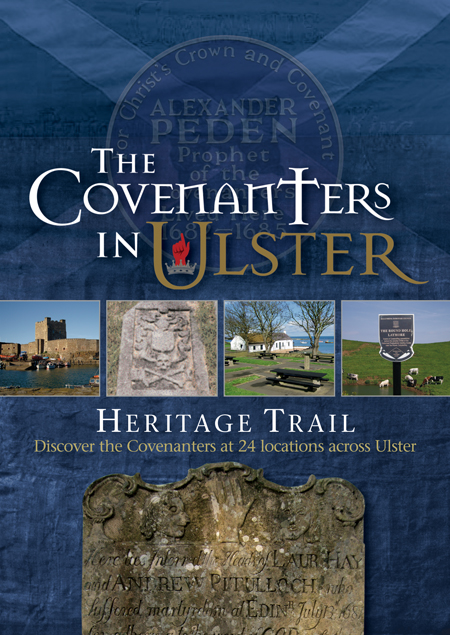
And here's the ad that is appearing in the next edition of the Presbyterian Church's "ReachOut" magazine:
The Twelfth Part Five: Rogues Gallery
Portavogie 12th pictures:
As if Jacob's home-made hairdo wasn't bad enough, look at his two mates!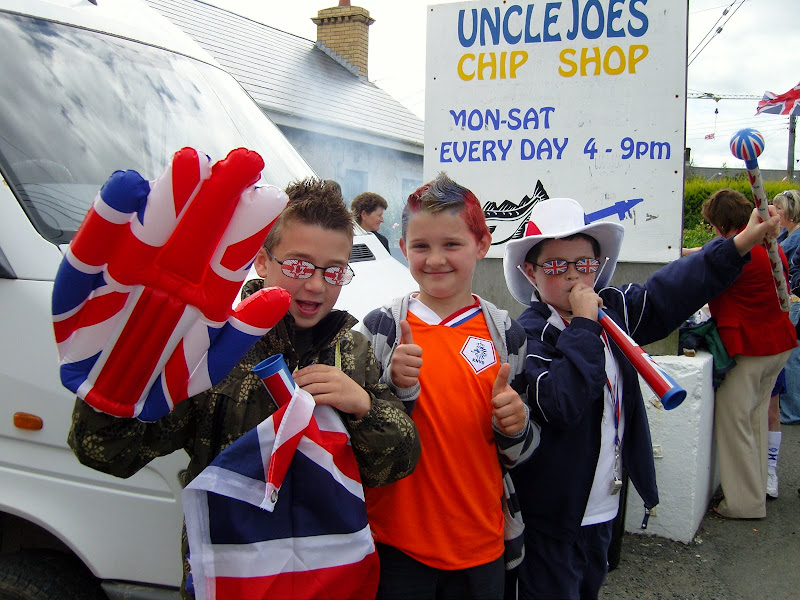
Stephen J and Jacob: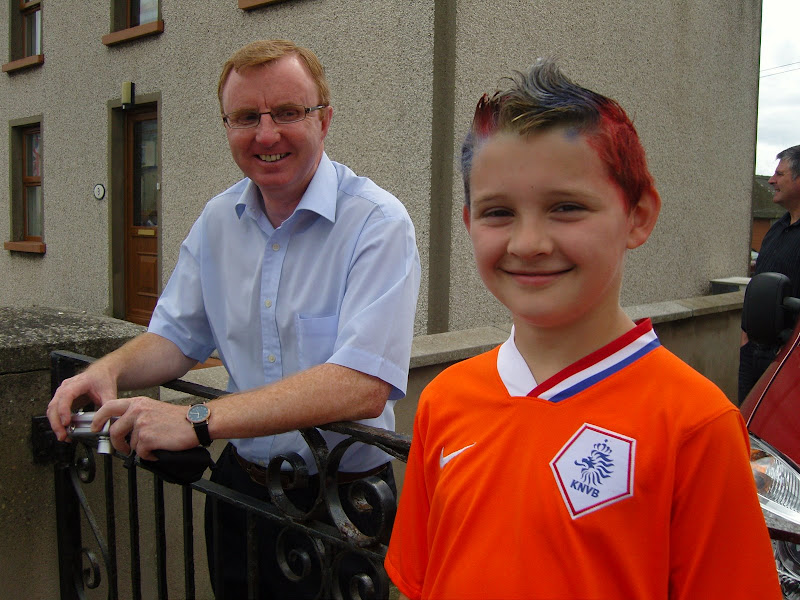
Maggie-Jane must have inherited Hilary's English "I don't like the bands" gene: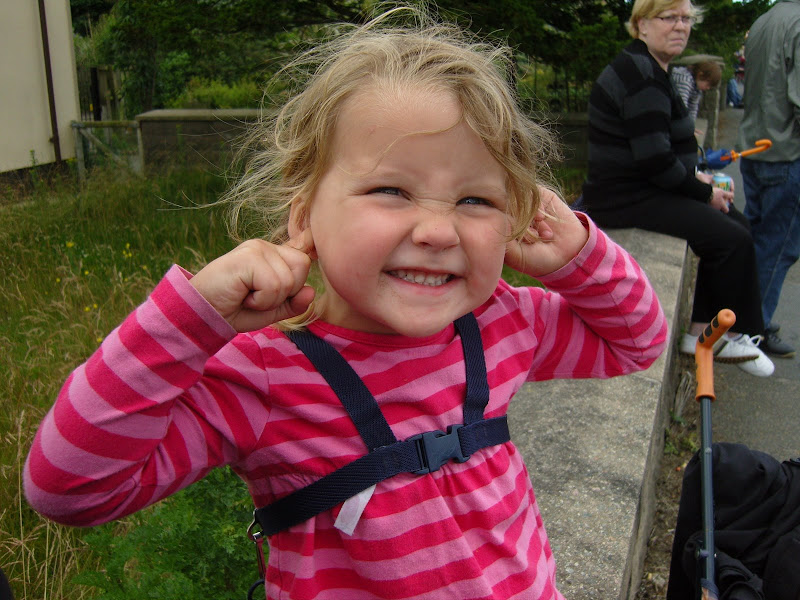
John W: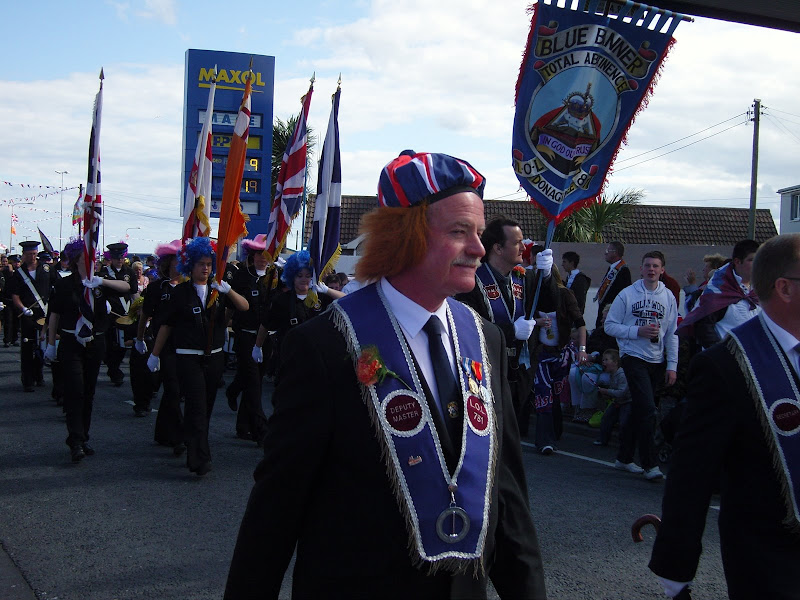
Mark A: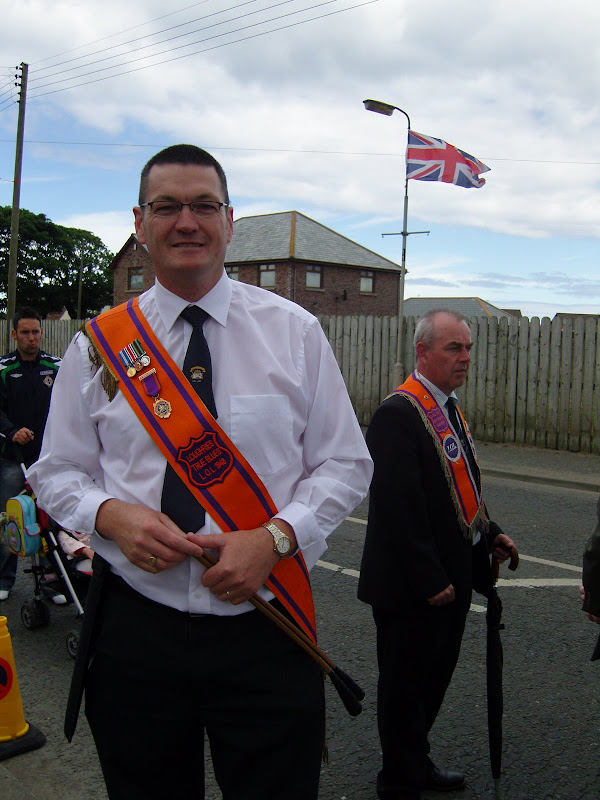
Jack G: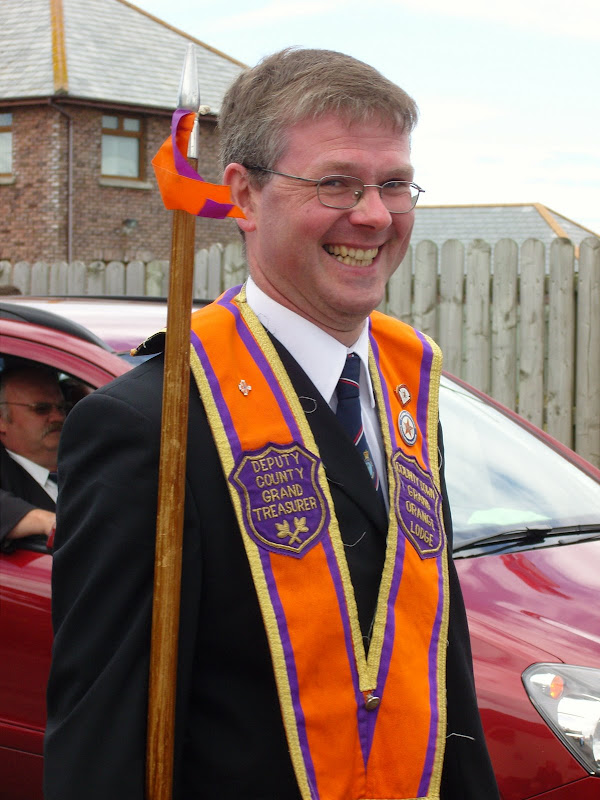
Joseph L: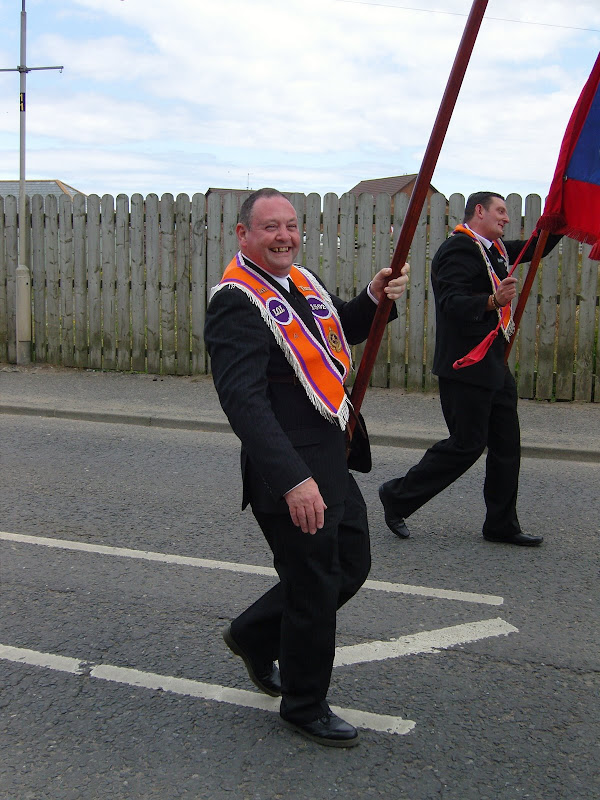
Eddie Grimason greets his fans: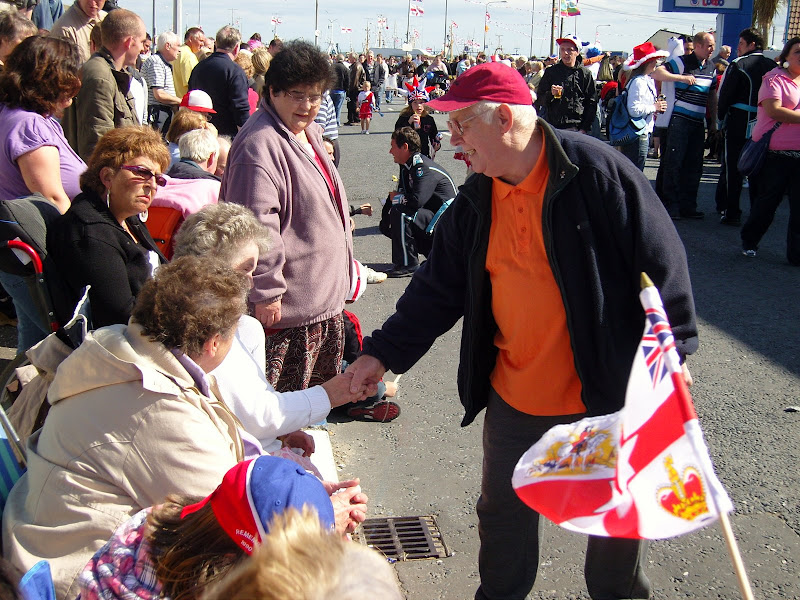
The family wait with excitement!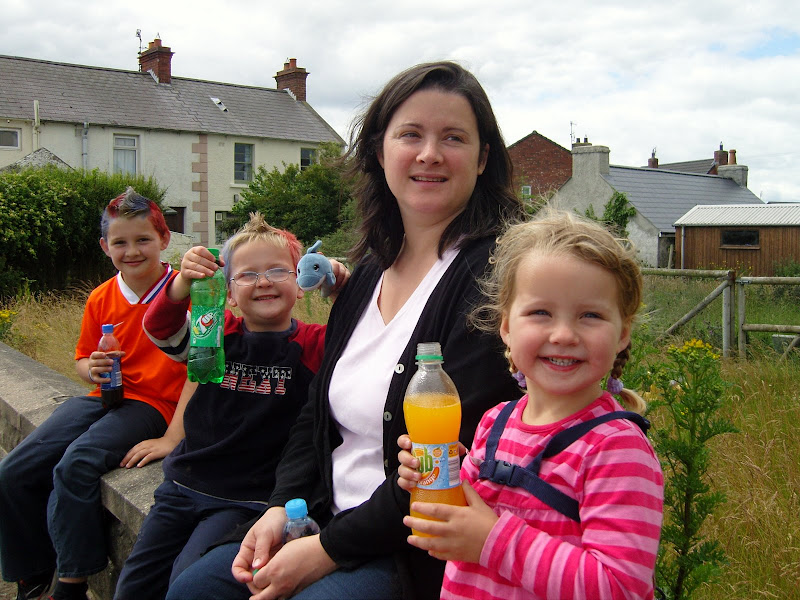
Me and Jacob: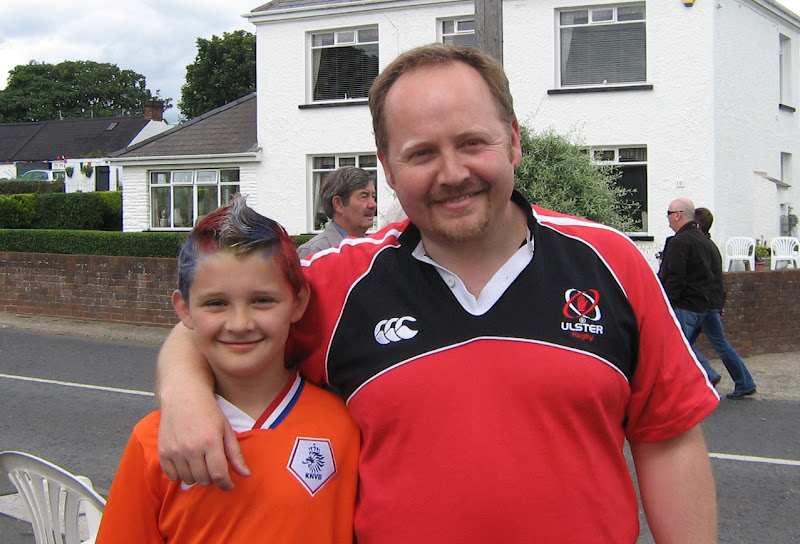
Plenty more great photos over on Stephen's blog (which is where I stole the last one from!)
Tuesday, July 15, 2008

The Twelfth Part Three: It may be a typo, but that's how it's pronounced
In an era of slick branding (which is my day job and once I get my new blogfolio finished I'll post a link here for you all to see and judge), hand painted typos have a certain charm.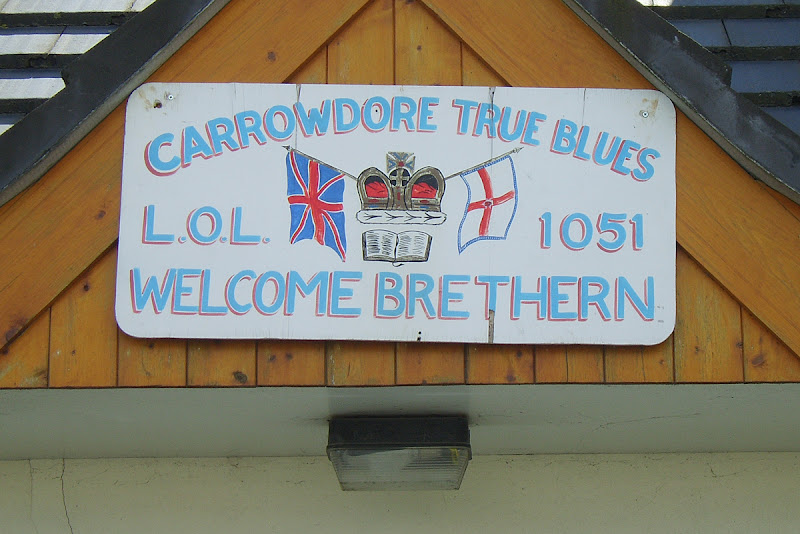
Compare and contrast: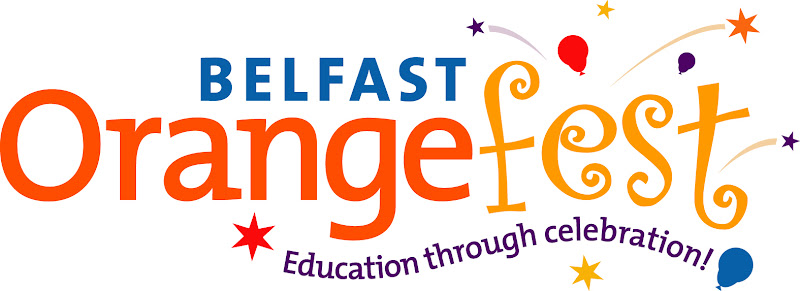
Red Hand Guinness
Carrying on from the oyster post, I bought three of these old Guinness bottles a few years ago on eBay - I'd been trying to track one down for years. Bet they don't produce this brand any more!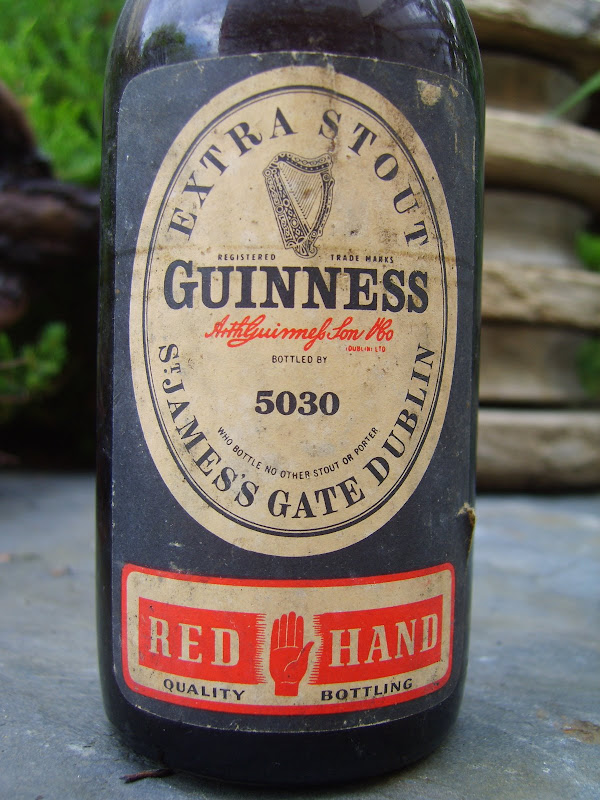
I also found this old pub sign in Belfast, but sadly long since gone. If anyone knows anything about this brand, get in touch.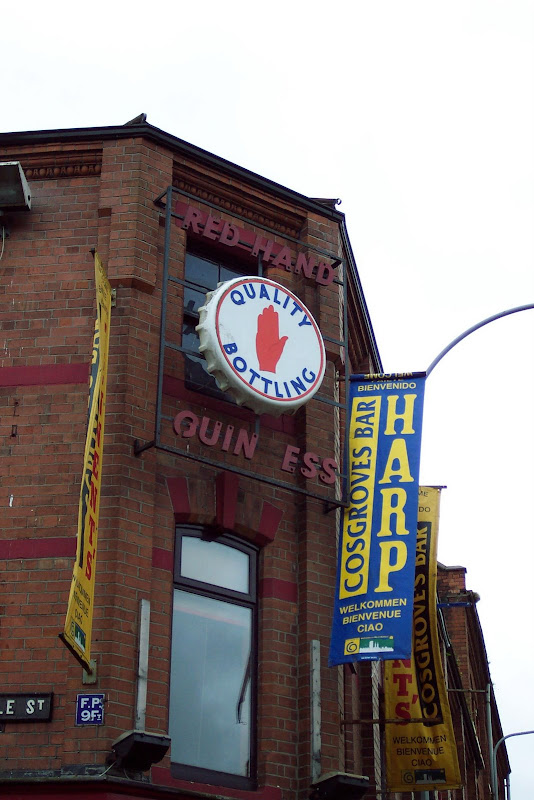
Hillsborough Oyster Festival
Is the Hillsborough Oyster Festival the stupidest-ever idea and location for an event? It has been going now for years, a corporate platform created by Guinness to give the rich and aspirational something to do for a weekend, bringing to life one of their corporate photo library images that appears in every Oirish tourist publication produced these days.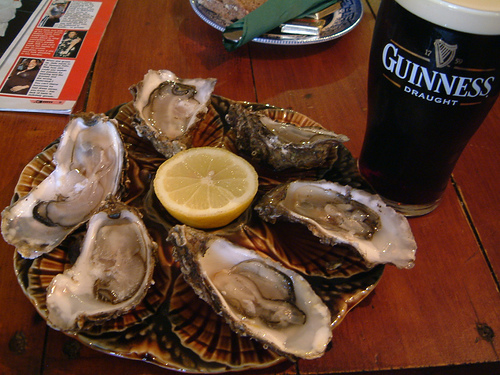
The irony is that you can't actually get oysters in Hillsborough. Or fish. Or crab. Or lobster, or any other kind of seafood. Because Hillsborough, as most people know, (according to GoogleMaps) is far inland - about 15 miles from Belfast and about 20 miles from the nearest sea inlet (Strangford Lough). And as for the nearest oyster farm where the things are actually available, it could be as far away as Donegal!
They must have a really tough time landing all those baskets of fresh oysters at the quayside in Hillsborough.
The Twelfth Part Two: Ulster's National Dish
Some will claim that the Ulster Fry is our national dish. Partial as I am to a good fry from time to time (a real one has fried pancakes and vegetable roll*, none of this hash browns and black pudding nonsense - be wary of people who seek to deviously subvert and internationalise the Fry), I have long believed that there is one other food, an unsung hero, to whom the title of Ulster's National Dish truly belongs.
It's not yellow man. It's not Tayto crisps. It's not even Bushmills whiskey. No ladies and gentlemen, I give you (drum roll.....) the egg and onion sandwich!
No church tay meetin, Sunday School social, family picnic or Twelfth day can be considered truly complete without some egg and onion. It has been the staple of Ulster Protestants for many generations. I was delighted to see one of the food vans in the field at Portavogie had restored egg and onion to its rightful position - jostling for orangey-yellow attention with the modern day bacon & cheese burger, and placed above the chilli chicken burgers! This particular van owner was obviously a man of considerable insight, as he was also selling tea and buns. You'll never get that at a McDonalds franchise.
So impressed was I, that I was even prepared to tolerate the (frankly unnecessary) innovation of the egg and onion bap, as a substitute for the standard egg and onion sandwich, on the basis that he had described it using the traditional term "bap", not a roll, and that he hadn't overstepped the boundary by going for something as poncey or elitist as a baguette, panini or (sharp intake of breath) a wrap!
So I paid my £1.50 and took a bite - boysadear, the perfect egg and onion! Hard boiled egg (not scrambled) raw white chunky onion (not the scallion substitute, and not finely chopped), and real butter (not mayonnaise or salad cream). All's well in the world when traditional egg and onion still exists as a menu option for Ulstermen.
(* for those of you who don't know, the humble vegetable roll is about 99% sausage "meat". Ah, the Northern Ireland sense of irony and humour!)
The Twelfth Part One: It's not what it used to be...
Had some conversations recently about the changing face of Orangeism and the 12th celebrations. Lots of articles have been published in the last few days, mostly in two camps: a) things are changing and it's great, or b) so much for the supposed change, the Lisburn Road was still swimming in alcopops.
The third position is Rev Stephen Dickinson's, which has been explained here, here and here. At great risk of sounding like a fence sitter, I have sympathy with all three views - yes some good moves are being made, but sadly there is still an alcohol culture at some stretches of some parades (as is the case generally in society), and be very wary about dumbing down, losing authenticity, and losing the core values. (I didn't see none of that fancy Orangefest branding in Portavogie!).
Maybe I should have a caption competition for the pic below, photographed a while back outside the Orange Hall in Newtownabbey up near Mossley Mill...
...I wonder if Heather got much trade from the Lodge members?
Saturday, July 12, 2008
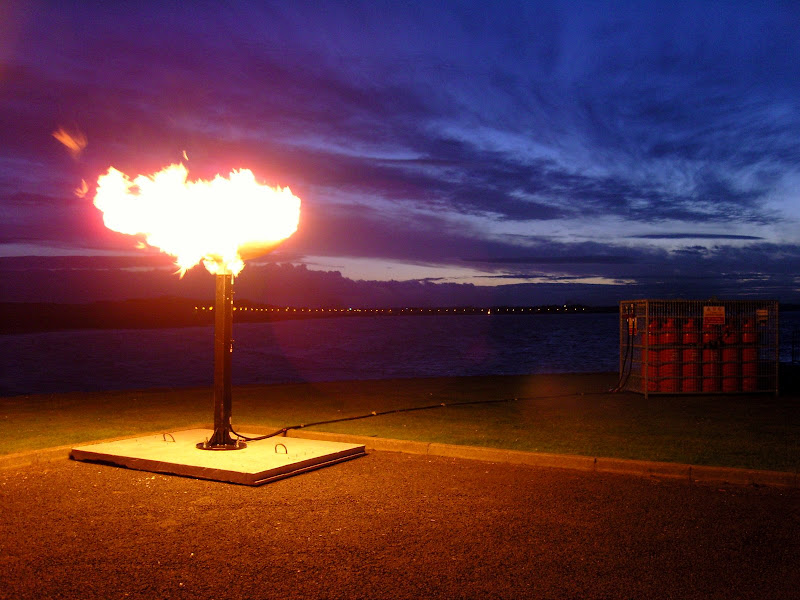
The Eleventh Night Beacon
Went down to the harbour last night, where the local community association had organised a (gas powered) beacon to be lit, a short performance by the flute band, and a firework display for the traditional 11th Night celebrations.
It was a beautiful evening, and the intention was that the beacon could be seen in Scotland. A nice simple event, plenty of local folk to yarn with, but Maggie couped and skint her wee knees so there were some tears and yelling, but all in all a nice evening with no drink or nonsense.
(Apart from some fancy folk who had wandered over from their houses, large glasses of wine in hand. Very posh for wee Ballyhalbert!)
The lighting of beacons on the facing coasts of Ulster and Scotland has happened many times over the centuries, including during the Covenanters period:
"...1641: The “Scotch Rising” in Ulster
In April 1641, the authorities in Ulster reported ‘disorders lately attempted by some of the inferior sort of the Scottish nation in the Counties of Down and Antrim’. Copies of Scotland’s National Covenant were circulating in Ulster - one of the suspects who had been arrested reported that ‘that there was such a scroll, and that it had been carried through the country and signed by 1,000 people and more’. Ulster Scots also protested at parish churches, and rumours abounded that the ‘rowtes’ (riots) in Antrim and Down had been instigated by ‘beacon fires on the Scotch Mountains’. As events escalated King Charles I acknowledged that he had heard news of ‘the Scotch rising in Antrim and Down… in contempt of the State and Established Church’ , ordering his forces in Ulster ‘to stop outrages, you shall declare martial law wherever you use troops’..."
(See the full story here)


Thursday, July 10, 2008
The Real McCoy
I was invited to speak in Portavogie Community Association on Tuesday night on an Ulster-Scots subject of my choosing. So, true to form, I opted for Hamilton & Montgomery.
I've delivered versions of that talk in nearly 30 places across Ulster (NI and RoI), but this was only the second time in the Ards Peninsula, which was the epicentre of the Hamilton & Montgomery settlement of 1606.
(For the US readers of this blog, the Scots arrived in large numbers in Ulster starting in May 1606 - the English began to arrive at Jamestown exactly one year later in May 1607, and the two projects were deeply connected - visit UlsterVirginia.com for more background info)
There were nearly 50 people out, and I spoke for about 45 minutes. I knew a good few of them, mostly familiar faces from our rural Ulster-Scots community. My friend and neighbour John Adair was there (Stephen - you can tell him he's now been mentioned on my blog!), David McKee from Kirkistown Pipe Band, Wullie Palmer the local mechanic, Emma Graham, Bert McMaster, the Birches from Bishopmills, Hilary Donnan - all good down-to-earth local folk. Probably all descended from Scottish settlers, maybe even the original people that came with Hamilton & Montgomery. They told me they enjoyed the talk, especially when I showed them the 1625 Thomas Raven map of Hamilton's settlement at Portavogie, along with the rabbits on the Warren (it's still called that even today).
What was refreshing was that in the middle of all the bureaucracy, the Irish News and BBC Radio Ulster "Talkback" hype and nonsense and attacks on Ulster-Scots, the ongoing need to justify the existence and validity of Ulster-Scots to the chattering classes - these folk in Portavogie need no convincing. And when I explained that in other places some audiences need to be convinced of Ulster-Scots, they thought that was ludicrous!
These people ARE Ulster-Scots, as are similar communities across Co Down, Co Antrim and other places too. I'm glad to see the folks in Portavogie improving their 12th calendar this year with simple but good quality events, a historical photographic exhibition in the Orange Hall. I hope it grows into something regular - not bigger, just regular. Because big usually becomes trivial and gimmicky; small is authentic. The community is where the real Ulster-Scots exists.
Pray for sunshine on the 12th and Portavogie will be buzzing! The picture below, from the Portavogie 12th of 1935, shows that the locals have never lacked creativity or imagination!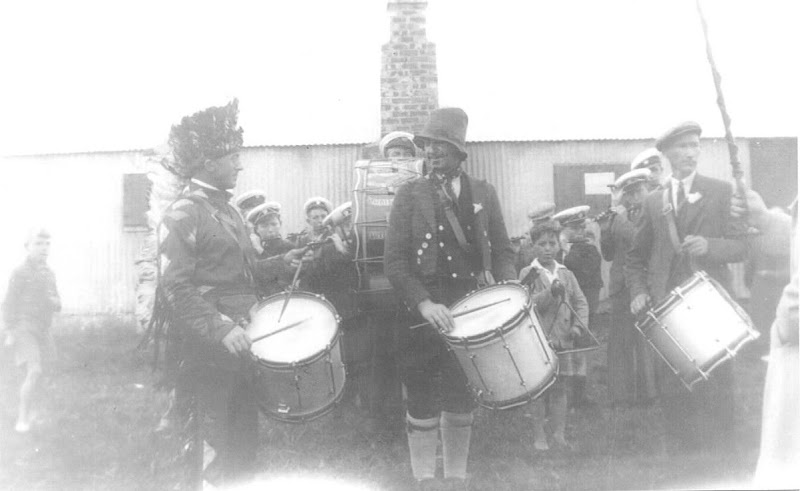
Subscribe to:
Posts (Atom)