
The news today has been full of coverage of Ian Paisley's political career - he steps down tonight as Leader of the Democratic Unionist Party. I was invited to the big party but wasnt able to go. However, I suspect that he'll be around for a good while yet.
Let this very ornate old street sign from Edinburgh's Royal Mile be a warning to anyone that thinks he's gone for good!
Paisley Close: Heave awa' chaps, I'm no dead yet!
Friday, May 30, 2008
Ian Paisley - retired?


Wednesday, May 28, 2008
How to justify to an increasingly sceptical wife the true value of all of those very old obscure books that keep mysteriously appearing in our house
I found this great quote today, which I know will appeal to many of you!
"The venerable dead are waiting in my library to entertain me and relieve me from the nonsense of surviving mortals."
Samuel Davies
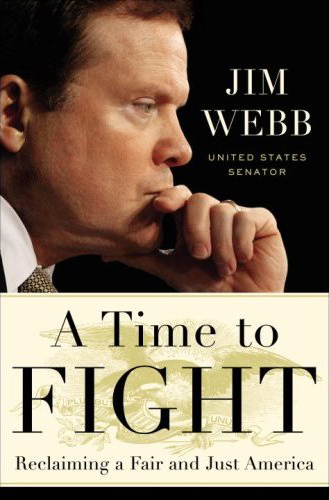
Jim Webb: A Time to Fight
I met Senator James Webb last June in Washington DC, I was lucky enough to spend half an hour with him in his Capitol Hill office, with Edwin Poots, Edgar Jardine and Paul Givan. We got on very well, we invited him to visit Northern Ireland (he's been a regular visitor over the years, researching his family tree and the historical connections) and he signed my copy of his great book about the Ulster-Scots, Born Fighting: How the Scotch-Irish Shaped America. I asked him to sign page 65, which amused him greatly, laughing aloud as he went to get his pen. (Have a look at it yourself and you'll see why he wrote a huge "Indeed!" and then signed it underneath!)
Webb's being talked about as a potential Vice Presidential candidate to run alongside Barack Obama in the election later this year.
Webb himself has repeatedly said "if this cultural group (the Scotch-Irish) could get at the same table with black America, you could really change American politics..."
With perfect timing, his new book, A Time to Fight: Reclaiming a Fair and Just America, has just been published.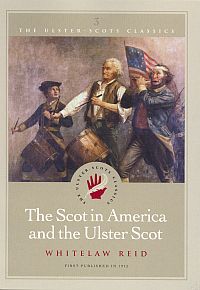
It'll be interesting to see the spin-off for Ulster-Scots/Scotch-Irish awareness if Webb does run, and if he does become the Vice President. If he does, he'll be the first Vice Presidential candidate to write about his Ulster roots since Whitelaw Reid, who ran for the job in 1892. His excellent book The Scot in America and the Ulster Scot, published in 1912, was recently reprinted and is available here.
(Pics of me - beardless - with Senator Webb, Edwin Poots and Edgar Jardine are below)

Tuesday, May 27, 2008
Robert Burns and the Covenanters

Robert Burns (1759 - 1796) is of course Scotland's National Bard. He was born at Alloway, Ayrshire, the son of tenant farmer William Burns and Anges Broun. Next year is the 250th anniversary of his birth, and to mark the anniversary the Scottish Executive has been working on a programme of events branded as Homecoming Scotland. Burns has some Covenanter connections, hardly surprising for an Ayrshire ploughboy in the 1700s.
At Greenhill Covenanter Museum in Biggar, Burns' Covenanter poem is set in a metal plaque, sunk into a large stone:
The Solemn League and Covenant
Cost Scotland blood, cost Scotland tears;
But it seal'd Freedom's sacred cause -
If thou'rt slave, indulge thy sneers.
1) It's said that Burns named his favourite horse "Jenny Geddes" after the famous Covenanter who threw her stool at the Dean in St Giles Cathedral in 1637.
Genealogy is often a dubious basis for history, it's hard to prove and a lot of it is made up. So take that as a health warning for the rest of this post.
2) Burns' maternal great grandfather was shot with Richard Cameron at Airds Moss. (see Scotland and Scotsmen Vol II p 554 by John Ramsay, published 1888)
3) Burns' maternal great grandmother spoke of giving refuge to Covenanters in her younger days. His mother Agnes, at the age of 9 and upon the death of her own mother, went to live with her grandmother, who told her that in her early days she had given shelter to some of the Covenanters (see Genealogical Memoirs of the Family of Robert Burns by Charles Rogers, 1877)
4) John Brown of Priesthill is one of the most famous Covenanter martyrs, due to the manner of his death (aged 58, in May 1685). He was shot dead in front of his wife by Claverhouse. John Ramsay (see point 2 above) spent time with Burns, and his reminiscences are further considered by AB Todd in Covenanting Pilgrimages and Studies (1911), in the chapter "Priesthill and John Brown":
"...In the course of their conversation Ramsay relates how Burns attributed his inclination at times to lean to the Jacobite side to the fact that some of his paternal ancestors had suffered for siding with the Pretender's party in their ill fated risings. On the other hand, his feelings, he said, led him to take the side of the Covenanters, because that one of his maternal ancestors had been slain on Ayrsmoss by the persecutors of the men of the Covenant. Now, who could this maternal ancestor of Burns' be but a son of John Brown of Priesthill? Bear in mind that the maiden name of the mother of Burns was Agnes Brown, who was married to William Burness on 15th December 1757, and that Robert Burns, their son, was born in 1759, only seventy four years after the martyrdom of John Brown of Priesthill.
We know that at the time of his murder John Brown had a son, then in the mother's arms, and that she was about to be delivered of another child, who, for anything we know, may also have been a son. Burns, therefore, must have been a descendant and not at all a remote one of the martyr of Priesthill.
This is the more certain as, among all the other Covenanters who were put to death on or near to Ayrsmoss (July 1680), there is not another of the name of Brown. None of the nine who fell with Cameron in the fierce and desperate fight on Ayrsmoss bore that name. The martyr of Wellwood was named William Adam. The martyr shot by the wayside when sick and resting a little way out of the then village of Muirkirk, was named Smith.
Who, then, could this maternal ancestor of Robert Burns be but a descendant of John Brown of Priesthill?..."
[I must admit I can't see the obvious connection in that excerpt!]
5) Burns' uncles, Thomas and Archibald Bourns, emigrated to Virginia in 1747. There they and their families practised "...the strict Covenanter faith...". More information here
6) Burns' world-famous Selkirk Grace was originally known as the Galloway Grace or the Covenanters' Grace.
Burns is claimed to be many things - Williamite, Jacobite, champion of the working class, proto-Marxist, philander, genius - so it's no surprise that 19th century Scottish historians should link him to the Covenanters.
The sources listed above deserve further examination, as there could be some substance in them. A solid Burns/Covenanter connection could create an opportunity for people in Scotland to look more closely at the story of the Covenanters, while the tourists are flooding into Edinburgh snapping up the tartan nicknacks for The Gathering 2009!
Monday, May 26, 2008
"A Hundred Covenanters in his Eyes" : CS Lewis and Ulster Scots

(This article was originally submitted to The Ulster Scot in January 2006, but not published. Oh the shame!)
With the Disney version of “The Lion the Witch and the Wardrobe” packing cinemas worldwide, and having already taken over $225 million dollars since its release in December, interest in CS Lewis has never been greater. Steven Moore’s article in the December edition of “The Ulster Scot” inspired this short piece about the role that Ulster-Scots culture played in Lewis’s life and his writings.
“…low Scotch…”
One of his earliest pieces, The Most Substantial People (1927), was a story about the family of Scrabo Easley from Belfast. On a trip on the Liverpool to Belfast ferry, he describes a group of hefty, prosperous Ulstermen whose speech:
“…I could have easily mistaken for low Scotch... I cannot describe these Ulstermen better than by saying that they realised perfectly a child’s dream of what grown-up ought to be. Their hands were hairy and massive: their movements and voices were sudden, confident and practical: they moved to an incessant jingling of money, flipping of watch chains and rattling of cuffs. They were the strictest uniform of respectability… I felt instinctively that I was among good sleepers and hearty eaters…”
Over the following 36 years of his life, references to Ulster-Scots culture and language would continue to appear in his writings.
Mr MacPhee: Covenanters and Burns forbye
Lewis’s three science fiction novels – Out of the Silent Planet (1938), Perelandra (1943) and That Hideous Strength (1945) - collectively named The Cosmic Trilogy - provide more of the Christian symbolism that Narnia is so famous for, and further examples of Ulster-Scots influence. One of the main characters, Mr MacPhee, is clearly an Ulster-Scot and was probably based on Lewis’s tutor WT Kirkpatrick.
In That Hideous Strength MacPhee is described as an Ulsterman and uses many Ulster-Scots words like “forbye”, “skeery” and “daffin” - as well as expressions like “…that’s not a question to be answered by Aye or No…”, and “…my uncle, Dr Duncanson, whose name may be familiar to you – he was Moderator of the General Assembly over the water, in Scotland…”. Some of the descriptions of him include: “…MacPhee, who had been carefully shutting up the snuff box, suddenly looked up with a hundred Covenanters in his eyes…”.
He is even mocked by other characters in the story with comments like “…Mr MacPhee probably approves of no poets except Burns…”. Lewis’s understanding of the Ulster-Scots connection is further underlined by: “…I am ver' glad to see you, Mrs. Studdock," he said in what Jane took to be a Scotch accent, though it was really that of an Ulsterman…”
Lewis dedicated That Hideous Strength to another Ulster Presbyterian, Janie MacNeill, who he described as a “…true, sometimes a grim, daughter of the Kirk…” and “…the broadest-spoken maiden lady in the Six Counties…”.
Three Ulster-Scots Influences
Lewis’s later writings about his early life reveal strong Ulster-Scots influences. Three particular people are recognised to have had a major impact on him, and in Surprised by Joy (1955) he refers to them all. His nurse in Belfast, Lizzie Endicott, may well have been of Ulster-Scots stock, as he said this about her: “…through Lizzie we struck our roots into the peasantry of County Down…” - it was Lizzie who told him the ancient tales and legends which gave him such inspiration.
Then there was the spiritual insight and academic influence of his governess Annie Harper, of whom he wrote “… she was a Presbyterian; and a longish lecture which she once interpolated between sums and copies is the first thing I can remember that brought the other world to my mind with any sense of reality…”.
Ultimately, his strongest Ulster-Scots influence was his tutor during his early years in England, WT Kirkpatrick.
An Ulster-Scot on the Sabbath
William Thompson Kirkpatrick was born in 1848 at Boardmills, near Lisburn, and had also been tutor to Lewis’s father, Albert Lewis, while he attended Lurgan College. Kirkpatrick was qualified for ordination into the Presbyterian Church, but had never actually been ordained. When the young CS left Ulster for England he met Kirkpatrick, who was then 66. He described himself to Lewis as an atheist. In Surprised by Joy Lewis wrote these classic lines about Kirkpatrick – lines which are now almost part of Ulster-Scots literary folklore:
“… He had been a Presbyterian and was now an Atheist. He spent Sunday, as he spent most of his time on week-days, working in his garden. But one curious trait from his Presbyterian youth survived. He always, on Sundays, gardened in a different, and slightly more respectable, suit. An Ulster Scot may come to disbelieve in God, but not to wear his week-day clothes on the Sabbath…”
As you can see from just these few examples, Ulster’s most renowned author recognized Ulster-Scots speech and cultural influence in his own life.
So as the cinema popcorn runs low, and as you finish the final chapter of The Chronicles of Narnia you were given as a Christmas present, why not wait for the DVD release by reading The Cosmic Trilogy – that way you’ll be able to enjoy CS Lewis and discover his Ulster-Scots influences for yourself!
The Nearly Season

With the football season now over, and no "Home Nations" teams qualified for this summer's Euro 2008, I've decided to call 07/08 the "Nearly Season". Here's why:
Northern Ireland nearly qualified for Euro 2008. It went down to the final match against Spain to determine whether we'd qualify for our first major tournament finals since 1986. We didn't.
Scotland nearly qualified too, but were beaten in their last match.
Chelsea nearly won the European Champions League Final for the first time in their history. The score was level after extra time, and halfway through the penalty shoot out it actually looked like we'd win. Up stepped John Terry... and missed. ManUre walked away with the trophy.
Chelsea nearly won the Premiership, like Northern Ireland it went right down to the last game. We lost. ManUre are the champions again.
Chelsea nearly won the League Cup, but were beaten by Spurs in a real shock of a final.
Rangers nearly won the UEFA Cup. Yet again, it went right down to the last match where they were out-run and outclassed by Zenit St Petersburg. The last time Rangers were in a European final was the year I was born, 1972. It'll be another 36 years before they get to another one!
Rangers nearly won the Scottish Premier League. Just like Chelsea, it went right down to the last match where they were beaten by Aberdeen, handing the League to Celtic.
So, had the results of just seven matches been victories rather then defeats, this could have been officially The Greatest Football Season of All Time. However, in the end it was mostly a great anti-climax, a huge disappointment.
However, the great thing about football is that all of the clubs start again from scratch in August. Everybody gets a fresh start. Somewhere, in all of last season's effort, striving and ultimate failure - and in the knowledge of a certain fresh start just ahead - is a deep spiritual truth.
[ PS: of course England nearly qualified too, and I'm not anti-England, but it is funny that just like the rest of us they didnt make it either! ]
Covenanting Kye

Took this picture yesterday at the old "Round Hole" Covenanters conventicle site (opposite 210 Old Ballymoney Road, Laymore, Ballymena). The kye were oot haein a conventicle o their ain, but with the hole filled with water it looked mair like New Testament adult baptism tae me.
The Greatest Chapter in Ulster-Scots History
(this article was published in the News Letter on Monday 26th May 2008; and was simultaneously published in the Carrick Times, Larne Times and Newtownabbey Times of the same week)
Meeting the Wigtown Martyrs
Long before Easyjet and cheap flights to the continent, the few family holidays we ever had were either in Scotland or the Isle of Man. When I was about 14, my parents took us on holiday to Castle Douglas in Galloway. As we drove from the ferry terminal at Stranraer, we diverted down to Wigtown where they took all five of us weans to see the Martyrs Stake - the monument that marks the place where Margaret Wilson (aged just 18) and Margaret MacLachlan refused to denounce their Presbyterian faith. In May 1685 they were drowned in the rising tide of the Solway Firth by the troops of King James II.
Our family isn’t even Presbyterian (we were reared around gospel halls and mission halls), nevertheless the stories of the Covenanters and of their faith, courage and martyrdom were often told in our house, passed on by our parents. Many Ulster-Scots folk have the same experience, with old Victorian novels like “Tales of The Covenanters” in thousands of homes across Ulster. Folk often say that years ago every Ulster-Scots home had two books – a Bible and a copy of Burns. For many people I’ve talked to over the years, there was a Covenanter book on the shelf too.
A Continuous Ulster Thread
This year, the Ulster-Scots Agency ‘s theme story is “The Covenanters in Ulster”. Like so much of our heritage, the Ulster chapter has been almost forgotten, left out of the history books, reducing it to a Scotland-only story. Yet nothing could be further from the truth! From 1638 to 1688, through the “50 Years Struggle” which caused the Covenanters to fight against the state and the monarchy of their day, there is a continuous Ulster thread. Ulster was the Covenanters’ nearest refuge in times of trouble.
For example, the four ministers who sailed for America on “Eagle Wing” in 1636, came home to become instrumental in the Covenanting cause. Over later years, men like Rev Andrew McCormick of Magherally (near Banbridge), Rev John Crookshanks of Raphoe and Rev Michael Bruce of Killinchy were expelled from their pulpits by the authorities. And rather than succumb to the persecution, all three became even more determined – McCormick and Crookshanks died at the Battle of Rullion Green outside Edinburgh in November 1666 (they are the only men named on the monument there) and Bruce preached at large open air services known as “conventicles”. Literally hundreds of monuments across Scotland record the sacrifice and heroism of the Covenanters.
The most famous Ulster link of all is Rev Alexander Peden, “The Prophet of the Covenant”, who was a regular visitor to County Antrim. There is a monument to him at Glenwherry, near Slemish.
During the period known as “The Killing Times”, others like Rev David Houston and Rev James Renwick spent much of their time in Ulster, avoiding capture by the Scottish authorities, and encouraging the people here to remain strong in the face of state oppression. Four brothers of Margaret Wilson, the Wigtown Martyr, are said to have fled to Ulster for refuge.
Re-thinking the Revolution
Every July, hundreds of thousands of people in Scotland and Ulster celebrate “The Glorious Revolution” and King William III’s victory over King James II at the Boyne - an event that is usually stereotyped as nothing more than “Protestant defeats Catholic”. But how many people realize that the Revolution brought an end to 50 years of anti-Presbyterian persecution by three successive Kings - which had seen an estimated 18,000 people either killed or deported for their faith?
Scotland understands – it’s time we did too
In a recent BBC Scotland viewer poll, The Covenanters was voted as one of the Top Ten stories in Scotland’s history; the (some would say) over-hyped “Bonnie Prince Charlie” didn’t make it in at all! Clearly the people of modern, secular Scotland still understand the importance of the Covenanters – it is time for us, on this side of the water, to begin to explain and to understand the Ulster dimension.
This year we’re serialising “The Covenanters in Ulster” in our own monthly newspaper “The Ulster Scot”, and are particularly delighted to be working very closely with today’s Covenanters, the Reformed Presbyterian Church, in a series of events and initiatives. We’ll be producing a “Covenanters in Ulster” heritage trail publication, to be distributed to every Presbyterian church in both Northern Ireland and the Republic of Ireland.
As you know, the skeptics and opponents have dismissed Ulster-Scots as a recent invention, an artificial counterbalance to Irish culture and identity. I would challenge anyone to deny the deep integrity of “The Covenanters in Ulster”. This could be the most important story of all in Ulster-Scots history.
If you have any stories, local folklore, or information about Covenanters links with churches in your area, please get in touch with me. We’d love to hear from you, and perhaps include your information in our projects during this year.
……………………………………………………………
Find out more at www.covenantersinulster.typepad.com
THIS WEEKEND:
Psalm Singing Evening
“Psalms Sung in Times of Persecution”
Carrickfergus Civic Centre, Antrim Street
Saturday 31 May at 7.30pm
Traditional open air Covenanter “conventicle” service
Carrickfergus Castle Marine Gardens
Sunday 1st June at 3pm.
……………………………………………………………
Ballyrashane Presbyterian Church

Imagine you're the minister of a new church plant in north Antrim. It's 1657 and things have been going reasonably well - there's no King to interfere in the running of the church anymore, local congregations are full and so a new church is started. You're only in the job for three years when a new King is crowned and the persecution starts once again. You get two warnings to "toe the line" and preach only what the government approves. Of course you refuse. Then one Sunday a number of Royal troops knock on the door - they have arrived to arrest you.
Well, that's what happened to Robert Hogsherd (or "Hogsyard") in 1661. The plaque on the church says:
Robert Hogsherd
Ordained Minister of the Parish of
Ballyrashane, October 1657, and ejected
by a troop of dragoons
in 1661 for his loyalty to
Christ's Crown and Covenant
of whom the world was not worthy
Jack sent me this excerpt from God's Other Children which tells the story of Hogsherd's eviction:
"...Presbyterians manifested disaffection with the restoration in other ways as well. Some distributed books reminding readers of Charles’s avowal of the Solemn League and Covenant in Scotland in June 1650, while others refused to let conformist clergymen baptize their children. At Dromore Presbyterians ‘opposed and abused’ a conforming minister. At Ballyrashane in 1661, after the Scottish Presbyterian minister Robert Hogsyard had twice ignored citations from ecclesiastical officials to accept Episcopal ordination or resign, a troop of dragoons surrounded his church, alarming the congregation, but Hogsyard persuaded the officer to allow him to finish his sermon and had the congregation make room in the pews for the dragoons. The sermon done, Hogsyard descended from the pulpit, shut its door, and struck it with his Bible three times, exclaiming ‘I arrest this pulpit in the name of the Lord Jesus Christ as King and Head of his Church, that neither Episcopalian, Erastian nor indulged Presbyterian should ever enter it, or address a congregation in this church until the top stone of this building is as low as the foundation’..."
Hogsherd was sent to Scotland (hardly a punishment at all!) in November 1663 - some records say he escaped there with Crookshank of Raphoe, McCormick of Magherally and some other Ulster ministers. Hogsherd never returned to Ulster, but died in Scotland in 1673.
Monday, May 19, 2008
Protestant Trash Culture

Let me be clear - I'm not referring to any group of people as "Protestant Trash" in the way that the term "white trash" is used in America to demean poor and working class white people. I'm referring to what is offered to poor and working class Protestants as "culture" - and it is trash. Cheap, valueless, decadent, exploitative, hedonistic - whatever you want to describe it as, it's trash. The people are being fed sweet-tasting candy floss but, culturally, are starving to death.
Paramilitarism and the Troubles have taken their toll on the urban Protestant working class in Northern Ireland. Educational standards in these communities are rock bottom. Hardly anyone in the Shankill Road goes to university any more. But this is a wider malaise than just the red brick streets of our cities and larger towns - it affects Protestants right across the social spectrum. No culture or trash culture - it's not much of a choice is it? As mainstream society gets dumbed down more and more each year, it even affects our churches, it affects our Sunday Schools.
Children are taught cuddly wee Bible stories that make them happy, far removed from any sense of the might and authority of God. David and Goliath? A wee boy with a lucky shot? Sure didn't he take five stones, so he mustn't have been that sure God was going to help him. How many kids know that the real reason he took five stones was because Goliath had four brothers and he was going to get them too?! Scripture is approached like a book of bedtime stories.
As the people's cultural (and theological) horizons are lowered, it becomes more and more difficult to raise them back up. With the whole deep complex well of identity now reduced to little more than wearing the replica shirt of certain football teams, how do we change this downward trend? Do we continue to feed people the same lightweight rubbish that they enjoy, but hope that there'll be some magic solution that will suddenly enrich and transform them? Someone needs to start to turn the tide, to wean them off the stuff that's killing them.
...................
This isn't the answer, but maybe it's a start. Beginning next Monday (26th), the News Letter are publishing a week-long series called "Perspectives on the Covenanters". It feeds into the work I'm doing this year on "The Covenanters in Ulster" with William and Jack as well as Rev Harry Coulter and Rev Robert McCollum. Check out the growing Covenanter blog for yourself (the link is on the left).
I'm glad that the Editor, Darwin Templeton, has opened the pages of his paper to help spread the Covenanter story. There will be articles from me, Harry, Callum Webster of the Christian Institute, Grand Orange Lodge of Scotland, the Grand Orange Lodge of Ireland and the Scottish Covenanters Memorial Association - all leading up to a special Psalm singing event in Carrickfergus the following Saturday evening entitled Psalms Sung in Persecution Times, and an open air Conventicle at Carrickfergus Castle on the Sunday afternoon.
We're advertising the events heavily in the local press around Carrickfergus, Larne and Newtownabbey for the next 2 weeks, so even if nobody turns up, at least we're starting down the long hard road of getting positive, engaging and deep cultural messages into the public domain. Beyond Beckham, beyond Healy, beyond Rangers.
This is just a small effort and I hope it captures the interest of some of the News Letter's readership. To use a scriptural analogy, we can't keep feeding people on milk - they're going to have to move onto meat to stand any chance of growing.
(But I still hope Rangers win the treble!)
An even better typo!
Thanks to Jack for this one! Better not mention the name of the church (its best to keep these things quiet), but in its constitution it stated that the church met for "pubic worship" rather than "public worship"!
Sunday, May 18, 2008
The '59 Revival

Thanks to Jennifer in the Presbyterian Historical Society library for this one.
To Antrim, with its hills and glens
One hundred years ago
God sent the Holy Spirit
To set all hearts aglow
First as a gentle whisper
Upon the evening air
To men and women waiting
Engaged in earnest prayer
And gradually the blessing spread
As ripples on a pond
Outside the bounds of Antrim
To places far beyond
In Derry and Fermanagh
Tyrone and County Down
Armagh and Belfast city
God poured his blessing down
And men's and women's hearts were changed
And marvelled soon to see
The children and the aged
Alike on bended knee
Rejoicing in their Saviour
Who washed away all sin
So long ago, on Calvary
Who died, their souls to win
And what a change the blessing brought
To market place and fair
In field and shop and factory
God's praises rent the air
The gracious Living Presence
Was manifest in full
And kindly generous brotherhood
Became life's Golden Rule
And yet again, our prayers ascend
For our beloved land
That God, once more, would visit her
And with His mighty Hand
Would pour us out a blessing
To reach from sea to sea
May each pray with sincerity
Let it begin, in me
A.B. Gilmore, Oldpark Presbyterian Church. Published in the "Christian Irishman", July 1959
Thursday, May 15, 2008
The best typo in the world ever
I kid you not, in a Christian mag advert, "worship committee" was misspelled as "whorship committee".
Whoever wrote that ad must have been reading Revelation 17 at the time....
Thought for the Day
We all know what modern life is like. In the madness and maelstrom of rushing here and there, from meetings to emails to text messages to phonecalls (I counted tonight, I have four phone numbers) to chasing up some clampett that hasn't done what they said they'd do, a wee blast of cold fresh thought just hits every now and again to stop me dead in my tracks. It's good. It's a wake up moment, a reality check. Today's was an old hymn by Horatius Bonar, circa 1860:
I hear the accuser roar
Of ills that I have done
I know them well, and thousands more...
...Jehovah findeth none
Monday, May 12, 2008
Lies, Damned Lies and Statistics
I see the Irish News have this morning printed a hatchet job and complete fabrication about the Ulster-Scots Agency and our funding assistance scheme. Sure, why let the truth get in the way of a good cover story?
I'll explain more later... >:<
.......
UPDATE: When a newspaper makes this level of allegation they must be either very confident in their sources, or veeeery foolish. For the Irish News, it is the latter.
This is a personal blog, not an Agency communications outlet, so I will leave specific comment to the Agency press release which was issued earlier today. Let's see if the Irish News has the courage to print an apology tomorrow - after all, this is only the latest in a long line of anti-Ulster-Scots smears they have printed.
Here's another one, printed on 28th May 2004, depicting the Ulster-Scots themed stage show "On Eagles Wing" as a Nazi Nuremburg rally. 
Sunday, May 11, 2008
Did David Houston preach at Glastry?
Rev David Houston is perhaps the single most important of the Ulster Covenanter ministers. Jack just sent me a 6500 word article he's written, detailing Houston's life. With his permission I might well post it on the Covenanters blog (although that's what this blog has turned into anyway!).
In Michael Shields' Faithful Contendings Displayed, (printed 1780) on page 280 he writes of Houston "...first his license, then his ordination, which was to the parish of Grastrie, a little before the Restoration..."
In a copy I have of The History of Old Cumnock (printed 1899), on page 175 among mountains of marginalia, "Grastrie" is suggested to have been "Glastry, Presbytery of Ards", which is just between Ballyhalbert and Kircubbin.
Houston is known to have spent time in Newtownards, so to be just about 15 miles down the road at Glastry is entirely possible. There's a Presbyterian church there, I think it was built around 1777 - funny enough the current Minister is called Cameron!
There's also a Methodist tradition that John and Charles Wesley came to Glastry - there's a Methodist church there too.
Battle of Bothwell Bridge
Loughries True Blues LOL 1948 sent me this photo of the back of their banner - commemorating the Battle of Bothwell Bridge, 1679. Thousands of Covenanters died here, most in the mayhem that took place after the battle was over. ( a song lyric recalls that "5000 Covenanters were chaffed before the wind / that roared upon us from the fires of Hell / and Claverhouse and Monmouth / for pleasure maimed and killed / and I saw things no man should ever tell")
I don't think there are many Orange/Black Covenanter themed banners in Ulster (there are scores of them in Scotland), but I hope that this year's work will identify a wheen mair.
(Jack called in yesterday, gave me a copy of The Puritan Hope by Iain Murray, and we had good banter for an hour or so. It's always reassuring to know there are other nutters in the world and that it's not just me!)
The Ulster-Scots and the Platypus
Published in "AgendaNI" magazine, February 2007
From Australia to America to Scotland and Back Hame
Introduction
The Platypus had lived in eastern Australia since the beginning of time, but it wasn’t until 1797 that European explorers first encountered one. Two years later the first specimen was sent to the British Museum in London, the headquarters of the intellectual élite of the day. The greatest scientific minds of enlightened, educated, pompous Europe viewed the bizarre creature and couldn't understand it - after all what bizarre concoction has four legs, a furry body, beady eyes, a wide beaverlike tail, a duck's bill, and webbed feet? Had the Chinese taxidermists once again tricked them, as they had tried to do before by stitching mummified fish-tails to the bodies of monkeys, and who then sold them for exorbitant prices to gullible sailors as mermaids?
One of Britain’s most renowned zoologists, George Shaw, examined the specimen and was so convinced that it was nothing more that an “art of deception” that he tried to remove the duck-like bill. The platypus defied every known classification, so they concluded that because it was so unusual, and of course completely new to them, that it must be a recent invention, a fake.
However as time passed, more and more specimens arrived, and more Europeans travelled to witness the platypus in its natural habitat. Those with an open mind acknowledged that it was a real, living creature. But it wasn’t until almost a century later that the platypus was finally, grudgingly, accepted by the scientific establishment as a genuine product of nature.
I’m sure most of you see what I’m getting at. Since it was thrust centre-stage following the Belfast Agreement of 1998, Ulster-Scots has been the easy target of choice for the media and the chattering classes – a recent invention and a fake - maligned by people who have never bothered to discover what Ulster-Scots is all about yet who used their positions to criticise, belittle and mock not just a cultural and linguistic tradition, but a significant cross-section of the Ulster population. And it is Ulster, for Ulster-Scots is a nine county heritage which predates the border. But just like the once-scorned platypus, I believe it is now time for Ulster-Scots to shrug off its detractors and take its rightful place in the mainstream of cultural life in Northern Ireland.
America
Another thing that pompous Europeans still love to do is to criticise America. Ten years ago, on my honeymoon, I spent just over two weeks travelling the Blue Ridge and Appalachian mountains from Washington DC to Nashville Tennessee. We had planned our accommodation for some of the trip, but we left some open so we could just follow our noses and do a bit of exploring. Tucked away in the hills of south west Virginia, many miles from the nearest freeway, we stumbled upon a small, privately-financed museum. It was a converted farmstead with a large white wooden farmhouse and some outbuildings - and in one small display room talking with an elderly volunteer guide I learned more about my own heritage that I had ever done at home. It was both an epiphany and a disgrace. The Anglo-Irish history I learned at both primary and grammar school had no Scottish chapter. I had to travel over 3000 miles to learn my own story aged 25. Rural America knew me better than I knew myself.
Thankfully today we have direct flights from the USA to Belfast, and thanks to the current Lord Mayor Pat McCarthy, the Belfast/Nashville Sister Cities relationship is being revived. Will the relevant tourism bodies start to deliver product and experiences on the ground for incoming Scotch-Irish tourism – one of Tourism Ireland’s identified target markets?
The reality
For hundreds of thousands of people in Northern Ireland today, Scotland has an undeniable connection. Only 13 miles separate County Antrim from the Mull of Kintyre; only 18 miles separate Donaghadee and Portpatrick. Yet today we are so land-locked that we view the sea as a barrier. It was not always so – the connections across the North Channel have been ongoing for thousands of years, but most permanently since 1606.
One of the biggest knowledge gaps with Ulster-Scots concerns how the Scots came to be in Ulster to begin with. I was fortunate in that my first year as Chair – 2006 – was the 400th anniversary of what many people believe to be the foundational event in Ulster-Scots history – the Hamilton & Montgomery Settlement of 1606. We had a fantastic experience with the story and I hope you saw the excellent BBC Northern Ireland programme “The Dawn of the Ulster-Scots” presented by Flora Montgomery. The viewing figures were superb, but this is nothing new. BBC2’s “A Nicht o Ulstèr-Scotch” back in 2000 had the third highest audience of the entire year.
Working with other organisations like the Environment and Heritage Service, the National Trust, the National Trust for Scotland, Ards Borough Council, North Down Borough Council and Stena Line, 2006 was an exciting year in terms of building credibility and relationships have now begun which I hope will develop over the coming years. This year one of the stories we’re looking at is an earlier event, King Robert the Bruce’s refuge on Rathlin Island in 1307 where he famously encountered the determined spider and returned to Scotland, ultimately to win Scottish independence at the Battle of Bannockburn in 1314.
Why bother?
A truly culturally pluralist society values all of its cultural identities, and celebrates them. There are major equality and rights issues which cannot be ignored, and there are issues of mutual respect which must be developed to further our own understanding of ourselves and our neighbours. A shared future surely grows from an understood past. We have found time and again that it is the enormous appetite for Ulster-Scots history which then cultivates a natural interest in language and participation in cultural activity.
Just as importantly, there are economic benefits which should not be dismissed. The Scottish Executive estimates the Robert Burns brand to be worth £157m per annum to the Scottish economy. Is an incoming Northern Ireland Assembly going to waste the opportunity of joining with Scotland in 2009 for their major Robert Burns “Year of Homecoming”, and in sharing in some of the cultural benefits and revenues? After all, Scots language poetry was being published in Ulster as early as 1753, 33 years before Burns was in print. Even at that, Burns was first published in Kilmarnock, then Edinburgh – and then Belfast. We have four centuries of Ulster-Scots language and literature which have not yet been presented in an accessible form – this is something I hope the Agency and the soon-to-be-established Ulster-Scots Academy will co-operate on to deliver.
Last year the magnificent Field Marshal Montgomery Pipe Band were once again crowned World Champions. The “Worlds” event in Glasgow generates £14m to the Scottish economy each year, with hotel occupancy from Dumfries to Perth. If the opportunity arises, will the relevant organisations step up to the plate and help the Royal Scottish Pipe Band Association to bring this world class event to Northern Ireland in 2010?
Aside from all of the high-falutin’ stuff about economics and suchlike, what has Ulster-Scots contributed on the ground? I’ll point any skeptic to one example – the once-paramilitary murals which have been replaced by Ulster-Scots-American murals all over Northern Ireland. Why? Because those local communities recognise the value of their own cultural identity being presented in a positive way, and Ulster-Scots gives them the opportunity to be outward-looking, to see what our ancestors achieved - in particular in the building of America. The kids who are growing up in those estates may not have read Hanna, Ford, Fitzpatrick, Webb or Woodburn’s masterful accounts of the Ulster-Scots story (have you?), but the change of imagery in the places where they live will have a huge impact on their young lives. George Washington or balaclava-clad gunman – which do you think has the more positive effect?
Next steps
There are some people for whom the closest encounter with rural Ulster is the car park at M&S, people whose upwardly-mobile lifestyle aspirations have caused them to reject their own roots - and in doing so they have cut themselves off from the deep well of their own heritage.
To be fair, most people I’ve met in my time with the Ulster-Scots Agency have an open mind, and are open to being persuaded that Ulster-Scots has depth and credibility. But they have no time for nonsense and fluff – and neither do I. Our story is too important to be cheapened, or to allow it to be denigrated. It is undoubtedly the job of the Ulster-Scots Agency, and every other Ulster-Scots organisation, to present our message with authority and in an appealing manner, and to fully engage with the community and voluntary groups Provincewide who cherish their heritage so much.
Let’s make sure that the younger generation will grow up in a peaceful society and will also have a sense of their own outward-looking identity, and will be able to confidently share it with others.
I hope you will assist us on our journey of rediscovering heritage, celebrating culture and living language.
(By the way, it is said that George Shaw’s platypus specimen can be seen at the British Museum to this day, with scissor marks to show where he tried to remove what he believed was the fake bill.)
Veda - The Secret Recipe of the Ulster-Scots!

Published in "Belfast in Your Pocket", July 06
There are many world-famous secret recipes – Coca-Cola and Kentucky Fried Chicken are two you’ll already be familiar with. Typically, the Ulster-Scots have one of our own – the recipe for mouthwatering Veda bread!
The real recipe is patented, but Veda is an absolute classic, and the unsung hero of Northern Ireland’s breads. Invented by a brewery in Scotland in 1904, Veda is a small, soft, caramel-coloured malty loaf which is only baked in Ulster.
Veda tends to be overlooked by the usual gastro-tourism restaurants and eateries, yet it’s so easily available that you’ll be able to get a Veda loaf in most corner shops and small supermarkets across Northern Ireland. Whether eaten sliced with butter, or toasted with butter, cheese or jam, it’s delicious.
So during your stay in Northern Ireland, make sure you taste a slice of the perfect Ulster-Scots flavour!
(for further information, see “Our Daily Bread” by James Davison, published by Colourpoint Books, 2004)
Hallowe’en with the Ulster-Scots
Published in "Belfast in Your Pocket", October 06
As the summer ends, there are three main seasons in the Ulster-Scots traditional folk calendar during Autumn and Winter – Harvest, Hallowe’en and Hogmanay. Also known as “Haleve Nicht”, Hallowe’en is of course celebrated worldwide as a night of ghostly goings-on. Interestingly, the other Irish “quarter days” have never been observed by the Presbyterian communites of Scottish descent in Ulster, but Hallowe’en (All Hallows Eve) gave a degree of Christian justification for the Ulster-Scots to enjoy the festivities.
All of the usual traditions apply – bonfires, children visiting houses, rhyming, practical jokes and parties have been enjoyed at Halloween for centuries. Some of the more unusual, lighthearted traditions once included adults putting a small pile of salt on a child’s forehead at bedtime as an attempt to ward off any mischievous fairies! Gates would be removed from their posts and placed on roofs of nearby buildings – this was blamed on the spirits and “broonies” who had come out to play!
And of course bonfires were common in every townland, village and town right across Ulster. People would gather around them to sing, to keep warm, or to cook potatoes in the ashes around the edge of the fire. Some even practiced old Scottish traditions of fortune-telling – for example if two nuts were put together into the bonfire and they jumped apart it was time for you to find a new partner!
The food traditions are important too – all vegetarian – for example steamed apple puddings, fruit spiced duffs and barmbracks, some of which had coins or rings added to them for the lucky eater! A range of indoor games, like ducking for apples, biting apples suspended on a string - illuminated by candles inside carved turnips or large potatoes (American pumpkins are a very recent Halloween import to Ulster). Even the door-to-door antics of the Hallowe’en rhymers have a centuries-long tradition for Ulster-Scots. And of course, the world-famous bard Robert Burns wrote a poem called “Halloween”.
Even in America, the old Hallowe’en cards often had tartan and Scottish themes on them. (See illustrations)
So watch out for the broonies and don’t chip a tooth on the coin in your apple pudding!
(for further information, see “Harvest Halloween and Hogmanay” by Philip Robinson in “Halloween and Other Festivals of Death and Life” by Jack Santino, published by University of Tennessee Press, 1994)
Subscribe to:
Posts (Atom)