Sunday, February 26, 2023

The brothers Fitzgerald – simultaneously Irish Establishment and also Irish Rebellion of 1798 – and representing Ireland in the new Union Flag of 1801


The Fitzgeralds had been in Ireland since 1169, Anglo-Norman in origin, who prior to that had come to England with William the Conqueror in 1066. In Ireland, they had been Earls of Kildare from 1316 onwards, the era of the Edward and Robert The Bruce campaign, with the Fitzgeralds fighting against the Scots.

450 years later, James Fitzgerald, 20th Earl of Kildare, became the 1st Duke of Leinster in 1766.

James and his wife Emily Lennox (who was English, of Scottish and also Royal ancestry) were among Ireland's uppermost social establishment élite. Emily features in the writing of  Stella Tillyard, whose Aristocrats: Caroline, Emily, Louisa and Sarah Lennox 1740-1832 included Emily and became a BBC television series (Wikipedia here). Here's a portrait of Emily by Scottish artist Allan Ramsay:


James and Emily had 18 children – including two very contrasting boys.

• Their oldest surviving son, William Robert Fitzgerald (1749-1804), seems to have been the ultimate establishment man. William's entry in the Dictionary of Irish Biography describes him as 'somewhat pompous'. He was chosen as Grand Master of the freemasonic Grand Lodge of Ireland in 1770, and on 5 Feb 1783 he was one of the knights of the new Most Illustrious Order of St Patrick - which took upon itself his family crest, the red saltire 'Arms of Fitzgerald' as its insignia. Here he is:


• William had 'procured' the election to Parliament of his 14 years younger brother, James and Emily's fifth son, Edward Fitzgerald (1763–1798), in 1790. Two years later Edward became sympathetic to the French Revolution and also supported the new Society of United Irishmen, which sought to reform, but later to overthrow, Ireland's establishment of which his own family was such a key part. Edward eventually became a member of the United Irishmen in 1796. He was arrested in the early stages of their 1798 Rebellion, but died in Newgate Prison as a result of wounds sustained during that arrest.

(Stella Tillyard's biography of Edward Fitzgerald, entitled Citizen Lord, was published in 1998 on the 200th anniversary of his death. Edward's life story was written by Thomas Moore, and also by Patrick Byrne in his 1955 book Lord Edward Fitzgerald). Here's Edward:


• In the aftermath of the failure of the 1798 Rebellion, on 31 December 1800 the Parliament of Ireland was abolished, and Ireland was governed from a new, combined, Parliament in London from 1st January 1801. The 'Arms of Fitzgerald' were incorporated into a new flag for the new administration, to represent the inclusion of Ireland within the previous design which had visually merged the pre-existing historic flags of both England and Scotland since 1606 (designed for the 'Union of the Crowns' when King James VI of Scotland also became King James I of England).


• A red flag with a white shield and red saltire might have been used by the Dublin Volunteers in the 1700s. There is a glimpse of this in a detail of the famous Francis Wheatley painting The Dublin Volunteers on College Green, 4th November 1779, said to be a commemoration of the birthday of King William III, and gathered around the statue of William which was there at that time.


Contemporary prints of the painting include a caption 'To His Grace William Robert Fitzgerald, Duke of Leinster & of the Kingdom of Ireland...' and the Fitzgerald coat of arms. He was a Colonel in the regiment.


• Coincidentally, the family crest of the boys' mother Emily Lennox Fitzgerald (whose roots trace back to the Lennox of Woodhead clan of Dumbartonshire in Scotland) was the very same design - a red saltire, sometimes with 'engrailed' lines, and also often depicted with four roses in the white quadrants. The badge of local football team Clydebank FC is based on it, but with four different locally-relevant emblems where the roses usually appear.


Saturday, February 25, 2023

There is no 'east west' dimension...

... apart from set-piece window-dressing things that make some politicians and some civil servants look and feel important, but which actually deliver nothing, with no organisational infrastructure or resourcing to make things happen within communities and for normal folk. "Strand Three" has no substance. In a previous life I used to get invited to 'important' meetings at which the press releases were approved before the meeting had even begun.

Out of the blue I was contacted recently by one of those. Avoid. It is people and community that matter.

With the current affairs media anticipating a 'deal' ahead of the 25th anniversary, maybe, after a generation of (this is a weird trendy internet politics word) nothingburger, it's time to actually deliver something on an east west basis? I'll not hold my breath.


Friday, February 24, 2023

Alan Rickman

Thankful to Anne for posting this on her Facebook this week. Everyone loves stories. And therefore the mirror to this is, if you let your stories degrade or fade away, so will your community and your humanity.


Thursday, February 09, 2023

Archibald Hamilton Rowan's autobiography, 1840 - and the aftermath of the French Revolution

This is a fascinating source (online here) of first-hand accounts of the events prior to, during, and after, the 1798 Rebellion in Ireland. Archibald Hamilton Rowan (1757–1834) was the son of Gawen Hamilton of Killyleagh Castle in County Down, and Jane Rowan, but AHR was born and raised among the "privileged elite" of London society.

AHR had never set foot in Ireland until 1784, aged 27, after some years of living with his mother in Paris. AHR bought an estate at Rathcoffy in County Kildare just west of Dublin - only about 7 miles away from palatial Carton House, (which today is a luxury 5 star hotel and resort, where Real Madrid have stayed - website here).

Carton House was the family seat of AHR's contemporary and fellow United Irishman, Lord Edward Fitzgerald (1763-1798), who was one of the sons of the 1st Duke of Leinster, and whom AHR described in his autobiography as a 'high-spirited young nobleman'.

The French Revolution began in May 1789 and AHR was back in France in early 1794. His accounts of what he witnessed and experienced there are illuminating. The high-minded revolutionary ideals had become La Terreur, bloodletting and anarchy, as power shifted from side to side. Here's one example.

"It  now  became  a  measure  of  personal  safety,  to be  able  to  declare  that  one  had  been  imprisoned during  Robespierre's  tyranny.  It  was  dangerous even  to  appear  like  a  Jacobin,  as  several  persons were  murdered  in  the  streets,  by  La  Jeunesse Parisienne,  merely  because  they  wore  long  coats and  short  hair."

AHR left France for America in June 1795, under the pseudonym of James Thomson, and eventually came back to Europe in 1800, and then to Killyleagh in 1806 on the death of his father.

I've been meaning to read this for a very long time, and it's proving a rich source.
More thoughts to follow.

BBC History Extra: The Story of the French Revolution through 7 severed heads (click here)

Monday, February 06, 2023

Address to a Tunnock's Caramel Wafer


I penned these lines on the sofa on Burns Night, just for fun. With apologies to Rabbie...


Fair fa' your honest, stripey paper!
Great chieftain o the caramel wafer!
Aboon them a! There is nane greater,
Tae hae wi tay,
The minimum advised for every cratur's
Aroon five a day

Och an whun ye peel awa the wrapper
The rid an gold looks brave an dapper
If the chocolate’s saft it’ll mak a clabber
All ower yer fingèrs
Sure yer mooth’s near trippin’ ye wi slabbers
Nae chance tae lingèr

But tak yer time noo, crisp an sweet
A blissful peace sae near complete
A near-addiction this Tunnocks treat
Ye cannae share
Ye’ll hiddae jouk tae the shap doon the street
For twa packets mair


Plenty of room for improvement...

Friday, December 09, 2022

"Just because, that's why"

It's the worldwide slogan of disastrously bad parenting, when an adult is unable or unwilling to explain to their child why things are a certain way. The demand for obedience, with no explanation, and therefore stimulating no understanding within the child's mind. And, for the parent, the exercise of explaining why you think something, or why you do something, is a great way to self-examine, to re-assess, and to adapt.

Outside of parenting, it's also an attitude that has come up in some reflective conversations with friends in recent months, who have moved away from the religious, political and cultural contexts of their upbringing, which was often due to the failure of the previous generation to explain why.

When an inquiring mind asks an older practitioner 'why do we do this?' and the only reply is akin to 'just because, that's why', then that inquiring mind soon asks 'why do I do this?'. And soon will stop doing it.

And so, in my own narrow personal context here in Northern Ireland, I know many people from a generation of Christians whose youthful years were caught up in the busy activities of evangelical sub-culture but who can't today explain the Gospel, and perhaps have never actually believed it. Their hands were busy as that was the price of continued participation within that sub-culture. But their heads, and hearts, had never received or believed it for themselves. And so they have stopped.

The 2021 census results caused some excitement in the Northern Ireland media, and evangelical circles, with the concentration of 'no religion' in what would be regarded as traditionally culturally majority Protestant population areas, and all of the denominations have dropped in numbers. Personally I'm not overly concerned about this apparent reduction of the illusion of 'social influence' – because faith should be supernatural, individual and voluntary. A verse of a hymn by Joseph Hart (1711-1768) helps explain:

What comfort can a Saviour bring to those who never felt their woe?
A sinner is a sacred thing; the Holy Ghost hath made him so.
New life from Him we must receive, before for sin we rightly grieve.

It was once socially advantageous to participate in church culture. That is no longer the case, and in fact it might be counterproductive. The old nominalism is disappearing fast. 'My kingdom is not of this world', etc.


To take two topical NI subjects which have come up in these conversations, I know unionists who can't explain why the United Kingdom is Northern Ireland's best option. I know people who enjoy marking the events of 1688-90 but who can't explain why those are relevant today beyond the pageantry and commemorations. 

"Just because, that's why" is a verbalisation of thoughtlessness. It is no wonder that, when presented with such shallowness, those who want to think decide that there is no depth and drift away, or look elsewhere for meaning and purpose.

As Simon Sinek says in the video above, whatever you're trying to communicate to others, you need to start with why? And if you can't do that, then go away and figure it out. Now.

Monday, November 28, 2022

Omnipresence - by one guitar and two voices

Monday, October 24, 2022

Abraham Lincoln's father and the emigrant United Irishmen in Elizabethtown, Kentucky.

 Here is Thomas Lincoln (1779–1857). More to follow.


Saturday, October 22, 2022

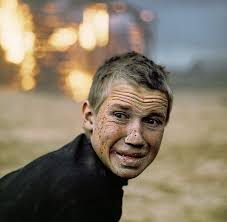
'Come and See' - Belarus WW2 movie by Elem Klimov, 1985


This horrific and infamous scene, from the harrowing movie Come and See by Russian filmmaker Elem Klimov (Wikipedia here) will have echoes for those in Ireland who know the full story of the 1798 Rebellion here - of the burning of the McKee family in their home at Carrickcessna near Saintfield, and of the burning of around 200 people in Scullabogue barn in Wexford (see previous post here). Klimov had personal experience of World War Two, and Belarus is said to have had over 2 million deaths during the war, over 25% of its population. At the end of the movie a caption says that during the war “628 Belorussian villages were burnt to the ground with all their inhabitants.” Utter barbarity. 

I can't say I would recommend Come and See as an experience, but it a remarkable and utterly horrifying movie, acclaimed as a 'masterpiece' since its release in 1985. It was remastered and rereleased in 2020. Here is a review on YouTube. Its hand-held steadicam camerawork gives it a revolting nauseating realism. 'Soldiers' drunk on whisky, power, and hate. Be very careful of viewing it.

Whatever the era, whatever the ideology, whatever the circumstances, the human heart never changes. As Scottish author and poet Robert Louis Stevenson knew, every one of us is both Dr Jekyll and Mr Hyde.

"And when he had opened the fourth seal, I heard the voice of the fourth beast say, Come and see." - Revelation 6:7-8 


Wednesday, October 12, 2022

Billy Strings & his Father - "What Would You Give In Exchange For Your Soul?"


The Monroe Brothers recorded this in the 1930s, a classic Appalachian 'brother duet'. Outstanding version by Billy Strings. A taster of his forthcoming album, Me & Dad.

And here's a rough version my brother and I recorded at the kitchen table on an iPhone about 12 years ago, with just one guitar, on our old Soundcloud page. Trying to find those primitive harmonies.


Tuesday, October 11, 2022

Part Four – back to Meagher's tricolour and Red Hand in 1848

There are lots of primary sources for how Meagher had designed his version of the tricolour, which, as per previous post, was not in fact the first such design. Here's one from 1848, showing that the inclusion of the Red Hand on the white third was for him a critical component in communicating the message of his flag, and with a harpist playing the melody The Battle of the Boyne.


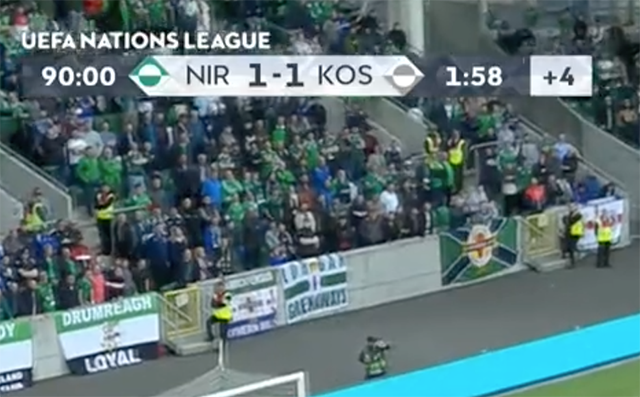
Just a few weeks ago, at the Northern Ireland v Kosovo international football match, just as Josh Mageniss struck the winning goal, I spotted a Northern Ireland supporters club home-made flag which was a blue saltire on a green field –


Symbols are fascinating. People have some kind of primal need to create them. And over time, their stories can get distorted and misunderstood. 

Monday, October 10, 2022

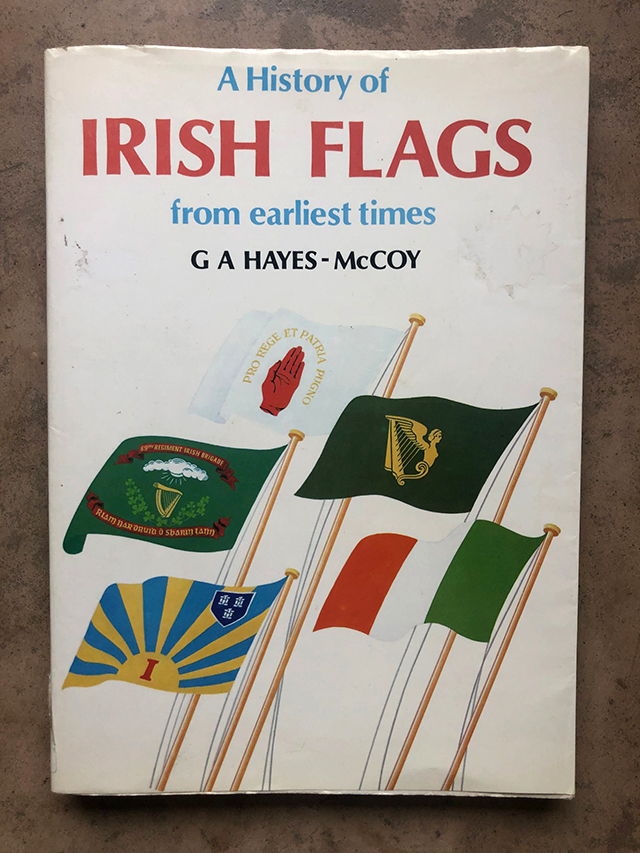
Part Three - Gerald Anthony Hayes-McCoy's 1979 book 'A History of Irish Flags from Earliest Times'


This is a classic volume, heavily illustrated and with meticulously-researched textual narrative. I consult it often, and picked it up again back in July after hearing a Radio Ulster discussion about flags, which was instigated by the annual burning of flags which happens on bonfires here, by loyalists on 11 July and then later in the summer by republicans too. I don't have a sense of how genuinely widespread flag burning is as a behavioural phenomenon, but it sure generates a lot of online reaction and press & broadcast media coverage.

Hayes-McCoy has a chapter entitled 'The Tricolour Triumphant' and also a subsection entitled 'Orange or Yellow?' where he outlines that the American 'Fenian' movement in the 1870s made various alterations to Meagher's tricolour design – first with a golden sunburst in the white third, and later by substituting a yellow or gold for the orange third. The 'Fenians' had other flags and emblems, one intriguingly described as:

 'a tricolour of Green, White and Gold, Saint Patrick's Cross with a red field, and shaped nearly like Saint Andrew's Cross, has one large shamrock emblazoned on it, with a wreath of small shamrocks encircles the cross, embracing the three colours. I never saw a handsomer flag in my life-time of experience. The Fenians and the Legion of St Patrick maintain that their destiny is to make a New Ireland, and the first step is that of providing a Flag that will be universally adopted by Irishmen in every part of the world. They hold to the belief that the Sunburst and Harp are not suitable, and not correct in point of historical accuracy...' 
– The Irishman, Saturday 18 September 1869

The poem below is from The Flag of Ireland newspaper, 10 July 1869. 'Green white and gold' is certainly a descriptive figure of speech everyone has heard. And from various online 'debates' I have been sent links to very recently, the introduction of 'gold' is indeed seen by many as a purposeful ousting of the 'orange' which had been used by Daniel O'Connell and the Association of the Friends of Ireland in 1831, and Meagher in 1848.

Often, the most extreme voices and positions about issues in Ireland come from beyond these shores, from romanticised ex-pats or those who like to indulge in what might today be interpreted as a kind of political 'cosplay', or by others seeking purpose through emotional involvement in far-away disputes. Or online, from the safely detached distance of a keyboard.

Flags, often belittled by the middle classes and some in the media as flegs, in fact hold visual stories and can tell us a lot about eras and ideas.


Wednesday, October 05, 2022

Part Two: MacNeven's tricolour objections? New York City, Tuesday 26 April 1831

There were plenty of reports in the 1830s of Daniel O'Connell rallies in Ireland using green and orange banners and ribbons. Here is one example, from a letter O'Connell published in The Freeman's Journal on 27 December 1830, outlining a proposed public demonstration in central Dublin –

There are accounts of Repeal meetings in Dublin using "a tri-colour of orange, green and white" in January 1831. (So the official Thomas Francis Meagher 1848 orthodox account of the origin of the flag appears to not be the whole story after all).

Therefore, that the Association of the Friends of Ireland in the United States were also using these colours in 1831, is no surprise.

Below is a report from the Charleston Mercury on 2 May 1831, of the Association event in New York on 26 April, where the emigrant United Irishmen leader William James MacNeven reacted to seeing orange – "the emblem of all that was baneful to his beloved native country". The wording is ambiguous – he might have been bemused rather than actually objecting.


The whole episode rippled across to our side of the Atlantic, and was reported in the Belfast News-Letter, the Tipperary Free Press, and other newspapers. Here's the News-Letter one from 1st July 1831:


There are many surviving records and accounts by, and about, William James Macneven. In The United Irishmen, Their Lives and Times (1842) there is a detailed memoir of his life, by his daughter, from pages 197-256 (online here), with his own autobiographical notes from page 244 (online here).

His birthplace and childhood near the historic battlefield of Aughrim was formative –

"an eventful battle was fought there on 12th July 1691, between the forces of King James II and King William, and my early intimacy with every inch of the field gave my thoughts ever after an invariable direction to the unfortunate relations of Ireland with England".

When he was arrested in 1798, aged 35, the 'examination' he underwent in Dublin on 7 August was transcribed (online here) – which includes an interesting usage of the term sasanagh as "one name for Protestant and Englishman". Yet he also objected to an Ireland under any religious establishment, even his own Catholic one, saying "I would no more consent to that than I would to the establishment of Mahometanism". 

All 'movements' are made up of individuals, and all individuals have their own quirks, biases and agendas. I have learned this over the years when I have collaborated with, and even hired, people for a very specific skillset or shared interest – but of course the rest of that person comes along too, with all of their associated baggages. MacNeven must have had his as well.

I've only skimmed through these references, but what emerges for me is of MacNeven being an example of how it's one thing to be in opposition to a government and even to plan and lead a rebellion – but another thing entirely to actually work to build a cohesive inclusive society. 

But if MacNeven's reaction was perhaps bemusement rather than outright objection of the orange component in the flag, soon it would be others who definitely would object. 

More to follow.

Saturday, October 01, 2022

Part One: William James MacNeven, the emigrant United Irishman leader from Aughrim, who objected to the orange third in a proto-Tricolour flag of Ireland, in New York City in 1831.


Meet William James MacNeven (Wikipedia here). He was born in Aughrim in Galway in 1763, joined the Society of United Irishmen and was imprisoned in 1798. He ended up in Fort George in Scotland along with other United Irishmen prisoners such as Rev William Steele Dickson, in whose famous Narrative of Confinment and Exile he is named as M'Nevin. Steele Dickson listed M'Nevin, and himself, among the four Catholic, six Presbyterian, and ten Church of Ireland leaders of the movement.

MacNeven left Ireland for America in 1805, where he became a hugely successful scientific academic. He died in New York City, on the 12th July 1841.

MacNeven had been President of the Association of the Friends of Ireland. At a meeting of the Association in New York City in 1831, a "green, white, and orange, tri coloured flag, the white in the centre" was used and a matching scarf was given to him. These, and their design, appear to have been sprung on him, and he wasn't happy.


The key point is that this all took place 17 years before the orthodox 1848 Thomas Francis Meagher origin account of the Irish Tricolour flag (see the website of the Thomas F Meagher Foundation here). History records that Meagher thought that these three colours, arranged in the exactly the same order as MacNeven's,  could signify a "lasting truce ... clasped in generous and heroic brotherhood".

Meagher was a boy of 8 in Ireland when the 'green white and orange' design appeared at the MacNeven event in New York. Macneven died 7 years before Meagher's matching 'green white and orange' design appeared in Waterford (with a Red Hand on the white) via some women he had met in France. (image below from The Irish Way on Facebook)

More to follow...


Thursday, September 22, 2022

Helen Mark interview for BBC Radio Ulster's 'Kintra'


I really enjoyed doing this conversation with Helen back in August - it's not often I'm the one answering the questions! I blethered on a bit much so the end programme is an astute edit. Check it out online here.

Wednesday, September 21, 2022

The Ulster Fiddle in America - six tunes from 1823


The 1700s was the century that saw massive Ulster-Scots emigration to the USA. People take music wherever they go. There were two main musical sounds which were exported from Presbyterian Ulster – the fiddle of a Saturday night hooley, and the unaccompanied vocal harmonies of Sunday morning Psalms-singing. And maybe a few folk songs too.

...................

James M'Henry (1784–1845) deserves to be better known. I have mentioned him here a few times, especially his searing riposte in 1825 to Sydney Owenson and other writers who depicted Ireland as a mono-cultural island. He was born in Larne, inherited family stories of the Hearts of Steel, witnessed the 1798 Rebellion, and emigrated to America. In his novel The Wilderness, or Braddock's Times: A Tale of The West which was published in New York in 1823 but set in western Pennsylvania in the 1750s, he includes characters who speak Ulster-Scots, and gives this description of the emigrants' dance and fiddle repertoire:

"They accordingly set off with "Nancy Dawson," to which they tripped airily and nimbly along in measured movements, with great art, sprightliness, ind vivacity. Now, (for every ten or fifteen minutes they changed their mood, and Peter had as often to change his tone,) the light corant, the gay cotillion, the merry riggadoon, the measured waltz, and the sprightly jig, succeeded to each other, and were rattled off to the successive tunes of the Irish Washerwoman, the Soldier's Joy, the White Cockade, Patrick's Day, and Morgan Rattler." (from page 79)

• Nancy Dawson
Named after an English stage performer, the tune is a slight variation of Here We Go Round the Mulberry Bush, but first appeared under the title Nancy Dawson around 1760.

• Irish Washerwoman:
Possibly English in origin, but first published under this title in Neil Gow's A Third Collection of Strathspey Reels &c for the Piano-forte, Violin and Violincello, 1792.

• Soldier's Joy:
Used by Robert Burns in The Jolly Beggars/ Love and Liberty, 1785.

• White Cockade:
First published in James Aird's Selection of Scotch, English and Irish Airs, 1782.

• Patrick's Day:
First published in The Caledonian Pocket Companion Book XI, 1750s.

• Morgan Rattler:
First published in Robert Petrie of Perthshire's Collection of Strathspey Reels and Country Dances, 1790.

• So the chronology works – all of these tunes were composed within M'Henry's era and it's entirely plausible that he heard them being played during his east Antrim childhood, and also in emigrant Pennsylvania among Ulster-Scots emigrant communities.

...................

• As posted here recently, the critical cultural context to this is that the earliest collection of American fiddle tunes was George P Knauff's Virginia Reels of 1839 (see link here). This makes the M'Henry reference above, 16 years earlier, from the pen of an Ulster-Scots emigrant, to be hugely important.

• The pics posted here are two that I took of Georgia-born Fiddlin' John Carson's fiddle, brought from Ulster by his ancestors in the early 1700s, and now on display in the Country Music Hall of Fame in Nashville, Tennessee, in July 2016 (Wikipedia here).


Friday, September 02, 2022

Glasgow no more / Glesga nae mair


Back in February I posted here of how I very nearly went to Art College in Scotland, but was derailed by the surprise intervention of someone who I knew from home who was already studying there, when doing my rounds of degree course interviews in Glasgow, Dundee and Edinburgh, in April 1991 (see post here). So I stayed in Belfast, where I had done my Foundation year.

At the same moment, my future wife was also offered a degree place at Glasgow School of Art, but she opted instead to come to Belfast, where we met in Autumn 1992.

A few weeks after I had graduated from there, in late July 1994 she had some of her art work exhibited in Felt Directions at the Collins Gallery on Richmond Street in Glasgow, for the International Feltmakers Association, and I flew over the meet her there for a few memorable days, with her parents who had travelled up from England.

We had various day trips and family holidays in Glasgow over the decades since.

Fast forward almost 30 years and I was back in Glasgow in April 2022 to meet up with our oldest son who was doing some videography work there (see post here) and we had a ball for a few days. He was filming with the-then Glasgow Rangers player Calvin Bassey for some promo videos for his PR agency (on Instagram here).

I had hoped that our second son might study medicine in Glasgow, but he has opted for the University of Plymouth, and starts there next week after his gap year of travelling around Europe, Israel, Australia and Bali.

I took my final hope, our daughter, to the University of Glasgow on 16 June for University Open Day. Whilst I was greatly impressed by the University in terms of its ethos (especially their emphasis on Graduate Attributes rather than grades), and even though we shopped in Buchanan Street (pictured above), hit multiple coffee shops, did the Gallery of Modern Art, and used the dead-easy circular Subway system, she didn't like the vibe of the city at all, and has decided that, if she gets the grades, to stay in Northern Ireland for university. So here endeth our student-era connection with Glasgow.

My maternal great-great-grandfather, James Kerr from Carrowdore, went to Glasgow for work some time around 1900 but he never came home – it's believed that he was drowned in the River Clyde. My mother's cousins, the Hamills from Ballyfrenis, who left Northern Ireland in the late 1960s to live back in that ancestral city have now all passed away, during the Covid lockdowns, with no-one from this side of the water able to be present at the funeral. So my sense of direct familial connection feels tangibly diminished.

We will still visit of course, thanks to the newly-announced air routes with Belfast. It's just a 25 minute hop over, and then the purple Service 500 shuttle bus, which uses wee touches of Scots vocabulary in its branding, from the airport right into the city centre.

With no family ties now, it feels that wee bit more distant. And I will always wonder "what if" I had gone to Scotland in '91.

Sunday, August 28, 2022

Ulster-Scots Music: "Let me make the songs of a nation, and I care not who makes its laws"

The quote above is from Scottish writer and politician Andrew Fletcher. He understood the power of music, story and song. Few of his ilk do so today.

................

Music is the universal expression of the human race, whether through rhythm, song, or instrument. It's a creative endeavour and so is seldom, if ever, 'fossilised' and frozen in time.

A trawl through the earliest printed Ulster-Scots sources always reveals some great material: 

• The Montgomery Manuscripts, collated in the late 1600s by William Montgomery, from first-hand accounts and family traditions, are always a great place to start. It includes references to the lute, bagpipes, drums,  trumpet, violin, flute, recorder, cornet, hautboys, and 'the huntsman's musical instrument' which must have been a type of horn.

• The 1700s sources are pretty scant, because printing was still a fairly limited industry, but towards the end of that century the printing presses of Ulster were busy churning out volumes of local poetry and local songs by the Weaver Poets. Within the same era as the far more celebrated Belfast Harp Festival of 1792, these are full of references to music and songs.

• The Scottish sources from the 1700s also overlap into Ulster – some of the tunes in the Scottish Musical Museum which Robert Burns worked on included tunes from Ulster and Ireland, Burns confirmed so in his notes – including the melody he used for Ye Banks and Braes of Bonnie Doon

• The 1700s was the century that saw massive Ulster-Scots emigration to the USA. People take music. The two sounds which were exported from Presbyterian Ulster were the fiddle of a Saturday night, and the unaccompanied vocal harmonies of a Sunday morning.

- FIDDLE: The first published collection of American fiddle tunes was George Knauff's renowned Virginia Reels in 1839, of which about 20% are Scottish in origin. So any references before 1839 are highly important. Here are two: 

1) There's a reference to an unnamed fiddle-playing Presbyterian minister at Londonderry, New Hampshire, circa 1730, one of the second wave of Ulster emigrants to arrive there.

2) Larne-born and raised author James M'Henry (1785–1845) emigrated to America in 1817, aged 32. His novel The Wilderness was set in 1750s Ulster-Scots Western Pennsylvania and has a short, but very important, list of dances and specific tune names. This is especially valuable because The Wilderness was published in 1823 – 16 years before Knauff's Virginia Reels.

- VOCALS: An Anglican minister in the frontier Carolinas, Rev Charles Woodmason, an avowed opponent of the Ulster-Scots, had to admit in 1760 that in a church service he had conducted "On the 31 (Sunday) I gave service to about 400 people among whom a great number of Baptists and Presbyterians… excellent singing. The women sing as well or better than the Girls at the Magdalene Chapel, London – they all come from Virginia and Pennsylvania – not an English person or Carolinian among them".

There is so much richness and depth. More to follow...

Monday, August 22, 2022

Irish, Scots and Anglo-Normans in Portaferry, 1641 (from 'The Savage Family in Ulster', p 128)


The Savage family of the Upper Ards and Lecale were originally Anglo-Normans. They had dominated Antrim and Down up until the Bruce 'invasion' of 1315–18. This list of their tenants from 1641 on the Portaferry estate shows that their territory there became home to English and Scots as well as Irish people. 

"...In an old Rental preserved at Portaferry the number of tenants in the town of Portaferry at this time was stated to have been twenty. It is interesting to read the names of the then tenants on the estate in the year 1641. They are:—

Patrick Savage, Esq., his demeasne;
Conboy O'Neale and others during pleasure;
Rowland Savage (three townlands);
James Coffy and others;
James Savage and others, during pleasure;
Rowland Savage, five half-quarters Ballyvranagan, in freehold;
Henry Savage, Ballefunerergh, in freehold;
John Martin, during pleasure;
Patrick Savage and others, during pleasure;
Arthur Moneypenny (two townlands);
James McCullen and others, during pleasure;
Hugh O'Tomolte and others;
William Waghop, during pleasure;
Nicholas ffitzsymons, in freehold;
Patrick Harnot and others, during pleasure;
Thomas Carr, in freehold;
William Dunbar;
William McCea;
James Savage;
Divall Smith and others (Quintin Bay);
John Echlin;
Nevin McCormick, during pleasure;
Dualtagh Smith (the half-town of Tullenecrevy);
Patrick Steward, during pleasure;
Henry Smith, during pleasure;
Dualtagh Smith (Knocknellett), freehold;
James Capy Widow;
Thomas Malmont..."

Friday, August 19, 2022

Psalm 91 by Renew Collective


This isn't my musical cup of tea, but its a great example of how versatile the inspired Psalms are. The 1650 Psalter was put together by a team of people including Rev James Hamilton of Ballywalter, Dumfries and Edinburgh. He may not have ever seen a person of a different ethnicity, but he would definitely have known 'For God so loved the World', and he would definitely have read of the Ethiopian of Acts chapter 8. What a legacy.

From some research I did a few years ago:

'...The General Assembly of 1649 appointed Hamilton, with John Smith, Hugh McKail, Robert Traill, George Hutcheson (he had been sent to Ulster by the General Assembly in Feb 1644 ) and Robert Lowrie, to “overtake the review and examination of the new paraphrase of the Psalms”. The final volume, entitled The Psalms of David in Meeter: newly Translated and diligently compared with the Original Text and Former Translations, etc. Allowed by the Authority of the General Assembly of the Kirk of Scotland was published in 1650. This remained the only authorised version of the Psalms in Scottish Presbyterian churches until the revision of 1929...'


Wednesday, August 17, 2022

Jimmy Hawthorne, Douglas Carson, and taking a risk


Back in October 2004 when I was invited to be the new Chair of the Ulster-Scots Agency I sought advice from various work colleagues. I knew that, if I accepted it, it was going have a significant impact upon my life. At that time I was Managing Director of GCAS Design, and just a year before had completed the project to create and implement a new corporate identity for the Northern Ireland Executive and its then eleven departments. So people at Stormont knew me. Our sister company, GCAS Public Relations, had a number of external consultants including senior former BBC Northern Ireland people James Hawthorne and Robin Walsh. Via a colleague in GCAS PR, Jimmy Hawthorne's advice to me was "don't touch it with a barge pole".

I weighed that up for a while, but eventually disregarded it. I accepted the invitation and attempted that role for a full four year term from June 2005 – June 2009. It was unpaid*, and meant to be just three days a week. But it took over almost all of my non-GCAS life, and not always positively.

I think it was in Wendy Austin's landmark 1996 BBC Radio Ulster series 'Pioneers and Presidents' that another BBC giant, Douglas Carson, pictured above from this Irish Times obituary, poured scorn on the idea of being proud of ancestry. Perhaps it was the common upbringing that Carson and I had in the 'Brethren' Gospel Halls that caused his remarks to resonate so strongly with me.

He was right. You can only be proud of achievements, things you have done, not of what you accidentally are – and even at that, pride is of course the very first original sin. I remember being queezy when I was asked to say something on a TV script about being proud of heritage. The vocabulary that we use shapes our world. Be precise with words. 

* the fee for board members was from memory about £600 per month, but it was all paid to my employers, for them to release me for those three days per month. 

Tuesday, August 09, 2022

A Texas movie where "King Billy's on the wall"

THE SOUTHERNER (1945) was a successful and Oscar-nominated movie of its time, directed by Jean Renoir. It depicts the hardships of pioneer life in the ‘share-cropper’ cotton farms of Texas in the early 1940s. In a sequence showing a community fiddle square dance, the famous portrayal of King William III on his horse can be seen hanging on the wall. 


Saturday, August 06, 2022

Erasure and Absorption – 'Irish' music and America

I recently remembered that a kind civil servant that I used to see from time to time when I was Chair of the Ulster-Scots Agency gave me this double album – the select soundtrack of the momentous 1990 BBCNI & RTE, Emmy award-winning, five part TV series Bringing It All Back Home, about the musical connections between Ireland and America. She was (and probably still is) a lovely person, well-intended, and I had high hopes of the music.

When the series, and soundtrack, came out in 1990 I was a hard rock devotee in my last year of school – Def Leppard, Guns N' Roses, the Black Crowes, a bit of Iron Maiden and Metallica. By the time the CDs were given to me around 2007 I'd already spent a good few years immersing myself in Ulster-Scots heritage, I'd been through Appalachia twice and had become enthralled by how well our story was told over there, and was preparing to head to Washington DC to take part in the Smithsonian Folklife Festival in July 2007.

The musical standard of Bringing It All Back Home is exemplary, played by a galaxy of world class stars. However, the narrative that underpins the soundtrack leaves out the story of the Ulster-Scots (see the track listing here). The tv series is available online and I have been re–watching some of it.

The influence of Bringing It All Back Home can't be exaggerated, it was something of a game-changer. It was broadcast two years before the genre-blending landmark Another Country album by The Chieftains (link here) and five years before the global phenomenon of Riverdance. Some time around 2005/2006 a photographer friend gave me a mix tape, inc The Chieftains' version of 'Tennessee Waltz' with Tom Jones on vocals. The societal impact of all of this was huge.

What might be called the Irish 'national project' of the twentieth century has created world-shaping perceptions, and a singular dominant story. But the orthodox account of the history Irish music that many consequently tell has seldom, if ever, acknowledged the uniquenesses of the Ulster-Scots – the exact musical forms which were exported by Ulster-Scots, the early era in which the Ulster-Scots emigrated, and the differing American geographies to which various waves of migrations from Ireland went, both the Ulster-Scots, the 'Famine Irish', and others too.

None of this is to claim that any cultural tradition is better than another, but simply to acknowledge that there was, and is, variety.

Some oppose that cultural variety. Some find it to be inconvenient. Many just don't know about it, because of the dominance of the singular 'national project' narrative. For people in any walk of life there is commercial/financial security in repeating and reinforcing 'conventional wisdom' stories. So the Ulster-Scots story is typically either erased, or else absorbed into the island's story.

I might post some specific observations of precisely how the tv series missed the mark.

...........

As a welcome corrective to the creative imaginations of musicians and marketing people, the Irish-centric orthodoxy is expertly redressed in this 2012 lecture at Emory University which is available on YouTube, where Paul Wells, former Director of the Centre for Popular Music at Middle Tennessee State University (situated south east of Nashville) challenged the narrative. He said:

"... there are a great many assumptions being made ... however it is quite clearly a Scottish, rather than Irish, strain. The widespread assumption about the existence of the strong Irish element in southern fiddling is relatively new. It has become a popular notion only within the past 20 – 25 years, in other words during the period in which Irish traditional music has risen to unprecedented heights of popularity.

Perhaps even more striking than the assumption itself is the degree to which people want it to be true... it is my understanding that prior to the famines of the 1840s and 1850s the vast majority of those who came to these shores from Ireland were the so-called Scotch-Irish or Ulster-Scots... 

... If the music in Knauff’s 'Virginia Reels' (1839) tells us anything about the music of the Ulster-Scots who settled in the South, it is that it was much more strongly Scottish than it was Irish in flavour..."


George P. Knauff's collection was the very first published volume of southern / Appalachian fiddle music, and the only one in the 1800s. The simultaneously "geographically Irish" but also "culturally Scots" people who filled early Appalachia and American South were the Ulster-Scots. Even the most basic grasp of the demographics of Ulster/Ireland and America will confirm that. 

The earliest known fiddle music in Appalachia was Scottish, via the north of Ireland, and transported there by the Ulster-Scots.

• PS: Paul Wells' talk became the 2019 paper Examining the Irish Connection in the Southern American Fiddle Repertoire for the Elphinstone Institute of the University of Aberdeen and is online here as a PDF file.

Monday, July 25, 2022

Padric / Pádraic Gregory, 'The Ulster Folk' (1912)


Padric / Pádraic Gregory
(1886-1962) was a renowned architect, a lover of folklife traditions, a poet, and for a time a Nationalist councillor for the Falls Road in Belfast. He was also warmly disposed towards Ulster-Scots and included much in his 1912 collection of 24 poems The Ulster Folk (online here), much of which originated 'in the country districts of Antrim and Down', one of which in particular he traced back to Robert Burns. He also has a footnote to explain what 'tae hae a crack' means = 'to have a friendly talk'.

• Biography on BelfastMedia.com here 

Friday, July 22, 2022

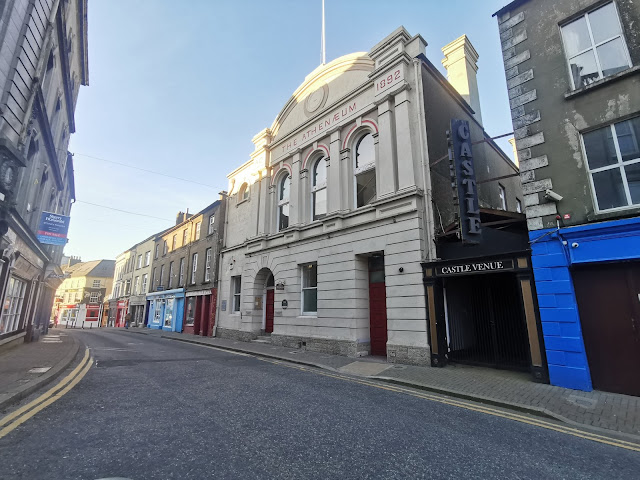
The Gaelic League in Enniscorthy, 1902 – and 'Ulster Scot'


"...On Thursday evening Rev Patrick Murphy, MSS, Enniscorthy, delivered the first of a series of lectures on Irish history in the Athenaeum, Enniscorthy, before a crowded audience...

The Milesian, the Dane, the Norman, the Welshman, the Scotchman, and the Saxon naturalised here must combine regardless of their blood; the Strongbowian must sit with the Ulster Scot, and him who came from Tyrol and Spain must confide in and work with the Cromwellian and the Williamite..."

- from The New Ross Standard, 17 January 1902


Murphy gave his address on behalf of the Gaelic League. An interesting source and an interesting timeframe. Especially as some deranged people will still claim Ulster Scots was invented by unionists in 1998.

(pic from Wexford's War of Independence, on Twitter here)


Thursday, July 14, 2022

The United Irishmen become Orangemen, 1797

"... the Ballymascanlan Volunteers who six months ago were all United Irishmen are now complete Orangemen..."

When researching the Henry Thomson booklet I posted about recently, I came across this reference in a book about his relatives, the Thomsons of Ravensdale in County Louth. It will come as a shock to some, but it is a perfect example of how the 'prism' of nationality can't comprehend the priority of community

There are similar examples I know of in the area around Saintfield and Ballynahinch where former 'Volunteers' became 'United Irishmen' - but after the battle defeats of 1798 they then (unthinkably for some) became members of new Orange lodges in the locality, uniting again with their neighbours. Why? Because community matters. The people you live with, work with, and rely upon, matter more than an ideology.

When specific moments from the past are homed in on, usually through a desire to make those moments relevant to the present, very often everything that happened in between has to be ignored, especially the things that are complex and inconvenient. But in doing so in the pursuit of simplicity, what happens is that the fuller, complex, community story is not explained or understood.

Wednesday, July 13, 2022

Londonderry 300


Back on 21 June was the 300th anniversary of the town of Londonderry, New Hampshire, being awarded its charter, having first been established by Ulster-Scots emigrants in 1719. An image of the surviving 1731 duplicate version is on this website.

Monday, July 11, 2022

'The July Day' 1906, by Adam Lynn of Cullybackey

This is from Adam Lynn's collection Random Rhymes. Despite 'the system' in Northern Ireland doing almost everything it can to equate Ulster-Scots with modern-day Unionism, when you bother to actually read authentic Ulster-Scots literature you will struggle to find much of any overtly Unionist content.

The writers are almost entirely about community rather than nationality, and any indications of the concept of nationality is defined by their lived experiences of community first. This poem isn't high art, it's an account of a typical community 12th July.

Attempts to skew Ulster-Scots into the binary political framework of Ulster Unionism or Irish Nationalism will fail. You might actually perceive glimmers of both, even within the same piece of writing, because it's far more organic than our restrictive present-day categories (see 2019 post about Adam Lynn here and a July 2020 post, again about Adam Lynn, here). It's good for everybody. If only the policy-makers bothered to understand.

You can extend this beyond our own narrow context – to emigrant America and the Revolution of 1776, you'll read writing that is pro, and writing that is unsure, and writing that is against.

There's always a broader, fuller, picture. 

Challenge your own categories. Read the literature. Community first. 


Wednesday, July 06, 2022

Henry Thomson & Co.'s Old Irish Whisky, Newry, Ireland – booklet now published


The best stories are the most surprising ones! Last week this 52 page booklet was launched, telling the long-lost story of "Henry Thomson & Co.'s Old Irish Whisky, Newry, Ireland".

The pic shown above where this quest all began – the 1920s / 1930s bottle that's part of the street window display at Grace Neill's in Donaghadee. It first caught my eye many years ago when walking past. The surname was part of the attraction, and so about 5 years ago I started to dig into the story. And dig. And what a story it has turned out to be.

.............

Henry inherited his father's business in 1859, a lucrative wine and spirits merchants in Newry. Their 1860s building is in Trevor Hill still today, designed by architect WJ Barre. It looks a like a miniature version of another more famous building Barre designed at the same time – the Ulster Hall in Belfast.

Henry served a 5 year term as a Unionist MP from 1880–85, was a prominent Orangeman (becoming Deputy Grand Master in 1911) and was well-respected right across the community in his day. There are multiple newspaper reports of his generosity and kindness - "taking men as he found them, and judging them by their deeds and not their creeds".

A few miles south of Newry, at Ravensdale in Co Louth, a branch of the Newry Thomsons had set up a major linen business in the 1700s. In their family collection was a buffalo leather coat worn by King William III at the Boyne, given to them by one of William's senior soldiers. It is now on public display in the collection of County Museum, Dundalk.

For 30 years Henry Thomson & Co.'s Old Irish Whisky was marketed as 'The Finest Whisky in the World'. It must have been good as it was awarded a Royal Warrant in 1892, the first Irish whisky ever to be granted one.

In 1904 it was Henry's whisky fortune that saved the 'Sham Fight' at Scarva when he bought Scarvagh Demesne, and also funded the building of Scarva Orange Hall.

His whisky was sold around the world well into the 1930s – in that decade in New York the Rockefellers opened a swish new restaurant 'La Maison Française' in Manhattan, fronted by Parisian celebrity chef Henri Charpentier, which served Henry Thomson Old Irish Whisky. And 40 years after Henry's death, the Newry newspapers were still saying positive things about his legacy. The brand name continued in various forms in the Newry area right up to the present day.

Henry was buried in the family plot at St Patrick's in Newry, alongside his Presbyterian brewery owner in-laws the Henry's. At the base of the triple gravestone is the classic Ephesians 2 text "By grace are ye saved through faith, and that not of yourselves, it is the gift of God".

Sincere thanks to everyone who contributed personal and private content and trusted me enough to allow me to include those. The final booklet is 52 pages packed with the best content I could fit in. Lots had to be left out, and more content is still coming forward - so maybe there might be a second, expanded, edition in future.

.............

I'll be sending everyone who has helped me assemble the story a copy by post pretty soon. For everyone else, *free* copies should be available (while stocks last) from:

• Bagenal's Castle in Newry
• Museum of Orange Heritage,Belfast
• County Museum, Dundalk

And the graphic design's pretty okay too.


Monday, July 04, 2022

The Scots at the Copeland Islands, August 1595

In August, A.D. 1595, the Lord Deputy encloses a letter to Lord Burghley, which exhibits the disturbed state of the Ards neighbourhood in that year:—


Rowland Savage to Captain Izod:

Worshipful good captain, whereas your worship desired me to send you all the news of the Scots. All the news I can learn your worship shall know it. The whole army is as yet at Copland Islands, and the Queen's ships keep them in there.


There was six gallies that was coming after them; the Queen's ship met the five gallies and sunk two of the gallies, and took two of them, and the other ran ashore and saved their men.

The Earl of Tirone came not to Clanaboie as yet. The soldiers of Knockfergus came to help the ships with all the barks and boats of the town, and what news we get I will certify your worship from time to time. No more unto your worship at this time, but God have you in his keeping.

From Strangford this present Tuesday, Strangford, August I.

……….

From p114 & 115 of The Savage Family in Ulster by George Francis Savage-Armstrong (1906)


Sunday, July 03, 2022

"Two sorts of Scots" - Edmund Spenser, 'A Veue of the Present State of Ireland', 1596


Eudox: I wonder, Irenius, whether you runne so farre astraye; for whilst wee talke of Ireland me thinkes you rippe up the originall of Scotland; but what is that to this?

Iren: Surelie very much, for Scotland and Ireland are one and the same.

Eudox: That seemeth more strange; for wee all knowe right well that they are distinguished, with a greate sea runninge betweene them; or else there are twoe Scotlands.

Iren: Never the more are there twoe Scotlands, but twoe kindes of Scotts there were indeede, as you may gather out of Buchanan, the one Irine or Irishe Scotts, the other Albyne Scotts; for those Scotts or Scythians arrived, as I supposed, in the North parts of the Island, where some of them afterwards passed into the next coaste of Albyne, nowe called Scotland, which, after much trouble, they possessed, and of themselves named yt Scotland; but in process of tyme, as is commonly seene, the denominac[o]n of the part prevailed in the whole, for the Irishe Scotts puttinge away the name of Scotts, were called only Irishe, and Albyne Scotts, leavinge the name of Albyne, were called only Scotts. Therefore yt cometh of some wryters, that Ireland is called Scotia-major, and that which nowe is named Scotland, is called Scotia-minor.

Eudox: I doe nowe well understande your distinguishing of the twoe sortes of Scotts, and twoe Scottlands, howe that this which is nowe called Irelande was auncyently called Erine, and afterwardes of some wrytten Scotland, and that which is nowe called Scotland was formerlie called Albyn, before the cominge of the Scotts thither: But what other Nations inhabited thother partes of Irelande?


Friday, July 01, 2022

Wisdom from the Savages, 1342

In 1315 Sir Robert Savage of Ardkeen was one of the many Anglo-Norman lords who fought the invading Bruce armies which had landed at Larne that year. A generation later, after the Bruce failure, Sir Robert embarked upon a major building programme in 1342, but was chastised by his son Henry who astutely told him that people are far more important than buildings:

better a castle of bones than of stones; where strength and courage of valiant men are present to help us, never will I, by the grace of God, cumber myself with dead walls…”.