
(NB: If you're reading this on Facebook, you can read this post in full on my blog). This booklet (pic left - click to enlarge) is my latest historical project, and will be launched on Friday 14th May at Ards Arts Centre (the old Town Hall). It's taken the best part of a year to complete, and conscious of my own limitations I'm happy with the end result. Published through Loughries Historical Society (and without the help of Mr Balmoral the booklet would never have happened!), with the printing funded by Ards Borough Council, North Down Museum and the Ulster-Scots Community Network, it lifts the lid on what was going on in the Ards and north Down before the Lowland Scots arrived with Hamilton and Montgomery to settle exactly the same region in May 1606. The booklet has 40 pages in total, and is lavishly illustrated throughout with some very rare maps and portraits which took ages to track down. Here's the introduction:
...........
IN MAY 1572 around 800 young men gathered at the small town of Liverpool in the north west of England, bound for a new life in the Ards Peninsula and north Down.
Their venture had been planned with meticulous detail. The English authorities had been considering a scheme like this since at least the year 1515, so there was no shortage of either colonial theory or political will. It was 5 October 1571 when Queen Elizabeth I granted her Secretary of State, Sir Thomas Smith, 360,000 acres of land in this most easterly part of Ulster, “the nearest part of all Ireland to Lancashire.”
Smith and his 24 year old son, who was also called Thomas, had until March 1579 to successfully colonise the lands or else lose their grant. So, almost immediately, they began advertising their newly acquired estate to potential tenants across England, through the unique and imaginative step of publishing a range of promotional literature – a single page broadsheet, followed by a map of east Ulster accompanied by a 63 page promotional booklet. However, even though the land had been claimed by the English Crown since the late 1100s, it was disputed territory, having also been claimed by the Clandeboye O’Neills from around 1345.
The Smiths' objective was to establish a new English colony centred around a new fortress town called Elizabetha that was to be located at the upper end of the Peninsula where “it is joyned unto the rest of the Island”, and which would be defended by three major forts that the colonists would build. However, Sir Thomas was sent to France on Royal business, leaving the project in the hands of his son. But, due to delays, by the time the colonists set sail on 30 August 1572 the number of emigrants had plummeted to around just 100.
They arrived the next day and set up base camp at the small townland of Newcastle, between Cloughey and Kearney. However, a few months earlier Sir Brian O’Neill, the chief of the Clandeboye O’Neills, had acquired copies of the Smiths’ booklet. The discovery of their plan turned Sir Brian, who was described by the English authorities in 1571 as “a loyal and true subject” , into a man who “suddenly assumed a hostile attitude.” Knowing that Smith’s English colonists would make use of the vacant abbeys and any major stone buildings, O’Neill set fire to them all and left the English outpost town of Carrickfergus in ashes.
The Smith scheme struggled on, but it was doomed from the start, being dogged by both local Irish opposition and internal strife among the colonists themselves. On 20 October 1573, just over a year after arriving in Ulster, Thomas Smith jnr was killed by two Irishmen he had employed. The high profile murder sent shockwaves through the English authorities in London. The original Smith colony was then scattered, with most of the colonists returning home to England. After a few failed attempts to start afresh, by late 1575 the scheme was abandoned; Sir Thomas’ health deteriorated and he died in August 1577.
Sir Thomas Smith’s nephew and heir, Sir William Smith, had built a new church at Theydon Mount in Essex, and Sir Thomas was buried there. Sir William tried to revive the Ards project in June 1579, but it was too late. The deadline of the original grant had passed and the great adventure was over.
Nevertheless, Sir William Smith (and, later, his second son who was also called Thomas Smith) clung vainly to the hope that they might one day reclaim the family’s grant. However, after the Queen died in 1603, Sir William Smith was sent by the new Scottish King James I to Spain. Smith left his Ulster affairs in the hands of one of the King’s men - James Hamilton - giving Hamilton inside knowledge of lands in east Ulster which, once he had acquired them for himself, would make him famous. The failure of the Smiths’ English colony, and the destruction which it brought about, cleared the way for the success of the Hamilton & Montgomery lowland Scottish settlement of the same lands that would begin 34 years later in May 1606.
“Hamilton & Montgomery succeeded where Sir Thomas Smith failed. They created the bridgehead through which the Scots were to come to Ulster for the rest of the century.”
from The Narrow Ground by ATQ Stewart.
............
Copies will soon be available from Loughries Historical Society. Get in touch if you want to come to the launch evening.
The O'Neill burnings are referred to on the present-day interpretive signage at Newtownards Priory, Holywood Priory and at the new visitor centre at Grey Abbey (pic below - click to enlarge)
Tuesday, April 20, 2010
Sir Thomas Smith’s forgotten English Colony of the Ards and north Down in 1572


Tuesday, April 13, 2010
WG Lyttle's book covers - and Harry Creevy of Greyabbey
(NB: If you're reading this on Facebook, you can read this post in full on my blog). Wesley Greenhill Lyttle was a famous writer, performer and newspaper man in the late 1800s. There's a very good short biography of him here. He's probably best known for his books "Betsy Gray and the Hearts of Down" and "Daft Eddie and the Smugglers of Strangford Lough". Below are four covers from the paperbacks of some of his lesser-known (but in my own view, much better) writings - all have a good heavy dose of local Ulster-Scots dialogue. The illustrations and type on these are brilliant -
He also wrote a local tourism booklet called "The Bangor Season - what's to be seen and how to see it" in 1885. It contains short descriptions of the main towns and villages of the area, and includes the following about Greyabbey:
"A remarkable personage, known as Harry Creevy, resides in Greyabbey. He is pretty much a hermit, no-one being allowed to enter the humble house in which he lives. Harry is quite a favourite with the population, who liberally supply him with food. He possesses a remarkable memory and seems to never weary of reciting - in loud and gutteral tones - headstone inscriptions and local legends. His appearance as he saunters through the graveyard is calculated to alarm a timid visitor, but Harry is exceedingly gentle in manner, and the visitor who can engage him in conversation is indeed fortunate..."
Nowadays, Harry Creevy would probably get an ASBO.

Thursday, April 08, 2010
Johnny Cash - descendant of Scottish Covenanters?
(NB: If you're reading this on Facebook, you can read this post in full on my blog). There's a 30 minute radio programme on BBC iPlayer which I listened to today called "Johnny Cash Of Easter Cash". (click here to listen)
It traces Cash's roots to Easter Cash, near Falkland in Fife, to an ancestor called William Cash (1653 - 1708) who emigrated to Virginia in the 1670s and settled in Westmoreland County, where many Ulster emigrants later settled. Falkland was the birthplace of the famous Covenanter minister Richard Cameron (1648 - 1680). Maybe they were even boyhood friends; lots of Covenanters ended up being sent as slaves to Virginia during the 1670s and 1680s. Johnny Cash visited Falkland a few times, and some of the people he met are interviewed in the programme. Well worth a listen.
RELATED ARTICLES:
> Article "From Nashville to Govan" (with a Covenanter reference)
> Article "Johnny Cash's Scottish Roots Explored in New Documentary"
> Article "Scottish Roots of Johnny Cash - the man in black tartan"
(Pic above of Easter Cash from this article)

Saturday, April 03, 2010
Some music for tomorrow - Blind Lemon Jefferson - "He Arose from the Dead"
(NB: If you're reading this on Facebook, you can read this post in full on my blog). I went to a unique musical event last night to mark Easter, a Good Friday "Tenebrae" service at Portaferry Presbyterian Church - which included a certain Lambeg drummer creating an awesome sense of the thunder and earthquake that ripped through the earth and sky when Jesus died. The room was plunged into darkness and then the rumble of the Lambeg got louder and more intense to an almost ear-splitting crescendo. An amazing experience - and a great credit to Mark, to Neil McClure and the New Quay Singers who had the vision to make it all happen.
Just as impressive, but in a very different way, are the simple hymns and folk songs about Easter. Robert Lowry, son of Killyleagh emigrants, wrote the marvellous hymn "Christ Arose". For a simpler, acoustic sound, here's a bit of Blind Lemon Jefferson (1893 - 1929) playing a great old song for Easter Sunday - and another for every day of the year.
Thursday, April 01, 2010
Mars Hill Church does Easter
(NB: If you're reading this on Facebook, you can read this post in full on my blog). Some of you have been getting into the Mark Driscoll / Mars Hill Church material lately, which is great. Tomorrow they're launching their Easter activities at whokilledgod.com. They're premiering a film about the death and resurrection tomorrow night at 8pm.
Saturday, March 27, 2010
“Scotch-Irish Foodways in America”
(NB: If you're reading this on Facebook, the original post is from my blog). Ulster-Scots food? The usual knee-jerk response to this is some sneering comment about battered Mars Bars, the obvious haggis - or perhaps the glorious egg & onion sandwich! As ever with Ulster-Scots subject matter, in between the scorn - and the trivialisation - there's a deep and important story to be told.
Mary Drymon is an American writer, historian, museum educator and curator who has recently published an important book called “Scotch-Irish Foodways in America”. (I am glad she stuck with the historic term "Scotch-Irish" and didn't adopt the recent "Scots-Irish") She has based the book on the recipes known to have been used by Ulster-Scots emigrants who arrived in Maine in the early 1700s. Mary's research indicates that it was Ulster emigrants who brought rhubarb to America - as was the case with potatoes.
> Here's a brief article about the book
> Here's Mary Drymon's blog
> Buy the book on Amazon
There's a great quote on Mary's blog:
"Don't eat anything your great-grandmother wouldn't recognize as food"

Friday, March 26, 2010
"A tongue as broad as any Scot", Ballyhalbert, 1983
(NB: If you're reading this on Facebook, the original post is from my blog). This is a scan from the Ards Borough Council 1983 tourist's guide booklet. For the language enthusiasts, the last line is interesting:

Sunday, March 21, 2010
"When They Ring The Golden Bells for You and Me"
(NB: If you're reading this on Facebook, the original post is from my blog). John Gray sang this at Carrowdore Mission Hall last Sunday night - a lovely rendition of an old hymn from the late 1800s. I found this version by Natalie Merchant (who sang with Wilco and Billy Bragg on the great "Mermaid Avenue" album of old Woody Guthrie songs).
And here's a very impressive guitar / instrumental version:
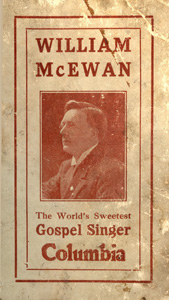
Glasgow man William McEwan, "the world's first great gospel singer", recorded a version in New York in May 1926; the brilliant Virginian singing Baptist pastor Alfred Karnes recorded it in 1927 (download his version free here) and the McCravy Brothers recorded it in 1930.
Saturday, March 20, 2010
A message from North Carolina
(NB: If you're reading this on Facebook, the original post is from my blog). A few days ago I was astounded to receive the following note on Facebook. The irony is that for a good few months now I've been thinking about deleting my Facebook page because people keep inviting me to play games or join causes that I don't really have the time or interest to get involved in, and so rather than risk offence I figured that shutting it down would be a good move.
Then, out of the blue, a complete stranger called Sharon Stewart Wilkerson emailed me from Asheville in North Carolina. For those of you familiar with the content of this blog and the kinds of projects I invest my spare time in, you'll have some idea of how blown away I was by this (reproduced below, unedited, with Sharon's permission):
.........
Mark,
I ran across your personal blog yesterday while searching for more information about the Ulster Scots language, and found a treasure trove. I ended up looking at your other sites and got such a blessing!
My Granny was born and reared on a farm outside Bushmills, County Antrim, and was converted at the age of fifteen in an evangelistic meeting. Her parents were saved through an evangelist at an earlier period. My grandfather, John Stewart, was born in Lurgan and was an orphan by the age of seven. My grandparents emigrated separately to Scotland. My grandfather was saved there and met my Granny. They married in 1904. My dad, James Alexander Stewart, was born in Glasgow and was "fitball daft". The Lord saved him when he was a teen and he became a boy preacher. He preached all over the British Isles as a boy. He met my American mom in Budapest, Hungary where she was ministering under the Southern Baptist. My parents travelled so I did not get to spend a lot of time with them. Dad also founded mission organizations and wrote many books.
I say all that to explain that I when I was with them, Dad read me stories about the Covenanters, and told me all about Revival. (He saw Revival under his ministry as a young preacher in Europe.) He taught me Scottish history and all about the great Scottish preachers etc etc. I also got to spend time with my parents during their meetings. Dad especially loved open air meetings.
I saw that you had "Fu an skailin" listed on your Sacred Scots Songs page. My husband and I still teach it to children along with "Come Awa the Noo". My family knew Seth and Bessie Sykes, as well as "Uncle Charlie' Main. Uncle Charlie was a mentor to Dad and I remember him even participating with Dad in the open air on the beach at Bangor as part of the Bangor Missionary Convention in 1965. Willie Mullan, Ian Paisley, WP Nicholson, Stanley Mawhinney, Herbert Mateer, and many more were part of the dear ones in Ireland.
Well, you see I got carried away! Thanks for posting all the articles, songs, poems etc. I enjoyed them so much! My husband and I live and minister in the mountains outside Asheville, NC, where the people have a lot of Scots Irish in their heritage. (The music!)
Well, "I'll Fly Away" now!
In Christ,
Sharon
.........
A lot of stuff has been written over the past 15 years or so about Ulster and America, much of it about centuries-old Presidents (whose Ulster links, in some cases, are pretty thin), much of it repetitive and very far removed from the common cultures of ordinary people. Sharon's email shows that there is still, alive and well today, a common evangelical faith and culture which spans Scotland, Ulster and America, and that some of the wee songs that I grew up with here in the Ards Peninsula, which had been taught to my parents and grandparents by the "oul Scotch preachers" like Seth Sykes, Charlie Main and Jock Troup, are still being sung today in the mountains of North Carolina.
Friday, March 19, 2010
Enough to start a riot in a Cathedral
(NB: If you're reading this on Facebook, the original post is from my blog). 1637 Book of Common Prayer, Scottish edition. As (not) recommended by Jenny Geddes. On eBay now for $900!
Thursday, March 18, 2010
Patrick at Immanuel Presbyterian Church
(NB: If you're reading this on Facebook, the original post is from my blog). On Monday evening past, I was a stand-in speaker for Immanuel Presbyterian Church PWA (now called Presbyterian Women) on Agnes Street in the Shankill area of Belfast. The speaker who was booked had to go gallavanting off to America last week, so the ladies at Immanuel put up with me instead!
I took a powerpoint along with lots of images but very little text, just as visual aids for the talk. I started (as you might expect) by pointing out a few of the myths and nonsense, then the Scottish stories and legends of Patrick, the Patrick-related placenames in Scotland, the early Ulster-Scots records of Templepatrick near Donaghadee, then onto the similarity of portions of his Confessio and Psalm 40, the Cross of St Patrick flag and its modern applications in logos (like the PSNI badge), Patrick Hamilton the first martyr of the Scottish Reformation and the origins of Scottish Presbyterianism, and finished with the work of Ulster-born hymn tune writer William James Kirkpatrick - "My faith has found a resting place not in device or creed...". A light and enjoyable evening for me, and apparently for the audience too!
Wednesday, March 17, 2010
From Patrick's "Confessio", circa 450AD
(NB: If you're reading this on Facebook, the original post is from my blog). "...For there is no other God, nor ever was before, nor shall be hereafter, but God the Father, unbegotten and without beginning, in whom all things began, whose are all things, as we have been taught; and his son Jesus Christ, who manifestly always existed with the Father, before the beginning of time in the spirit with the Father, indescribably begotten before all things, and all things visible and invisible were made by him.
He was made man, conquered death and was received into Heaven, to the Father who gave him all power over every name in Heaven and on Earth and in Hell, so that every tongue should confess that Jesus Christ is Lord and God, in whom we believe..."
Full text available here.
Tuesday, March 16, 2010
Mother's Day lunch - "Thon's a clooster!"
(NB: If you're reading this on Facebook, the original post is from my blog). My parents came off with this on Sunday, and I don't remember ever hearing it before.
Chambers Concise Scots Dictionary has it as:
• clooster n a mass of something wet or sticky, mud etc 19-, chf Galloway
James Fenton's The Hamely Tongue - a Personal Record of Ulster-Scots in County Antrim has it as:
• clouter [cf.Sc. cloiter a disgusting wet mess; possibly of Low German origin]
Hilary just hopes they weren't talking about the Sunday lunch she'd made that we were all eating at the time!
Global warming at the Ulster Folk Museum?
(NB: If you're reading this on Facebook, the original post is from my blog). I took this pic on my Blackberry a few weeks ago. Looks like the sea levels have risen and the Ards Peninsula has sunk into the sea... Lough Swilly and Inishowen look like they're in trouble too!
(from the Coalisland Spade Mill)

Sunday, March 14, 2010
Mark Driscoll (of Mars Hill Church) - coming to Belfast later this year
(NB: If you're reading this on Facebook, the original post is from my blog). Set aside all of your (perhaps valid) perceptions of US evangelists - the ones on tv with the scrolling information along the bottom with their credit card hotline numbers, who beg for donations and infer that they can arrange for a Divine blessing for every £ or $ you send them.
Mark Driscoll, of Mars Hill Church, is based in Seattle and has been described as "the fierce new face of American evangelism". He has become well-known around the world (thanks to the internet age, where he generates the occasional bit of controversy) for a frank and pull-no-punches preaching style, and is making his first visit to Northern Ireland for this year's annual Mandate event in Belfast on 13 November. Having been raised in wee rural halls, I tend to avoid big things like Mandate, but I hope to go this year to hear him preach.
His books, Vintage Jesus, Vintage Church and Doctrine - What Christians Should Believe - give a solid foundation about the Person we should follow, what Christians should believe, and how the local church should operate.
In particular, Mark Driscoll draws the listener's attention to Jesus. That might sound like a strange thing to say, but if you tune in to what's being said and sung in many churches today, you might conclude that the faith being presented should be called God-ianity. They might be unconsciously drifting that direction - but they should be into Christ-ianity. On the radio just this morning I heard a local minister downplaying the uniqueness of Christ. In his many online sermons I've heard and watched, Mark Driscoll's aim is (as Hebrews 12 says) to "fix our eyes on Jesus, the author and perfecter of our faith".
There's a huge back catalogue of Driscoll sermons on the MarsHillChurch.org website, and I often listen to them when I'm working at my desk - far better than Stephen Nolan! I get through maybe 4 or 5 of them every week. Some traditional Ulster folk (a solid, reliable and cautious breed which I count myself among) will find Driscoll's style a bit uncomfortable at first, but the substance of what he says, and all without notes, more than compensates.
Here are two recent sermon clips from a series he preached entitled "Luke's Gospel - Investigating the Man who is God"
There are hundreds more clips and sermons on the MarsHillChurch YouTube channel - take some time and enjoy them.

Friday, March 12, 2010
"A wheen o wee Scotch breek"
(NB: If you're reading this on Facebook, the original post is from my blog) About 12 years ago when we bought our current house and were doing some renovations, we found what one of the workmen called "a wheen o wee Scotch breek" - a few Scottish bricks, glazed firebricks to be precise. On the back they carried the moulded imprint of "J & M Craig Ltd., Kilmarnock, Scotland". So we got them built into some of the walls outside, with the lettering facing outwards. I did a bit of research at the time, and found that this particular imprint only existed for about 15 years, in the 1850s. On the excellent AyrshireHistory website they have a page about the Craig brothers. I gave them a lick of paint earlier in the week, so here they are, fresh and gleamin! (click to enlarge)

"The Eastern Gate", the Delmore Brothers
(NB: If you're reading this on Facebook, the original post is from my blog) This is a song that was played constantly in our house, on a tape by the old Belfast group the Echoes of Grace which they brought out ("released" is far too contrived a term for how it was done back then!) in the early 1980s. The Wee Echoes had mandolin, guitar, and lots of singers - usually 7 or 8 in the group at any time. My da still watches video tapes of their concerts, and herds visitors into the front room to watch them too!
It was only much later in life that I discovered that an enormous amount of the songs recorded by Ulster gospel groups in the late 20th century were originally old hillbilly and "brother duet" songs from the early part of that century. "The Eastern Gate" was written by Isaiah Martin in 1905 and was recorded a few times in the 20s and 30s, eventually made famous by the brilliant Delmore Brothers who recorded it in 1940:
Early American recordings of artists like the Delmore Brothers and Jimmie Rodgers travelled as far as the Shetland Islands off the north coast of Scotland, as shown in this advert from the National Theatre of Scotland, about Thomas Fraser, which features his version of the Delmores' song "The Mississippi Shore":
I hope that the forthcoming Ulster-Scots broadcast fund will enable projects like this to be produced, which delve into deep, rooted stories of real people and their culture.
.............
Here's some background on Thomas Fraser, presented by Rob Ellen of The Medicine Show:
Tuesday, March 09, 2010
"the pinnacle of thranness!"
(NB: If you're reading this on Facebook, the original post is from my blog) Wendy Austin said this today, to Danny Kennedy, on Talkback on Radio Ulster. Maybe you language enthusiasts out there should start to list the various Ulster-Scots terms that are used on the local media? It would be a quare gunk for a lot of folk! (you can hear it on iPlayer at about 40 min into the programme)
Thursday, March 04, 2010
Patrick and the Ulster Scots
Over the next few weeks the annual St Patrick stuff will be ratcheted up. I'll freely admit to having mixed views about Patrick - there's certainly a story in there somewhere, but it's buried under centuries of mythology, mumbo-jumbo and a heavy dollop of nonsense added for good measure. Efforts have begun already to prevent a repeat of last year's drunken riot in a specific part of Belfast.
Outside Donaghadee is a tiny coastal graveyard called Templepatrick. My mother's family are from that general area, in fact the Reids who lived in the wee cottage next door to the one she grew up in are both buried there. Local tradition has always held that Templepatrick was where Patrick arrived - probably from Scotland. One of the earliest chroniclers of the Ulster-Scots, William Montgomery (1633 - 1706), a nephew of Sir Hugh Montgomery, wrote the following in 1683:
It was a younger brother of Sir Hugh, a Patrick Montgomery, who was granted the land at Templepatrick. You can imagine the conversation at Donaghadee when they arrived in the sunshine of May 1606:
Sir Hugh M: "Weel Patrick, you're looking for some of my new Ulster estate eh? Well, my new friend Con O'Neill, whose family have been here for sixteen generations, says that your namesake, Patrick the evangelist, arrived just a mile or two from here in a wee spot that the locals call Templepatrick near Creboy (Craigboy). Would that do ye?".
Patrick M: "Aye, that's a nice wee spot. And on a clear day I'll be able to look across to Portpatrick in Scotland, which is named after him forbye - it's the port that all of our new tenants are sailing from. Y'know, Hugh, if you made enough money here in Ulster maybe you could even buy Portpatrick from the Adairs!"
Sir Hugh M: "Patrick, ye're no as daft as ye look..."
And so on. Joking aside, it is of significance that William Montgomery recorded the Templepatrick story in 1683, and said that there were "other traditions among ye Irish concerning it". William Montgomery was a close friend of the local Savage family, who by then had been living in the Ards for about 400 years and who provided much of the content for his writings.
It would be ironic if, with all of the money and attention lavished on Downpatrick, Armagh and Slemish, if a forgotten and overgrown wee burying ground just south of Donaghadee was actually the place where he arrived.
(NB: The original stone coat of arms from Patrick Montgomery's home can still be seen today on a house at the foot of the Craigboy Road. A friend of my da's got the job of cementing it into place.)
Wednesday, March 03, 2010
The McCravy Brothers: "Rugged Presbyterians" from Scotland to Ulster to Pennsylvania to South Carolina... whose music came back to Ulster and then to New Zealand
Some months ago, I was researching the McCravy Brothers (Frank and James McCravy) of Laurens, South Carolina. The reason was that our aunt Rhoda had a few of their 78s which she had somehow bought here in Ulster in the 1940s. In the late 1970s when Graeme and I were wee, and were members of her Sunday School class at Carrowdore Mission Hall, she taught us their songs "Does This Train Go To Heaven" and "The Glorious Gospel Train", both of which they had recorded in 1931. I remember singing these at the Christmas social with the rest of the class. The McCravy Brothers must have had quite a fan base in their heyday, because from the wee bit of information that I had already posted here, I was contacted last Autumn by a few people, including a man called Edmund Sheridan from New Zealand, who was trying to find these two songs - so I sent them to him on a CD.
Thanks to Google, I managed to get in touch with Paul McCravy, a cousin of Frank and James. We emailed back and forth, and he sent me some great material, which I've posted excerpts from below:
1) Family History and Ulster-Scots Origins
• "...Frank and James McCravy's ancestors ( McCreary was the original spelling ) were run out of Scotland during the John Knox Movement. Before they emigrated to America they lived in County Antrim... my family is very proud of it's Scotch-Irish heritage." There are of course McCrearys still in Ulster today. David McCreery played football for Northern Ireland back when we had a good team!
• "...When they learned that William Penn was giving land to new settlers in America, these rugged Presbyterians came to Pennsylvania to live. As time went by the McCravys, along with many Scotch-Irish families, moved south along the Appalachian Trail to the foot hills of what is today North and South Carolina..."
2) Musical careers
• "...The brothers were extremely close to their mother (you can hear it in the songs they chose to record) who faithfully made them practice their music every day. They played several instruments including guitar, violin, and piano but when they hired a studio musician they got the best (a banjo player on one record comes to mind). There is one old recording where one brother plays a Jew's harp..."
• "...The brothers had contracts with all the major labels but unlike today made little money during their career. They had other jobs to make ends meet..."
• An article by Paul's father, John R McCravy, says that the brothers were "well known evangelist singers during the 1920s and 1930s. They conducted song services for many revivals in this area and were known for their lovely singing voices. They made sixty or more recordings for Brunswick, Okey, Victor, Bluebird and Decca record companies".
• From another clipping Paul sent me it says that the brothers' three-times-a-week radio shows on WFBC were sponsored by Coca-Cola!
3) A Talented Family
• Their younger sister Margaret was also a singer, her stage name was Margaret McCrae and she sang with the world-famous Benny Goodman band in 1937 and 1938
• She had been well known as "Pretty Peggy Pepper" on the Dr Pepper radio programme, which featured Joe E Brown.
• Margaret married Harry Simeone, who wrote the song "The Little Drummer Boy"
• Frank McCravy Jr. lives in Greenville in South Carolina, and Paul describes him as "a fine percussionist".
• Paul's father "...John McCravy, was a fine musician and played banjo and musical saw with them in some local appearances..."
4) Personal Inspiration
• "...Their brother Jack McCravy lived in Columbia, SC, until his death in the 1970s and he had all their records but he would get so emotional when they were played no one would dare play them. My brother Ed and I once sang "Hello Central, Give Me Heaven" in their same harmony for Jack and the tears streamed down his face..."
• "...I am sending you a song my father, John McCravy wrote in memory of Frank and James McCravy. It's entitled "Life Forever" and if you like it, feel free to use it any way you wish..." John had a dream in which Frank and James sang this song - he jumped up out of bed and wrote it down.
In closing, Paul encouraged me to "...Feel free to share any info I send you as it's an honor that folks are still interested in their music after all these years..." - hence this lengthy post.
Below I'll post a selection of the clippings, photographs and videos of the McCravy Brothers, most of which Paul sent to me.
McCravy Brothers - The Glorious Gospel Train (October 1931)
McCravy Brothers - Does This Train Go To Heaven? (Oct 1931)
Margaret McCravy (McCrae) with Benny Goodman circa 1936:

Sunday, February 28, 2010
Striffin and Stave
(NB: If you're reading this on Facebook, the original post is from my blog) I was talking to a man in County Antrim yesterday morning, at the launch of the Alexander Peden book at Kellswater Reformed Presbyterian Church. He asked me if I knew what "striffin" was. I hadn't a clue, so he told me - it's the word for the thin skin or membrane inside a boiled egg. How specific is that!*
Earlier in the week one of my nieces had a bash falling down a few stairs at home, and staved her finger. My English wife had never heard of "stave" before - and I must admit I had difficulty explaining it to her. So I dug out my copy of The Hamely Tongue and there it was - the definition is "to injure the joints of a finger or thumb by stubbing". Chambers English Dictionary confirms that "stave" is Scots in origin.
Folk might huff and puff about language and status but there is no doubt whatsoever about the large amount of Scots-origin vocabulary in daily use in Ulster today.
(* Long before the Kelloggs invasion and the era of croissants, boiled eggs were a vital part of the daily diet. In the early 1900s, an old ancestor of mine got married and moved into a cottage at Butterlump between Ballyhalbert and Portavogie. He was a big gruff character but his new wife was a wee timid woman. A few days into the marriage, she asked him what way he'd like his boiled egg in the morning. His abrupt reply was... "Alangside anither yin")
Friday, February 26, 2010
Woburn House, Millisle
Woburn House, on the big sweeping beaches just south of Millisle, was built by the wealthy Belfast businessman John Gilmore Dunbar some time between 1797 and 1830 as his summer residence. I am 99% sure that his family had come from Scotland. Like many of his ilk, big fancy houses along the County Down coast (many of which are still dotted right along the shore from Holywood on down the Peninsula) were the ultimate status symbol. The town of Dunbar is a town between Edinburgh and Berwick on the east coast of Scotland, which was the location of a famous battle involving the Covenanters in 1650. For most of my life the house has been used as a borstal. You'd think that a more suitable purpose could be found for such a fine building.

Monday, February 22, 2010
Johnny Cash - American VI - out now.
The last recordings. Here are a few of the tracks from YouTube:
The advert:
Ain't No Grave Can Hold My Body Down:
Can't Help But Wonder Where I'm Bound:
For the Good Times:
Saturday, February 20, 2010
Burial Isle and the Mull of Galloway
(NB: If you're reading this on Facebook, the original post is from my blog) Took this photo yesterday - Burial Isle is just off Ballyhalbert, the most easterly point in Northern Ireland. There's a legend that it has a secret Danish burial chamber full of Viking treasure - if you could find it under the guano! The land in the foreground is mainland Ulster, then Burial Isle, with a snowy Mull of Galloway in Scotland on the horizon. Click to enlarge.
Thursday, February 18, 2010
"Clandeboye Talks" by Lola Armstrong - The Blackwoods
Over the next few weeks Lola Armstrong is giving a series of talks at Clandeboye Estate to raise funds for the Conservation Volunteers:
The Blackwoods
Wed 24 Feb @ 7.30pm
The Blackwoods were one of the first Ulster-Scots families, arriving at Bangor around the time of the Hamilton & Montgomery settlement which began in May 1606. John Blackwood (1591 - 1663) was born in Fife and became Provost of Bangor; I'm fairly sure that his father was Adam Blackwood. Clandeboye Estate is on the site of the Blackwoods' original dwelling.
The History of Helen's Tower
Tues 9 March @ 7.30pm
A wonderful iconic building which Mark Anderson blogged about recently, and which has a fascinating social history too.
Clandeboye's connection with Trafalgar
Tues 16 March @ 7.30pm
Entry is £10 per person, including refreshments. Numbers are limited - to book telephone 028 9185 2817 or email k.kane@btcv.org.uk
Monday, February 15, 2010
1636 - 1638: From "beggary" to "prosperity" - another wave of lowland Scots migration to Ulster
(NB: If you're reading this on Facebook, the original post is from my blog) Billy Kerr, who writes the weekly history column in the Irvine Times newspaper in Ayrshire sends me great information. In a recent email, he sent me a scanned page from a book entitled "The Royal Burgh of Irvine" by Arnold McJannet (Glasgow 1938). In it, on p 166, McJannet outlines a massive wave of migration to Ulster:
"...about 1636 the coming and going of Scots and Irish* between their respective countries was on a scale that made it a remarkable feature of the time... so numerous were the bodies of Scots passing through Irvine for Ireland at this period that the Earl of Strafford... was compelled to insist on every Scot who arrived in Ireland bringing with him a certificate of his respectability and honest intentions... no fewer than 10,000 Scots from the country between Aberdeen and Inverness had crossed to Ireland within two years... they came in parties of one hundred in number at a time through Irvine... three hundred had shipped for Ireland at one tide. The reason was that the country had suffered a series of bad harvests which reduced a large proportion of the people to beggary and drove many to emigrate to the north of Ireland to contribute by their thrift and energy to the prosperity of modern Ulster..."
This late 1630s migration is a new one to me, and warrants further research. Significantly, this part of Scotland, whilst northerly, is still mostly Lowlands and in the 1630s was very Presbyterian - the book "The Covenanters in Moray and Ross" by M MacDonald (Inverness 1892) provides some brilliant detail and insight into the area at exactly the time of this migration. From 1605 - 1613, and then 1622 - 1624, the renowned Robert Bruce of Kinnaird had been banished to Inverness by King James (his published Life and Sermons are here). Bruce was a preaching tornado and massive spiritual conversions took place across the whole region. By the time that Scotland's National Covenant arrived there in 1638 "...the people of Sutherland, Easter Ross, Nairn and Moray entered into the Covenant with alacrity...".
To bring the connections up to the present day, Billy also tells me that he was born in a part of Irvine which was then known as "Wee Ulster", such were the huge numbers of Ulster families living there and working in the shipyards of Ayrshire.
* NB - I suggest that the term "Irish" here is geographical, rather than linguistic or cultural, and refers to people who were Ulster-Scots.
Saturday, February 13, 2010
The dying words of Sir Thomas Smith
(NB: If you're reading this on Facebook, the original post is from my blog) Many of you know I'm about to publish a booklet (with expert assistance from my good friend Mr Balmoral) about Sir Thomas Smith (1513 - 1577). Smith planned an English colony on the Ards Peninsula and north Down which arrived in 1572, but which ultimately failed. It cost Smith £10,000, the life of his son, and probably his own health and peace of mind - within 5 years he was dead. It's an historically important and yet sad personal story. During the week I found that Charles Spurgeon quoted Smith's dying words:
“It is a great pity men know not to what end they were born into this world, until they are ready to go out of it"
(from The Treasury of David by Charles H Spurgeon, 1872)
Tuesday, February 09, 2010
The Hardy Brothers - a Scotch-Irish Argentinian sugar empire.
(NB: If you're reading this on Facebook, the original post is from my blog) I have an old book with a modest title: "The Scotch Irish in History as master builders of Empires, States, Churches, Schools and Christian Civilization" by Rev James Shaw, published in Illinois in 1899.
Here's an example, not of that book's content, but of its ethos, and of the Ulster-Scots entrepreneurial vision which 100 years ago made Belfast a dynamic, prosperous and outward-looking international city, driving some of the biggest industries in the world. Richard Hardy (1844 - 1891) and Charles Hardy (1859 - 1913) were originally from Ballymena. They set up an import/export business which sold linen into South America - and in turn they also set up a huge sugar plantation and refinery in Argentina and brought sugar back here. They also generated their own electricity which made Las Palmas the first town in the country to have public street lights! Here are two summaries:
..........
"...(Hardy) was one of those hard-bitten, tenacious men that Antrim rears, with all the dogged obstinacy of the Scotch and the intelligence of the Irish, whom you find struggling and prospering throughout the seven seas. His father kept a small draper's shop in Ballymena, but it could not hold the wanderer and his dreams. After a spell in Australia, he came to Buenos Aires, where he started a small dry goods store, made money selling Belfast linen, and married a native lady. Then he became an estanciero, and in the end sold his shop and fenced lands to stake his whole fortune on the development of the sugar and tannin business in the wild Chaco. It took a brave man to create this oasis of industry in the heart of the jungle, but he did it..."
(From Men, Manners and Morals in South America, published 1920)
..........
"...It was about the year 1874 that Messrs. Hardy Brothers, of Belfast, established the importing firm of Hardy & Co., in Buenos Aires; the late Mr. Richard Hardy was the head of the firm, and the business grew so fast that they found themselves in a very short time at the head of a large trade in Irish linen and hessians. The finest linens from Ireland were introduced into this market by the firm and found a splendid sale, and the sugar business, which was then in its infancy and creeping up, generated a demand for bagging which Messrs. Hardy & Co. for many years supplied. No merchant in Buenos Aires watched the market more keenly or studied the currents of trade more closely than Mr. Hardy ; he saw the tendency of the country to protective customhouse duties, and with a zeal deserving a better result he was the first to start flax growing in the Plate and literally spent a thousand pounds on an experimental flax farm in Quilmes.
He brought out the best machinery, scutched the flax here and spun the Argentine yarn in Ireland; but one way or another the result was not favorable; he then turned his mind to the manufacture of hosiery and under-clothing, introduced the best machinery and all those great and important manufactories of stockings and undershirts which exist in the city to-day were founded and introduced by Mr. Hardy. He traveled over the country in every direction, studying its adaptabilities and requirements; he visited Tucuman and was in and out through every sugar factory in that province; he traveled over Entre lUos and Corrientes.
It was a period remarkable for what is termed concession fever; everyone was taking out concessions, and Mr. Hardy followed the current, visited the Gran Chaco and took out a concession in the year 1880 to start a sugar plantation and factory at Cerrito, which is beautifully situated at the confluence of the three rivers: Parana, Upper Parana and Paraguay ; and here he made his first start in sugar planting, with such unlooked for success that he soon discovered the area of arable land for the planting of sugar cane was too limited for his views... He at once applied to the government and under the terms of the land laws received a territory of four hundred square miles, and it is on this magnificent territory that he constructed the factory and built up the establishment which we now visit.
The Messrs. Hardy's sugar establishment at Las Palmas, in the Chaco Austral, is the largest, the grandest and most successful of all the sugar plantations in the Chaco ...the Hardy sugar factory of Las Palmas is paved with sovereigns, from the port to the factory, from the factory to the Indian village of Cancha Larga, from the colonies still further out, back to Mr. Hardy's bouse; in every field, in every Indian path, in every "senda" we see the impress of the gold sovereign..."
(from the Louisiana Planter and Sugar Manufacturer, 10 July 1909)
..........
"Belfast and the Province of Ulster in the 20th Century" (Pike, 1909) records two men called Hardy, but they seem to be of a different family than the above. There's a brief biography online here. If anyone out there knows more, please get in touch.
Saturday, February 06, 2010
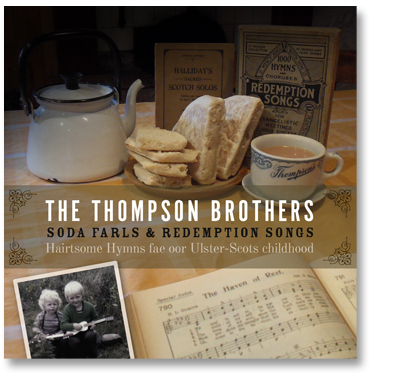
"Soda Farls and Redemption Songs" - our new CD is on the way!
(NB: If you're reading this on Facebook, the original post is from our music blog) Yes, the long-awaited CD is nearly finished and all being well will be out before Easter. It's named after two things that we grew up with - Soda Farls & Redemption Songs (Hairtsome Hymns fae oor Ulster-Scots childhood). There should be around 18 tracks, mostly old hymns with clear Ulster roots, some "Sacred Scotch Solos" and some old brother duet songs from the 20s and 30s. Lots of people from all over the country have been asking us about the CD over recent months, so if you email us we'll put you on a list - and you'll be the first to know when it arrives. Spread the word and get the kettle on - it's on the way!
Friday, February 05, 2010
800 years ago
(NB: If you're reading this on Facebook, the original post is from my blog) So here we are, another momentous agreement. But sadly the "hand of history" was missing, I hoped he/she might have showed up, as he/she would have had a story to tell. Because exactly 800 years ago King John arrived in Ireland. He had been here back in 1185, but this was his first visit as King. He arrived at Waterford on 20 June 1210 and while he was here spent a fair bit of time at Carrickfergus. During the visit, John granted land at Larne and Glenarm to a Scottish "ruler of greater Galloway, Duncan of Carrick". Here's an excellent article on the subject.
So in 1210 there was a big historic event (after which, in 1215, King John issued the Magna Carta); then 400 years later in 1610 along came another one in the form of the official Plantation of Ulster - and now, another 400 years later in 2010 there are yet more big things happening.
Now that the deal's been done, maybe the papers and airwaves will find something different to talk about.
Wednesday, February 03, 2010
James Traill of Tullykin (Killyleagh)
(NB: If you're reading this on Facebook, the original post is from my blog) The Hamilton Manuscripts record a man called James Traill of Tullykin (1595 - 1663). There are lots of different spellings of the place, like Tallachin / Tolychin / Tullochin / Tullychin, and the name lives on today - there's a Tullykin Road just outside Killyleagh. He was born in Scotland (probably Blebo in Fife, just 5 miles from St Andrews) on 15 October 1595. His brother Robert Traill (1603 - 1676) was the famous minister at Greyfriars Kirk in Edinburgh. Here's an article about the family, called "The Covenanting Traills", some of which is in Scots. According to the article another member of the family, Colonel James Traill (possibly Robert and James' father) acquired 1000 acres in Knockninny in Co Fermanagh during the Plantation. The other major grantees in Knockninny were the Balfour brothers - second cousins of the Traills - who built Castle Balfour in Lisnaskea around 1620 (pic shown here, click to enlarge).
James Traill was no dozer. He had a degree in theology from Leiden University in the Netherlands, and spent time with the Ambassador to Paris. Robert Traill too was in France, joining James there in 1625 and staying until around 1630 - he was later described as a "Grim Geneva Minister".
Around 1633, Sir James Hamilton appointed Traill "...He choosed for him a very learned, discreet, and religious master, one Mr. James Trail..." to be tutor for his son. The son was "...to travel some years for his improvement, which he did the length of Rome, very safely and successfully, and returned with great improvements in such things whereunto his genius allowed..."
So James Traill showed young Hamilton jr, the ways of continental life. Traill wrote to Hamilton sr. from Paris in October 1633, summarising their trek around France. It wasn't a holiday - the letter says that young Hamilton started his day at 7am with two hours study of French or Latin, then classes in dancing and fencing, then oral French, followed by an hour of translation. Once he had a grasp of French he was going to move on to study "logic and mathematics". At the start of the day and at the end were his "duties of piety". Traill went on to outline a proposed "circuit of France", plus a trip to Geneva and Italy - Florence and Rome in particular.
When they came back, Traill joined Oliver Cromwell's army and rose to Lieutenant Colonel. It's not very PC, but Cromwell said of him "If only I had 10,000 James Traills, I would drive the Pope out of Italy" - a country that Traill was already very familiar with!
Traill married Mary Hamilton (daughter of James Hamilton's brother John - and therefore a cousin of Hamilton jr.) in 1647. However in 1649 James Traill had to leave Ulster "...on account of malignants..." and went to stay with his brother Robert in Edinburgh. Robert also knew the Hamiltons well - he and Rev James Hamilton (who was another cousin of Hamilton jr.) were both ministers in Edinburgh and signed the Solemn League and Covenant together on 11 April that same year. They also both accompanied their friend and coleague James Guthrie to the gallows in 1661 when he was executed by order of King Charles II.
Some time in the 1650s, James Traill's payment for his military service was said to be "...land in lieu of his back pay and this land near Killyleagh he named Tullochin. The last portion of this property was sold in 1770, by his grt grandson, the Rev. Hamilton Trail, who died in 1795, aged 75." The land was part of the Killyleagh estate which was by now owned by his former protégé, James Hamilton jr. ( pic below of the church with Hamilton's Killyleagh castle in the distance - click to enlarge)
Hamilton jr. wrote his will on 18 June 1659, naming Lieut-Col Traill as one of his executors, and died just two days later on 20 June 1659. He was buried at Bangor Abbey. Traill himself died about four years later, on 18th May 1663 and was buried at Killyleagh. There is a large memorial to him inside Killyleagh Parish Church, just down the hill from James Hamilton's castle - and where the Rowan Hamiltons still live today. The inscription on the memorial reads:
"Heere lyeth the body of Lef. Col. Jam(es) Traille who having severall years faithfully served his mast. in ye warr against ye Irish Rebells departed th(is) life at Tollachin 18 May 1663, haveing had issue by his wife Mary Traille als Hamilton, daughter to John Hamilton of Hamiltons Baun in ye county of Ardmagh, Esqr., broth(er) to ye Right Honl. ye Lord Viscount Claneboys; 4 sons & 8 daughters, James, John, Hans, James, Jane, Ann, Mar(y), Mathelda, Sarah, Ellenor, Magdalen, Margaret. Here lieth the body of Elizabeth Trail alias Read of Hollypark who departed this life 10 Jan 1818. And also near to this lies the remains of her husband, the Revd. Archibald Hamilton Trail of Hollypark, Killinchy, who departed this life 16 Apr 1844 in the 89th year of his age."
There's a humourous, but derogatory, stereotype where the first generation of Ulster-Scots settlers are dismissed as "sheep stealers and cattle thieves" or (to use an often-abused mid 17th century source, Rev Andrew Stewart of Donaghadee, who wrote about the settlers from England and Scotland) "the scum of both nations". These might be amusing, but they're very far from the whole story. James Traill is a perfect example of a sophisticated Europhile who was as comfortable in his youth with the Ambassador in Paris as he was in later life in his wee townland outside Killyleagh in County Down.
And if you've got a spare £375,000, there's a very nice house for sale at Tullykin right now!
Saturday, January 30, 2010
Provosts of Newtownards, Movilla Abbey and the link with Ayrshire

(NB: If you're reading this on Facebook, the original post is from my blog) I visited Movilla Abbey today (shown here, click to enlarge) on my way through Newtownards. It was a lovely clear crisp morning, with a wee bit of snow on the ground, so with camera in hand I snapped a few photos. One discovery was of the gravestone of "John Saunders, late Provest of Newtown who departed this life the 20 day of 1704"- the gravestone a reddish colour and is built into the east wall of the abbey ruins. "Provost" is of course an old Scottish term for Mayor.
John Corry from Dumfriesshire (1638 - 1708) was also a Provost of Newtownards. And Sir Hugh Montgomery was of course the first Provost of Newtown. Walking back to car I came upon a gravestone with the inscription "Erected to the Memory of Robert McCredie of Ayrshire, Scotland, who departed this life March 31st 1848 aged 47 years"..
As these gravestones, and the recent information I posted here from Billy Kerr in Irvine demonstrates, the Ulster-Ayrshire connection is very strong. I was pleased to find this online recently, from 2003:
Friendship Charter between Irvine Valley Regeneration Partnership, Ayrshire and Newtownards:
We, the communities within the Irvine Valley Regeneration Partnership Area (Darvel, Newmilns & Greenholm, Galston, Moscow, Hurlford and Crookedholm), Ayrshire, Scotland, extend a hand of friendship to the towns and communities within Ards Borough Council, Northern Ireland. Our aim is to foster and develop mutual understanding and respect between the people of the Irvine Valley and Newtownards and to improve the economic development of the towns and villages by the promotion of tourism. We will communicate and exchange visits with each other, thereby developing human and cultural relations and establishing a firm foundation for future understanding respect and friendship between the people of The Irvine Valley and Newtownards.
It would be great to see the Councils on both sides of the water develop these links for the present day. John Saunders and John Corry, the old Provosts of Newtown, would definitely approve!
Friday, January 29, 2010
Isaac Watts (1674 - 1748)
(NB: If you're reading this on Facebook, the original post is from my blog) In 1707, the 33 year old Isaac Watts published his first hymn book. His father was a nonconformist minister in England who had been imprisoned twice for his faith, but Isaac had long been concerned by the dismal singing in the church. Until then, only Psalms were sung.
But taking inspiration from both Ephesians 5v19 "...psalms and hymns and spiritual songs, singing and making melody in your heart to the Lord..." and also Colossians 3v16 "...teach and admonish one another with all wisdom, and as you sing psalms, hymns and spiritual songs with gratitude in your hearts to God..." he, logically, entitled his collection "Hymns and Spiritual Songs". (download link here)
He faced massive opposition, with some people describing his works as "whims" rather than hymns. He even suffered a nervous breakdown in 1712 such was the torrent of opposition he faced. In 1739 he had a stroke - but carried on writing with the help of a secretary.
Here's a list of 787 of his most famous hymns, some of which are still being sung today, such as:
- When I Survey the Wondrous Cross
- O God Our Help in Ages Past (the "anthem" hymn of the Ulster Covenant in 1912)
- We're Marching to Zion
- I'm Not Ashamed to Own My Lord
Here's a great video summarising his life:
Thursday, January 28, 2010
The Forgotten Holywood Revival, 1632-33
(NB: If you're reading this on Facebook, the original post is from my blog) In Crookshanks' History of the State and Sufferings of the Church of Scotland, there's an intriguing reference on page 129 to John Livingstone, one of the four Eagle Wing ministers, who had been the preacher at the famous Kirk O Shotts revival in 1630, where 500 people were converted in one day. The reference says:
"About two or three years after, such another, and a more plentiful effusion of the Spirit attended a sermon of his at a communion in Holywood in Ireland, where about a thousand were brought home to Christ..."
The story of the Ulster-Scots of the early 1600s is bound up in the lives of their ministers. Far more work needs to be done on this subject.
Advice for preachers
(NB: If you're reading this on Facebook, the original post is from my blog) Here's a brilliant story I heard for the first time yesterday, from one of the young men who were there. Way back a long time ago, probably in the 1970s, my great-uncle Sandy Wilson (1916 - 1994) was made Superintendent of the Elim Movement in Ireland. After a preaching trip to England, the story goes that he was back home with a group of young Ards Peninsula men who were doing a bit of part-time preaching themselves. Sandy's advice to them was:
"Young men, there are two words you must NEVER use when on the platform..."
The group sat there, waiting for a revelation...
"NEVER use the words fornenst and oxter!"
Monday, January 25, 2010
Burns Night
(NB: If you're reading this on Facebook, the original post is from my blog) I've blogged about Rabbie Burns and Ulster a few times here. Seeing as he's been deid iver twa hunner years there's no fresh news to report. Sadly, one of the world's most important collections of Burnsiana still languishes in the bowels of Belfast's Linenhall Library - although I understand it might be put on display some time soon-ish.
Burns is the acceptable face of Scots language, and Ulster-Scots remains strong in pockets of Ulster. I was talking to a "townie" Ards man yesterday who's been living in Ballywalter for about 15 years, and who still struggles to communicate with some of the local shop staff. Outside of these pockets, everybody says "aye" for "yes" and "wee" for "little" - so whether they realise it or not, almost everybody in Northern Ireland uses Scots words and expressions every day of the week.
Robert Burns is buried at St Michael's Kirk in Dumfries, where James Hamilton of Ballywalter was minister from 1638 - 1648, and where I had the privilege of speaking in their annual Covenanter memorial service back in November last year.
It's nice to see the media coverage of Burns increasing every year, but we still have a way to go until we return to the dizzy heights of 1870s Ulster.
Finally, here's a reference from the famous old Ards Peninsula antiquarian, James Shanks of Ballyfounder:
"...Burns threw light upon navigation, mathematics, classics, religion, everything. No matter what formed the body of a subject, Burns formed the tail, and the tail always wagged the body... in my boyish enthusiasm I believed that Burns was the short cut to everything, and the open sesame to the doors of knowledge..."
Enjoy your haggis!
Previous articles:
- The Ulster visit legends
- Orangeman and Freemason?
- Burns and Belfast
- Burns and the Covenanters
Sunday, January 24, 2010
The Cromwellian "Scheme to Transplant the Scots from Ulster", 1653

Here's another example of why 1600s Ulster was not a "Plantation Paradise" for the Ulster Scots. Cromwell invaded Scotland following the defeat of the Covenanters at the Battle of Dunbar in 1650. In 1652, his troops built a huge walled fort at Ayr (some sections are still visible today) in an effort to quell the troublesome Covenanter hotbed of south west Scotland. In 1654 Cromwell established a short-lived political union between Scotland and England.
On our side of the water, Cromwell's forces had also taken control, and a sizeable number of Ulster Scots were now under surveillance - because they would "neither promise nor give bond not to disturb the present Government". The Cromwellian authorities knew fine well that a fervent Ulster-Scots population, just across the narrow sea from their kinsfolk in Scotland ("...in two hours they may pass betwixt the headland of Cantyre and the coast of Ireland between Glenarm and Fair Foreland..."), spelled trouble.
The authorities decided that the coast was to be locked down, boats were to be seized, correspondence was to be intercepted. And people were to be rounded up.
KGB-like, they drew up a list of what might be called Ulster's most wanted, and proposed to arrest them and exile them to the farthest ends of Ireland - to Kilkenny, Tipperary or Waterford. The lists (at a glance I'm guessing probably 150 people, broken down into localities) are still available today. Many were men with military experience, others were leaders of their communities - and even the two great landowners of Co Down. Significant names include a Captain George Welch of Sixmilewater (perhaps a son of the minister Josias Welch, who was John Knox's grandson?), Hugh Montgomery III (Lord of the Ardes) and James Hamilton II (Lord Claneboy). I'll post more about the names sometime over the next few weeks.
The documents of the time (dated 24 April 1653) say "...we have some thoughts of transplanting some of the Scotch inhabitants into some of the towns of the South, if we can find the grounds to hold out for their removal, their number being at present almost equal with the English, which we judge very dangerous to be allowed..."
However, the deportations never happened.
But when Cromwell was replaced by the Restoration of Charles II in 1660, far worse was ahead for the Presbyterian Scots and Ulster-Scots - a 28 year period of overt and murderous state persecution. It began with almost every Presbyterian minister in Ulster being driven from his pulpit by armed troops, public executions in Edinburgh - and culminated in a period which would be later known in Scotland as "The Killing Times" when 18,000 would be killed, imprisoned or sent as slaves to the colonies. In its scant description of the period, a big local museum describes this as a time when "Ulster in particular recovered and prospered to a remarkable degree".
Aye right.
Thursday, January 21, 2010
The blog as a bridge to Scotland
(NB: If you're reading this on Facebook, the original post is from my blog) In August 2007, the Centre for Cross Border Studies proposed that a bridge should be built linking Ulster to Galloway (BBC report on the story here). While we wait for that to happen, I'm finding that this blog is making connections across the water too. Just over the past few months quite a few folk from west and central Scotland have been in touch with me directly - local Scottish historians who are interested in the Ulster-Scots links from the other side of the narrow sea.
Recently, William Kerr from Irvine on the Ayrshire coast (whose great grandmother was a McGowan from Armagh) sent me a clatter of brilliant information:
- a photo of the memorial to Rev Robert Cunningham (first Presbyterian minister in Holywood) which I never even knew existed! The inscription reads:
"Erected Anno Dom 1824
to
the memory of
The Rev Robert Cunningham
Sometime Minister of the Gospel
at Holywood in Ireland, who for
his faithfulness to the cause of
CHRIST, was expelled from his
charge by the Bishops and died
in exile at Irvine on the 27th of
March 1637
He was eminently distinguished
for meekness and patience and
zeal in his ministry"
It also has a few lines of Latin that I'm going to get translated, or find a translation for. Here's William's photo:
He also sent me:
- information about Rev Robert Blair (first Presbyterian minister at Bangor, and leader of the early Ulster-Scots)
- an Agnes Ferguson buried in Irvine (who as a child was at the Siege of Derry)
- a Lisburn man, William McKnight, who became minister at Irvine in 1709
- the school in Irvine that Edgar Allan Poe attended (he was of Ulster-Scots descent as well)
So I'll let you all know when the Northern Ireland museums sector get in touch to discuss how they might be able to incorporate these kinds of simple, culturally authentic "east-west" stories into their interpretations, replacing the politically-based Anglo-Irish (Scotophobic?) stuff that's presently filling up far too many of their galleries, and subsequently the minds of their visitors. However I suspect we'll be waiting a looooooong time for that particular phone call - in fact, the North Channel road bridge may well be up and running first.
Ultimately, leaving aside the "great and the good" and public institutions for a minute, it's far more important that ordinary folk on baith sides o the Sheugh continue to recover our cultural heritage, learn from each other and share our histories with one another - it's all one story anyway, of kindred people with a wee bit of water in the middle.

Tuesday, January 19, 2010
Frances Browne Multilingual Poety Prize, 2009!
(NB: If you're reading this on Facebook, the original post is from my blog) Got a brilliant surprise in the post today - a beautiful cut Derryveagh Crystal award for finishing as runner-up in the Frances Browne Multilingual Poety Prize, 2009, run by the Finn Valley Voice newspaper in Donegal! The poem that came up trumps was "Address to a Nintendo DS". Ivan Knox was first with "An Auld Man Lived at Ballin-a-glack", and Wilson Burgess was third with "Dassah Daley". Thanks to Celine McGlynn, and Pauline Holland too (who read my poem at the event, I had a family commitment which meant I wasn't able to be there). I can't wait to tell Charlie wen he gets home from school!
Monday, January 18, 2010
Book Launch - Alexander Peden - Kellswater
(NB: If you're reading this on Facebook, the original post is from my blog) It's taken a bit of time to organise, but the Alexander Peden book will be launched at the end of Feb at Kellswater Reformed Presbyterian Church in Co Antrim. Poster below (click to enlarge) as well as GoogleMap link for any of you who want to go but aren't sure of how to find the church. I contributed one chapter to the book - may well be saying a few words at the launch on Saturday - I'm very sure that Rev David Silversides will be worth hearing.
View Covenanters Heritage Trail - Ulster in a larger map
Sin
(NB: If you're reading this on Facebook, the original post is from my blog) There has been a recent media explosion in Northern Ireland which has rippled around the world. A recurring theme on a vindictive radio and press has been one of wrongs done, the hypocrisy of saying one thing but doing another, and so on. A vicious media, in NI, the UK and the US, loves nothing more than the mistakes of a prominent Christian.
You don't have to be saved/converted too long before you realise that sin continues to have a grip on your life - of temptation, thoughts, inclinations, motives... which, unchecked, can all too easily turn into actions. Someone told me many years ago that "when the light gets brighter, the shadows get darker". There's a lot of truth in that.
The Bible's idea of sanctification (after conviction, repentance and salvation) is one of gradually becoming more and more like Christ, having the creases ironed out in a life-long process which (due to our own weaknesses and failings) is more like a rollercoaster than a constant uphill journey. Every believer I know understands this full well, and struggles with different forms of sin more or less every day. As it says in 1 John 1 v 8: "If we say, we have no sin, we deceive ourselves, and the truth is not in us."
As the world, whether media, family, friends, neighbours or colleagues, looks on at the lives of Christians they can see plenty of evidence of residual sinfulness, and of our spectacular failure to be consistently Christlike. I know myself too well to pretend otherwise. The end reaction is often "well, if that's how Christians behave..."
Part of the problem, I think, is that Christians all to easily slide into lazy and inaccurate language and thereby fool both ourselves and our fellow believers - which then creates a completely false picture to the non-Christian world around us. We talk - and especially sing - about "our sins being taken away", or sins being "washed away". And so the false notion of having no sin in our lives creeps into our heads and takes root. But the idea of "sinless perfection" is a nonsense, and a heresy.
Christians - those who have a simple faith in Jesus - need to daily remind ourselves and those around us that we are not sin-free, but that our sinfulness has not been removed but forgiven through our complete reliance on what Jesus has done. Jesus came because God loved people despite our sin. For the rest of our lives we're now in a daily battle to keep "the old nature" under control. But sometimes, maybe even a lot of the time, the old nature gets the upper hand.
The clip below is great at about 2.00 "You know what, I'm not a good person, I'm a sinner...":
"Be not proud of race, face, place... or grace." - Charles Spurgeon