Friday, January 31, 2020

"They are unworthy of freedom who expect it from other hands than their own" - the Calton Weavers, 1787


(image above from this blog)

In Burns-era Ulster and Scotland there were tremors of social revolution emerging from weavers' looms, shuttles and pens. Our own 'Weaver Poets' captured the mood of the country of the 1798 Rebellion and some of them were personally involved. In our modern day land-locked mentality we forget that, just across the water, the simultaneous 'United Scotsmen' movement and the weavers of Scotland had similar experiences and convictions.

Calton today is part of Glasgow but in the 1780s it was a small weaving village. The Calton Weavers went on strike in 1787 and on 2nd September six of the weavers were killed by soldiers of the 39th Regiment who opened fire on a crowd of several hundred. Three of them - John Page, Alexander Miller and James Ainsley, were killed instantly. Three more died later of their wounds. A crowd of around 6000 people attended the funerals.

Fifty years later, a memorial at Abercromby Street in Bridgeton was erected, with the inscriptions:

"They are unworthy of freedom who expect it from other hands than their own"
"They Though Dead Still Liveth. Emulate Them." 

(Given what day it is, this post is not a Brexit-related metaphor, but Brexit will not be the last of the changes ‘these islands’ will experience...)

Tuesday, January 28, 2020

Alexander Ales / Alane / Alesius and the Bible in the 'Scotish Language', 1500s


I have posted about Edinburgh-born Alexander Ales / Alane / Alesius (1500–65) before (see 2016 article here) an early Scottish reformation convert who sought refuge in Luther's Germany in 1530, where he changed his surname and where he is still today remembered through a street name in Leipzig. From Germany he wrote to the then King of Scotland –

"in two eloquent Latin epistles, indited and printed in Wittenberg itself, in behalf of liberty to his Scottish countrymen, to read and to teach the Word of God in their mother tongue" – Peter Lorimer, Precursors of Knox, p168 (1857) 
Interestingly he addressed the King as "To the renowned King of Scots, James the Fifth, Duke of Albany, Prince of Ireland and the Orkneys". These two letters were entitled Alexandri Alesii Epistola contra Decretum quoddam Episcoporum in Scotia quod prohibet legere Novi Testamenti libros lingua vernacula (1533) and Alexandri Alesii Scott Responsio ad Cochlaei Calummas (1534). This chapter on Archive.org seems to include translations of each; his aim seems to be to bypass the bishops and appeal directly to the King to campaign for religious liberty for the people of Scotland.

Alesius' great opponent Johann Cochlaeus, claimed that Alesius was about to produce a bible in the 'Scotish language', to be translated from Luther's German edition, but Alesius pointed out to the King in one of the letters that 'I do not know the German' (p 460 in this book).

I do wonder if, someday in an archive somewhere in Germany, an unpublished manuscript of an Alexander Alesius Scots language Bible translation might be found.

• Dictionary of National Biography entry here
• 62 original Alesius manuscripts are listed here
• 98 original Alesius manuscripts are listed here
• This biography by the Tudor Society is succinct
• A chapter about him in The Scots in Germany (1902) is online here
• This short reference is also interesting:


Sunday, January 26, 2020

Robert Burns and Portaferry - the friendship of James McManus and James Shanks


Patrick McManus (1863–1886) was a poet from Kearney, a small coastal clachan between Cloughey and Portaferry, shown in the pics above. It is now owned by the National Trust.

He had attended Ballyphilip National School on the outskirts of Portaferry. Politically speaking was an Irish Nationalist. His poems appeared under the pseudonym 'Slieve Donard', the highest mountain of the Mournes. Culturally though he had a strong Ulster-Scots influence from living in the Upper Ards. His father James McManus was described as 'the staunchest of Catholics' but was also huge Robert Burns fan, who once said that ‘had Burns been a Catholic, he would have been a saint’. This cultural overlap and intermingling is very reminiscent of the Lynn C Doyle story I posted here recently. Patrick arrived in Philadelphia in April 1886 but tragically he died there just a few months later in August of that same year, aged just 23.

This story was written down by another Portaferry man, John McGrath (1864–1956) in an 1890 article in The Irish Monthly of March 1890 (see below). McGrath was the literary editor of the Irish National Land League publication called United Ireland from 1891–1902 and a friend of WB Yeats.

Their contemporary, the Portaferry Presbyterian farmer, botanist, geologist and antiquarian James Shanks (1854–1912), was a close friend of James McManus. Shanks attended Portaferry National School in the village opposite the Presbyterian church (which in recent years has been refurbished and rebranded as Portico Ards). Like McManus and McGrath, Shanks was also in favour of land reform and he became a leading light in the local Tenant Right Association. In a biography written by James C Rutherford, this scene is recalled –


"... one day I spent several hours behind the quay were James McManus was repairing a boat, listening to his talk. He ranged over the whole gamut of knowledge from navigation to Bobby Burns; but he left on my mind the impression that if anything in the world were compared to Burns, it would be 'as moonlight unto sunlight and as water unto wine'... Burns threw light upon navigation, mathematics, classics, religion, everything. No matter what formed the body of a subject, Burns formed the tail, and the tail always wagged the body... in my boyish enthusiasm I believed that Burns was the short cut to everything, and the open sesame to the doors of knowledge..." 

James Shanks and James McManus were of different religious backgrounds but yet were in many ways cut from the same cloth, with similar convictions and interests. They are described in the Rutherford biography as "literary comrades", a David and Jonathan combination, who would spend hours talking to each other in the streets of Portaferry. When McManus died "Shanks was left for a time companionless and disconsolate". Rutherford quoted a verse of a poem that Shanks wrote for McManus, which was written in the 'standard habbie' format made famous by Burns.

• McGrath's entire article 'An Ulster Poet' on the life and writings of Patrick McManus can be read here

................

PS – In the weeks before 'Ulster Day' on Monday 9 September 1912, Portaferry witnessed a torch-lit procession through the town (featuring the Carraig-Ulaidh Flute Band from Portaferry, St Mary’s Band from Shrigley and five Highland pipers) to St Patrick's Hall where the prominent Nationalist and antiquarian F.J. Bigger spoke on the ‘Work and Progress of the Gael’. Though very much in favour of Home Rule, the meeting is reported to have attracted ‘a good few Protestants’ and to have been conducted in an amicable spirit. On the previous New Year’s Eve the Carraig-Ulaidh Flute Band and Portaferry Accordion Band jointly paraded the town, concluding by cheering each other and playing ‘Auld Lang Syne’ together.

Thursday, January 09, 2020

Mr & Mrs Hall's account of the people of County Down, 1843

(Intro - in 1844 Mr & Mrs Hall visited Ayr to experience and record the events of the major Burns Festival which was held on 6 August - see their account and illustrations here from the Illustrated London News)

"...The people of the county Down as a whole are of Scotch origin. There are of course numerous exceptions but so small a proportion do they bear to the whole that the lowland or Ayrshire dialect was commonly spoken all over the county till about the middle or towards the end of the last century.

At this moment a sort of mongrel Scotch is spoken in and near Ballynahinch, Dromara, Saintfield, Comber, Killinchy, Holywood, Bangor, Newtownards, Donaghadee, Kirkcubbin, Portaferry &c. The nearness of this county to the Mull of Galloway has made the districts on the two sides scarcely distinguishable and the stream of Scottish population can be traced most distinctly from Donaghadee and Bangor upwards to the interior.

In the eastern part of the parish of Hillsborough the Scottish dialect and religion are still preserved its western extremity is among the colonists of James I where the dialect is much more interesting being a mixture of pure English with that of the olden time.


The eastern district of the county about Ardglass lies opposite to the Isle of Man and is one of the nearest points to any English sea port. Hence the settlers there at an early period as well as at present were English as its castles and towers amply prove. The remains of three or four are still in existence and it appears from Harris that they formed part of a long range of booths for the sale of merchandise open towards the land for the purposes of trade and having loopholes towards the sea with a view to defence. The English settlers spread to a little distance round hence in Downpatrick as well as in various other towns of Ireland the three leading streets are the English, Irish and Scotch quarters respectively.

Until about a century ago an extensive Irish speaking population existed near Downpatrick but they have all disappeared and the only traces of the language are to be found in the mountainous districts where the people are almost exclusively Irish or in the neighbourhood of Carlingford Bay at the south.

The English settlers under the various Knights of the Plantation of Ulster spread up the valley of the Lagan meeting the Scotch and Irish on the banks of the Lagan from Belfast to Lisburn then by Hillsborough formerly called Crommelin or the village of the crooked stream and changed by Sir Moyses Hill to Hillsborough, Druibh Mor Dromore, and the bridge of the Bann, Bannbridge.

At various points of this line the people are as distinct in religion dialect habits wealth and other characteristics as their respective nations are on the opposite sides of the border. It is even said that a Down farmer Scotch can be known from an Antrim one English in a fair or market by his hardness in driving a bargain..."

- from Ireland: Its Scenery, Character, &c, Volume 3, 1843

Wednesday, January 08, 2020

'The Irish Border as a Cultural Divide' - Max Heslinga (1962)

With all the clamour about Brexit's hard border, soft border, technological border, blah blah blah, I've heard nobody talking meaningfully about the cultural differences within the island of Ireland. It's all jurisdictions, administrations, bureaucracy, talks, parties, elections, border polls and politics.

But without an understanding of cultural values, traditions and their holistic expression within communities, all that politics and elections do is give those communities some little say once every four years or so as to who rules them and how they are ruled. Democracy isn't always empowering, or stabilising, for the demos.

The late Dutch academic geographer Dr Marcus Willem (Max) Heslinga's book was once well-known, but is hardly ever mentioned today. He travelled around Ireland from 1959–1961 - even the structure of the contents pages show a mastery of the subject. He saw the concept of the border as a reflection of cultural difference, a 1920s outworking of many centuries of cultural formation, but one which had broken the British Isles and not just Ireland.

He talks about the 'land boundary' and the 'sea boundary' - from the back cover blurb '...the Irish land boundary could be interpreted as a cross-channel extension of the Scottish border...'.

The foreword by Estyn Evans' is about as concise and clear as it's possible to be, and even though it's an academic publication this is 210 pages of accessible, well-reasoned and highly recommended reading, a fascinating pre-Troubles cultural study. And he uses the term Ulster Scots with ease.

Whatever the political future might be, culture and community matters more.

The legends of Robert Burns in Ulster

Many years ago the Director of a local museum recounted to me an oral tradition story which had been passed on to him by the late librarian Jack McCoy (1950–1987) of Ballynahinch. [ Jack McCoy was a renowned Local History Librarian and a collector of local folklore on a wide variety of subjects with a specific interest in County Down - his investigations into the Betsy Gray traditions, published in 1989 as Ulster's Joan of Arc, are exemplary]. The version I heard was of a Robert Burns visit to Donaghadee, via Portpatrick. I have now come across a very similar version of the same story in a book called Burns and Tradition by Mary Ellen Brown (Macmillan, 1984) which was evidently collected in Scotland.


From memory, the version I heard was:
I can tell by your claes
And the cut o your hair
You're the fam'd Rabbie Burns
Frae the auld toon o Ayr.

Sadly I can't remember the wording of the response, but it was very similar to the above.

Friday, January 03, 2020

Richard Hayward 'Border Foray' – green, blue and tartan

The famous cover of this 1957 book by Ulster author and broadcaster Richard Hayward is packed with details and stories. The book itself is a single narrative, not broken down into chapters. The front endpaper says that 'this book is written from the human, historical and topographical viewpoint rather than from the political angle, and for the most part it sheds a friendly and liberal-minded light on a highly controversial problem'. As Brexit looms, the border is more of an issue than ever, and it even has its own Twitter account with over 100,000 followers (click here). 

Hayward observed our three-stranded linguistic heritage, which he describes on page 97 as '... a piece of Irish tweed, woven of three predominant coloured strands – green, blue and tartan... green for Irish, blue for English and tartan for Scottish...'. He goes on to then describe how various regions within Ulster have differing proportions of these three, for example 'the southern Ulster dialect has more of the green and the blue than the tartan,', and so on. He understands our inherent complexity and variety.

A friend often comments to me about our tragic lack of a Seamus Heaney figure, someone who can see and articulate beyond the stereotypes, a vision that we badly need today. We also lack a Sam Hanna Bell, and we also lack a Richard Hayward. 

Sunday, December 22, 2019

Foy Vance - from Bangor to Memphis and Muscle Shoals

Friday, December 20, 2019

Preserve, Demolish, Restore?


I was down at Sketrick Castle again a few days ago, tucked away on the sheltered side of one of the islands on Strangford Lough. It's been there for about 500 years. Today it's the worse for wear - a shadow of what it was in its heyday, now eroded by the forces of nature and also neglect. In our post-Troubles era, ambitious developers have flattened many an important building to make way for something flashier and more profitable. Some old buildings in prime locations have mysteriously, conveniently, burned down over the years.

But Sketrick is culturally important for many reasons, and so it has been shored up by specialist building conservationists over the years, to maintain it for the public to appreciate, and to pass on to future generations. It would even be possible for experts to produce an artistic impression, or digital reconstruction, to show what it was like at its proudest moment. The remains bear enough evidence, the printed records have enough description. In theory the missing walls could be authentically rebuilt.

In many ways, buildings like this across Ulster can be seen as a metaphor for Ulster-Scots language. Centuries old, certainly not what it once was, today very eroded – but with tonnes of published literature, still culturally and linguistically evident, and still important.

The recent - and inaugural - Ulster-Scots Language Week at the end of November was inspiring and thought-provoking in many ways. The speakers and contributors from Scotland were superb. Making meaningful connections across the water could bring us all sorts of fresh momentum.

Our choice now is do we merely preserve it? Or do we let the ambitious new generation of cultural developers demolish it to make way for something new? Or do we actually restore it, renew it. revitalise it?


Wednesday, December 18, 2019

Adam Lynn's Linguistic Fusion - Ulster-Scots, Orange and Irish


Adam Lynn (1866–1956) seems to me to be underrated as a writer, not just for his rich Ulster-Scots but for the world that it describes. His collection Random Rhymes Frae Cullybackey was published in 1911* and is online here. We filmed a segment about him for one of the Hame BBCNI episodes, but there was no room for it in the final edit.

In recent years much attention has been focussed upon the famous Irish language expression Erin Go Bragh being used prominently at a huge Unionist convention in 1892. Lynn uses the term as well, in his Ulster-Scots poem Ireland for Me on page 146.


He also uses another famous Irish language expression - Cead Mile Failte - in a poem of that title which celebrates the 12th July demonstration in Cullybackey in 1910.


The world as understood by Adam Lynn was linguistically overwhelmingly Ulster-Scots, and culturally one where Presbyterians, Church of Ireland, Faith Mission and Orange lodges co-existed, and within which the occasional use of commonly-known Irish language expressions was natural.

That was 100 years ago, a very different time. Pre Partition and pre Troubles. Pre our institutionalised polarisation. This balance and blend was, and still is, different in other parts of Ulster - and that is why notions of a flat cultural and linguistic uniformity are a huge mistake. It is essential to reflect the variety.

His poem Liberty on page 169 is worth a spin through.

* Coincidentally, 1911 was also one of the years of the Census of Ireland. So of course I had to look at the forms online. Adam Lynn lived in Galgorm, and on his form the language column is left blank. Three other families in Galgorm - the Church of Ireland McMeekins, the Presbyterian Stockmans and the 'English Church' Crawfords - had written 'Irish' in their forms, but in all cases the enumerator who did the checking scored that out. So, a famous and published Ulster-Scots language poet with no means of officially recording himself as such - and three families whose linguistic lack of self-understanding had got it wrong.

PS: The 30-something female poet Agnes Kerr of Ahoghill whose important Ulster-Scots collection was published in 1913, also left the language column in her form blank. In Ahoghill only the Brethren McMeekin family, the Church of Ireland Marks family, the Catholic Letters family and the Presbyterian Mark family were those who filled in 'Irish', and again in every case the enumerator scored that out.

There is a need - or opportunity - for an academic re-assessment of the Census, which takes into account all other existing evidences of cultural and linguistic life.

Ulster is complicated and surprising. 
Reject the two-tribes false simplicity.
Reflect the interesting true variety.


Tuesday, December 17, 2019

The Amber Light - new documentary film on the origins of Scotch whisky

This new movie is on limited release just now, having been acclaimed at the Edinburgh International Film Festival this year. It showed in Dublin in November, but hasn't yet come to a screen in Northern Ireland. Four star Guardian review here.


Sunday, December 15, 2019

Before Makemie? Another reference to Presbyterians in Maryland, 1668


This is a significant reference, from 15 years before Makemie's famous arrival in Maryland. This is solid further evidence that Makemie arrived into a well-established Ulster-Scots emigrant community, and not a spiritual wilderness –

"...The Rev. Matthew Hill, a Presbyterian minister (first settled over a Scottish and English congregation at Patuxent, Maryland), writing to Richard Baxter from Charles county, Maryland, April 13, 1669, states that:
"there are many here of the reformed religion, who have a long while lived as sheep without a shepherd, though last year brought in a young man from Ireland, who hath already had good success in his work."
Concerning the early  congregations in Maryland, very little is known beyond the fact that about 1670, Colonel Ninian Beall emigrated to that colony, settling between the Potomac and the Patuxent. During the next twenty years he induced a  number of his friends in Scotland (most accounts place the number at about  two hundred) to join him. They founded the Presbyterian congregation of  Upper Marlborough, which was first under the care of Rev. Nathaniel Taylor.

Some Scottish Presbyterians were also settled near Norfolk, Virginia, on the eastern branch of the Elizabeth River before 1680. They seem to have been numerous enough to form a congregation, as they had secured a minister from Ireland. His name is not known at this day; but there is some reason for believing it to have been William Traill, who emigrated in 1682-83, and returned to Ireland after the Revolution. The Rev. Josias Mackie, son of Patrick Mackie of St. Johnstone, county Donegal, Ireland, ministered to the congregation on Elizabeth River from 1691 to 1716. 

Many Scottish and Irish Presbyterians were also settled on the eastern shore of Maryland and Virginia, in Dorchester, Wicomico, Somerset, Worcester, and Accomac counties, and along the Pocomoke River, which divides Somerset county, Maryland, from Accomac county, Virginia. They were especially numerous in the vicinity of Snow Hill, Dorchester county, Maryland.

To these people, Rev. Francis Makemie, of Ramelton, was sent by the Irish Presbytery of Lagan in 1683-84. He lived and labored among them for a number of years. Makemie was the pioneer Presbyterian missionary in the New World, his labors in that connection carrying him from Virginia to Connecticut, and he is properly regarded as the chief  founder of the Presbyterian Church in America. Before 1690, there were four or more separate congregations in Somerset (which then included Worcester) county, Maryland, with meeting-houses at Snow Hill (1683), Pitt's Creek, Wicomico, Manokin, and Rehoboth..." 


– From Charles Augustus Hanna's landmark The Scotch-Irish; or, The Scot in North Britain, north Ireland, and North America (1902)


Monday, December 09, 2019

Seamus Heaney and Burns's Art Speech


A few years ago I was honoured to create the naming and branding for what became Seamus Heaney HomePlace at Bellaghy. I was recently sent a copy of his 'Burns's Art Speech' which is thematically connected with - and in many ways a precursor to - the concepts he expressed in his magnificent A Birl With Burns poem. The speech was published within Robert Burns and Cultural Authority by Robert Crawford (1997).

The speech contains many glorious revelations, and an understanding of

"three languages – Irish, Elizabethan English and Ulster Scots".

Geographically, he perceived a cultural and linguistic region which straddles the North Channel -

"somewhere north of a line drawn between Berwick and Bundoran".

More thoughts to follow.


Wednesday, December 04, 2019

Language debates in the 'Derry Journal' 24 April 1950


Depending on your perspective, it will either be a source of reassurance or frustration to see that some of our present-day debates are nothing new. This cutting from the Derry Journal shows that the language and identity issues recur. The optimistic notion of seeing this place as one of intertwined traditions has in the past as much as the present been replaced with more barbed issues of legitimacy and perhaps even power.

Tuesday, December 03, 2019

John Hewitt, Belfast Telegraph, 19 March 1955


Saturday, November 30, 2019

Sam Henry 'A Critic In The Candlelight' - Summer 1943


'My heart had a vision of Ulster the Land of the Free.
Our fathers shed their blood for the right to think.'


This is by the wonderful and globally-renowned folklorist and photographer Sam Henry, from Ulster Parade Number 5, a periodical that was published during the years of WW2, quarterly from 1942–1947, and which featured a variety of popular Ulster writers of the time. It was published by The Quota Press, which was an interesting and innovative imprint that produced a large amount of local material from around 1927–1952. There are quite a few Ulster-Scots kailyard stories in the editions of Ulster Parade I have.

The use of very natural Ulster-Scots in this story by Sam Henry is joyful, and it's especially interesting to see it in print in the 1940s, which is usually thought of as a period where Ulster-Scots had fallen out of fashion. The storyline, of the hassles of trade barriers and import taxes across the border, is very topical in our current Brexit context!


Monday, November 25, 2019

Bowmore - the most expensive Scotch whisky in the world? – and the Old Comber connection


This article (albeit from 2012) shows just how in-demand whisky from Bowmore Distillery on Islay is. £150,000 for a bottle of spirit is quite some price tag. It was bottled in 1957 when Bowmore was owned by William Grigor & Sons, from 1950–1961. As you can see from the clipping below, when the company's owner James Grigor died, he was the owner of both Bowmore and Old Comber.

A 1980s bottling of 1950s Old Comber is a relative bargain, at just over £500. On 27 October 2019 a bottle of Old Comber, which from the label design looks to date from around 1900, sold on Whiskyhammer.co.uk for £2750 (see photo below).


Thursday, November 21, 2019

The Rivers and Burns of Belfast: Town Burn, Pound Burn, Knockburn and Mary Burn


Intro: They say that history is written by the 'victors'. That's true in the aftermath of a war. But for the mundane normalities of everyday existence, in every society in the world, daily life is recorded by the dominant culture which has a kind of social power and 'majority privilege'. Ulster-Scots has never been dominant here – it was and is the speech of ordinary folk – and so much of it has gone unrecorded. So finding gold nuggets gleaming out of the dull silt is exciting.

There are still many very familiar 'burns' still today around greater Belfast, such as Minnowburn, Purdysburn, Tillysburn. Further out there are Muttonburn, Woodburn, Redburn, Crawfordsburn and maybe even Lisburn. I am sure there are more. These names reflect the parts of the Belfast hinterland where Lowland Scots settled over the centuries. Here are four more examples I recently came across which are new to me:

• The Presbyterian Banner of Ulster newspaper reported on 29 March 1860 that an old forgotten stone bridge had been discovered during works on High Street, referring to –

'... the turgid waters of the "Town Burn" from the Bank Buildings to the embouchure of the stream, opposite Queen's Square ... The "Town Burn" was perfectly opened down to the river, and navigable, at flood-tide, for very small craft and boats ... The "Town Burn" or "Belfast River" as it was sometimes called, had, it is supposed, an artificial course through the town – as would seem to be shown by its comparative straightness from the Belfast Flour Mills to its junction with the Lagan ...'

Today, that 'straightness' runs from Andrews Flour Mill down Divis Street into Castle Street and Castle Place and then into High Street – certainly the description sounds a lot like the famous final section of High Street which ships used to be able to sail into from the River Lagan, as depicted in the Carey illustration above. It was all culverted and built over in the later 1800s.

• The Northern Whig of 4 November 1902 refers to another, called the Pound Burn. According to Councillor J. N. M'Cammond surface water was 'running like a millrace from the Pound Burn' due to flooding problems in Belfast. It was located between Glengall Street and Grosvenor Street, eventually joining the Blackstaff River. The bad weather had resulted in the Pound Burn being 'in a filthy condition with two or three feet of mud, old tin cans, and refuse of all sorts ... had the Pound Burn and Blackstaff River beds been cleaned out there would not have been the flooding in this district to the same extent, and possibly none at all'. It is marked on the 1957–1986 OS map, close to the junction of the Grosvenor Road and Durham Street.

There was a street called Old Pound Loney there too (link here) - a familiar corruption of the Scots word loanen meaning lane. There is also a Pound Burn in Monkstown in Newtownabbey.

• The Belfast Telegraph of 28 December 1956 front page showed a photograph of houses being severely flooded around the Castleview Road area captioned as 'owing to the rain and thaw, the Knockburn River flooded houses and gardens in the area'. This is just directly across the road from the famous entrance to Parliament Buildings at Stormont. On OS maps it is called the Knock River, but yet must have been known locally as Knockburn – there is a street called Knockburn Park still there today.

• An old OS map I picked up a while ago in a second hand shop shows a Mary Burn in the countryside around Andersonstown which is now West Belfast, and which looks like it might have been a tributary of the Blackstaff River. It seems that a large house of the same name was nearby. The Kennedy Centre retail complex is on the site today.

These are just a few examples of once-familiar Ulster-Scots names in the landscape of Belfast which have fallen into disuse. Urban improvements, Anglicisation (both by officialdom, but also by gradual social erosion) and 'progress' have phased them out of usage. But just because they are not visible today doesn't mean that they never existed. It would be good to collate and record these in some way.

Monday, November 18, 2019

Old Comber Pure Pot Still Whiskey (1825–1961) - and the brief Scottish connection


(Just a few notes, not a comprehensive history)

This famous spirits brand was founded in 1825, but there were two distillery facilities in Comber - hence the company name 'Comber Distilleries Company Limited'. There was the Lower Distillery on the Newtownards Road, and the Upper Distillery on Killinchy Street. But 1825 wasn't the beginning of distilling in the town - there had been a malt kiln and distillery on the 'Upper' site since the 1700s, whose owner, a James Patterson, died in 1763. A William Murdock who died in 1805 is named on a local gravestone as 'the eminent distiller of Comber'.

• ORIGINS
But it was George Johnston and John Miller who set up what became the famous Upper Distillery in 1825, on a street near a ford on the Inver River, called Waterford Loney (later renamed Pot Ale Loney, but which is now unimaginatively called Park Way). It almost immediately came to an end, through an accidental fire in July 1832 – caused by a visiting excise officer, a dipping rod and a candle – in which John Miller was very seriously burned. The buildings were almost destroyed and were saved only through the efforts of "almost every one in Comber". The fertile farmland and extensive grain production of east County Down, dotted with windmills, meant that by 1830 Comber Distilleries was producing a reputed 80,000 gallons of whiskey a year.

• 1872: THE BRUCE ERA BEGINS
Samuel Bruce (1838–1922) of Belfast, and also of Norton Hall in Gloucestershire, bought Comber Distilleries from John Miller in 1872; his brother James Bruce (1835–1917) was a director of Royal Irish Distilleries in Belfast, the producers of the Dunville's whiskey brand. Both brothers had been born at the family home of Thorndale in Belfast, just off Duncairn Avenue - today the house is gone but the family is remembered by street names such as Brucevale Court, Kinnaird Place and Thorndale Avenue.


The Bruces claimed descent from the great royal Scottish dynasty of the same name, and also from Rev Michael Bruce, the Covenanter minister of Killinchy in the 1660s. During this era Samuel Bruce’s monogram 'SB' appeared on the brand's labelling; in his brother James Bruce's country mansion (which is today Benburb Priory - link here) a very similar 'JB' monogram can be seen on the entrance hallway in mosaic tiles.


• 1918: END OF THE BRUCE ERA
On the road towards the Great War, Samuel Bruce was Chairman of Comber Distilleries, and his son George Bruce (1880-1918) was Managing Director.  In the 'Home Rule' tumult of 1912, George commanded a company of Ulster Volunteers and drilled them in the Lower Distillery yard. In February 1914 he led 100 men of D Company as part of a 1000-strong demonstration in Newtownards. On the outbreak of war George became Captain of the 13th Battalion of the Royal Irish Rifles (County Down Volunteers). Even though he was the MD of a major company, George Bruce served in France throughout the War and was tragically killed in action on 2 October 1918 at Dadizelle in Flanders. Captain George James Bruce D.S.O. M.C. was only 38 years old, meeting his end just six weeks before the Armistice was signed. There is a tablet in Comber Parish Church to his memory. The portrait here is from his memorial page on the Winchester College At War website (link here).


• 1918-1925: SOLD TWICE, AND THE DEATH OF SAMUEL BRUCE
Comber Distilleries was then put up for sale and was bought on 12 December 1918 by the Old Bushmills Distillery Company. Samuel Bruce did well from the sale, buying Norton Hall and a London residence, spending the rest of his days in England. However within less than two years, newspaper adverts appeared on 24 September 1920 announcing the liquidation of The Old Bushmills Distillery Company and the sale as a going concern of The Comber Distilleries. In October 1920 it was confirmed that Hollywood and Donnelly had bought Comber. Two years later Samuel Bruce passed away at his home in England on 6 September 1922, aged 86.

• 1925 CENTENARY
The Upper Distillery was rebuilt in Scrabo stone in the early 1920s, at a cost of £50,000, becoming the most advanced distillery in Ireland. But the Lower Distillery closed in the 1930s and was demolished.

There were centenary celebrations in 1925 during which various artefacts were displayed including a letter praising the quality of ‘Old Comber’ from the Prince of Wales, which had been supplied to him via Lord Londonderry of Mount Stewart.

The partition of Ireland in 1921, and also the prohibition era in the USA from 1920–1933, undoubtedly had an impact. ‘Old Comber’ featured among the Ulster whiskies on display in the Ulster Pavilion at the British Empire Exhibition of 1924. Newspaper reports from 1934 show that the firm was once again taking on new employees, there was renewed demand from the United States.

• WORLD WAR TWO
News coverage about the company from the mid 1930s to the early 1950s is pretty scant, but there was a steady amount of display ads within the Northern Ireland newspapers right up to the end of 1939. Distilling in Ulster was suspended for two years in 1943 and 1944, due to barley rationing, but resumed on 1st January 1945. The Lower Distillery premises were sold off by public auction in April 1946; newspaper adverts endorsed by the company, encouraging local farmers to grow 'much more barley', were published throughout the late 1940s

• 1950s: PRODUCTION CEASES - SCOTTISH PURCHASE
Comber Presbyterian Hugh Patton, a Director of the company, died in January 1950 after 30 years of service. Comber Distilleries ceased production in 1953 but the premises and remaining stock of around 50,000 gallons were bought in 1957 by the ambitious Scottish distillers William Grigor & Sons Ltd of Inverness (founded 1846) who in 1950 had taken over the famous Bowmore Distillery on the island of Islay - one of the oldest in Scotland. The company's managing director was James Grigor (a former Provost, or Mayor, of Inverness) ; his brother William Grigor OBE was a county surveyor for County Antrim here in Northern Ireland from 1934–1962. Both men had served during the Great War. Here is a photo of James in his role as Provost, in 1953, inspecting the Queen's Own Cameron Highlanders passing-out parade.


But William Grigor & Sons Ltd put Comber Distillery back on the market about four years later in October 1961; a Belfast Telegraph report from 5 October of that year said that James Grigor estimated that if they were to recommence distilling at Comber they could produce around 6,000 gallons a week. However he also said that –
'the main reason for selling the property was that its stocks ... do not qualify for a Scotch whisky certificate although the whisky itself is an excellent one'.
Shockingly, James Grigor possibly didn't live to see the sale through. Within six weeks he was found dead in his bed at Lentran House in Inverness (photo below) on 27 November 1961, aged 67, the owner of three famous spirit brands - William Grigor & Sons, Bowmore and Old Comber. His widow Kay Grigor is said to have sold Bowmore soon after James' death. His brother William died in Belfast in February 1969.

Image result for lentran house"

• Back in the 1890s, Old Comber had embraced its Ulster-Scots locality, and possibly the Ulster-Scots cultural understanding of its then owner Samuel Bruce, with a 15 year old release called Auld Cummer. 20-odd years ago I saw an original advert for it in an antique shop in Donegall Pass, but foolishly didn't buy it!
• Sources: A Taste of Old Comber (2002) by Len Ball and Desmond Rainey / The Story of Comber (1984) by Norman Nevin MBE is also very good

• Comber Historical Society have hosted my talks a few times over the years; their article on Old Comber Whiskey is here.
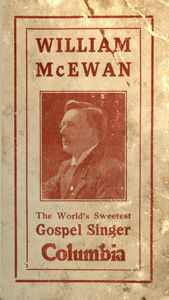
File:Im19440218ISDN-WilliamGrigor.jpg


Sunday, November 17, 2019

Wonnacott 1927 painting of 'The Burn Houses' Ballyhalbert


I found this in my archive and am posting it here in case a connection can be made with the artist's family. I am not sure how I came to have this scan, but we lived there for about 10 years in the middle row of 'The Burn Houses', so-called as the area was known as Clydesburn, and which is where we were when this blog was born.

Maybe W. Wonnacott is known to someone out there.