Thursday, September 21, 2023

'The Orange Way' - in the footsteps of William - a 350 mile walking trail from Brixham to London

Much as I love Northern Ireland, sometimes to understand 'us' better it's good to escape 'us'. I'm in Devon a few times in the year and on my most recent visit a few weeks back I have found that there is an 'Orange Way' - a trail which follows the route taken by William Prince of Orange in 1688, from his landing place at Brixham Harbour on 5th November 1688 all the way to his arrival at St James's Palace in London on 18th December 1688. There are statues of William in both places, and various monuments and memorials along the way.

I was aware of scattered places in the south of England which have links to William's era, but I didn't know there was a coherent, mapped, walking trail which follows the route that he actually took. It's 350 miles / 560 kilometres long, and a few walkers, writers and bloggers have published their own journey experiences and advices. Leslie Ham published his account, The Orange Way: A Long Distance Walk in 2003. He broke the route down into 15 sections.


• Brixham Harbour on the 'English Riviera' at Torbay is beautiful. It's one of the UK's most important harbours and plenty of my Portavogie neighbours know it well, having landed catches there over the years. A famous statue of William was installed at the head of the harbour, by public subscription. The foundation stone was laid on the bicentenary of his landing in 1888. The inscription says that the statue was unveiled one year later by His Excellency Count De Bylandt and C.A. Bentinck, a descendant of one of those who arrived with William. Local dignitaries from England, Holland, the US Navy, the Royal Navy and also the Grand Orange Lodge of England took part in the ceremony. Here are a few pics of it - it was made by W & T Wills of London. 


To be honest the face is terrible, but the nearby fish and chip shops are outstanding. Various cafés and ice cream shops are named for William.

• There is also an obelisk in memory of William at the side of the harbour, which, according to HistoricEngland.com, was built exactly 200 years ago in 1823. There used to be a gas lamp on the top, and a flat stone known as "King William's Stone" at its base, which said "On this stone and near this spot, William Prince of Orange, first set his foot on his landing in England, the 5th November 1688". In Thomas Babington Macaulay's monumental History of England (1848) he wrote this description:

... (William) landed where the quay of Brixham now stands. The whole aspect of the place has been altered. Where we now see a port crowded with shipping, and a market place swarming with buyers and sellers, the waves then broke on a desolate beach: but a fragment of the rock on which the deliverer stepped from his boat has been carefully preserved, and is set up as an object of public veneration in the centre of that busy wharf...

A later account (Christian World, 7 October 1870, page 7) says that the obelisk was 'in a dingy, disreputable state' but that Macaulay rescued the monument - it had originally been near Brixham fish market, and then was moved to the ballast bank, where it was "allowed to lie there as a thing of no use. From this ignominious resting place it was rescued through Lord Macaulay. Happening to visit the neighbourhood with some ladies, he inquired for the obelisk and found it at the ballast bank. Whereupon he sharply reprimanded the Brixhamites, and the result was the present monument".

The obelisk has been moved around Brixham a few times, it was moved to its current position for the tercentenary in 1988. The harbour-facing side of the obelisk now contains the original inscribed stone; the street-facing side has an inscription from 1988 when Queen Elizabeth II unveiled it in its current position.


• Parliament House, Stoke Gabriel is a short distance from Brixham and its where William reputedly met with local allies including Sir Edward Seymour, to discuss their plans for Revolution. It's a beautiful building, I had visited it before back in 2010 (see previous post here) but this time I had a chat with the owner who recently purchased and renovated it, and it's now available as an AirBnB. An inscribed stone memorial in the garden commemorates the tradition of William's Parliament.


• At Newton Abbot, there is a memorial stone marking at St Leonard's Tower at the base of the pedestal where Rev John Reynell read aloud William's Declaration for the first time (the pics below are not my own). 


And so on. You get the general idea.

Is the 'Way' authentic? Yes. The route was journalled at the time by some of those who accompanied William, such as the Rev. John Whittle, one of the chaplains in William's army. His detailed An Exact Diary of the Late Expedition of His Illustrious Highness the Prince of Orange, (Now King of Great Britain) From His Palace at the Hague, To His Landing at Torbay; And from thence To His Arrival at White-Hall. Giving a Particular Account of all that happened, and every Days March. By a Minister, Chaplain in the Army. was published the next year, on 23 April 1689.


More recently, in 2022, author Philip Badcott published The March of William of Orange through Devon which is another excellent, detailed, account.


The trail snakes its way eastwards across England, through villages and market towns, and past buildings which have various associations with William's journey.

• At the end of The Orange Way, the splendour of London is a very different experience to the Devon countryside and coastline. The 1907 statue of William, at Kensington Palace, and his own final destination at nearby St James's Palace, conclude 'The Orange Way'. There's a kind of 'circle of life' moment at St James' Palace - this is where cousins William and Mary were married in 1677, neither of them realising that just 11 years later they'd be back in the very same building preparing to be crowned King and Queen, having deposed her father, King James II.


• Completed after their reign – and so William and Mary never set foot in it – the Old Naval College at Greenwich isn't on the official 'Orange Way', it's about 10 miles further east of the two London palaces. But it should be added for completeness, as a kind of appendix, because it's where the magnificent painted ceiling, described as Britain's Cistine Chapel, can be seen. Created from 1708-24 by artist Sir James Thornhill, its formal title is The Triumph of Peace and Liberty Over Tyranny. Pics below are from my visit there in summer 2019.


England's 'The Orange Way' a very different kind of 'Orange Walk' than the ones we are familiar with in Northern Ireland and Scotland.

Our NI prism has diminished understandings of the full history and significance of what took place in 1688. Far from our narrow contexts, William and Mary's Bill of Rights of February 1689 is depicted in stone in the Reformation Wall in Geneva, Switzerland, which was built in 1909. I am hoping to visit it early next year. 

These historical events are far bigger than the myopic Northern Ireland context. Perhaps, one day, they can be re-told and re-defined.

The beautiful, gentle, Ulster-esque landscapes of Devon are a marvellous context to start to rediscover 'King Billy'. The Orange Way is the sort of trail that a travelling historian like Michael Portillo, Tony Robinson or Julia Bradbury could do a superb TV job with.


• The Orange Way Wikipedia entry is here
• Blog by Edna MacLoy here
• Hiking blog Komoot.com here


.............

Whittle's diary is online on GoogleBooks here. It recalls William's arrival in London as this –

"...Most of the Nobility congratulated his Highness's safe arrival at St James's and on the 20th (December) the Aldermen and Common Council of the City of London attended his Highness upon the same account and the Lord Mayor being disabled by Sickness Sir George Treby Kt Recorder of the Honourable City of London made an Oration to his Highness to this effect: 

Great Sir, 

When we look back to the last Month and contemplate the swiftness and fulness of our present Deliverance astonished, we think it miraculous Your Highness, led by the Hand of Heaven, and called by the Voice of the People, has preserved our dearest Interest, the Protestant Religion, which is Primitive Christianity restored. 

Our Laws which are our ancient Title to our Lives, Liberties and Estates and without which this World were a Wilderness. But what Retribution can we make to your Highness? Our Thoughts are full charged with Gratitude. Your Highness has a lasting Monument in the Hearts in the Prayers in the Praises of all good Men amongst us. And late Posterity will celebrate your ever glorious Name, till Time shall be no more. 

December the 25th the Lords Spiritual and Temporal assembled at the House of Lords Westminster and there agreed upon and signed an Address wherein they humbly desired his Highness in this Conjuncture to take upon him the Administration of Publick Affairs both Civil and Military and the Disposal of the Publick Revenue for the preservation of our Religion, Rights, Laws, Liberties and Properties and of the Peace of the Nation, and that his Highness would take into his Care the Condition of Ireland and endeavour by the most speedy and effectual Means to prevent the Dangers threatening that Kingdom..."


It's quite the Christmas present – "Dear William, please run the country, and sort out Ireland". 

• Brixham in Devonia, by Charles Gregory (1896) has lots of information. Online at the British Library here.


Below: OS map 1865, with King William III Monument marked.


Below: OS map 1869, with King William III Monument marked.


Below: OS map 1874, with 'stone' beside the fish market marked. This is pretty much where the obelisk is today.


Tuesday, September 19, 2023

Electricity Board for Northern Ireland - logo with the Red Hand of Ulster

It is well known that the Northern Ireland Tourist Board logo, from around 1950–1995ish, featured the Red Hand of Ulster. In March 1997 I joined the design company (GCAS) which had scrapped it, due to international consumer research the NITB had carried out which said it visually communicated "stop, no entry" and "don't come here". Over this past summer I came across these old Electricity Board for Northern Ireland logos, also with a Red Hand, from the 1960s and 1970s.

Symbols have no meaning, it's our perceptions of them that give them their meaning. So, in our era a generation later, maybe the Red Hand might be re-thought of as a friendly 'High Five" rather than an intimidating stop sign.


Wednesday, September 13, 2023

Dúlamán, "Dullie Men", Dulse and Ulster-Scots edible seaweed gathering


Which came first? And does that matter?

The older folk around Ballywalter still refer to the local guys that gather the edible seaweed called dulse (Wikipedia page here) as the "dullie men". Dulse grows pretty thickly there at a rock known as the "dullie roak".  Ernie Dunbar's dulse is the best. Below is an article from the Belfast News-Letter, 1 July 1946, describing these and also mentioning a "dullie beach" and "dullie floats". I grew up with this name and pronunciation and I still hear it used. 


For Ulster-Scots, these terms are very specifically used for dulse only, not seaweed generically.

In 1976 Clannad released an album called Dúlamán (on YouTube here) and in west Donegal a distillery produces An Dúlamán Irish Maritime Gin (website here).


Culture flows in multiple directions. I don't know if my County Down dullie men predate dúlamán, or vice versa, or if they exist(ed) simultaneously. I also don't buy that just because there's an Irish spelling now that it therefore must linguistically predate the Scots version.

The old Scots & Ulster-Scots crack became the Irish craic in the 1970s (see Irish Times article here). Ulster-Scots largely abandoned traditional music during the same period (see Nigel Boullier's marvellous book Handed Down for details of that - see ITMA website here). Ulster-Scots have stopped doing the Christmas rhymers I grew up with, and their road bowls playing was consigned to history long ago. Yet these two traditions remain alive in Armagh and Fermanagh, within what would be regarded as Irish cultural communities. 

As Ulster-Scots communities devalue, fail to hand down, neglect, and eventually stop doing these things, then the traditions are left for others to pick up, carry on and develop. Maybe a bit like the seaweed itself - it's lying there and it's available - so why not gather it up?

I am not very bothered about 'cultural appropriation' as one of the activist grievance issues of our age - because civilisations develop when cultures are shared.

..................

Dulse is an emotive food for many, evoking deep-rooted memories of hame. This time last year an elderly lady, now living in Texas but who was born and raised in Portavogie, reached out to me on Facebook after I posted the poem below. She was so stirred by the words that she wanted to taste dulse again - so I posted her a bag which arrived with her about 8 weeks later, in good time for Christmas.

The poem was given to me by a man from Coleraine a few years ago, but it was originally collected by Sam Henry and published in his 1933 book Rowlock Rhymes and Songs of Exile (see manuscript here). He had perhaps slightly Anglicised the Ulster-Scots 'Blad' (which means a 'sample' or 'selection') to 'Blade'.


Monday, September 11, 2023

The Ards TT 'Race to Disaster' and the story of deadly driver Jack Chambers.


Above: a letter from Harry Ferguson from the collection at PRONI.


Last year I was delighted to be co-presenter of a BBC Northern Ireland programme, made by Northern Star Pictures, about the Ulster (Ards Circuit) Tourist Trophy Race which took place close to where I live every year from 1928 - 1936. The race was masterminded by Harry Ferguson and William Wallace McLeod. 

The programme which was entitled "Race to Disaster: The Ards TT" was 'Critics Choice' in the Sunday Times just prior to broadcast on 16 February 2023 - details here on the Northern Ireland Screen website.

It was one of the most famous motor races on the planet, attracting the biggest car brands and the most famous daredevil drivers. But it was ended because of a horrendous incident when a young Belfast driver, Jack Chambers (pictured left in 1935) crashed into a crowd of spectators in Newtownards. Eight people were killed and 40 injured, and Jack Chambers' father, Alderman William John Chambers, took part in the funeral processions through Newtownards. It was reported that even more people came to see the funerals than had watched the world famous races.

Local tradition held that young Chambers was heartbroken by the accident and drank himself to death, dying in ignominy and obscurity.

However, the full story – not included in the tv programme as I only uncovered these details after programme production was finished – is far more reckless and disgraceful. For the next 32 years Chambers was a serial drink driver, defying every licence ban, suspension and fine that the courts handed down to him.


........................


A branch of the Chambers family were the first motor car manufacturers in Ireland – they produced  Chambers brand cars, made in Cuba Street in Belfast. 


• EARLY YEARS
William John (Jack) Chambers was the namesake, and one of the three sons, of Alderman William John Chambers. The family lived on the Donegall Pass. WJ senior was one of the first motorcyclists in Ulster, having taken the sport up in 1900. He opened a garage and showroom on the Donegall Pass and his two sons inherited his love of speed. WJ was a member of the City Council in 1929 and he and the  family attended Windsor Baptist Church, becoming President of the Baptist Union of Ireland in 1934. By the time of the 1936, the Chambers were influential and famous.

• THE 1925 RACE DEATH
Another of the sons, Herbert Charles Joseph Chambers, was killed in a motorbike race at Portmarnock in October 1925, aged just 24. The crash was witnessed by his father - Herbert had been doing an estimated 80 - 90mph and, with no other rider involved, the bike wobbled and went about 10 feet into the air, somersaulting along the road. Sustaining multiple injuries, he was transported by car to the Mater Hospital in Dublin but died before arriving there.

• THE 1936 RACE DEATHS
It was ten years later, in September 1935, when fellow motorcyclist Jack Chambers made his racing car debut. And one year after that, he was at the wheel when his car left the road in Newtownards, outside today's Strangford Arms Hotel, at around 100mph and ploughed into the unprotected spectators. The newspaper reports spare no details – a gruesome horrific event.

• A RECKLESS LIFE
The local legend of Jack Chambers' alleged remorse and decline are just that - a legend.

• In April 1938 there are newspaper reports of him once again racing motorbikes, almost at the same time that the inquest and civil case by the victims' families began, in July 1938.


• Alderman Chambers died in May 1943, aged 65, and it seems that Jack inherited the showroom and garage business.

• In July 1947 Jack was fined £25 for drunk driving and had his license suspended for two years.

• In December 1953 he had a further 10 year driving ban imposed, and in 1957 (presumably due to having defied previous bans) he was in court in Newry where the magistrate said Chambers had “four previous convictions and suspensions … he hadn’t come up against a record quite as bad as Chambers"


• Unbelievably, in October 1962, Jack Chambers had a “£100 fine and 20 year ban”.

He died in late October, 1968, at 104 Donegall Pass, leaving his wife Patricia but seemingly no children. He was buried at the City Cemetery. Among his obituaries was one from the Belfast & District Motor Club, of which he was Vice-President. 

.................

Attitudes to drink-driving and road safety in Northern Ireland have changed dramatically over the subsequent years. Much of that has been rightly accredited to the globally recognised award-winning campaigns by McCann-Erickson Belfast, later Lyle Bailie.

• Watch the programme on the BBC iPlayer, here.


Tuesday, August 29, 2023

'The Break of Killyleagh, 1688' - further details just discovered on the Cuffies of Shrigley


Following this recent post, and my subsequent expedition in search of John and William Cuffies' grave, here is an article from the Belfast Weekly Telegraph on 30 April 1910. For all of the fixation on "kings in wigs", their respective armies on opposing river banks, and the obscurities of battlefield strategy – the far more emotive community story has been almost totally lost. Thankfully there were some people who wrote down a few fragments, like these below. (PS Mark Talbot was certainly a colourful character - Wikipedia here).


Tuesday, August 22, 2023

"Retribution will bring Rebellion" - Hugh Williamson and The Boston Tea Party, 16 December 1773


This coming December, the United States of America will celebrate the 250th anniversary of the Boston Tea Party, kicking off what will be two and a half years of rolling commemorations leading up to the 250th anniversary of the Declaration of Independence on 4 July 2026 (see website here).

..........................

Just a few days after turning 38, Hugh Williamson sailed out of Boston Harbour on one of John Hancock's fastest transatlantic ships, the Hayley, captained by James Scott, bound for London. In later years, both Benjamin Franklin and Samuel Adams would confirm that Hugh had been present at the 'Sons of Liberty' planning meetings for the Boston Tea Party. Williamson had then watched the Tea Party taking place, from 6pm-9pm on 16 December 1773, and he brought the Privy Council in London the first account of it - "he was the first to report to the British Government that occurrence" - one week before the official colonial government's own narrative arrived. Williamson told them that "retribution will bring rebellion".

As a later account wrote:

...The strange quiet that prevailed, except for the sound of ripping tea chests and numerous splashes in the water, made a lasting impression upon several witnesses. 
One of them was Dr. Hugh Williamson of Philadelphia, a leading advocate of American independence and a close friend of Benjamin Franklin's. Williamson had been in Boston for a month on business and was about to take ship for London. He had attended at least two of the large public meetings that preceded the Tea Party, and when he heard on the night of December 16th that the Party was in progress, he went at once to the scene. He found a little hummock about fifty yards from the nearest ship and, standing there, enjoyed a clear view of the proceedings. 
"The rioters made very little noise," he told the King's Council, in wonderfully self-contradictory phraseology, a few months later...

 
Williamson's full account to the Privy Council can be read online here.


According to an obituary, "his parents were natives of Ireland but their earlier ancestors it is believed came originally from Scotland". Hugh's parents had arrived in America among the early Presbyterian emigrants from Ireland – his mother, Mary Davison, with her father George via Londonderry in 1718/19 (on a ship said to have been captured by the infamous pirate, Blackbeard) – and his father, John W. Williamson, via Dublin, in 1730. They married in 1731, most likely at West Nottingham Presbyterian Church, Chester County, Pennsylvania – Hugh was born in West Nottingham township in 1735, the eldest of their ten children. John died in 1757, but Mary lived until she was 90 years old, dying in 1804.

Hugh Williamson studied under two renowned Ulster-Scots Presbyterians: Francis Alison, whose revolutionary philosophy forged the thinking of so many in the American colonies, and Armagh-born Samuel Finley, who was also part of the Williamsons' community of West Nottingham. In 1743 Finley had been banished as part of a series of anti-Presbyterian actions by Connecticut's colonial government - in The Scotch-Irish, or the Scot in North Britain, North Ireland, and North America (1902) author Charles Hanna described that action as "to be so contrary to the spirit and letter of the British Constitution as to work a forfeiture of the colonial charter" (vol II, p 24). But Finley would have his day - he moved to New Jersey and in 1761 he became President of the College of New Jersey at Princetown, later Princeton.


Hugh Williamson studied for a time at the University of Edinburgh, in 1764, and in 1767 he became Professor of Mathematics and Natural Philosophy at Princeton. In 1770 he wrote this paper on climate change in Pennsylvania. In 1773 he, and another 'son of Ulster' Dr John Ewing, planned a tour of England, Scotland and Ireland to raise funds for their college in Newark.

It's quite a CV for a guy in his mid 30s. But he would soon become more than an intellectual – events combined to make him a, somewhat reluctant, revolutionary – who would become one of the signatories of the United States Constitution.

"Were not we of Scotch Irish race and Presbyterian faith pledged already to the cause since the first blood shed for American liberty was the blood of the Scotch Irish Presbyterians, spilled at the battle of Alamance, when the stern North Carolina "Regulators" had risen, like Cromwell's "Ironsides," against the tyranny of their royal governor?

The "Boston Tea Party”, therefore, found quickest sympathy among the Scotch Irish of the Southern and Middle States, and the earliest and grimmest of the resolutions sent up to the several assemblies, urging that Massachusetts be sustained, and kingly tyranny determinedly resisted, came from the towns and counties settled by these people.

"Freedom or death" was the consuming sentiment in the hearts of many Scotch Irish Americans for months before the typical orator of that race thrilled a continent by speaking those immortal words, "Give me liberty, or give me death”. 

- from W W Caldwell’s novel ‘Donald McElroy, Scotch-Irishman’ (1918)


More to follow...


Sunday, July 30, 2023

"an old grudge against a government, which ... had never done them justice ... inflexible devotion to popular liberty" – Rev Daniel Eagle Nevin of Pittsburgh (1851)


Rev. Daniel Eagle Nevin was the minister of Sewickley Presbyterian Church, Pittsburgh, Pennsylvania (shown above). His family ancestry included McCrackens on his mother's side, and Williamsons on his father's side. Nevin was a great-nephew of Hugh Williamson, the son of Ulster emigrants who was a witness to the Boston Tea Party and who was quizzed about it in London, and who wrote his famous The Plea of the Colonies* - Wikipedia here.

Here is how Nevin understood and expressed the Scotch-Irish community story, undoubtedly passed down to him by his family -

“religious liberty ... democratic ideas ...

... It was the amplification of these twin doctrines, aided by an old grudge against a government, which, – notwithstanding their prowess at Londonderry and the Boyne – had never done them justice, that furnished them with sufficient reasons for assuming in their adopted country the initiative in the American Revolution – by resisting on the banks of the Alamance the militia of Gov. Tryon in 1771, and promulgating from Mecklenburg Courthouse, North Carolina, in May 1775, the first bold manifesto looking firmly at the scheme of colonial independence.

The same doctrines endeared yet more and, consecrated through conflict and trial, drew from the mountains and valleys of Pennsylvania, Virginia and North Carolina, to meet the demands of the Revolutionary contest, a hardy intelligent yeomanry whose inflexible devotion to popular liberty has justly won for the Presbyterian Bluestocking the highest grade of canonisation in the temple of freedom....

...It was their glory to be the great champions in America of the rights of the soul. Paul before Agrippa, or Luther at Worms, furnished not to Italian or Flemish artists a purer or more elevated study in moral aesthetics than is presented in Makemie's trial at New York, 1707, for preaching without Lord Cornbury's license the gospel of the Lord Jesus Christ ..."

– Rev Daniel Eagle Nevin (1813-1886) of Sewickly Presbyterian Church, Pennsylvania, writing in The Mercersburg Review, 1851 (online here)


• Look at his four key reference points - the Bible (Paul and Agrippa), the Reformation (Luther at Worms), the Glorious Revolution (Londonderry and the Boyne), and individual liberty (Francis Makemie). These fuelled the Scotch-Irish community's justification for revolution in America, shown at Alamance and expressed at Mecklenburg.


LINEAGE

The lineage here is interesting too. Hugh Williamson was born in 1735 and died in 1819. His great-nephew Daniel Eagle Nevin was born in 1813 and died in 1886. Their lives span 150 years and overlapped by six years. Potentially, Hugh's parents or grandparents would have endured the Siege of Derry, which is the port that his mother had emigrated from. In The Plea of the Colonies, Hugh made the blockade of Boston of 1774 sound a lot like the Siege of Derry of 1689:

“the whole town of Boston, unheard and untried, was immediately condemned to suffer that kind of extreme, inadequate punishment which savours of revenge … a fleet and army sent to intimidate and distress the inhabitants … like beasts and not like men … you then cut off their fishery and lest starvation should make them more refractory, you sent more troops”. 

Daniel had a brother who was another Presbyterian minister in Pennsylvania, called Rev Alfred Nevin (1816-1890). Alfred wrote numerous books, including this one - Churches of the Valley: Or, an Historical Sketch of the Old Presbyterian Congregations of Cumberland and Franklin Counties, in Pennsylvania, which is online here.


"WHAT COULD TEMPT SUCH PEOPLE TO BECOME INDEPENDENT?"

*Again, in The Plea of the Colonies (1775) Hugh Williamson shows that, rather than being anti-British, right up to the 11th hour the colonists' campaign was that, in terms of rights and liberties, they should be fully British: 

“whoever was best acquainted with the colonists had the least reason to believe that they were looking toward a state of independence. As members of the British empire, they have enjoyed, till the beginning of the present controversy … as much liberty as was consistent with civil government, or as much as they could possibly expect … they were conscious of the blessing, they prayed for its continuance. They esteemed Great Britain as a parent, they loved her with more than filial affection; they loved every thing that was British; they were to a man zealously attached to his Majesty, if we except a few individuals who migrated to that country in the year forty-five. What could tempt such people to become independent?”


• the 1926 Historical Sketch of Sewickley Presbyterian Church is online here.

Friday, July 28, 2023

Withdraw the "sacred guarantee of their liberties" // 20 May 1774 – the London government's retaliation for the Boston Tea Party


• BOSTON AND NEW YORK, 1689
On the very same day that the Siege of Derry began - 18 April 1689 - on the other side of the Atlantic Ocean the Boston Revolt happened. 2000 colonists took up arms, an orange flag was raised on Beacon Hill overlooking Boston Harbour (highlighted on the 1722 map above, and on the detail of this 1689 map below). A public Declaration of the Gentlemen, Merchants, and Inhabitants of Boston, and the Countrey Adjacent was made in the market square, including this reference – 

... the Almighty God hath been pleased to prosper the noble undertaking of the Prince of Orange, to preserve the three Kingdoms ...


Around the same time a German emigrant, Jacob Leisler, and 400 men seized control of the Province of New York, making a declaration in the name of William and Mary. He named himself Lieutenant Governor of New York, but then seems to have gone rogue. Lots more detail here.


• THE MASSACHUSETTS CHARTER, 1691
On 7 October 1691, during the joint reign of King William III and Queen Mary II, the Province of Massachusetts Bay was granted its Charter. It was based upon William and Mary's Bill of Rights of 1689, which was their very first law, passed at their Coronation. In The Minutemen and Their World (published 2001) Robert A Gross described it as follows – "the Massachusetts Province Charter of 1691, which the inhabitants treasured as a sacred guarantee of their liberties". Shown above is the original manuscript, from this website.


• REVOKING THE CHARTER, 1774
Jump forward 80-ish years and Boston Harbour was probably still a delicate infusion with a tinge of brown from the 342 chests of tea that the Sons of Liberty had thrown into it in December 1773.

One of the responses by the government came on 20 May 1774 when the Massachusetts Charter was 'abrogated' or withdrawn by the London Parliament (see Wikipedia here). Massachusetts had its autonomy scrapped, and it was made a royal colony, with a new governor installed - military man Thomas Gage. His job was to implement four punitive new laws, known to the 'colonists' as the Intolerable Acts.

Son of Ulster emigrants Hugh Williamson, in his The Plea Of The Colonies which was published the next year in 1775, wrote that “the charter of Massachusetts was changed without necessity, without provocation ... by that single stroke every other province was informed that nothing was sacred or secure"

.......

• News of William Prince of Orange's arrival at Torbay had reached Boston a few weeks before all of this kicked off, on 4 April 1689, when a young Bostonian called John Winslow returned from the Caribbean island of Nevis with news of William's Declaration of October 1688. Winslow was arrested and imprisoned for bringing a 'traitorous and treasonable libel into the country', with an astronomical bail of £2000 offered. The Declaration was reprinted in Boston around that time by "R.P." Richard Pierce. See full account here.

• 1985 article Communicating an English Revolution to the Colonies, 1688-1689 by Ian K. Steele is on Jstor here.

• The full quote from The Minutemen and Their World, by Robert A Gross (2001): "Parliament contemptuously abrogated the Massachusetts Province Charter of 1691, which the inhabitants treasured as a sacred guarantee of their liberties".

• Another quote: "After the “Glorious Revolution”, William III issued Massachusetts Bay “and all the adjacent territories” which they united, a new Royal charter in 1691, which reflected all the political progress brought by the English Bill of Rights. The tone, style and intent of that colonial charter, echoed the original 1606 first charter as well as previous royal charters going back to Magna Carta, as the document insisted on the solemnity and contractual form of the grant of freedom and political liberties given by the King to his subjects..." - from this pdf on www.magnacarta800th.com

• Neighbouring Connecticut had its charter revoked by King James II in 1687, in his attempt to merge various colonies in America into a new 'Dominion of New England'. It was reinstated by King William III and Queen Mary II in 1689. Summary here.

• Image below from this website


"the Machiavellian policy of a British ministry" "to this Province in particular"

This was posted on the Liberty Pole flagstaff in Taunton, Massachusetts, by the Sons of Liberty, in October 1774 under a new red ensign flag design bearing the motto 'Liberty And Union'. A few months earlier they had published their Solemn League and Covenant for the province of Massachusetts. 


Thursday, July 27, 2023

"a colony distant from the parent state cannot possibly enjoy all the liberty of the parent state."

So wrote Governor of Massachusetts Thomas Hutchinson to the government in London, in private correspondence in 1768-69. Twenty of the letters were found, given to Benjamin Franklin, and were published in the Boston Gazette newspaper in June 1773.  More info here.


Wednesday, July 26, 2023

"Ex-vangelicals" who never heard the Gospel properly

I have a number of friends who grew up in evangelical churches (when there was less to do of an evening or weekend) but who have left it all behind. They are part of a phenomenon which has been labelled "ex-vangelicals". Some have closed that door and don't want to talk about it, but some others do.

A theme I have observed is that they were misled and mistaught. Presentations and sermons that they were told were the Gospel were actually the Law. As one of the reformers, Theodore Beza, wrote “Ignorance of this distinction between law and gospel is one of the principal sources of the abuses which corrupted and still corrupt Christianity.”

If the next generation are drifting, the previous generation didn't anchor them securely.


Wednesday, July 19, 2023

Another Revolution – "the old institutions are quite literally smashed to pieces"


As a brief departure from the flow of American Revolution 1776 era posts, here is a far more recent revolution which shows that change doesn't always need muskets and battlefields, or kings, or politics, or even the accountability of elections. 

"It is no news to anyone to point out that during the generation since the First World War, sovereignty has been slipping away from parliaments... In four of the major nations of the modern world (Germany, Russia, Italy, France) sovereignty has already altogether departed from parliament; in two (Japan and England) parliament retains a small shred; and even in the last refuge, the United States, parliamentary (Congressional plus Supreme Court) sovereignty is more than half way into its grave".

So wrote James Burnham (Wikipedia here) in his 1941 book The Managerial Revolution: What Is Happening in the World, in chapter 10 entitled 'The Managers Shift the Locus of Sovereignty'.

Burnham argued that - even in the midst of World War 2 - the concept of national sovereignty, as had been understood "from the Middle Ages to 1914", was effectively over. Administrators had taken over the world.

• Online here on Archive.org
• Here is the intro to George Orwell's critique 'Second Thoughts on James Burnham' (1946)

"... Capitalism is disappearing, but Socialism is not replacing it. What is now arising is a new kind of planned, centralised society which will be neither capitalist nor, in any accepted sense of the word, democratic. The rulers of this new society will be the people who effectively control the means of production: that is, business executives, technicians, bureaucrats and soldiers, lumped together by Burnham under the name of ‘managers’. These people will eliminate the old capitalist class, crush the working class, and so organise society that all power and economic privilege remain in their own hands..." 


Tuesday, July 18, 2023

Sweet Hame Appalachia - "The principal element is Scotch and especially Ulster-Scotch, more familiarly known as Scotch-Irish"


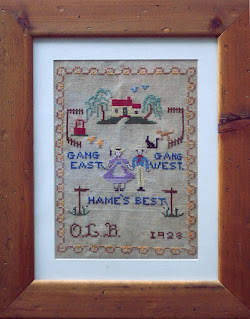
Image: this cross-stitch sampler is one that I first saw in the Museum of Appalachia in Norris in east Tennessee, when we were there on our honeymoon in 1997. "Gang East, Gang West, Hame's Best" - Hame in the Appalachian Mountains, with the town of Maryville just about half an hour away.


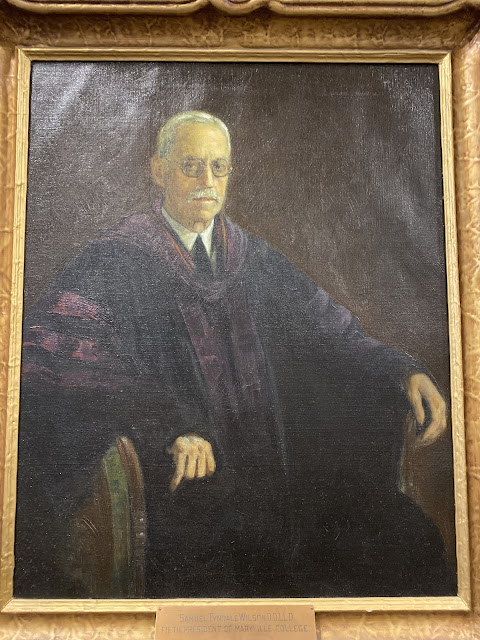
The book The Southern Mountaineers was written by Samuel Tyndale Wilson (1858–1944) and first published in 1906. He was the President of Maryville College in east Tennessee, and was a prominent Presbyterian as clerk of the Synod of Tennessee. Here are some quotes from the book:

"... While it is undeniable that the mountain people of the South are a composite race, the fact remains that they are probably of about as pure a stock as we can boast in America. Almost all their ancestors came from the British Isles. The principal element is Scotch and especially Ulster-Scotch, more familiarly known as Scotch-Irish ... 
... It may be added, too, that there still survive most interesting phases of life and idioms of language that are Scotch or Scotch-Irish in origin...

... They were possessed by a fierce love of liberty, and so the birthplace of American liberty very appropriately was in the mountains. In Abingdon, Virginia, at the junction of the valleys of the Blue Ridge and East Tennessee, as early as January 20, 1775*, a council met that, as Bancroft says, "was mostly composed of Presbyterians of Scotch-Irish descent." "The spirit of freedom swept through their minds as naturally as the wind sighs through the fir trees of the Black Mountains. There they resolved never to surrender, but to live and die for liberty."


Samuel Tyndale Wilson was born in Syria in 1858 where his parents (Rev David Morrison Wilson and Emeline Tomlinson Wilson) were Presbyterian missionaries for a time.

...............

• Online here 

• His grandfather, Samuel Wilson (1787–1857), was an 'abolitionist and educator' (see here). He was born in Acworth in New Hampshire, which had been founded in 1768 by families from Londonderry, New Hampshire.

* This is a reference to The Fincastle Resolutions which I have blogged about here before.


Monday, July 17, 2023

'The Rest Is History' podcast - The American Revolution - 4x1hr audio discussion series by Tom Holland and Dominic Sandbrook

 Available on Spotify here; embedded below too.

Sunday, July 16, 2023

Ciara Kelly, Ricky Gervais and Nick Laird


This clip from NewstalkFM from 14 July has gone viral, with almost 1 million views on Twitter alone. What does liberty look like in our international, multinational, some might say postnational and increasingly borderless, digital, era? It looks something like this from Ciara Kelly - a liberty which transcends  'nationality'. This piece includes a prescient warning from the poet and writer Nick Laird (who I had the pleasure of meeting a few years ago for a BBC radio programme he was working on) about the danger of identity politics – "the rest of the world has turned into Northern Ireland".


Saturday, July 15, 2023

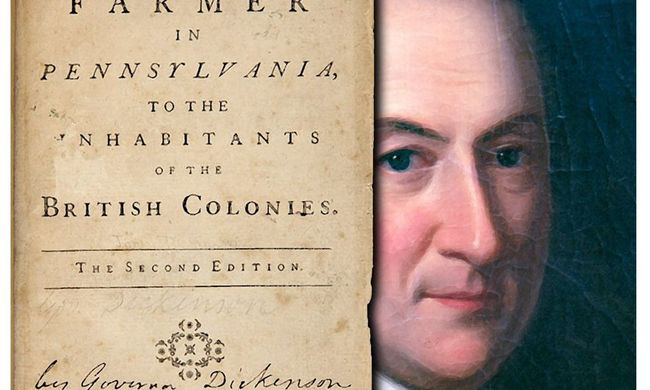
Nationality - a mechanism for Liberty; John Dickinson of Pennsylvania


'... All drafts also included one form or another of the proposition "that his Majesty’s Liege Subjects in these Colonies, are entitled to all the inherent Rights and Liberties of his Natural born Subjects, within the Kingdom of Great Britain.” The resolves of the Congress on the relationship between the colonies and the King were clear and unequivocal. The Stamp Act Congress fully recognised and declared its allegiance to the King in his executive capacities and as personal symbol of the union of colonies and home country. ...'

- from John Dickinson and the Revolution in Pennsylvania, 1764-1776 (published 1965)


John Dickinson
(pictured above, 1732-1808; Wikipedia here) was a pupil of renowned Donegal-born Presbyterian Francis Alison, and also of William Killen, who had been 'born in North Ireland in 1722, of Scotch Presbyterian heritage' and who went on to become the first Chief Justice of the first US Supreme Court in 1776.

A very wealthy man, Dickinson became one of the signers of the US Constitution. In 1767-8 he wrote a series of anonymous articles entitled Letters from a Farmer in Pennsylvania (Wikipedia here) explaining how various laws were unconstitutional and how Americans should resist them. French philosopher Voltaire was so impressed that he compared Dickinson with the orator statesman of Rome, Cicero. The Letters were a sensation and outside of America they were also printed in Dublin, London and France. In their day they were more popular and influential than even Thomas Paine's writings. (Paine was a relatively late arrival to the party, only landing in Philadelphia on 30 November 1774, and his Common Sense being published on 10 January 1776).


Perhaps Alison and Killen had seeded a chronology of earlier liberty in Dickinson's mind. Perhaps their parents had handed down memories to them both. Dickinson's biographer pointed out that the first of the Letters from a Farmer was penned on "the date of the fifth of November, 1767, the seventy-ninth anniversary of the day on which the landing of William the Third at Torbay gave constitutional liberty to all Englishmen" (online here).

The Sons of Liberty gathered at the Greyhound Tavern in Roxbury, Massachusetts on Monday 15 August 1768 and among their 45 toasts was one "To the immortal Memory of that Hero of Heroes William the Third". And Dickinson's sixth letter included this reference – "It is sufficient to remind the reader of the day on which King William landed at Torbay".

.................

With the 4th July having recently come round again, I had a couple of opportunities to speak briefly on the general topic, from an Ulster-Scots perspective. In our era and context we often get bogged down in two competing concepts of nationality, and consequently many here try to retro-fit those present day concepts upon the past. Which causes all kinds of bafflement. "Why did Ulstermen try to end British rule in America? Are you all not meant to be loyal?" and so on.

For our forefathers, nationality was not an end in itself, but was a mechanism for liberty. In pre-Revolutionary America, rather than being anti-British, in terms of rights and liberties the colonists demanded to be fully British – as the quote above says "that his Majesty’s Liege Subjects in these Colonies, are entitled to all the inherent Rights and Liberties of his Natural born Subjects, within the Kingdom of Great Britain.” 

Of course, those appeals fell on deaf ears in London, and in late 1775 & 1776, Independence became the only remaining route to liberty.

.................

Here is a famous illustration done by Paul Revere in 1766, depicting a celebratory obelisk which locals created and installed under the Liberty Tree in Boston, after King George III had withdrawn the despised 'Stamp Act' law. Revere entitled the illustration "A view of the obelisk erected under liberty tree in Boston on the Rejoicings for the Repeal of the —— Stamp Act 1766 ... To every Lover of Liberty this Plate is humbly dedicated by her true born Sons in Boston, New England." A full description is online here. Portraits and poetry, it was quite a statement:


The fourth panel says –

“And has her Liberty restored by the Royal hand of George the Third;”

Our Faith approv’d, our Liberty restor’d,

Our Hearts bend grateful to our sov’reign Lord;

Hail darling Monarch! by this act endear’d,

Our firm affections are thy best reward—

Sh’d Britain’s self against herself divide,

And hostile Armies frown on either side;

Sh’d hosts rebellious shake our Brunswick’s Throne,

And as they dar’d thy Parent dare the Son.

To this Asylum stretch thine happy Wing,

And we’ll contend who best shall love our King.


Even the Ulster Solemn League and Covenant of 1912 echoes with the very same ideas - Thomas Sinclair's words were that a 'Home Rule' parliament in Ireland would be '... subversive of our civil and religious freedom, destructive of our citizenship ... to stand by one another in defending, for ourselves and our children, our cherished position of equal citizenship in the United Kingdom'.

The nationality that each individual chooses is of course up to that individual. In Northern Ireland we have a duality of options, and I know quite a few people of other nationalities who live here. But would anyone choose a nationality which restricts their liberty?

There are many dimensions to nationality – such as a sense of continuity, of endurance, of tradition, of quelling internal differences to achieve something greater. But power corrupts. Nations can exploit their own populations, silence dissenters and exploit minorities. And absolute power corrupts absolutely. These are the pitfalls of human nature.

Nationality should not be an end it itself –  it should be a mechanism to protect and ensure liberty of all of its people. When liberty is threatened, nationality can be jettisoned. This is why liberty comes before loyalty.

.................


• More info on Dickinson and his Letters from a Farmer here, on Libertarianism.org

• Also worth looking at is James Otis Jr's 1764 tract The Rights of British Colonies Asserted and Proved , printed in Boston, in which he refers back to the 1688 Revolution for precedent (online here / further article online here)

On William of Orange: "... we should have heard nothing of the oppressions and misfortunes of the Charles’s and James’s; The revolution would never have taken place; the genius of William the third would have languished in the fens of Holland, or evaporated in the plains of Flanders ... Great-Britain to this day might have been in chains and darkness ..." 

On slavery: "The Colonists are by the law of nature free born, as indeed all men are, white or black … It is a clear truth, that those who every day barter away other mens liberty will soon care little for their own… That the colonists, black and white, born here, are free born British subjects, and entitled to all the essential civil rights of such, is a truth not only manifest from the provincial charters, from the principles of the common law, and acts of parliament; but from the British constitution, which was reestablished at the revolution, with a professed design to lecture the liberties of all the subjects to all generations."